You are about to embark on the trip of a lifetime. The Emerald Isle awaits you with open arms and rolling green hills. A 3 Week Ireland Itinerary is the perfect amount of time to see the most famous sites and find those quiet corners that most people miss. You will find that twenty-one days allows you to travel at a slower pace so you can truly enjoy the history and the food.
Planning Your Grand Adventure for 2026
First of all, you should decide when to go. The best time to visit Ireland is between March and May or September to November. During these months, the crowds are smaller, and the weather is usually mild. May is a wonderful choice because the wildflowers are in bloom and the days are getting longer. Additionally, the local school children are still in class, so the top tourist spots are not as busy.
You must consider your budget. A mid-range trip for twenty days will likely cost between €2,100 and €5,250 per person. This amount covers nice Bed and Breakfast stays, meals in good restaurants, and a rental car. If you prefer luxury, you might spend €250 to €600 every single day. On top of that, you should remember that Ireland uses the Euro, while Northern Ireland uses the Pound Sterling.
Getting Around the Emerald Isle
You have options for travel. A rental car is the best way to see the country because it gives you total freedom. You can stop at a roadside pub or a tiny village whenever you want. However, you must remember to drive on the left side of the road. The roads are often narrow and winding, especially in the countryside. Therefore, you should allow more time for driving than your GPS suggests.
If you do not want to drive, public transport is quite good between the major cities. You can use Bus Éireann or Irish Rail to move from place to place. Plus, some people love to use a motorhome for their Ireland itinerary. A campervan lets you stay right next to the ocean or beneath the mountains.
Part 1: Dublin and the Sunny Southeast (Days 1 to 5)
Day 1 and 2: The Heart of Dublin
Your journey begins in Dublin, the lively capital city. You should spend your first afternoon just walking around to get used to the vibes. You will see Georgian houses with colorful doors and cobblestone lanes. Later, you can enjoy live folk music in a traditional pub.
On your first full day, you must visit Trinity College to see the Book of Kells. The Long Room in the Old Library is a dream for book lovers. It holds over 200,000 of the oldest books in the library. After that, you can walk to Dublin Castle and the Chester Beatty Library. For lunch, you might enjoy a picnic in St. Stephen’s Green.
No trip to Dublin is complete without the Guinness Storehouse. You can learn how to pull your own pint and enjoy a 360-degree view of the city from the Gravity Bar. If you prefer whiskey, the Jameson Distillery is another great stop. Finally, you should walk through the Temple Bar District for more music and fun.
Day 3: Wicklow Mountains and Kilkenny
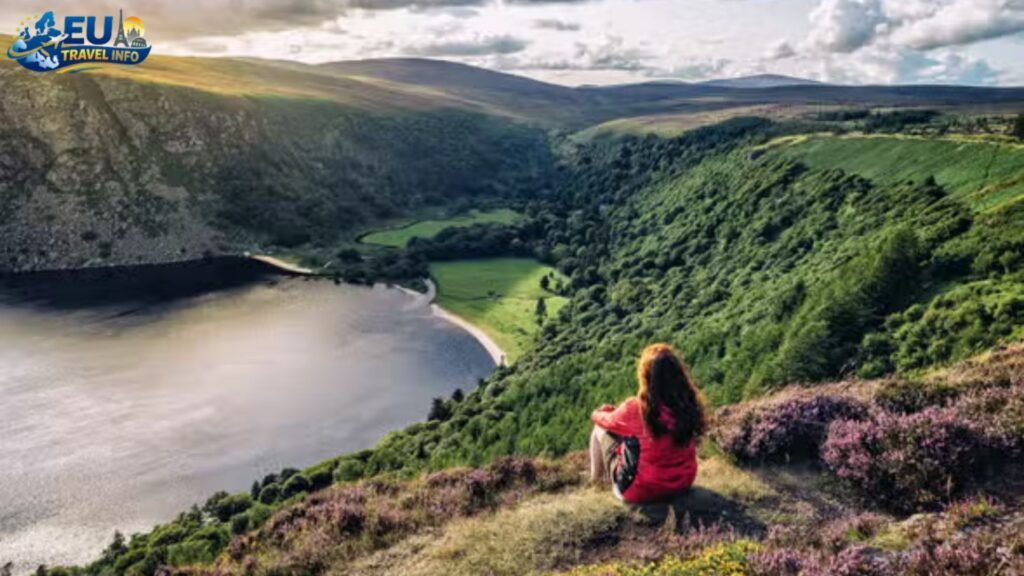
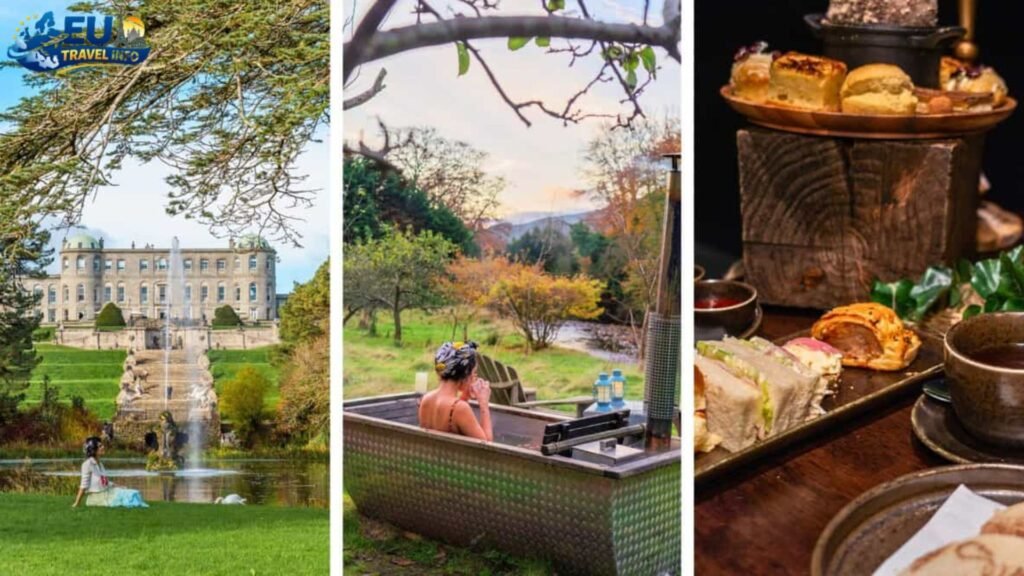
You will head south toward Kilkenny today. On the way, you should stop at the Powerscourt Estate in the Wicklow Mountains. The gardens there are beautiful. Additionally, you can visit Glendalough to see ancient monastic ruins.
When you arrive in Kilkenny, you will find the Medieval Mile. This path links Kilkenny Castle to St. Canice’s Cathedral. The city is very lively with many pubs and a great food culture. A medieval castle. A cold drink. A perfect evening.
Day 4: The Rock of Cashel and Waterford
You will drive to the Rock of Cashel in County Tipperary next. This is where the kings of Munster were once crowned. It is a massive stone fortress on a hill. Though many people visit it, you might find it crowded at times.
From there, you can go to Waterford. It is the center of the Viking and medieval heritage in Ireland. You can see the famous crystal factory or walk through the old streets. Similarly, you can find the Coumshingaun Lough nearby if you want a challenging hike with amazing lake views.
Day 5: The Beauty of Lismore
You should visit Lismore in County Waterford. The Lismore Castle Gardens are a hidden gem. You cannot go inside the castle because it is a private home, but the gardens are enchanting. You will see towering flowering bushes and even a rope swing. Gradually, you will fall in love with the quiet charm of this town.
Part 2: Cork and the Wild Southwest (Days 6 to 9)
Day 6 and 7: Rebel County and the Blarney Stone
You will spend the next two days in County Cork. Your first stop should be the English Market in Cork City for fresh local food. Afterward, you can visit the Cork City Gaol to learn about its history.
A visit to Blarney Castle is a must so you can kiss the Blarney Stone. Legend says this gives you the “gift of the gab”. Later, you should explore the coastal towns of Kinsale and Cobh. Cobh was the final port for the Titanic. You can see the colorful “Deck of Cards” houses that climb up the hill.
Day 8: The Mizen Head Peninsula
You will drive to the Mizen Head Peninsula today. This area has rugged cliffs and beautiful beaches like Barleycove. You must see the Mizen Head Signal Station. Additionally, the walk to Three Castle Head is breathtaking. Ancient ruins. Crashing waves. Total peace.
Day 9: The Beara Peninsula
The Beara Peninsula is often missed by tourists, but it is one of the most beautiful places in Ireland. You can take the only cable car in Ireland to Dursey Island. The car crosses open seawater, which is a unique experience. On the contrary to the busy areas, Beara offers quiet roads and deep green hills. You should stay in Kenmare or Castletownbere for the night.
Part 3: The Kingdom of Kerry and Dingle (Days 10 to 12)
Day 10: The Ring of Kerry
You will tackle the famous Ring of Kerry today. This is a 179-kilometer loop drive around the Iveragh Peninsula. You will see Ladies View, Moll’s Gap, and the Torc Waterfall. However, some travelers find the main road too busy. Therefore, you might prefer the Skellig Ring extension. It offers dramatic views of the Skellig Islands.
Day 11: Killarney National Park
You should spend the day in Killarney National Park. You can visit Muckross House, Ross Castle, and take a boat trip on the lakes. Additionally, you can explore the Gap of Dunloe by foot or by a horse-drawn carriage. At that time, you will realize why this county is called “The Kingdom”.
Day 12: The Dingle Peninsula
You will find the Dingle Peninsula just north of Kerry. Many people think it is even better than the Ring of Kerry. You must drive the Slea Head Drive for incredible coastal views. First of all, stop at Coumeenoole Beach and look out at the Blasket Islands. Plus, you should visit Dingle Town for the best ice cream at Murphy’s.
Part 4: Cliffs, Burren, and Galway (Days 13 to 15)
Day 13: The Cliffs of Moher and Doolin
You will head north to the Cliffs of Moher in County Clare. These cliffs rise 214 meters above the Atlantic Ocean. They are one of the most famous sites in the world. Finally, you can spend the night in Doolin, which is famous for traditional Irish music.
Day 14: The Burren and Galway City
You should explore The Burren today. It is a unique landscape of limestone rock that looks like the moon. Gradually, you will reach Galway City, known as the “City of Tribes”. You can walk through the Latin Quarter, see the Spanish Arch, and listen to street performers. The atmosphere is colorful and modern.
Day 15: Connemara and Kylemore Abbey
You will drive into the heart of Connemara today. The landscape here is vast and rugged. You must visit Kylemore Abbey, which is run by Benedictine nuns. It looks like a fairytale castle sitting next to a lake. Additionally, you can explore Connemara National Park for some great hikes.
Part 5: The Wild West and Northern Beauty (Days 16 to 19)
Day 16: Achill Island and Mayo
You will travel to Achill Island in County Mayo. It is linked to the mainland by a bridge, but it feels very remote. You must see Keem Strand, which has breathtaking views from the cliffs. Additionally, you can find the highest sea cliffs in Ireland at Croaghaun. At that time, you might feel like you are at the edge of the world.
Day 17: Sligo and the Northwest
You will drive through Sligo, which is known as “Yeats Country”. You can see the flat-topped Benbulben mountain and visit the Caves of Keash. Similarly, you can see Glencar Falls, which inspired the poetry of William Butler Yeats.
Day 18: Donegal’s Rugged Beauty
You will find Donegal to be one of the most remote and beautiful areas. You must visit the Slieve League Cliffs, which are some of the highest in Europe at 601 meters. Later, you can drive the Inishowen 100 to see Malin Head, the most northerly point of Ireland.
Day 19: Derry and the Causeway Coast
You will cross into Northern Ireland to visit Derry. You can walk along the ancient city walls and learn about the “Troubles” at the Museum of Free Derry. Gradually, you will move along the Causeway Coastal Route. You must see the Giant’s Causeway, which has 40,000 hexagonal stone columns. Plus, if you are brave, you can cross the Carrick-a-Rede Rope Bridge.
Part 6: Belfast and the Boyne Valley (Days 20 to 21)
Day 20: Belfast and the Titanic
You will spend the day in Belfast. You must visit the Titanic Belfast museum to see where the famous ship was built. Additionally, a Black Taxi Tour is a great way to learn about the city’s history and see the Peace Walls. Finally, you can shop at St. George’s Market, which is a beautiful Victorian market.
Day 21: Newgrange and the Return to Dublin
On your last day, you will travel south through the Boyne Valley. You must visit Newgrange, an ancient passage tomb that is older than the pyramids. Later, you will return to Dublin to catch your flight home. A full circle. A heart full of memories. A plan for the next trip.
Important Travel Tips for Your 3 Week Ireland Itinerary
What to Pack
You must be ready for all types of weather. Ireland is famous for having four seasons in one day. Therefore, you should pack a good raincoat and an umbrella. Additionally, comfortable walking shoes are vital for exploring those cliffs and castles.
Food and Drink
You should try traditional dishes like Irish Stew, Boxty, and Colcannon. Plus, do not forget an Ulster Fry for breakfast. For a treat, look for Murphy’s Ice Cream in Dingle or a warm scone in a local cafe. A pint of Guinness or a cup of Irish Coffee is the perfect way to end the day.
Driving and Safety
You should use a local road atlas along with your GPS. Sometimes your phone will try to take you down very narrow “L” roads to save time. However, sticking to the larger “R” or “N” roads is often less stressful. You will find the Irish people to be incredibly friendly and helpful. You will likely feel safe everywhere you go.
Frequently Asked Question
What is the best Ireland itinerary?
The best itinerary depends on your interests, but a circular route starting and ending in Dublin is very popular. You should include the Wild Atlantic Way, the Ring of Kerry, and the Causeway Coast to see the most iconic sites.
What are the best three places to visit in Ireland?
Many travelers agree that the Cliffs of Moher, the Dingle Peninsula, and the Giant’s Causeway are the top three must-see spots. These locations offer the most dramatic scenery and unique history.
Where is the prettiest town in Ireland?
Many people believe that Kinsale in County Cork or Dingle in County Kerry are the prettiest towns. They both feature colorful buildings, charming harbors, and a very friendly atmosphere.
Concluding Words
A 3 Week Ireland Itinerary for 2026 is the best way to experience the magic of the Emerald Isle. You will see everything from the bustling streets of Dublin to the wild cliffs of Donegal.
You will have enough time to find hidden gems and enjoy the warm hospitality of the local people. Pack your bags and get ready for an adventure you will never forget.