You step off the plane at the Bilbao Airport. The air feels cool. It smells of the sea and the nearby mountains. You are in Euskadi. This is the land of the Basques. It is a place where a language older than Latin still fills the streets. You feel the excitement. This Basque Country Spain Itinerary will lead you through a world of ancient stone and modern art. You will see a region that is fiercely independent and full of pride.
Plan Your Arrival and Transport
First of all, you need to decide how to move. A basque country road trip is the best way to see the hidden spots. You can pick up a rental car right at the airport. This choice gives you the freedom to explore at your own pace. However, you might want a basque country itinerary no car. This is also possible. The public transport system is excellent and sustainable. You can use the Barik card in the Bizkaia province to save money on the metro and buses. Additionally, the Euskotren connects the major cities with beautiful coastal views. Therefore, you have many options for your journey.
Day 1: The Modern Heart of Bilbao
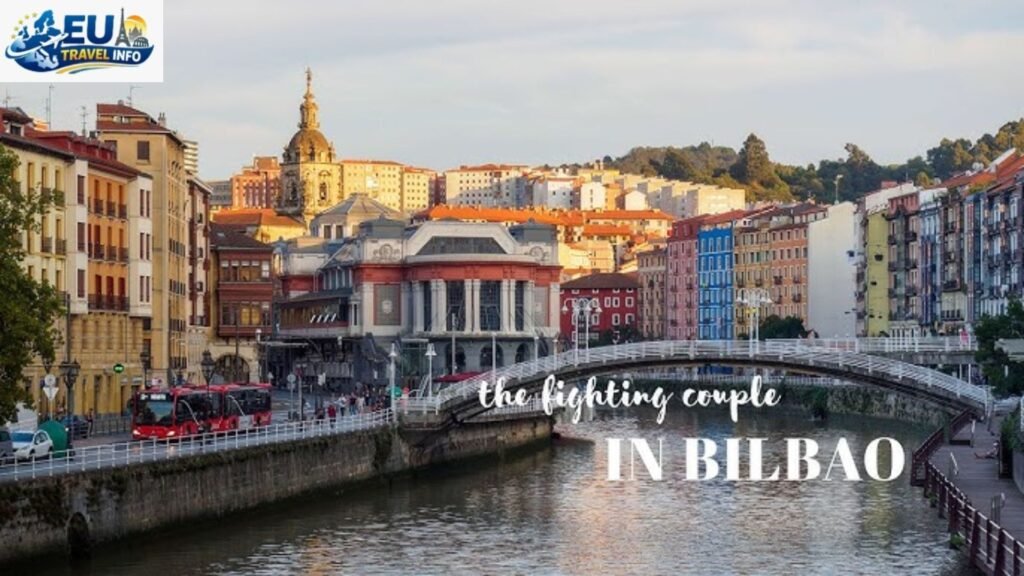 You begin your adventure in Bilbao. The locals call it “Bilbo”. At that time, this city was a grey industrial port. Now, it is a center of world-class design. You head straight to the Guggenheim Museum. The building is a masterpiece by Frank Gehry. It looks like a giant ship made of titanium. You walk around the outside first. You see the giant flower dog called Puppy. On top of that, you see the scary spider sculpture named Maman.
Later, you walk across the Zubizuri bridge. This white footbridge was designed by Santiago Calatrava. It connects the new city to the history of the Casco Viejo. You enter the seven original streets of the city. The streets are Somera, Artecalle, Tendería, Belosticalle, Carnicería Vieja, Hierro, and María Muñoz. You get lost in these narrow paths. This is part of the charm. Finally, you stop at the Mercado de la Ribera. It is the largest covered market in Europe. You see fresh fish that fishermen unloaded just hours ago.
Day 2: The Hanging Bridge and Coastal Rest
You drive or take the metro to Getxo on your second day. You must see the Bizkaia Bridge. People call it the “Hanging Bridge”. It is a UNESCO World Heritage site and an architectural jewel. The bridge is over 125 years old. You take the gondola across the river. It feels like you are part of history. Plus, the view from the upper platform is marvelous.
Gradually, you move to the town of Plentzia. As “Inge” from a local blog suggests, the views here are perfect for a sunset. You walk along the promenade. You see a beautiful white sand beach. This is a popular place for local tourists. There are no overpriced souvenir shops here. It feels real. Additionally, you can hike along the cliffs from Gorliz to Armintza. This walk is about 7 kilometers long. You hear the waves. You feel the wind. It is a reward for your soul.
Day 3: A Climb to the Throne of Legends
You set out early for the most iconic spot on the coast. This is San Juan de Gaztelugatxe. It is a rocky islet connected to the mainland by a stone bridge. You will recognize it. It was Dragonstone in the show Game of Thrones. You must pre-book a time slot because it is very popular.
The walk is a physical challenge. There are 241 uneven steps carved into the rock. You climb higher. The Atlantic crashes against the cliffs below. You reach the top and find a small chapel. It is dedicated to Saint John the Baptist and dates back to the 10th century. You ring the chapel bell three times. Therefore, you will have good luck. This is a tradition for every visitor. However, do not forget to wear flat hiking boots or sneakers. The path is steep and can be slippery in the rain.
Later that day, you drive to Bermeo. This is a colorful fishing village. At that time, the people here were famous whalers. You walk through the marina. You might see a pirate ship moored there. You eat some rabas, which is local calamari, at a bar in the harbor. It is fresh. It is delicious.
Day 4: History and the Painted Forest
You visit Gernika on day four. This town is a symbol of peace. It was bombed during the Spanish Civil War in 1937. This event inspired the famous painting by Picasso. You visit the Peace Museum. Similarly, you stand before the Gernika Tree. It stands for the freedom of the Basque people.
Additionally, you enter the Urdaibai Biosphere Reserve. It covers over 220 square kilometers. This is a paradise for birds. You see herons and migratory flocks. You go to the Oma Forest. This is a living artwork by Agustín Ibarrola. He painted shapes on the trees. The patterns only align when you stand in a specific spot. It is a visual riddle. Plus, it was an act of cultural reclamation after a long dictatorship.
Day 5: Time Etched in Stone in Zumaia
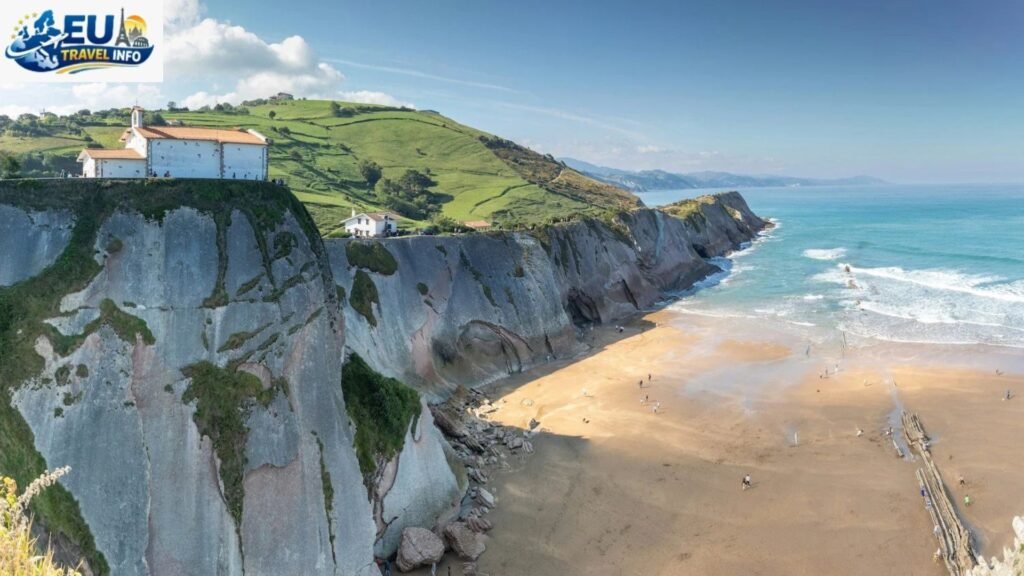
You travel to Zumaia to see the Flysch cliffs. These rocks are like pages in a book made of stone. They stretch for over 13 kilometers. These layers show 60 million years of Earth history. You can see the impact layer from the asteroid that ended the dinosaurs.
First of all, check the tide schedule. You want to walk on the exposed seabed at low tide. It looks like a lunar landscape. You hike up to the Chapel of San Telmo. The views of the jagged coast are cinematic. Then, you head to Itzurun Beach to relax. This beach is one of the most beautiful in the region.
Days 6-7: Culinary Bliss in San Sebastian
You reach San Sebastian, or Donostia in Basque. This city seduces you immediately. It has three golden beaches: La Concha, Ondarreta, and Zurriola. You spend 3 days in basque country just eating if you are a food lover. This area has the second-highest number of Michelin Stars per capita in the world.
You walk into the Parte Vieja (Old Town). It is packed with pintxos bars. You do a bar hop. You take one or two bites at each place. This is the local way. You must try a Gilda. It has a green pepper, an olive, and an anchovy. It is named after a character played by Rita Hayworth. Additionally, you try the Basque Cheesecake. It has a burnt top and a creamy center. Later, you take the funicular up Monte Igueldo. You see the famous view of the crescent bay. It is a scene from a postcard.
On Day 7, you drive 30 minutes to Hondarribia. It is a walled town right on the French border. You see colorful houses with wooden balconies. You visit the Castle of Charles V. It is now a beautiful hotel. You can feel the blend of Basque and French culture here.
Day 8: A Visit to the French Side
A basque country 7 day itinerary usually stays in Spain, but you should cross the border. You want to see what to see in basque country france. You visit San Juan de Luz. It is a charming town with a rich history of pirates and kings. You walk along the harbor. You see the traditional Basque architecture. It feels different but familiar. Gradually, you realize how the Basque culture spans across two nations.
Day 9: The Quiet Capital and the Medieval Almond
You head inland to Vitoria-Gasteiz. This is the capital of the Basque Country. It is one of the greenest cities in Europe. You walk through the Medieval Almond. This is the old quarter, shaped like an oval on a hill.
You must visit the Santa Maria Cathedral. It is famous because it is “open for works”. You wear a hard hat. You see how they build and restore a Gothic church. Over one million people have taken this tour. Writers like Ken Follett found inspiration here for their books. Later, you walk the Green Belt. It is a perimeter of parks around the city. You might even see a herd of deer at the Salburua wetlands.
Day 10: Wine, Salt, and Farewells
Your basque country itinerary 10 days long ends in the south. You visit Rioja Alavesa. This is the heart of wine country. You see a sea of vineyards between the Ebro river and the mountains. You visit Laguardia. This is a town that breathes wine and memory. It has medieval cellars hidden under the streets. You should book a tasting at a family-run bodega. You try the red Tempranillo wines.
Finally, you stop at Salinas de Añana. These are ancient salt flats. They have been used for more than 7,000 years. There are over 6,500 salt pans stepped into the earth. It looks like a geometric puzzle. You take a guided tour to learn how they still make salt using traditional ways.
Statistical Snapshot of the Basque Country
- Michelin Stars: 33 stars in the region.
- Flysch History: 60 million years of geological records.
- Salt Heritage: 7,000 years of active salt works.
- Bird Species: More than 250 species in Urdaibai.
- Steps to Gaztelugatxe: 241 uneven stone steps.
- Coastline Length: 246 kilometers of rugged beauty.
The Culinary Experience: Beyond Pintxos
You will eat very well here. The Basque country vacation package always includes a focus on food. You should look for the Txakoli wine. It is a crisp, white, fizzy wine. It goes perfectly with grilled fish. If you like seafood, try Txangurro. This is baked spider crab. Additionally, you must try Bacalao a la Vizcaína. This is salt cod in a rich red pepper sauce.
The cider houses are also a must. You will hear someone shout “Txotx!”. This means a new barrel of cider is open. You stand in line and catch the cider in your glass. You eat steak and cod omelets. It is a loud and happy experience.
Hidden Gems You Cannot Miss
Some places are not in every guidebook. You should seek them out. Elantxobe is a vertical village. It clings to a steep cliff. The streets are so narrow that the bus has a spinning platform to turn around. Additionally, visit Orduña. It is called the “Balcony of the Basque Country”. You see the Salto del Nervión. It is a waterfall that drops 222 meters down a sheer cliff. It is the tallest waterfall in Spain. However, it is seasonal, so you should visit after heavy rain.
Summary of the Basque Vibe
You will notice the people are proud. They speak Euskara. This language is a “language isolate”. It has no known relatives on Earth. You see it on road signs and in bars. You hear words like “ongi etorri” (welcome) and “eskerrik asko” (thank you). You feel the history in every hand-laid stone.
FAQ
How many days to visit Basque Country?
A basque country 7 day itinerary is a good start to see the main cities and the coast. However, a basque country itinerary 10 days long allows you to see the hidden inland gems and the wine region without a rush. You can even see the main highlights in a basque country itinerary 5 days if you stay near the coast.
Which is nicer, San Sebastian or Bilbao?
Both cities have unique spirits. Bilbao is modern and artistic with the Guggenheim. San Sebastian is elegant and romantic with beautiful beaches and famous food. You should visit both because they are only one hour apart by car.
What is the most beautiful part of the Basque Country?
Many travelers believe the coast between Zumaia and Gaztelugatxe is the most stunning. The Flysch cliffs and the winding steps to the islet chapel are breathtaking. However, the vineyards of Rioja Alavesa at sunset are also very beautiful.
Is Basque Country expensive?
It depends on your choices. San Sebastian can be expensive for parking and fine dining. However, pintxos are affordable snacks. Public transport is cheap. You can find a basque country vacation package that fits many budgets.
Concluding Words
This 2026 Basque Country Spain Itinerary Guide for a Perfect Trip shows you a land of contrasts. You see modern museums and ancient salt flats. You eat world-class food in tiny bars. You climb steep steps and walk along calm beaches. The Basque Country is more than a place. It is a feeling of discovery. You will go home with memories of salty air, crisp wine, and stone walls that tell stories.