I have traveled to more than 35 countries and I can tell you one thing for sure. Europe is a dream. I love the old streets, the tasty food, and the beautiful views. However, I also know that a trip across the ocean can cost a lot of money. Many people think they need a fortune to see the Eiffel Tower or the canals of Venice. I am here to tell you that this is not true. You can see the best of the continent without a huge bank account. I have learned how to find the Best Time to Travel to Europe Cheap through my own adventures. I will share my best tips and secrets with you today.
First of all, you must understand the travel seasons. Europe has three main times for tourists. The first is peak season, which runs from June to August. The weather is hot and the days are long, but the crowds are huge and prices are at their highest. Later, we have the off-season from November to March. This is the best and cheapest time to travel to europe because flight and hotel prices drop a lot. Finally, there is the shoulder season in spring and fall. I think this is the sweet spot for many travelers.
Why the Winter is the Ultimate Money Saver

I have visited Europe in the winter many times. It is totally worth the cold. Prices are much lower because there is less demand. I once found a flight from Washington D.C. to Copenhagen for only $260! Additionally, I stayed in a hotel in Paris for a great price. It was listed at $100 a night for the spring, but I got my flight and hotel together for just $500 in the winter.
Off-season travel is great for your wallet. Plus, the lines are much shorter. I remember walking right into Laduree in Paris without waiting at all. A friend told me the line was two blocks long when they went in the summer! I felt like a VIP at places like Sainte Chapelle because they were almost empty. You can really enjoy the art and history when you are not being pushed by thousands of other people.
The Best and Cheapest Time to Travel to Europe: A Monthly Guide
If you want to know what’s the cheapest time to travel to europe, you should look at the months of January and February. These are the coldest months, but they offer the biggest discounts. Though it is chilly, you can see the Northern Lights in Norway or go skiing in the Alps. January and February also bring huge sales on fashion and electronics. I love shopping in Copenhagen because of the amazing thrift stores.
Early Spring and Late Fall

Gradually, the weather gets better in March and April. March is still quite cheap, and you can see spring blossoms start to appear. April is a wonderful time to visit gardens and historic sites before the summer rush begins. However, you should watch out for Easter week. In 2026, Easter Sunday is on April 5. Prices for flights can be two or three times higher during this school holiday.
November is another cheap time to travel to europe. The fall colors are beautiful in cities like Rome. Most tourists have gone home by then. Therefore, hotels try to fill their rooms by offering great deals. Additionally, you can enjoy the opera season in Italy or Bonfire Night in the United Kingdom.
How to Get the Best Time to Get Cheap Flights to Europe
I know that flights are usually the biggest cost of a trip. You must be smart about when and how you book your tickets. First of all, you should book your flight early. I find that the best time to get cheap flights to europe is between three to five months before you go. For spring travel, you should start looking in December or January.
Use the Best Tools

I use tools like Google Flights and Skyscanner to track prices. You can set up alerts so the computer sends you an email when the price drops. Plus, I recommend a tool called the ITA Matrix for advanced searches. It lets you see a calendar of the lowest fares for an entire month.
The Mid-Week Secret
The day of the week you fly is very important. I never fly on weekends if I can avoid it. Mid-week travel, especially on Wednesdays, is much cheaper. You can save about $56 to $100 per ticket by flying on a Tuesday or Wednesday instead of a Friday or Sunday. Similarly, early morning flights or “red-eye” flights at night are often the cheapest.
Fly into Cheap Hubs
If you are looking for the best time to travel to europe for cheap from usa, consider where you land. I often fly into London or Dublin first. These cities usually have the lowest prices for flights from North America. Once you are there, you can take a budget airline or a train to your final destination.
What are the Cheapest Countries to Travel to in Europe?
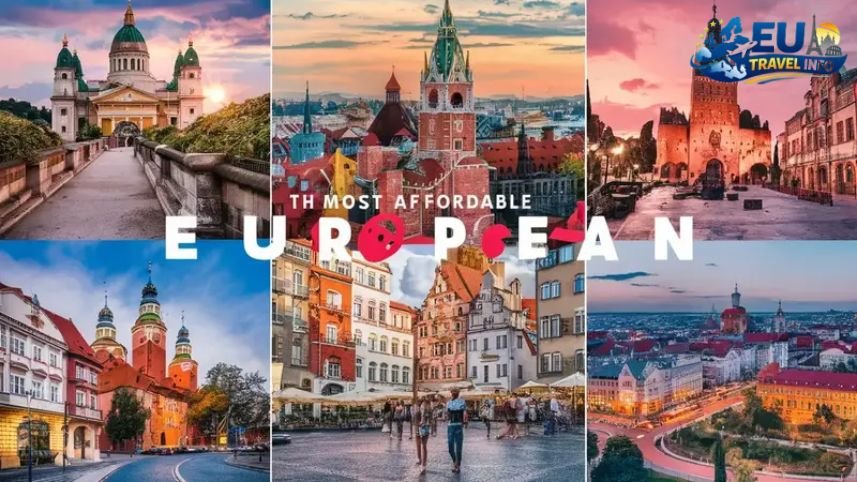
You do not need to stay in expensive cities like Paris or Zurich for your whole trip. Eastern and Southeastern Europe are full of amazing places at half the cost. I have found that you can live like royalty in these countries without spending much money.
- Bulgaria: This is often called the cheapest country in the European Union. You can find a hostel bed for $8 and meals for less than $12.
- Romania: I love the medieval towns and castles here. You can visit the castle of Dracula for a very low price. Hostels start at $12 a night.
- Albania: This is a secret gem with beaches that look like Greece but cost much less. You can get street food for $1 or $2.
- Poland: Krakow is a beautiful city with a great history and low prices.
- Bosnia & Herzegovina: I think this is one of the best spots for solo travelers. You can get a meal for $3 to $5.
- Lithuania and Latvia: These Baltic countries have beautiful architecture and very low prices.
- Serbia: Belgrade has a fun nightlife that is very affordable.
- Slovakia: You can go on mountain adventures for a fraction of the cost of the Swiss Alps.
- Turkey: I found that Turkey is very affordable and has a unique culture.
- Greece: While some islands are pricey, you can find great deals in the off-season.
A week in Albania or Bulgaria can cost the same as just two days in Switzerland!
How to Travel Cheap in Europe: Transportation Hacks
I love the European rail system. It is fast and efficient. However, trains can be expensive if you do not plan right. You should book your train tickets 90 days in advance to get the best deals.
Cheap Train Deals
I have found some incredible bargains on trains. For example, you can travel from Vienna to Budapest for only €9 with Regiojet. I also used the Ouigo service in France to go from Paris to Nice for just €19. If you are in Germany, you can buy the Deutschland Ticket for €49 a month. It gives you unlimited travel on all local and regional trains for 30 days. That is an amazing deal!
Night Trains
I often take night trains to save money. You can sleep while the train moves, which means you do not have to pay for a hotel that night. I once took the Nightjet from Paris to Vienna for €60. Though the seats are not always the most comfortable, it gets you from A to B cheaply.
Budget Airlines
Sometimes a flight is faster and cheaper than a train. Airlines like Ryanair and EasyJet offer tickets for as low as $25. But you must be careful. These airlines charge extra for everything. If your bag is too big, they will charge you a heavy fee. Always calculate the total cost, not just the low price you see at first.
Ride Sharing and Buses
I have used BlaBlaCar in France to save money. It is a carpool service where you pay a small fee to ride with someone who is already driving that way. It is better for the environment too. Buses like FlixBus are also very cheap for traveling between cities.
How to Save Money on Accommodation
I know that the cost of a place to stay adds up quickly. I do not always stay in hotels. There are many other ways to find a bed.
- Hostels: These are the traditional choice for budget travelers. I usually pay between $15 and $40 per night for a hostel. They often have kitchens where you can cook your own food. 2. Airbnb: Sometimes a private room in a house or an entire apartment is cheaper than two beds in a hostel. I like staying in apartments because I can feel like a local. 3. Staying with Friends: If you know people in Europe, ask to stay on their couch. I stayed with friends in Scotland and it was a great way to reconnect. 4. House and Pet Sitting: I use platforms like Rover or Trusted House Sitters. You can get free lodging in exchange for taking care of someone’s pet. It is a win-win for everyone! 5. Hotel Points: I use credit card points to stay in nice hotels for free. I stayed in a fancy hotel in Berlin using points that would have cost €250 a night!
How Much Does it Cost to Go on a Trip to Europe?
You probably want to know the bottom line. How much does it cost to go on a trip to europe for a few weeks? Here is a rough guide for a budget traveler:
- Airfare: $700 to $2000 depending on the season.
- Transportation in Europe: $500 to $3500.
- Accommodation: $15 to $40 per night for hostels.
- Food: $10 to $20 per day if you eat like a local.
- Daily Tours: $10 to $20.
Plus, you will need some money for souvenirs and personal items. I recommend a daily budget of about $85 to $100 for Western Europe, but you can do it for much less in the East.
Eating and Drinking on a Budget
I love European food, but restaurants can be a budget killer. I save money by going to grocery stores like Lidl or Aldi. They have amazing local products at low prices. I often buy cheese, fresh bread, and fruit to have a picnic in a park. It is a very local experience and it costs much less than a sit-down lunch.
The Alcohol Secret
Alcohol is a big part of the culture, but bars are expensive. I buy local beer and wine at the grocery store. You can get a bottle of wine for €3 instead of paying €5 for one glass at a bar. Plus, in many European cities, you can drink your wine in the park while you enjoy the view. Just be sure to check the local rules first!
Tap Water is Free
I never buy bottled water in cities where the tap water is safe. I carry an empty bottle and fill it up at public fountains. This saves me $2 to $5 every time.
Free Activities: The Best Things in Life are Free
I find that many of my favorite memories did not cost any money at all. Europe is full of free things to do.
- Free Walking Tours: I highly recommend these. You get to see the history and architecture of a city with a local guide. You should tip the guide at the end, but it is still a great deal.
- Museum Free Days: Many museums have one day a month where they do not charge any money. I always look this up before I go. In the UK, most national museums are free all the time!
- Parks and Hikes: I love hiking to a lookout point to see the whole city. It is healthy, easy, and free.
- Churches and Cathedrals: These are often free to enter and are like bona-fide sculpture gardens.
- Local Markets: I enjoy walking through markets to see the local culture. It costs nothing to look!
Avoid Sneaky Fees and Scams
I have seen many travelers lose their budget to hidden costs. You must be careful.
Bag Fees
I always try to travel with just one carry-on bag. This saves you $30 to $75 on checked bag fees each way. Plus, you do not have to worry about the airline losing your luggage. If you must check a bag, weigh it at home first to avoid overweight fees which can be as high as $200.
Resort Fees
Some hotels tack on mandatory fees for things like Wi-Fi or the pool. These can be $25 to $50 per night. I always read the fine print before I book. If I do not use the amenities, I sometimes ask the front desk to wave the fee at checkout.
Phone Roaming
I never use my home carrier’s international plan because it is too pricey. I prefer using an eSIM like Holafly. It is easy to install and gives you unlimited data for a much lower price. Alternatively, I use apps like WhatsApp or Skype when I have Wi-Fi to call home for free.
Currency Scams
I always pay in the local currency when I use my credit card. If a machine asks if you want to pay in U.S. dollars, say no. This avoids a bad exchange rate. Also, I avoid independent ATMs and airport currency exchanges because they have terrible rates. I look for an ATM at a real bank instead.
Watch Out for Pickpockets
I know that pickpockets are common in tourist areas. I always wear a money belt to keep my passport and extra cash safe. I never carry all my money in one place. Also, I am careful when someone tries to distract me, like spilling something on my shirt or asking for directions. These are often tricks to steal your wallet.
FAQ
What is the cheapest month to go to Europe?
January and February are often the most budget-friendly months to visit, as they fall in the deep off-season when travel demand is at its lowest. November is also a top choice for cost-conscious travelers, as flights and hotels become significantly cheaper during the transition to winter.
What is the best time to visit Europe cheaply?
The off-season (November to March) is the most affordable time, offering the lowest rates on transportation and lodging. Shoulder seasons (April–May and September–October) are also excellent for saving money, typically reducing costs by 30% to 50% compared to peak summer.
What is the best month to go to Europe?
May is considered one of the best months if you desire warm weather and outdoor activities without the heavy summer crowds. September is another top choice for its comfortable temperatures and more affordable flight and hotel options.
What is the most expensive month to visit Europe?
July and August are the peak of the high season, characterized by the highest prices and massive crowds. The weeks surrounding Christmas and New Year’s also see a significant surge in travel costs.
What is off-season in Europe?
Off-season typically spans from November through March, excluding the holiday peak in late December. During this time, travelers benefit from shorter lines, more empty attractions, and substantial hotel discounts.
Which country in Europe is most affordable to visit?
Bulgaria consistently ranks as having the lowest price levels within the European Union. Bosnia & Herzegovina and Albania are also among the most affordable, with hostel beds often available for under $10 and restaurant meals for $5 to $12.
Which is the rainy season in Europe?
While weather varies by region, the low season (late January through March and November) is frequently associated with cold and rainy weather.
Is $100 a day enough for Europe?
Yes, $100 a day is more than sufficient for many Eastern and Southeastern European countries where daily expenses can be as low as $30 to $50. In Western Europe, this budget is manageable if you stay in hostels, cook your own meals, and use public transit.
How many days do I need in Europe?
Travelers should ideally plan for at least 10 to 14 days to have a meaningful experience in one or two regions. For a grand adventure covering multiple countries, a month or longer is recommended to accommodate travel time and a varied itinerary.
What is the most beautiful season in Europe?
Spring is highly celebrated for blossoms and vibrant gardens, particularly in cities like Paris and Amsterdam. Autumn is also renowned for its golden foliage, vineyards, and crisp, comfortable air.
Which country in Europe is best to visit in 2025?
Spain is highlighted as a top destination for value in 2025, especially during the shoulder seasons. Other “breakout” destinations noted for upcoming years include Slovenia, Malta, and Cyprus.
What is the cheapest way to see Europe?
Coach travel (buses) and budget airlines are often the most economical ways to bridge long distances. Staying in hostels or using couchsurfing can further reduce costs significantly.
Is $10,000 enough for a trip to Italy?
Yes, $10,000 is a very healthy budget for a standard vacation in Italy, as basic transportation and tour costs for a typical trip are estimated between $500 and $3,500.
What’s the best month to visit Italy?
May is ideal for Italian food festivals and pleasant weather, while October is perfect for experiencing the wine harvest and truffle hunting.
Concluding words
Traveling to Europe affordably is entirely possible by prioritizing the off-season (November to March) and shoulder seasons (Spring and Autumn), which offer the greatest savings on airfare and hotels. By focusing on budget-friendly regions like Eastern and Southeastern Europe, utilizing low-cost buses and budget airlines, and choosing hostels or local apartments, you can extend your journey and enjoy authentic cultural experiences.
Success lies in planning your flights two to eight months in advance, remaining flexible with your dates, and seeking out the continent’s many free historical and natural attractions.