You stand on a balcony in the middle of the Alps and feel the cool breeze on your face. The peaks are white with snow while the valleys below glow with a deep green color. This is the magic of Central Europe. You are probably wondering when you should book your flight for 2026. This guide will help you find the Best Time To Visit Germany Switzerland And Austria so your trip is perfect.
First of all, you must realize that these three countries share more than just borders. They share a soul. Germany, Switzerland, and Austria all speak German, which makes your travel much easier if you learn a few basic phrases. However, each country has its own special vibe. Switzerland has the highest mountains and is the most iconic, but it is also the most expensive. Austria offers lower mountains but is rich in art, music history, and is generally more affordable. Germany is a mix of maritime charm in the north and alpine beauty in the south.
The Overall Best Window for Your 2026 Vacation
Gradually, you will see that the most popular time to visit this region is from April to October. During these months, the weather is mild to warm, ranging between 10°C and 30°C. You can see flowers in bloom during the spring or catch the orange glow of autumn leaves later in the year. Additionally, the cities are full of life with festivals and outdoor cafes.
On top of that, if you love the snow, you might prefer the winter months from November to February. This is when the Christmas markets open and the ski resorts start their lifts. Therefore, your choice depends on whether you want to hike under a summer sun or sip mulled wine in a snowy square.
Spring: Watching the World Wake Up

Is march a good time to visit germany? You might find it a bit chilly. March is the start of spring, but nature is just beginning to shake off its winter sleep. You can see crocuses and snowdrops popping up in the meadows. Though the days are getting longer, some mountain services and hotels might still be closed until mid-June.
Is april a good time to visit germany? April is a time of change. You can expect a mix of sunshine and rain showers. The temperatures usually sit between 10°C and 20°C. Similarly, in Switzerland and Austria, the snow is melting and the nights are getting shorter. It is a great time for city tours because the crowds are moderate and the prices are still reasonable.
Finally, May is one of the best months for nature lovers. The greenery is fresh, and the weather is pleasantly warm. You will find fewer tourists than in the summer peak. Therefore, you get a much quieter experience at famous spots like Neuschwanstein Castle or Lucerne.
Summer: The Peak of Alpine Adventure
First of all, June, July, and August are the busiest months. You will find that best time to visit germany and switzerland for hiking is right now. In July, virtually all the mountain trails are open. The alpine meadows are lush, and you can hear the bells of sheep and goats on the pastures. You get usable sunlight until about 9:30 at night, which gives you plenty of time to explore.
However, summer is also the peak season, which means it is the most expensive time to travel. You can expect higher flight and hotel rates. On top of that, popular cities like Munich or Salzburg will be very crowded. Temperatures can occasionally hit over 30°C during heatwaves, especially in lower areas. Gradually, you might find the crowds a bit overwhelming if you prefer peace and quiet.
Similarly, the lakes are perfect for a dip in the summer. You can visit Lake Constance or Lake Brienz for breathtaking views. Plus, summer is the best time for music festivals and wine events across the region.
Autumn: Beer, Wine, and Golden Leaves
Later, as the heat of summer fades, September arrives. Many travelers think this is the absolute best time for a visit. The weather is stable and the air is crisp. Is october a good time to visit germany? Yes, it is beautiful. The “Indian Summer” brings endless colors to the forests. Though the mornings might be foggy, the days are often sunny and nice.
You should know that the best time to visit germany for oktoberfest starts in late September. The festival usually lasts 16 days and ends on the first Sunday of October. If you go, you must book your hotel months in advance. Actually, a liter of beer at the festival can cost between 13.60 and 15.30 euros. Also, it is very loud and messy, so be ready for a rowdy time!
On the contrary, if you want to save money, autumn is a shoulder season. You can find better deals on hotels and tours compared to the summer. Additionally, September is the peak of the wine harvest. You can visit wine festivals in Germany and Austria to celebrate with the locals.
Winter: Markets and Mountains
Gradually, the air turns freezing and the first frost appears. If you are looking for the cheapest time to visit germany, aim for January or February. These months are the “off-season” for cities, and you can find great deals on flights. However, this is also the worst time to visit germany if you hate the cold and gray skies.
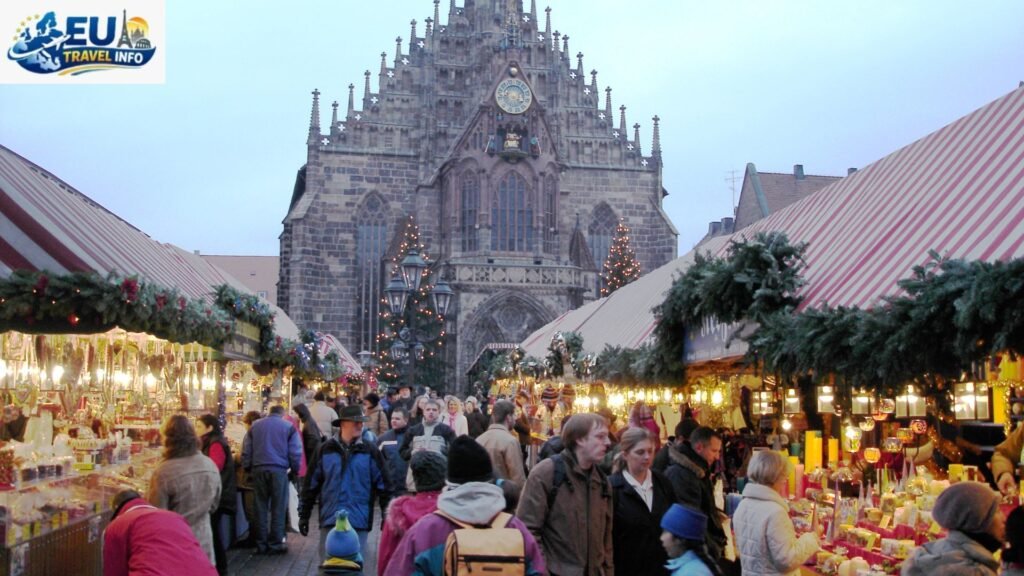
Later in November, the magic returns. The best time to visit germany for christmas markets starts at the end of November. Most markets run until December 23 or 24. You can walk through squares filled with the smell of roasting sausages and spiced wine. Strasbourg is often called the “Capital of Christmas,” and it is only a short hop from the German border. Similarly, Vienna and Salzburg have some of the most beautiful markets in the world.
First of all, for skiers, the season traditionally starts in late November and goes until late April. Resorts like Zugspitze in Germany or St. Anton in Austria offer amazing snow. Switzerland has some of the biggest and most diverse ski resorts, like Zermatt, where you can actually ski year-round on the glacier. On top of that, skiing in Switzerland is about 20% more expensive than in Austria.
Understanding the Costs for 2026

Therefore, you need to plan your budget carefully. Switzerland will always be the heavy hitter for your wallet. A mid-range traveler can expect to spend about $150 per day on a hotel there. On the contrary, in Austria, that same level of comfort might only cost you $90 per day.
Additionally, transportation costs can add up. If you rent a car, expect to pay about $60 per day. Gas is cheaper in Austria at about $1.70 per liter, while in Switzerland it is about $2.05 per liter. Plus, you must buy a “vignette” (a toll sticker) to drive on the highways.
- Austria: 9.50 EUR for 10 days.
- Switzerland: 38 EUR for a whole year (this is the only option).
Gradually, you might find that the train is a better choice. Switzerland has a legendary railway system with panoramic trains that offer stunning views. Also, you can buy a Swiss Travel Pass which gives you unlimited rides and discounts on many activities.
Scenic Routes for Your 10 to 14-Day Trip
Later, you will want to decide where to go. A classic 10-day itinerary could start in Zurich and head to Lucerne. You can visit the Jungfraujoch, which is known as the “Top of Europe” at 11,000 feet. Gradually, you move to Innsbruck and Salzburg in Austria. Finally, you end your trip in Munich to see the Marienplatz and the nearby Neuschwanstein Castle.
Similarly, a 14-day grand circuit allows you to see even more. You can visit the Dolomites in Italy or head to Hallstatt in Austria. Though Hallstatt is very crowded, its lakeside beauty is undeniable. Additionally, you can drive the Grossglockner High Alpine Road in Austria, but it does have an extra toll of 35 EUR.
Important Travel Tips for Mature Travelers
First of all, do not rush. The Alps are not a place for a race. Mountain roads are narrow and winding, so a short drive can take much longer than you think. Therefore, plan for extra time between stops. On top of that, many towns are very walkable, so bring comfortable shoes for the cobblestones.
Gradually, you should also think about your data. I recommend getting an e-SIM before you land so you stay connected without high roaming fees. Also, keep some cash on you. While cards are widely accepted, small stalls at Christmas markets or mountain huts often prefer cash.
Finally, remember that the weather in the mountains can change in a heartbeat. Though it might be sunny in the valley, it can be freezing on the peak. Therefore, dress in layers. Additionally, if you travel in the winter, make sure your rental car has winter tires or snow chains.
The mountains. The history. The food. Germany, Switzerland, and Austria are waiting for you in 2026. Whether you choose the blooming spring or the festive winter, you are going to have an unforgettable time.
FAQ
Which month is best to visit Switzerland and Austria?
September is often cited as the best month because the weather is mild, the summer crowds have left, and the hiking trails are in peak condition.
What is the best month to visit Austria?
May, June, and September are ideal for nature and mild weather, while December is the best for experiencing the famous Austrian Christmas markets.
Which is more beautiful, Germany or Austria?
This depends on what you love. Switzerland is often considered to have more breathtaking nature and higher peaks, while Austria is famous for its charming cities and rich musical history.
What is the best time to visit Germany and Austria?
The period from April to October offers the best weather for sightseeing and outdoor life, though late November through December is best for holiday traditions.
Concluding Words
The Best Time To Visit Germany Switzerland And Austria depends on your personal travel goals for 2026. If you want warm weather and hiking, aim for July or August, but be prepared for crowds. For a mix of good weather and lower prices, the shoulder seasons of May, June, and September are your best bet. If you love the holiday spirit, late November and December offer a magical experience with world-class Christmas markets. No matter when you go, these three countries offer a rich blend of nature and culture that will leave you breathless.