You are likely dreaming of a place where emerald rivers flow past snow-capped peaks and medieval castles sit on high cliffs. Slovenia is that fairytale come to life. You want to know the Best Time to Visit Slovenia so your 2026 trip is perfect. I have spent a lot of time looking at how this small but vertical country changes with the seasons. You should know that the best month for you depends on whether you want to hike the high Alps, swim in the sea, or see the autumn colors.
The Golden Rule of Slovenian Travel
The most important thing to remember is that altitude changes everything. Slovenia is small, but it has three different climates. You will find a sub-Mediterranean feel on the coast, an alpine climate in the mountains, and a continental climate in the flat lands. You could wear a light shirt on the coast in Piran and see snow on the peaks of the Julian Alps in the same week. Therefore, you must pick your main goal first. Do you want waterfalls? Go in the spring. Do you want high mountain treks? Wait for the summer.
Spring Awakening: March to May
 Spring is the time when the valleys turn a bright, lush green. This is the best time to visit slovenia if you love waterfalls and gorges.
March is a mix. The lowlands wake up, but the Alps are still deep in winter. It is a great month for walks in the city and valleys. April is a bit more unstable. You might wonder, is april a good time to visit slovenia? It is if you enjoy quiet trails and “hike plus culture” trips. The weather in slovenia in april brings greener valleys and very strong water flows in places like the Vintgar Gorge. However, you must be careful because the weather is not always stable. You should expect some rain.
May is often called one of the best calm months. The weather in slovenia in may is much more stable than in April. Daytime temperatures in the cities usually climb to about 20°C to 22°C (68°F to 72°F). This is a sweet month for mid-elevation hikes. Plus, the crowds are still light. You can see the tulips at the Arboretum Volčji Potok or enjoy a quiet coffee by the river in Ljubljana.
Summer Bliss: June to August
If you want the full alpine experience, summer is your window. This is when the mountain huts in the high Alps finally open.
June is the transition month. Early June can still have snow on high passes. However, late June is a great balance. The days are long and the summer freshness is everywhere. The temperatures on the coast start to reach a toasty 27°C (81°F). Many people look for the best time to visit slovenia reddit threads, and they often suggest late June to avoid the massive July crowds.
July and August are the peak months. The weather is warm and stable, with temperatures reaching 26°C to 28°C (79°F to 82°F) on average.
- July is the easiest for planning because every hut and trail is open.
- August is the busiest. You will see many people at Lake Bled and in the Soča Valley.
- Note: You should start your days early. Heat builds up fast, and afternoon storms are common in the mountains.
On top of that, the water in lakes like Bled and Bohinj is perfect for a swim. You might also enjoy the Ljubljana Summer Festival or the Bled Days fireworks in July.
Autumn Splendor: September and October
Many travelers believe that September is the most “hikeable” month. The weather in slovenia in september is often perfect. You get clear air, cooler days, and fewer people on the trails.
The slovenia temperature by month data shows that September stays around 12°C to 22°C (54°F to 72°F). This makes it a great time for a road trip or for photography. If you are also planning a trip to the neighboring coast, late August to early September is often the best time to visit slovenia and croatia together. The sea is still warm, but the heavy summer heat is gone.
October brings the “golden season.” The forest leaves change color, and the wine harvest begins. You can attend the Cow Ball in Bohinj on the third Sunday of September to see decorated cows return from the high pastures. Additionally, the Old Vine Festival in Maribor celebrates the wine tradition in late September. Just keep in mind that many high mountain huts start to close by mid-October.
Winter Magic: November to February

Winter is for two types of people: those who love cozy cities and those who love snow sports.
November is often the grayest month. It can be foggy and damp in the lowlands. However, this is the cheapest time to visit slovenia if you want to save money on hotels and enjoy a spa or a “workation” in the city.
December brings the festive spirit. The Christmas markets in Ljubljana and Bled are full of lights and food stalls. You can even see a live nativity scene inside the Postojna Caves.
January and February are the coldest months. These are the best months for skiing at resorts like Kranjska Gora or Vogel. In February, you can see the Kurentovanje carnival in Ptuj. People wear giant sheepskin costumes to scare away winter.
A Quick Look at the Temperature and Rain
To help you plan, here is a simple look at the slovenia temperature by month and the rainfall you might expect in the central areas:
| Month | Temp Low/High | Rain Likelihood |
| January | -2 to 4°C | Low (80 mm) |
| April | 6 to 17°C | Moderate (110 mm) |
| May | 11 to 22°C | Moderate (120 mm) |
| July | 16 to 28°C | Moderate (120 mm) |
| September | 12 to 22°C | Heavy (150 mm) |
| November | 4 to 10°C | Heavy (135 mm) |
Vital Tips for 2026 Travelers
- Winter Tires: If you drive between November 15 and March 15, your car must have winter equipment. This means four winter tires with at least 3 mm of tread or summer tires with chains in the trunk.
- Hut Bookings: If you plan to hike from hut to hut in July or August, you should book your beds weeks or even months in advance.
- The Soča River: If you want to go rafting, the river is open for paddling from March 26 to October 31.
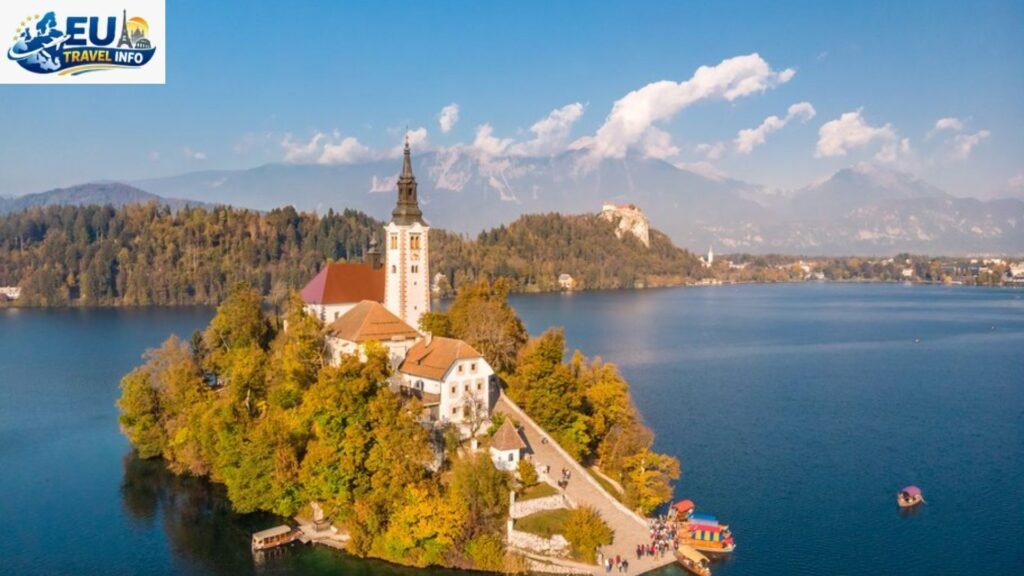
- Lake Bled: A walk around the entire lake is about 6 km (4 miles). It takes roughly 90 minutes. You must try the famous Bled Cream Cake while you are there.
Slovenia is a country that rewards those who plan around the weather. You will find that the people are friendly and the scenery is unlike anywhere else in Europe. Whether you are standing on the 99 steps of the church on Bled Island or watching the sunrise from Mala Osojnica, you will feel the magic.
FAQ
Is Slovenia cheap or expensive?
Slovenia is generally mid-range. It is more affordable than Switzerland or Austria but can be more expensive than some other parts of Eastern Europe. You can find luxury hotels like the Grand Hotel Toplice or save money by traveling in the off-season from November to March.
Is Slovenia warmer than Croatia?
Generally, no. Croatia has a much longer coastline with a Mediterranean climate. Slovenia’s coast is small, and much of the country is covered by high mountains that stay cool or cold.
Is 3 days enough to see Slovenia?
You can see the main highlights like Ljubljana and Lake Bled in three days. However, a full 10-day loop is recommended if you want to see the Alps, the Soča Valley, and the coast without rushing.
How cold is Slovenia in October?
It is crisp and cool. Daytime highs are around 16°C (61°F), but nights can drop to 4°C to 7°C (39°F to 45°F). You should pack layers.
Concluding Words
The Best Time to Visit Slovenia depends on your passion, but May, June, and September offer the most balanced weather and fewer crowds. You can enjoy green valleys in the spring, high alpine trails in the summer, or golden vineyards in the autumn. Your 2026 trip will be a success if you respect the mountain weather and plan your activities according to the altitude.