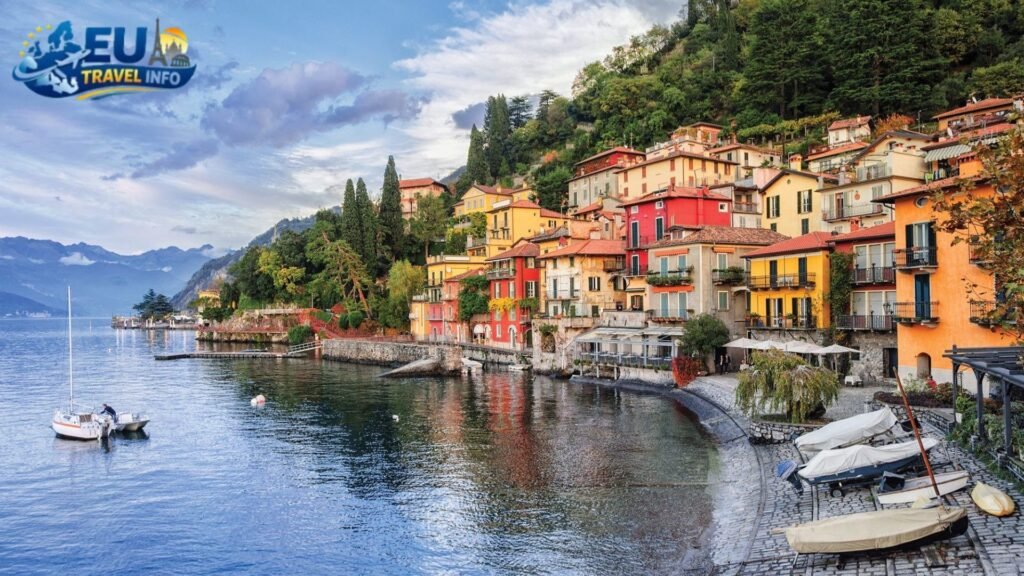
You are ready for the trip of a lifetime. Imagine the wind in your hair as you cross the border from the rolling hills of Bavaria into the jagged, snow-capped peaks of the Austrian Alps. Think about the taste of creamy Swiss chocolate melting on your tongue while you gaze at a turquoise lake. This Germany Austria and Switzerland Itinerary 12 Days plan is exactly what you need to make those dreams real in 2026.
Europe is a place of deep history and surprising regional diversity. You do not want to rush through these countries. You want to savor them. This guide focuses on a balanced pace. It is perfect for mature travelers who love culture, comfort, and breathtaking views.
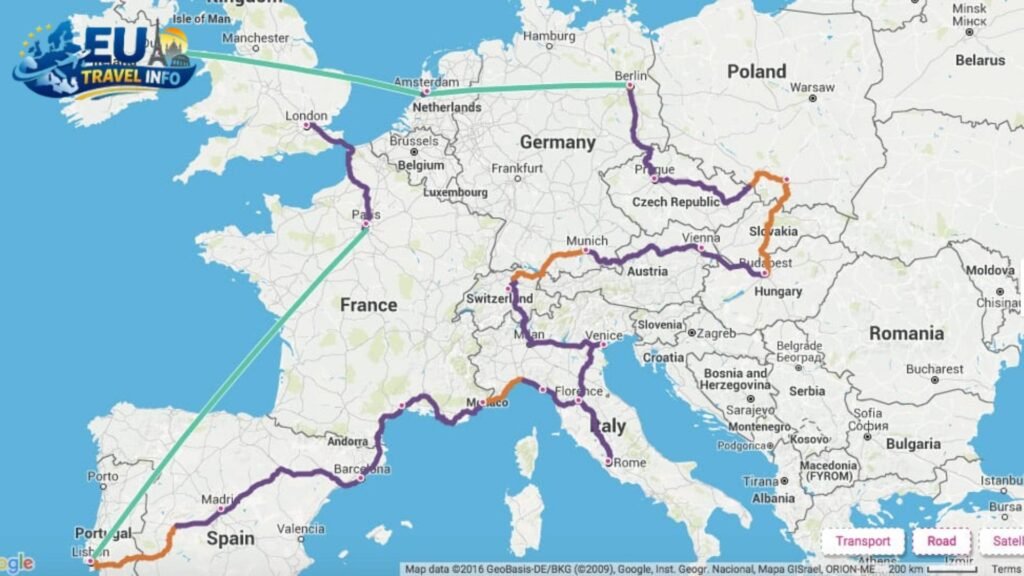
First of all, let us talk about the logistics. You will start your adventure in Munich, the capital of Bavaria, and end in Zurich, the financial heart of Switzerland. Along the way, you will cross borders that are almost invisible because of the Schengen Agreement. Though you are visiting three different countries, you will find they share a common thread of Alpine beauty.
Why This 12-Day Trio is Perfect
You might wonder why you should combine these three specific nations. They are close. They literally share borders. Germany borders Switzerland and Austria to the south, while Austria sits to the east of Switzerland. Additionally, they share a common language. German is the sole official language of Austria and one of the four official languages in Switzerland. You can learn a few basic phrases and use them throughout your entire austria and switzerland itinerary 12 days journey.
Versatility is another major plus. You get lakes, waterfalls, and mountains. You get storybook castles and world-class museums. Plus, the food! Hearty German sausages, delicate Austrian schnitzel, and rich Swiss fondue.
Getting Around: Car or Train?
How you move depends on your style. A rental car offers the most freedom. You can set your own schedule and take shortcuts through mountain passes. The roads are well-maintained and easy to navigate. However, you must remember the costs. Gas in Europe is often 3 to 4 times more expensive than in the United States. Additionally, you must purchase a Vignette sticker for your windshield to drive on highways in Austria (less than 20 EUR) and Switzerland (about 40-45 USD).
The train system is the other fantastic option. It is fast, clean, and efficient. Train stations are usually right in the center of town. You do not have the hassle of driving in a foreign country. Though it requires more planning around schedules, it is a very relaxing way to see the scenery.
Day 1: Welcome to Munich
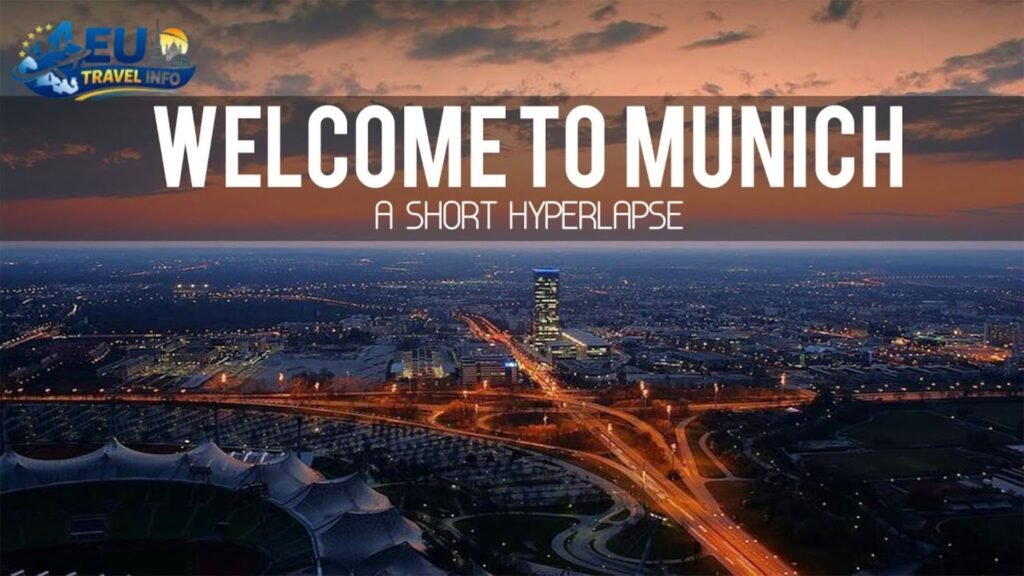
Your journey begins in Munich. This city is the political and cultural capital of Bavaria. If you arrive early, you can store your bags at your hotel and start exploring.
First of all, head to Marienplatz. This square has served as the main center of the city for almost 900 years. At 11:00 am or 12:00 pm, you can watch the Glockenspiel. Life-size figurines perform a dance high atop the New Town Hall. It is a 15-minute show that reenacts bits of the city’s history.
Later, you might want a bit of nature. The English Garden is one of the largest urban parks in the world—even larger than Central Park in New York. You can watch people surf on the Eisbachwelle, a permanent wave in the river. It is a wild sight in the middle of a big city.
Finally, end your day with an authentic Bavarian dinner. The Hofbräuhaus is a historic 16th-century beer hall that you simply must visit. Enjoy some local specialties and soak in the lively atmosphere.
Day 2: The Royal History of Munich
After a hearty breakfast, meet a local guide for a deeper look at the city. You should visit Peterskirche (St. Peter’s Church), which is the oldest church in Munich. If you are feeling active, climb the tower for a bird’s eye view of the city.
Next, walk over to the Viktualienmarkt. This is a massive open-air food market in the heart of town. You will find fresh local produce and traditional Bavarian delicacies. It is a perfect spot for a casual lunch.
In the afternoon, you should visit Schloss Nymphenburg. This was the former summer residence of the Wittelsbach family. It is one of the most beautiful palaces in all of Europe. The elaborately carved halls and expansive gardens add an air of pure elegance to your day.
Day 3: A Fairytale Escape to Neuschwanstein
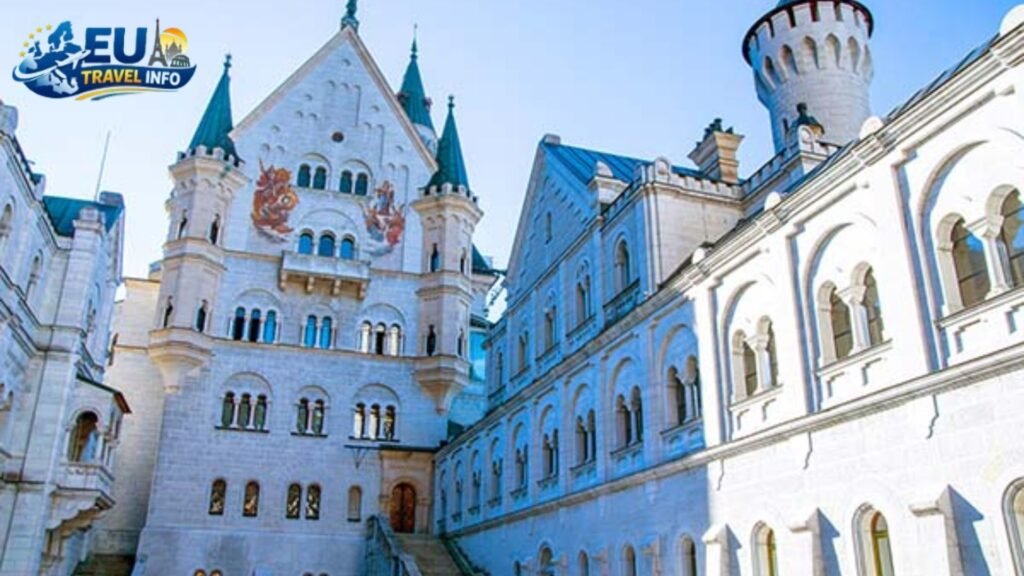
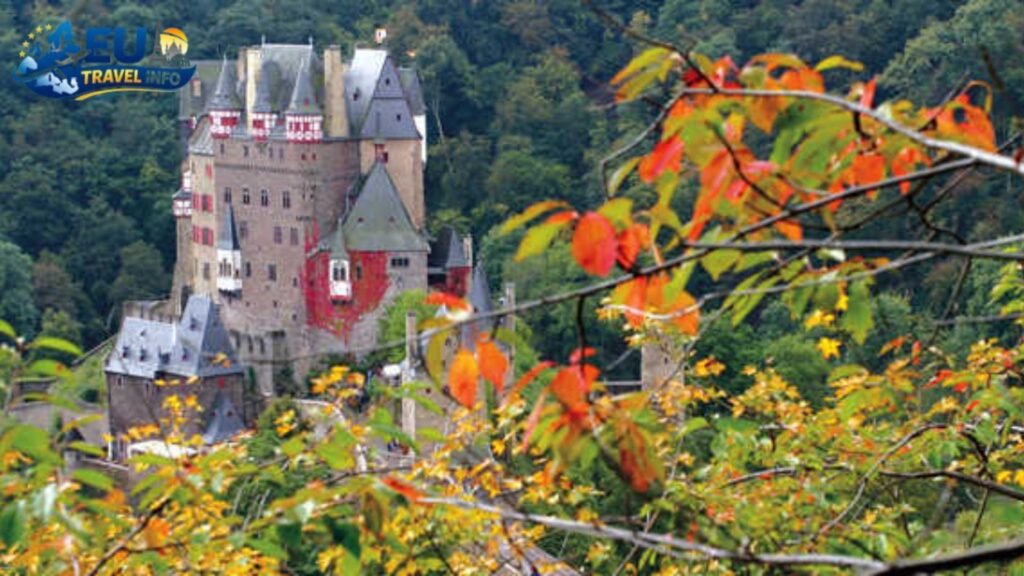
Today, you will travel south into the Bavarian Alps. The goal is Neuschwanstein Castle. This stunning structure was the inspiration for Walt Disney when he designed the castle for Cinderella.
King Ludwig II built this dream castle in the seclusion of the mountains. It features a mix of Gothic, Romanesque, and Byzantine architecture. You will likely have to walk about 25 minutes uphill on a steep incline to view it, so wear good shoes. For the best photo, head to the Marienbrücke Bridge which hangs high above a gorge.
Afterward, visit the nearby town of Oberammergau. This lovely village is famous for its Passion Play, which the locals perform once every 10 years. The town is also known for its beautiful flower boxes and woodcarvings. Return to Munich in time for a group dinner at a local restaurant.
Day 4: Remembering the Past
A germany austria switzerland itinerary 10 days or 12 days plan often includes a mix of beauty and history. This morning, you will travel north to Dachau. This was one of the first concentration camps established by the Nazi regime.
It is a somber occasion. The tour offers deep insights into a turbulent past. You can watch an orientation video and explore the cells and barracks. This visit is a powerful reminder of the journey Germany has taken since that time.
Return to Munich for a free afternoon. You might want to visit the Deutsches Museum, the largest museum of science and technology in the world. Or, if you love cars, BMW World is a must-see. This is your last day in Bavaria, so make it count!
Day 5: Journey to Salzburg via “Eagle’s Nest”
It is time to leave Germany and head toward Austria. The drive along the German Alpine Road offers spectacular views. You will stop in Berchtesgaden to visit the Eagle’s Nest.
This mountain summit retreat was originally a teahouse for Adolf Hitler’s 50th birthday. You will board a special bus to reach the top. The views from the summit are nothing short of incredible. After lunch at the top, you will cross the border into Austria.
You will soon arrive in Salzburg, a city that is truly “alive with the sound of music”. This historic area is an official UNESCO World Heritage Site. Check into your hotel and enjoy a dinner featuring regional specialties and local Austrian wines.
Day 6: The Melodies of Salzburg
Salzburg is the birthplace of Wolfgang Amadeus Mozart. You will find his childhood home on Getreidegasse street. It is a dashing yellow building that is hard to miss.
During your city tour, you will visit locations from the film The Sound of Music. You can walk through the Mirabell Gardens, where the song “Do-Re-Mi” was filmed. You might even feel like singing along!
Later, travel to the shores of Lake Mondsee. You can see the famous church where Maria and Captain Von Trapp were filmed getting married. For your final evening in the city, consider a Mozart Dinner Concert. You can listen to live music in a restored hall while you eat.
Day 7: Innsbruck and the Swiss Border
From Salzburg, you will travel to the beautiful town of Innsbruck. This city hosted the Winter Olympics in 1964 and 1976. It sits in a broad valley surrounded by high mountains.
Take a walking tour of the Old Town. You must see the Golden Roof (Goldenes Dachl). It is covered in over 2,600 gilded copper tiles. Also, pass the Hofburg, a former Habsburg palace that is one of the most important cultural sites in Austria.
After lunch, you will continue your drive southwest. You will cross into Switzerland. Your destination is St. Moritz, a luxury resort town in the Swiss Alps. This area is famous for world-class skiing and stunning landscapes.
Day 8: Relaxing in St. Moritz
Today is completely free for you to enjoy the Engadine Valley. You might choose to unwind at your hotel or take a leisurely walk around Lake St. Moritz. It is a picture-perfect backdrop for photos.
If you are feeling adventurous, you can visit the Olympia Bob Run. You might even see a bobsleigh competition in the afternoon. For art lovers, the Segantini Museum houses a significant collection of works by artist Giovanni Segantini.
In the evening, stroll along the Via Serlas. This street is lined with luxury boutiques and gourmet restaurants. It is the perfect place to treat yourself to a fine Swiss meal with a mountain view.
Day 9: The Smallest Nation and a Childhood Classic
You will head north toward Lucerne today. Along the way, stop in Maienfeld. This is the setting for the classic Heidi books by Johanna Spyri. You can see a collection of mountain houses and even an authentic Heidi House.
Next, you will visit Vaduz, the capital of Liechtenstein. This is a tiny principality—the sixth-smallest nation in the world with only about 40,000 people. You can see Vaduz Castle perched on a hill above the town.
Gradually, you will make your way to Lucerne, nestled on the shores of Lake Lucerne. It is one of the prettiest towns in Switzerland. In the evening, you should attend a Swiss Folklore Show. You will experience yodeling, folk music, and even alphorn blowing while you eat traditional food.
Day 10: The Heights of Mount Pilatus
Lucerne is famous for its medieval architecture. You will definitely cross the Chapel Bridge (Kapellbrücke). This covered wooden footbridge dates back to the 14th century and is a symbol of the town.
The highlight of the day is a trip up Mount Pilatus. You will take the world’s steepest cog railway to reach the top, which has a gradient of 48%. At the summit, you are 7,000 feet above sea level. The views of the surrounding mountains and lakes are extraordinary.
You will return to civilization via a large aerial tramway and a modern gondola. On top of that, you will enjoy a 90-minute boat ride on the vast lake. It is a day filled with different perspectives of the Swiss landscape.
Day 11: Final Stop in Zurich
Your final destination is Zurich, the largest city in Switzerland. It is a vibrant blend of historical charm and modern luxury. You will enjoy a guided tour of the city’s best spots.
You must walk along Bahnhofstrasse. This is one of the most luxurious shopping destinations in the entire world! Also, visit the Fraumünster church. It features five stunning stained glass windows designed by the artist Marc Chagall.
The tour will finish at the Lindt Chocolate Factory shop. This is the perfect place to buy last-minute souvenirs for your friends and family back home. In the evening, enjoy a farewell dinner with your fellow travelers and recount your many adventures.
Day 12: Farewell to the Alps
After one last Swiss breakfast, your group will transfer to Zurich Airport. How many hours from Germany to Switzerland did it take to get here? By the end of this trip, you will have covered hundreds of miles of beautiful terrain.
If you had more time, you could even try a germany switzerland austria itinerary 14 days version that includes Vienna or the Black Forest. But for now, you are going home with a camera full of photos and a heart full of memories.
Practical Tips for Your 2026 Journey
When you plan this trip, you should keep a few things in mind. Distance Germany to Switzerland is about 350 kilometers (217 miles) if you go from Munich to Zurich. You should budget for about 4 hours of bus time daily if you are on a group tour.
Currency is also important. Germany and Austria use the Euro. However, Switzerland uses the Swiss franc (CHF). You should carry some cash for small purchases, as independent vendors or market stalls might not accept cards.
Regarding the weather, the shoulder season is often the best time to visit. March through April and September through November offer lower rates and fewer crowds. Summer is beautiful but can get quite hot, and many historic hotels do not have air conditioning.
Gradually, you will find that the people here value punctuality. Trains and buses almost always run on time. If you are meeting a guide, be sure to arrive a few minutes early. It is a sign of respect for their time and culture.
Finally, let us talk about the mountains. You will be traveling through high-altitude regions. Even in summer, the mountains can be chilly. In higher villages, the average temperature is between 15°C and 20°C (59°F to 68°F). You should pack a warm jumper and a waterproof jacket to be safe.
A Look at the Stats
This region is full of impressive numbers. Here are a few to remember:
- Piz Bernina is the highest peak in the Eastern Alps at 4,049 meters.
- The Gotthard Base Tunnel is the longest in the world at 57 kilometers.
- The distance Germany to Switzerland via a direct drive from Munich to Zurich is approximately 350 km.
- How many hours from Germany to Austria? It is only about a 2-hour train ride from Munich to Salzburg.
- The Swiss Travel Pass is a great investment for tourists, as it covers trains, buses, and boats.
- Trümmelbach Falls in Switzerland move 20,000 liters of water per second.
You have now seen how much there is to do. Whether you are walking through the cobblestone alleys of Munich or riding a cog railway in the Swiss Alps, every moment is an adventure.
Frequently Asked Question
Which currency should I bring for this trip?
You will need Euros for Germany and Austria. You will need Swiss francs for Switzerland and Liechtenstein. Most places accept credit cards, but cash is good for small shops.
Do I need a special visa to cross these borders?
If you are from the United States, Canada, or the United Kingdom, you do not need a visa for short-term travel under 90 days. However, beginning in 2026, you must register for an ETIAS travel authorization before you arrive in Europe.
Is the tap water safe to drink?
Yes, the water is safe and of excellent quality in all three countries. You should pack a reusable water bottle to save money and reduce waste.
What is the minimum age to rent a car?
The minimum age to hire a car is 19. If you are under 25, you might have to pay a small extra fee or be restricted to smaller car models.
How much should I tip at restaurants?
Tipping is not mandatory but is welcomed for good service. Locals often add around 10% or simply round up their bill to the nearest whole number.
What should I wear for visiting churches?
It is respectful to cover your legs and shoulders when entering religious sites. Some churches may deny entry if you are wearing very revealing clothing.
Can I use my mobile phone in all three countries?
Coverage is generally excellent. You should check with your provider about roaming charges before you leave home.
Is there a lot of walking on this itinerary?
Yes, you should be prepared to walk 2 to 3 miles per day. Many old towns have cobblestone streets which can be uneven or slick when wet.
Concluding Words
This Germany Austria and Switzerland Itinerary 12 Days Guide 2026 provides a perfect mix of city culture and natural beauty. You start in the lively beer halls of Munich, move through the musical streets of Salzburg, and finish in the majestic Swiss Alps and Zurich.
You will see fairytale castles, ride the world’s steepest cog railway, and taste the world’s best chocolate. This trip is designed for a steady pace that allows you to truly experience the heart of Europe. Pack your bags and get ready for an unforgettable 12-day journey through three of the most beautiful countries in the world.