A trip to the old world fills your heart with joy. You look at your suitcase. You check your passport. One big question sits in your mind. How long is a flight from New York to Europe? This is the start of your adventure. You want to know the time. You want to plan your sleep. You need to know the numbers.
A flight across the Atlantic Ocean is a rite of passage for every traveler. You leave the bright lights of the Big City. You head toward the history of London or the charm of Paris. On average, you will spend 7 to 9 hours in the air for a direct route. This time changes based on where exactly you land. Europe is a massive place. A flight to Ireland is much faster than a flight to Greece.
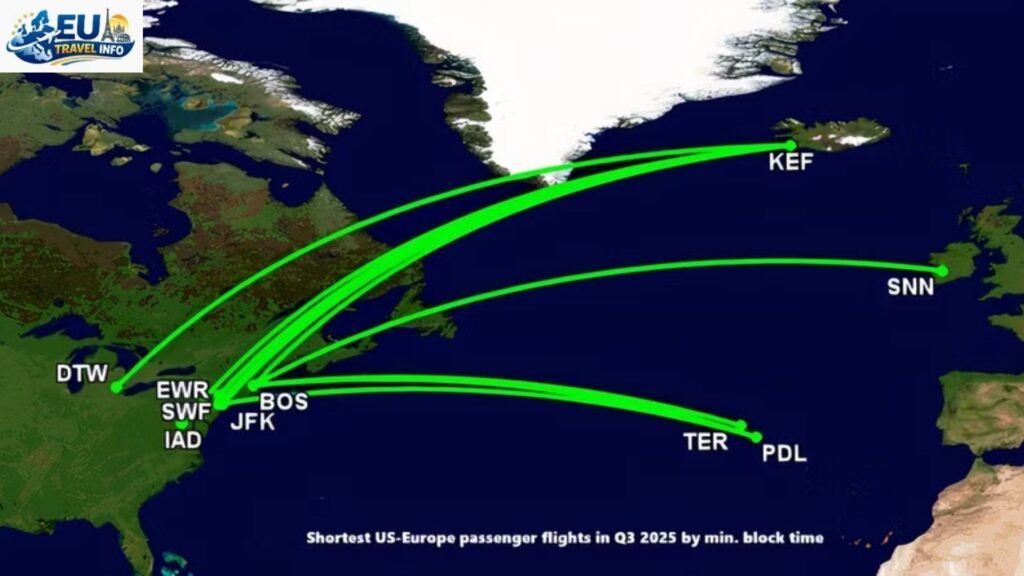
First of all, you must think about the shortest flight from New York to Europe. This usually means a trip to Ireland or the United Kingdom. You can reach London Heathrow in about 7 hours and 11 minutes on average. Some flights are even faster. You might find yourself on the ground in just under 7 hours if the winds are good.
The Geography of Your Journey

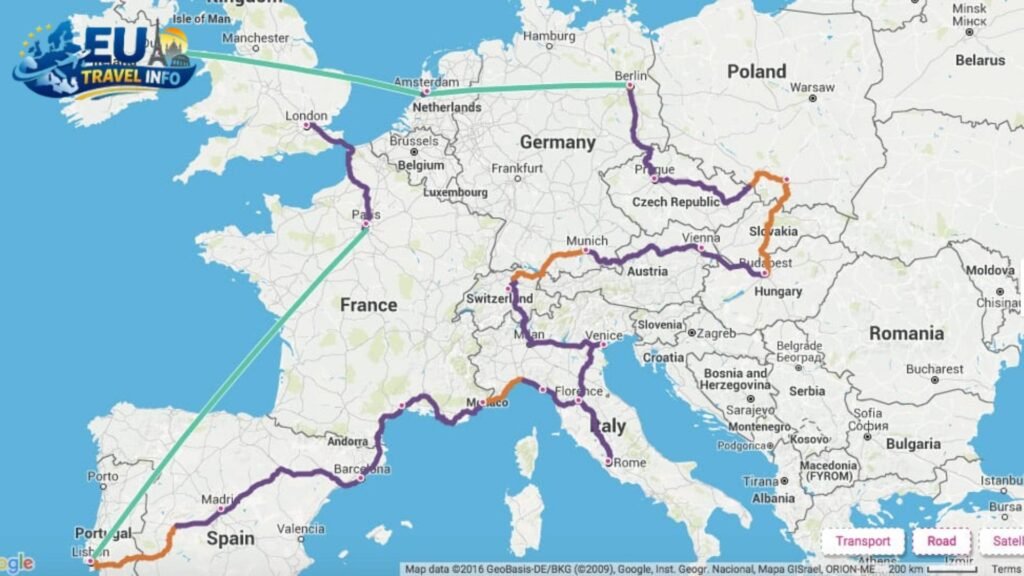
The europe map is broad and diverse. You cannot treat every city the same way. Therefore, you should break the continent down into parts. Western Europe is your closest neighbor. Cities like London, Paris, and Amsterdam are the primary gates. You will likely spend 7 to 8 hours reaching these hubs.
Later, you might look toward Central Europe. This includes places like Switzerland or Austria. How long is the flight to Germany from New York? This is a common question for many. You will usually be in the air for 8 to 9 hours to reach Frankfurt or Munich. If you want to know how many hours flight from New York to Berlin Germany, expect a similar duration. The distance is roughly 4,000 miles.
Southern Europe is another story. You might want the sun of Italy or the music of Spain. Flights to Rome, Madrid, or Lisbon also take about 8 to 9 hours. On top of that, Eastern Europe requires the most time. A trip to Warsaw or Bucharest can take 9 to 10 hours if you fly direct.
The Mystery of the Winds
You might notice something strange. Your flight to Europe is faster than your flight back home. This is not a mistake. It is a fact of nature. The Earth rotates. The winds blow. In the northern hemisphere, the jet stream moves from west to east.
This powerful river of air pushes your plane. It acts like a giant hand. You travel faster. You save fuel. Returning to New York, the plane must fight these winds. It is a struggle against the air. Because of this, the trip home is often 45 minutes to an hour longer.
Similarly, climate patterns like the North Atlantic Oscillation can change your travel time. During a “+NAO” phase, the jet stream is even stronger. This can add or subtract precious minutes from your journey. Scientists found that these wind changes can add about 4 to 9 minutes to a round trip. It sounds small. Plus, it adds up for the airlines.
Comparing the Coasts
You live in New York, so you have the best seat in the house for European travel. However, you might wonder about your friends in other states. How long is the flight to Europe from California? It is a long haul. A traveler from San Francisco or Los Angeles will spend 10 to 12 hours or more in the sky. They must cross the entire United States before they even see the ocean.
Similarly, consider the south. How long is a flight to Europe from Florida? You can expect a journey of about 8 to 10 hours depending on the city. How long is a flight to Europe from Texas? From Dallas or Houston, the flight is often 9 to 11 hours. New York remains the champion of speed. You are closer to the destination. You spend less time in a seat.
The Legends of Speed
You live in an age of steady travel. However, the past had more speed. The Concorde was a king of the skies. This supersonic plane could cross the ocean in half the time. On February 7, 1996, a British Airways Concorde set a record. It flew from New York to London in 2 hours, 52 minutes, and 59 seconds.
It flew at twice the speed of sound. It cruised at 60,000 feet. You could see the curve of the Earth. You could arrive in London before you left New York in local time. Sadly, the Concorde retired in 2003. High costs and noise problems ended the dream.
Even subsonic planes have their days of glory. In February 2020, a Boeing 747 reached London in just 4 hours and 56 minutes. A massive storm called Ciara pushed it along. The plane reached a ground speed of 825 miles per hour. It did not break the sound barrier. The air around it was simply moving very fast.
The “Atlantic Bridge” and Other Routes

Modern jets fly direct. They have the range. They have the power. In the old days, planes had to stop. They used the Atlantic Bridge. This route went from Newfoundland to Iceland, then to Scotland. It was a vital path during the Second World War.
Today, smaller private planes still use this bridge. Ferry pilots use it to deliver light aircraft. Even some airlines like Icelandair use this model. They offer you a free stopover in Iceland. It is a great way to see two countries for the price of one. You can break up the 7-hour flight with a dip in a hot spring.
Additionally, pilots follow the North Atlantic Tracks. These are like highways in the sky. Since there is no radar in the middle of the ocean, planes must stay in their lanes. These tracks move every day. Controllers look at the winds. They build the best path. Your pilot chooses the track that saves the most time.
Choosing Your Airport
New York gives you many choices. You have John F. Kennedy (JFK). You have Newark Liberty (EWR). You even have LaGuardia for some connecting flights. JFK is the main gate for international travel. It has six terminals. It is a city of its own.
Newark is also a strong choice. It is often less crowded than JFK. French Bee flies from Newark to Paris Orly. It is often the cheapest way to get across. Stewart International is another option. It is small. It is quiet. Sometimes it has seasonal flights to Europe.
Gradually, you will find the airport that fits your style. JFK offers the most airlines. You can fly with Delta, British Airways, or Lufthansa. Newark offers a quick train ride into the city. Regardless of the choice, you should arrive early. Security lines can be long.
The Cost of Time
You want a deal. Everyone wants a deal. The price of your flight changes like the weather. March is often the cheapest month to fly to London. You can find one-way tickets for as low as $185.
February is also a good time for savings. On the contrary, July and August are the most expensive. The weather is warm. The tourists are everywhere. If you want the best price, book about 40 days in advance. Do not wait until the last minute. The prices will rise.
Life on the Long-Haul
Seven hours is a long time to sit. You must prepare. You must have a plan. First of all, wear layers. The plane can be cold. The airport can be hot. Take off your shoes if it helps you relax.
Watching movies is a classic way to kill time. Most airlines offer free entertainment on these routes. You can catch up on the latest hits. You can watch a documentary about your destination. Additionally, try to sleep. A few hours of rest will help you fight jet lag.
Eating is another event. You get a meal on most long flights. It is a chance to sit peacefully. Review your English or learn a few words of French. You will feel better when you land. You will be ready for the immigration windows.
The Arrival Experience
Finally, the wheels touch the ground. You are in Europe. The time difference is the next challenge. Western Europe is 5 to 6 hours ahead of New York. If you leave at night, you will land in the morning.
You will face the immigration control. It can be a long wait. Later, you must find your way to the city. In London, you can take the Heathrow Express. In Paris, you can take a taxi or the subway. The journey from the airport to downtown Manhattan is about 26 km. In Paris, it is about 9 miles.
Transitioning to Your Adventure
Your flight from New York to Europe is the bridge to a new world. It is a few hours of waiting for a lifetime of memories. You now know the times. You understand the winds. You have the facts.
The New York to Germany flight will be a memory soon. The New York to Berlin Germany trip will start with a single step. You are ready to fly. You are ready to see the world. Pack your bags. Your plane is waiting.
FAQ
How long does it take to fly from Europe to New York?
A direct flight from Europe to New York usually takes between 8 and 9.5 hours. This is longer than the eastbound trip because the plane must fly against the strong jet stream winds.
How many hours is a flight from New York to Europe?
For most major cities in Western Europe, the flight is 7 to 8 hours. If you are traveling to Eastern Europe, it can take 9 to 10 hours.
How far is New York from Europe by plane?
The distance is between 3,500 and 4,000 miles. For example, the trip to London is about 3,470 miles, while the trip to Rome is about 4,300 miles.
How far is New York to Germany?
The flight distance from New York to Germany is roughly 3,800 to 4,000 miles. Most direct flights cover this distance in about 8 to 9 hours.
Concluding Words
A flight from New York to Europe is a manageable and exciting journey that typically lasts between 7 and 9 hours. While the shortest flight from New York to Europe lands in Ireland or the UK in just over 7 hours, destinations further east like Germany or Italy require a bit more time. Factors such as the jet stream make the outbound trip faster than the return, and choosing the right month, like March, can save you money. Whether you fly from JFK or Newark, your transatlantic leap is the efficient gateway to the history and culture of the European continent.