
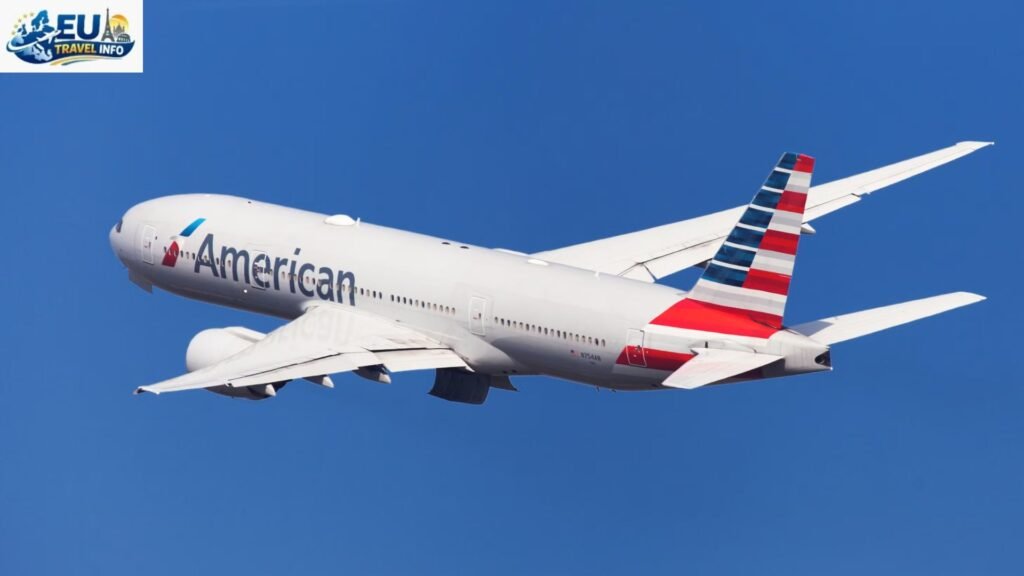
You probably look up at the night sky sometimes and see those tiny, blinking lights moving slowly across the stars. You might wonder where they are going. Most of the time, if you are on the East Coast, those planes are full of people just like you who are heading to Europe. The sky between North America and Europe is one of the busiest places in the world. I have spent a lot of time looking at the numbers behind these trips. It is truly amazing how many people cross that ocean every single day.
First of all, you should know that we are living in a record-breaking time for travel. For the first time ever, airlines are hitting a massive milestone. They plan to fly more than 600 daily passenger flights from the US to Europe. This is a huge jump. It took eight years to get from 500 flights to 600 because the pandemic slowed everything down. Now, the growth is back and it is stronger than ever.
How Many Flights From US To Europe Daily depends on the season you choose for your trip. The peak of summer is the busiest time. On June 29th and August 3rd, the number of flights will reach 601. Think about that for a second. Over six hundred planes take off from the US and land in Europe in just twenty-four hours. That is a lot of jet fuel and a lot of happy travelers.
A Look Back At How We Started
We did not always have hundreds of flights a day. At that time in 1919, nobody had ever flown across the Atlantic without stopping. Two brave British men named John Alcock and Arthur Brown changed everything. They flew a modified bomber plane from Newfoundland to Ireland. It was not a luxury trip like we have today.
They did not even have a real cabin. The cockpit was open to the wind and snow. Their heater failed, and their radio stopped working. At one point, they almost crashed into the ocean because of thick fog. “Jack” Alcock was the pilot, and “Teddie” Brown was the navigator. They even brought toy cat mascots for luck. Lucky Jim and Twinkletoes were the names of those toys.
They landed in a bog in Ireland after sixteen hours. The plane sank into the mud, but they were safe. They won a prize of ten thousand pounds for their bravery. King George V even knighted them a week later. When Charles Lindbergh landed in Paris years later, he said Alcock and Brown showed him the way. We owe our modern vacations to their courage.
The Big Players In The Sky
If you look at the tail of the plane next time you are at the airport, you will likely see a familiar logo. A few giant airlines control most of the market. United Airlines is the biggest one of all. They have about one in every six flights across the ocean. On a busy summer day, United alone has around 96 departures to Europe.
Delta Air Lines is right behind them with 93 flights. American Airlines comes in third with 66. These three companies are the kings of the Atlantic. Though they are rivals, they often work in groups called alliances. These alliances make your travel easier. They share flights and let you earn points on different airlines.
- Oneworld includes British Airways and American Airlines. They have a 37% share of the market.
- Star Alliance features United and Lufthansa. They hold about 33% of the market.
- SkyTeam has Delta and Air France. They control around 24%.
Together, these groups handle 85% of all the seats you can buy. It is a well-oiled machine. Additionally, you might see some newcomers like Norse Atlantic Airways. They use fuel-efficient planes to offer lower prices. They want to be like the old Norwegian Long Haul but with better planning.
Popular Paths Across The Pond
Not all routes are the same. Some cities have a special connection. The single busiest path is from New York JFK to London Heathrow. British Airways dominates this route. They have up to eight flights every single day just on this one path. This winter, that route alone will have nearly 2,800 flights scheduled.
The second busiest path is Newark to London Heathrow. United Airlines is the boss there with over 1,000 flights in a season. People also love to fly from New York to Paris. Air France leads that route with almost 700 departures planned this winter.
On top of that, other cities are growing fast. You can find many flights from Los Angeles, Boston, Chicago, and Miami to London. Even Dallas and Atlanta have several flights a day to major European hubs. The world feels much smaller when you can fly from Texas to London in one afternoon.
The Magic Of The North Atlantic Tracks
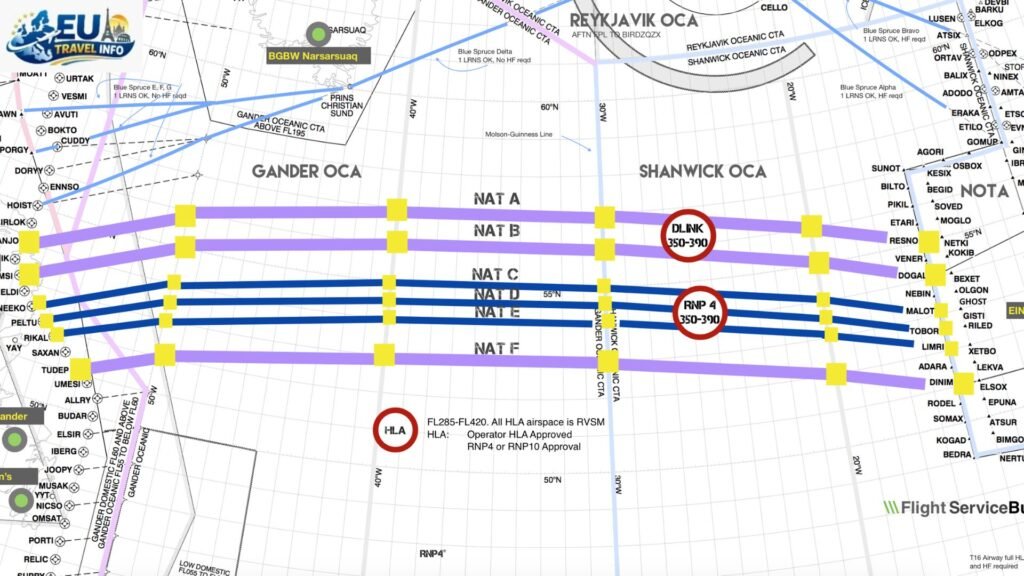
You might think pilots just fly wherever they want. On the contrary, the sky has invisible highways. These are called North Atlantic Tracks. They stretch from North America to Europe. Since there is no radar in the middle of the ocean, these tracks keep planes safe and far apart.
Controllers create these tracks twice every day. They look at the wind and the jetstream. If the wind is blowing hard toward Europe, they move the tracks to catch that tailwind. This saves fuel and gets you to your hotel faster. Eastbound flights to Europe happen mostly at night. Westbound flights back to the US happen during the day. This allows one plane to do a full circle in twenty-four hours.
In the past, planes had to stay 60 miles apart. Now, with better satellites and technology, they can fly much closer together. This increases how many planes can fit in the sky at once. Therefore, we can have 600 flights a day instead of 500.
Trends For The Future
The planes themselves are changing too. You probably remember the giant 747 with the hump on top. Those are becoming rare now. Airlines prefer smaller, more efficient planes. The Airbus A330-300 is currently the workhorse of the Atlantic. However, a new type of plane is taking over.
Narrowbody planes like the Airbus A321neo are becoming very popular. These are smaller planes with only one aisle. You might think they cannot fly that far, but they can. Their use has grown by 38% recently. They allow airlines to fly between smaller cities that do not have enough people for a giant plane. This is why you see 37 new US routes 2026 and beyond appearing on the maps.
American Airlines is waiting for the American first US A321XLR to arrive. This plane will change how we travel. It can fly very long distances while using much less fuel. You will see more American Airlines new routes to secondary European cities because of this plane. You might even see a special American 100-year livery on some of these new jets to celebrate their long history.
Airlines have to be careful, though. Sometimes demand is not as high as they hope. For example, some carriers have had to trim their schedules. You might hear that qatar airways reduced San Francisco flights to five weekly due to soft demand in some reports. This shows that even the biggest companies must adapt to how many people want to fly.
What About The Environment?
I know many of us worry about our carbon footprint. Travel is a luxury, but it has a cost to the planet. One return flight from London to New York produces about 986kg of CO2 for every passenger. That is more than the average person in some countries produces in an entire year.
The aviation industry is trying to fix this. They want to halve their emissions by 2050. They are looking at better technology and different types of fuel. Some people suggest a levy for frequent flyers to help pay for the damage. It is a tough balance. We love to see the world, but we want to keep it healthy for our grandchildren.
Tips For Your Next Trip
If you are planning a tour, keep a few things in mind. Saturday is the busiest day for transatlantic travel. If you want a quieter airport, try a different day. Also, look at the different hubs. Newark and JFK are the most common, but Boston and Philadelphia often have great options too.
Check the United Airlines Europe destinations list if you want a direct flight. They fly to more places in Europe than most other US carriers. You might wonder which two seasonal destinations does United fly to from Shannon airport. While I do not have that specific list in my current notes, United often connects Shannon to major hubs like Newark or Chicago during the summer months.
Plus, pay attention to the aircraft type when you book. A Boeing 787 Dreamliner or an Airbus A350 usually has better air pressure and humidity. This helps you feel less tired when you land. Nobody wants to start their European vacation with a massive headache.
Frequently Asked Questions
How many flights a day from the USA to Europe?
On average, there are between 355 and 435 flights in one direction every day. During the peak summer Saturdays, this number can jump to over 600 daily departures.
Are there day flights from the US to Europe?
Yes, though most flights to Europe are overnight. A few carriers like JetBlue and United offer daytime services from the East Coast to London. These usually leave in the morning and arrive in Europe late in the evening.
How many international flights per day are there in the USA?
The USA handles about 45,000 flights total every day. This includes domestic and international trips. Around 2.9 million passengers fly within or out of the country daily.
What US city has the most flights to Europe?
New York City is the clear winner. Between JFK and Newark airports, there are more flights to Europe than from any other place in the country. New York to London Heathrow is the single busiest path across the ocean.
Concluding Words
The transatlantic flight market is stronger than ever before. We are seeing a record-breaking 600 daily flights this summer. United Airlines remains the top carrier, while the route from New York to London continues to be the most popular. New, smaller planes like the A321neo are opening up more routes to different cities. While we enjoy this growth, we must also think about the environmental impact of our travels.