
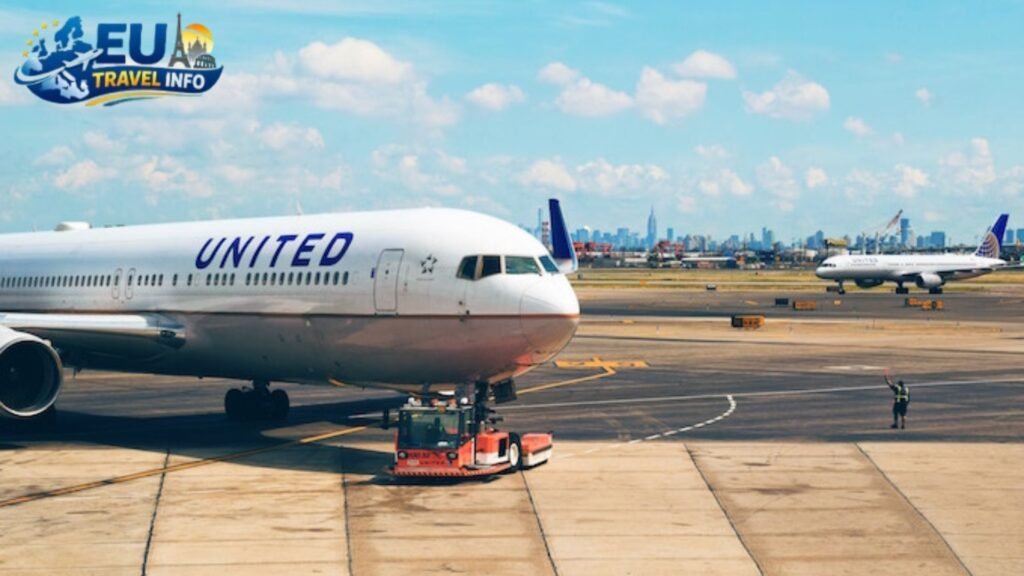
I remember the exact moment I stood in the middle of a crowded terminal at London Heathrow airport, staring at the bright red letters on the departure board. My flight to Paris was not just late; it was delayed by over four hours. I felt that familiar pit in my stomach as I thought about my missed dinner reservation and the stress of a ruined schedule.
However, a quick search on my phone changed everything. I realized that I was not just a victim of bad luck; I was a passenger with legal rights protected by powerful laws known as EU 261 and UK 261. This personal journey taught me exactly how to claim compensation for delayed flight europe so that I could turn a travel nightmare into a fair financial payout.
First of all, I must tell you that you are not alone if you feel confused by the legal jargon. A survey from 2024 showed that only 42% of European travelers actually know their rights. Additionally, statistics reveal that while millions of people qualify for money every year, only about 55% of passengers worldwide actually bother to make a claim.
They often fear the process is too hard or time-consuming. I am here to tell you that it is worth the effort. You could receive between €250 and €600 (or £220 to £520) depending on your specific situation.
Section 1: What is This Law and Why Does It Exist?

The legal name for this protection is Regulation (EC) No 261/2004. It is a rule that says your time is valuable. When an airline wastes your time through their own mistakes, they must pay you for the “loss of time”. Though the UK left the European Union, the British government kept these same protections and wrote them into a new law called UK 261. Therefore, the rules I followed during my delay are still very much alive and well today.
The goal of the law is simple. It forces airlines to take responsibility for significant disruptions to your travel plans. Plus, it makes sure that even passengers on cheap, low-cost carriers receive the same protection as those in first class.
The amount you get is fixed. It does not matter how much you paid for your ticket. Similarly, it does not matter if you used air miles or got a deal.
Section 2: Can I Claim Compensation For My Delayed Flight?
The first question you must ask is if your flight is covered by these rules. I learned that the answer depends on where you started and which airline you flew with. First of all, any flight leaving from an EU or UK airport is covered, no matter which airline is operating the plane. For example, a flight from Manchester to New York on a US airline like Delta is covered.
On the contrary, the rules for flights arriving into the EU or UK from a different part of the world are more specific. In this case, you only have protection if the airline is based in the EU or UK. If I fly from New York to London on British Airways, I am covered. However, if I take that same trip on American Airlines, the law does not apply to the arrival. Therefore, you must check the nationality of your carrier before you claim eu flight delay compensation.
Additionally, the law covers special regions that might surprise you. This list includes places like the Canary Islands, the Azores, Madeira, and French territories like Guadeloupe and Martinique. Plus, countries that are not in the EU but are part of the agreement, like Norway, Iceland, and Switzerland, also follow these rules. Knowing this territorial scope is a vital part of my how to claim compensation for delayed flight europe guide.
Section 3: The Magic Number – The Three-Hour Rule

I sat on my plane for what felt like forever, waiting for the doors to open. This is a critical detail. You are only eligible for financial money if you arrive at your final destination three hours or more later than scheduled. The clock does not stop when the plane lands on the runway. It does not stop when the plane arrives at the gate. The legal “arrival time” is the exact moment when at least one of the aircraft doors is opened to let people out.
I made sure to note down the exact time the doors opened. At that time, my delay was four hours and five minutes. This put me in the highest category for compensation. However, if the pilot had made up time in the air and we arrived only two hours and fifty-nine minutes late, I would have received nothing. Therefore, you must be very precise about your arrival time when you apply for compensation for delayed flight eu.
Section 4: How Much Money Can I Actually Get?
The amount of money you can receive is fixed based on the distance of your flight. It is not about the price of the ticket. The tiers are generally as follows:
- €250 (£220): For short flights of 1,500 km or less.
- €400 (£350): For medium flights between 1,500 km and 3,500 km.
- €600 (£520): For long-haul flights over 3,500 km that arrive more than four hours late.
There is a small nuance I found for long-haul flights. If your flight is over 3,500 km and the delay is between three and four hours, the airline can sometimes reduce the payout by 50%. In that case, you would receive €300 (£260). On top of that, these amounts are per person. When I traveled with my family of four, we were entitled to a total of £2,080. That is a significant amount of money that can pay for a future vacation!
Section 5: The “Airline Excuse” – Extraordinary Circumstances
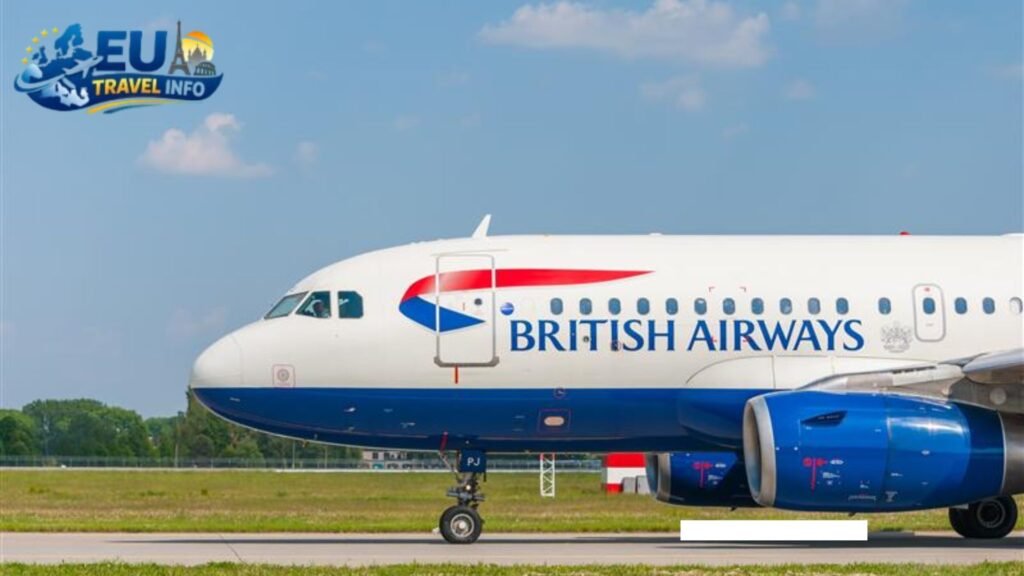
The biggest hurdle I faced was the airline claiming the delay was not their fault. They often use a phrase called “extraordinary circumstances”. If they can prove that the delay was caused by something outside of their control, they do not have to pay you. However, I learned that airlines often “abuse this argument” to avoid their responsibilities.
First of all, you should know what truly counts as an extraordinary event. These include:
- Bad weather that makes it unsafe to fly (like snowstorms or thick fog).
- Strikes by airport staff or air traffic controllers (but not the airline’s own staff).
- Security risks or political unrest.
- Bird strikes (though some courts disagree on this one).
- Medical emergencies on board the aircraft.
On the contrary, many common problems are not extraordinary. For example, technical problems with the plane are considered “inherent” to running an airline. If a part breaks or a computer system crashes, the airline is usually responsible. Similarly, if the pilot is sick or there is a shortage of cabin crew, that is an operational issue. Even strikes by the airline’s own employees (like their pilots or flight attendants) are now eligible for compensation thanks to recent court rulings.
Later, I learned about “knock-on effects”. This is when your flight is late because a previous flight arrived late. The law says the airline cannot use the delay of a previous flight as an excuse for your delay. They must have enough spare planes and crews to handle these routine issues. Therefore, do not take “no” for an answer until you check the facts yourself.
Section 6: What Happens if My Flight is Cancelled?
My guide also covers how to claim compensation for cancelled flight europe because the rules are very similar. If your flight is cancelled less than 14 days before departure, you are likely owed money. The airline must also give you a choice between three things:
- A full refund of your ticket price.
- Re-routing to your destination as soon as possible.
- Re-routing at a later date that is convenient for you.
I chose to be re-routed, but my new flight arrived six hours late. This meant I still had a right to claim compensation for the delay. Plus, if the airline cancelled my flight and did not offer me any alternative, I would have been entitled to both a refund and compensation. This is an important distinction when you are looking for how to get compensation for cancelled flight eu.
Section 7: Denied Boarding and Overbooking Nightmares
Have you ever been told that the flight is full, even though you have a ticket? This is called denied boarding due to overbooking. Airlines often sell more seats than they have because they expect some people not to show up. If everyone shows up and you are “bumped” against your will, you are entitled to immediate compensation.
The airline must also offer you a choice between a refund or a new flight. On top of that, they must provide you with assistance while you wait. I saw one passenger voluntarily give up their seat in exchange for a voucher. I chose not to do that. If you voluntarily surrender your reservation, you might lose your right to the full legal compensation. Therefore, I always suggest that you do not sign anything until you know the value of your legal rights.
Section 8: Your Right to Care – Food, Hotels, and Help
While I was waiting for my delayed flight, I realized I was hungry and thirsty. At that time, I learned about the “Right to Care”. This right is separate from financial compensation. It applies even if the delay is caused by bad weather or other extraordinary reasons.
The airline must provide you with help if your delay lasts long enough. The thresholds are:
- Two hours: For short flights (up to 1,500 km).
- Three hours: For medium flights or long EU-to-EU flights.
- Four hours: For all other long-haul flights.
Once you reach these times, the airline must give you:
- Food and drink vouchers in proportion to your wait time.
- Two free telephone calls, emails, or faxes.
- Hotel accommodation if you are forced to stay overnight.
- Transport between the airport and your hotel.
I once had to pay for my own sandwich because the airline staff were nowhere to be found. However, I kept my receipts. Later, I was able to get reimbursement for delayed flights eu by submitting those receipts to the airline. Do not buy luxury items like alcohol or expensive suites, as the airline only has to cover “reasonable” and “necessary” costs.
Section 9: The Step-by-Step Guide to Filing Your Claim
When I finally got home, I followed a specific process to claim eu flight delay compensation. I recommend you do the same to ensure success.
Step 1: Gather Your Proof
I kept my boarding pass and my booking confirmation. I also took a photo of the departure board showing the delay. Additionally, I kept the email from the airline that explained why the flight was late. This evidence is vital because it can be “your word against theirs”.
Step 2: Contact the Airline Directly
First of all, you must send a formal complaint to the airline that operated the flight. Most airlines, like British Airways or Lufthansa, have a standard online form on their website. You will need your booking reference and flight number. I clearly stated that I was claiming under EU 261/2004 (or UK 261).
Step 3: Be Patient but Persistent
The airline has a legal duty to respond, but it can take time. I waited about six weeks for a reply. Some airlines might “play hardball” and reject your claim without a good reason. If they say it was an extraordinary circumstance, ask them for proof, such as incident reports or logbook extracts.
Step 4: Escalate if Needed
If the airline ignores you or gives an unfair rejection, you have other options. You can lodge a complaint with a National Enforcement Body (NEB). This is the agency in the country where the delay happened. For example, if your delay was in Italy, you would contact ENAC. Similarly, in the UK, you would contact the Civil Aviation Authority (CAA).
Another great option is Alternative Dispute Resolution (ADR). Many airlines belong to ADR schemes that can make binding decisions. This is often faster and cheaper than going to court. Finally, if all else fails, you can take the airline to Small Claims Court.
Section 10: The Complexity of Connecting Flights
One of the most confusing parts of my experience was dealing with missed connecting flights. I learned about the “single unit” theory. This means that if you book multiple flights under one reservation (one booking reference), the law views your entire trip as one journey.
If a small delay on your first flight causes you to miss a connection, and you arrive at your final destination more than three hours late, you are entitled to compensation for the whole trip. For example, I flew from London to Dubai and then to Bangkok. A two-hour delay on the first leg caused me to miss my connection, and I arrived in Bangkok four and a half hours late. Even though the first delay was only two hours, I was still eligible for compensation because the final arrival was more than three hours late.
However, this only works if the flights were part of a single booking. If you booked separate tickets with different airlines (a “self-connection”), the first airline is not responsible for your missed second flight. Therefore, always try to book your entire itinerary under one reference number to keep your protections.
Section 11: How Long Do I Have to Act?
A very common question I hear is: how long can you claim flight delay compensation? I was surprised to find out that you can often go back several years! There is no single EU-wide time limit; instead, each country has its own rules.
Here are some common limits I found:
- 6 Years: UK (except Scotland), Ireland, and Cyprus.
- 5 Years: Spain, France, and Greece (and Scotland).
- 3 Years: Germany (from the end of the year of the delay), Austria, and Denmark.
- 2 Years: Italy, Netherlands, and Switzerland.
One notable case is Sweden. You can claim for up to 10 years, but only if you notify the airline of the disruption within the first two months. Therefore, I strongly advise that you start your claim as soon as possible after your flight. Plus, if you are nearing a deadline, you should file your court papers quickly to protect your right to the money.
Section 12: Should I Get Professional Help?
I filed my first claim by myself using a free template letter. This is the best way to keep 100% of the money for yourself. However, some cases are very difficult. The airline might keep rejecting you or use complex data that you cannot disprove.
In these cases, I found that using a claims management company like AirHelp, Flightright, or Bott & Co can be a lifesaver. These experts have massive databases of weather and flight data to fight the airline’s excuses. They usually work on a “No Win, No Fee” basis. This means they take a percentage of your compensation (usually between 25% and 35%) as their fee, but only if they win.
If you are busy or stressed, letting a professional handle the paperwork, the chasing, and even the court case is a great option. I know many people who only got their money because they used a service that the airlines could not ignore.
Section 13: Is Claiming the Right Thing to Do?
Before I finish, I want to share a thought on the ethics of claiming. Some people worry that a “compensation culture” might hurt the airline industry and lead to higher ticket prices. I understand this concern. If your delay was short and did not cause you any real trouble, you might decide not to pursue it.
However, for those of us who have spent twelve hours trapped in an overheated airport with upset children, or missed a vital family event, this is about financial justice. The law is there to protect you from substandard service. It is a personal choice you must make on a case-by-case basis.
Frequently Asked Questions
Is EU flight delay compensation 2 or 3 hours?
You are eligible for financial money only if you arrive at your final destination three hours or more later than scheduled. Simple enough? However, your right to care and assistance starts after two hours for short-haul flights. Therefore, you receive food and drink vouchers early, but the cash payout requires a longer delay.
How do I get compensation for a delayed flight?
You must first send a formal complaint to the airline that physically operated your flight. Use the official complaint form on their website or the standard Air Passenger Rights EU Complaint Form. If they do not respond within six weeks or you are not satisfied, you can escalate the matter to a national authority.
How to claim compensation if the flight is delayed?
Hold onto your boarding pass and all other travel documents immediately. Too much paperwork? Gather proof of the delay such as photos of the departure board or communications from the airline. You can then file your claim directly through the airline portal or use a specialized claim company to handle the legal work for you.
What proof do I need for a flight delay claim?
You need your boarding pass, booking confirmation, and a valid ID or passport. It is also helpful to have receipts for any extra costs like food or hotels while you waited. Photos of arrival screens that show the exact time the doors opened are excellent pieces of evidence.
What is the best way to claim compensation for a delayed flight?
A personal claim via the airline website is the best way to keep 100% of the money. If the airline refuses your valid claim, the best way to proceed is often through an Alternative Dispute Resolution (ADR) scheme or a professional legal agency. These experts have access to flight data that makes winning much easier.
What is the maximum compensation for a flight delay?
The maximum amount you can receive under EU law is €600 per passenger. Worth the wait? If you are claiming under UK regulations, the maximum payment is £520. This highest tier applies to long-haul flights over 3,500 km that arrive more than four hours late.
What proof do I need for an EU261 claim?
You must provide your flight number, ticket confirmation number, and specific departure and arrival times. You also need to provide personal details and a statement that you were at the check-in and gate on time. If you claim for others on your booking, you might need a signed letter of authority.
Can I get a refund instead of compensation?
You have the right to a full refund if your delay is five hours or more and you choose not to travel. Both at once? This is separate from compensation for your lost time. In some cancellation cases, you are entitled to both a full refund and the fixed compensation amount if the notice was less than 14 days.
Concluding Words
A claim for money for a late flight in Europe is a straightforward process when you know the rules. You are entitled to fixed payments between €250 and €600 if your journey ends with a three-hour delay that was within the control of the airline. Remember to keep all your travel documents and ignore airline excuses about “extraordinary circumstances” unless they provide proof. Use this guide to submit your claim directly or with professional help to get the financial return you deserve for your lost time. Financial justice at last? Turn your travel disruptions into a fair financial return by following these simple steps.
- Do not lose your boarding pass.
- Ask for the reason for the delay while you are still at the airport.
- Take photos of the departure board and any airline notices.
- Request your “Right to Care” (vouchers for food and water) after two to four hours.
- Do not sign any waivers or accept small vouchers that make you give up your right to full compensation.
- Note the exact time the aircraft door opens at your destination.
- Submit your claim to the airline as soon as you get home.
Finally, I want to say that traveling should be about joy and discovery. When things go wrong, do not let it ruin your memories. You have rights. You have a voice. And now, you have a guide on how to get compensation for cancelled flight in europe or a long delay. Safe travels, and I hope your next flight is perfectly on time!