You are ready to plan the trip of a lifetime. The Mediterranean sun calls your name. Italy and Spain stand as two of the most popular destinations in Europe for a reason. These countries offer a perfect mix of ancient history, world-class art, and food that will make you want to stay forever. You will find that these two nations complement each other perfectly through their vibrant cultural legacies. For a first-timer in 2026, a well-planned Spain Italy Itinerary is the key to a stress-free adventure.
Why You Should Choose This Journey
First of all, you should know that both countries are Western cultural powerhouses. Italy is the birthplace of the Renaissance, while Spain boasts a history of diverse influences, including the incredible Moorish architecture of the south. Gradually, as you move from the Roman ruins of the Eternal City to the whimsical structures of Antoni Gaudí in Barcelona, you will see how European history unfolded. Additionally, both countries use the Euro, which makes your money matters much simpler as you cross borders.
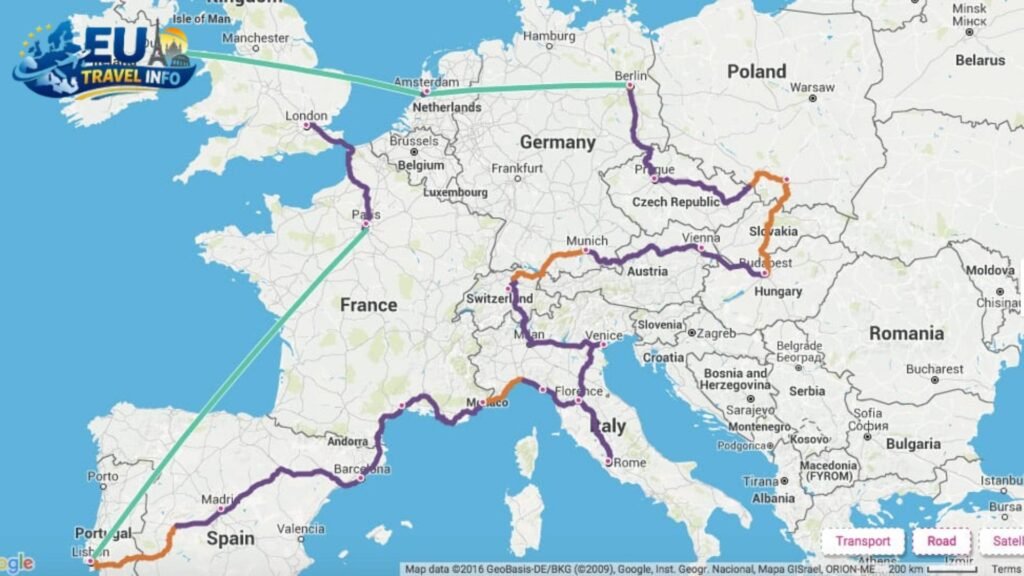
Travel planners often recommend a spain italy itinerary 14 days to hit the biggest highlights without feeling too rushed. However, if you have less time, a spain italy itinerary 10 days can still cover three major cities if you use quick flights between them. For those with more time, a spain france italy itinerary 3 weeks allows you to see the beautiful French Riviera or the rolling hills of Provence as you travel by land between the two.
Planning Your Arrival and Tour Packages

If you are traveling from far away, such as looking for spain italy tour packages from india, you will likely start in a major hub like Rome or Madrid. Many spain italy tour packages include your hotels, local transport, and even some guided activities to take the weight off your shoulders. You can expect a mid-range budget to sit around $200 to $240 per day for a two-week trip, not including your long-haul flights. Some high-end spain italy tour options might start closer to $350 per person per day if you want private guides and four-star hotels.
The Best Time to Visit
You should aim for the shoulder seasons of April to June or September to October. These months provide mild temperatures and fewer crowds than the hot summer. Average spring temperatures in Italy usually range between 43 and 73 degrees Fahrenheit. Therefore, you should pack layers to stay comfortable. On top of that, traveling during these times often means you will find better deals on flights and hotels.
Part 1: The Italian Highlights (Days 1 to 7)
Day 1-3: Rome, the Eternal City
Your adventure begins in Rome. This city has a history that goes back to the eighth century BCE. It is the perfect place to start because many ancient landmarks still stand today.
First of all, you will want to drop your bags at a central hotel. A hotel near the Pantheon or Piazza Navona puts you right in the heart of the action. You can walk to almost everything from there. Later, you should join a food tour. You will browse the Mercato dei Fiori for fresh produce and visit the Roman Ghetto to try traditional fried artichokes at a local tavern.
On the second day, you must visit the Colosseum. It is the largest amphitheater in the world and once held 50,000 spectators for gladiator fights. You should hire a guide to explain the stories of Julius Caesar and the emperors who built this massive stone structure. Additionally, walk through the Roman Forum and up Palatine Hill, which were the center of government and religion in ancient times.
Finally, do not forget the famous fountains. You must toss a coin into the Trevi Fountain to ensure you return to Rome one day. Also, take a slow walk, or passeggiata, up the Spanish Steps. This is a great way to join local families and enjoy the evening air.
Day 4-5: Florence and the Heart of Tuscany
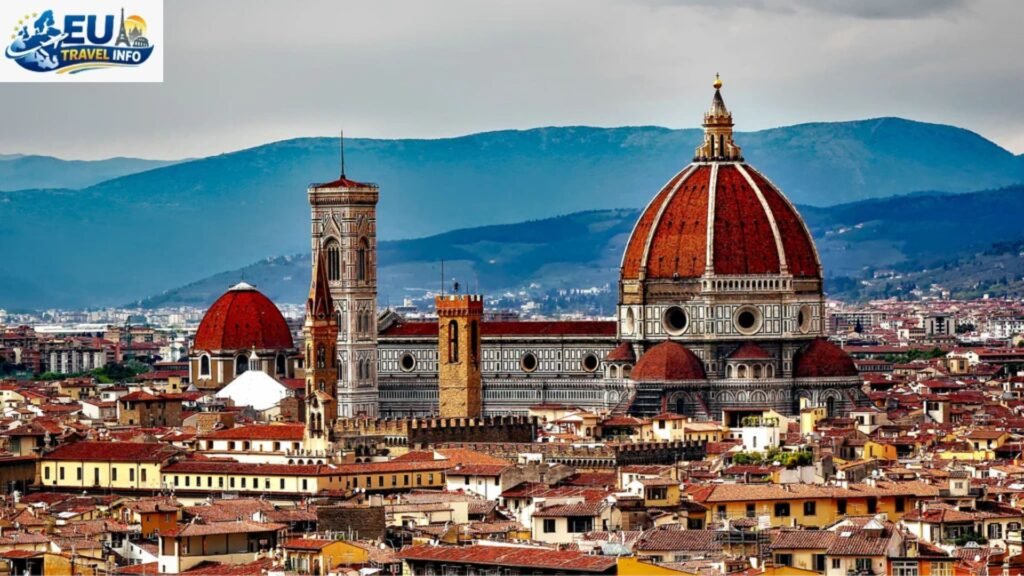
You will take a 1.5-hour high-speed train north to Florence. This city was the birthplace of the Renaissance. It feels like an open-air museum.
First of all, visit the Accademia Gallery. You will stand in awe of Michelangelo’s “David” statue. Your guide will tell you the history of how this masterpiece was carved from a single block of marble. Later, walk across the Ponte Vecchio, a medieval bridge lined with jewelry shops that crosses the River Arno.
However, you should also get out of the city for a day. You can rent a car or join a tour to the Chianti Hills. This region is famous for its rolling green hills and ancient vineyards. You might stop in San Gimignano, a village known for its 13th-century walls and tall stone towers. Similarly, a visit to Siena will show you one of the most beautiful cathedrals in the world and a famous shell-shaped main square.
Day 6-7: Venice, the City of Water
The train from Florence to Venice takes about 2.5 hours. Venice is unlike any other place on Earth because it is built on 117 small islands. There are no cars here, only boats and feet.
First of all, head to Piazza San Marco. You will see the Basilica San Marco, which features thousands of square meters of gold-leaf mosaics. Additionally, visit the Doge’s Palace, where the Venetian government ruled for centuries.
Later, you must take a gondola ride. It is a classic experience. You will glide through the narrow canals and under the Rialto Bridge while a professional gondolier guides the way. This is a very romantic and peaceful way to see the city from the water. Plus, you can stop at a local bar for cicchetti, which are small Venetian snacks similar to tapas.
Part 2: Crossing to Spain (Day 8)
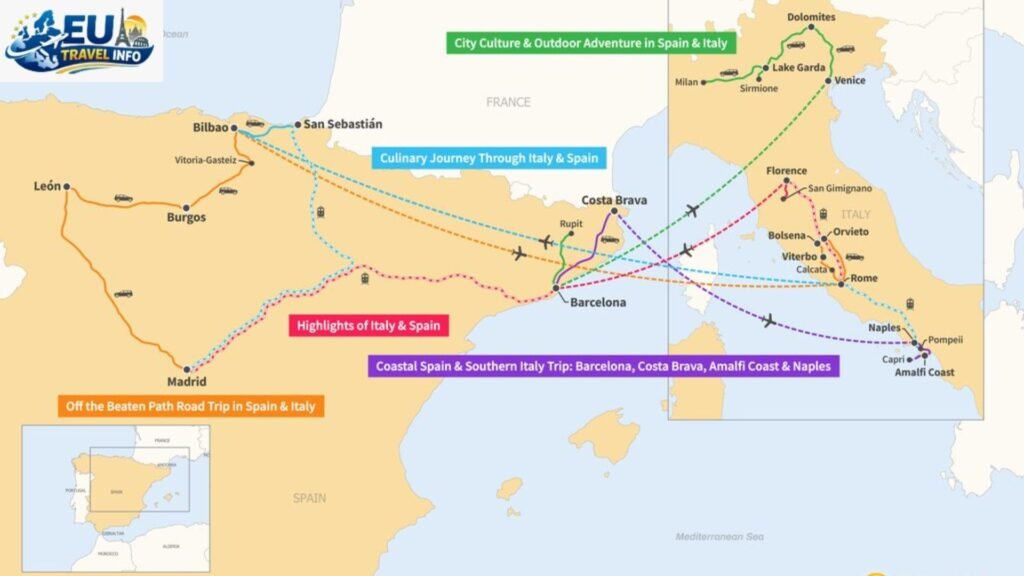
You have a few choices for getting from Italy to Spain. There are no direct high-speed trains between the two countries; a train ride would take nearly 15 hours and require multiple changes. Therefore, most travelers choose to fly. A flight from Venice or Rome to Barcelona takes about two hours and is often very cheap if you book with a low-cost airline.
On the contrary, if you want a more scenic route, you can take a ferry. A ferry from Civitavecchia (near Rome) to Barcelona takes about 20 hours. This is a long journey, but the ships have cabins, restaurants, and lounges. It is a great way to see the Mediterranean Sea if you are not in a rush.
Part 3: The Spanish Highlights (Days 9 to 14)
Day 9-10: Barcelona, the Seaside Metropolis
Welcome to Barcelona, the capital of the Catalonia region. This city is famous for its beaches, nightlife, and the strange, beautiful architecture of Antoni Gaudí.
First of all, you must visit La Sagrada Família. Construction on this massive church started in 1882, and it is still not finished. The inside looks like a stone forest with light pouring through colorful stained-glass windows. Additionally, spend an afternoon at Park Güell. You will see colorful mosaics and a famous dragon fountain while enjoying a great view of the city and the sea.
Later, wander through the Gothic Quarter. You will find narrow alleys that are over 1,500 years old. Gradually, you will reach La Rambla, a famous tree-lined boulevard full of street performers and markets. For dinner, you should join a tapas tour. You will hop from bar to bar to try small plates like patatas bravas or fresh seafood paired with local wine.
Day 11-12: Madrid, the Vibrant Capital
A 2.5-hour high-speed train will take you into the heart of the country to Madrid. The capital is a city of grand boulevards and famous art museums.
First of all, visit the Royal Palace. It is an 18th-century masterpiece with stunning rooms and gardens. Similarly, you should explore the Prado Museum. It holds one of the best collections of European art in the world, including works by Goya and Velázquez. Additionally, the Reina Sofia Museum is where you can see Picasso’s famous painting, “Guernica”.
Later, you should visit a local market. Mercado de San Miguel is a historic market that is now a gourmet food hall. You can sample everything from cured ham to fresh olives. For a relaxing break, head to El Retiro Park to walk through the landscaped lawns or row a boat on the lake. Finally, catch a flamenco show in the evening. You will feel the passion and soul of Spanish culture through the music and dance.
Day 13-14: Andalusia and the South
If you want to see the “soul” of Spain, you must head south to the Andalusia region. You can take a train to Seville or Granada.
In Granada, you will visit the Alhambra. This is a massive Moorish fortress and palace that dates back to the ninth century. It receives more than two million visitors every year, so you must book your tickets months in advance. You will walk through beautiful gardens and stone halls covered in intricate carvings.
Later, travel to Seville. This city is the capital of the region and is home to the Seville Cathedral, the largest Gothic church in the world. You can also see the tomb of Christopher Columbus inside. Additionally, visit the Alcázar, a royal palace with lush gardens that was originally a Moorish fort. On top of that, the Santa Cruz neighborhood is a maze of white buildings and flower-filled plazas that is perfect for getting lost.
Expanding Your Itinerary
If you have more than two weeks, you might consider a portugal spain italy itinerary. You could start in Lisbon, spend a few days in the Portuguese countryside, and then head into Spain. Similarly, a spain france italy itinerary 2 weeks is possible if you stick to the Mediterranean coast, visiting cities like Barcelona, Nice, and Rome.
For those who want to see everything, a spain france italy itinerary is a classic “Grand Tour” style of travel. You would likely spend about a week in each country to see the main sights. However, remember that more travel time between countries means less time actually seeing the cities. It is often better to see fewer places deeply than many places quickly.
Practical Tips for First-Timers
Getting Around
You will find that high-speed trains are the best way to travel within each country. They are fast, clean, and run from city center to city center. However, for travel between Italy and Spain, you should stick to flying to save time. You should only rent a car if you plan to spend several days in the countryside, like the White Villages of Andalusia or the hills of Tuscany. Cars are a headache in big cities because parking is expensive and traffic is heavy.
What to Pack
You should pack light. Many travelers manage with just a carry-on bag by choosing clothes they can mix and match.
- Comfortable walking shoes are the most important item. You will walk many miles on cobblestone streets.
- A light jacket or cardigan is necessary for cool mornings and evenings.
- A scarf or wrap is helpful for women to cover their shoulders when entering historic churches.
- A portable power bank ensures your phone does not die while you are using GPS or taking photos.
Budgeting Your Trip
You will find that Spain is generally a bit more affordable than Italy, but both are accessible.
- Accommodations: These will be your biggest cost. Booking one to two months in advance will help you find better prices.
- Food: You can save money by eating a large lunch (the main meal in these countries) and having a smaller, cheaper dinner of tapas or pizza.
- Attractions: Many museums offer free entry on certain days of the month, so you should check their websites before you go.
FAQ
What is the Big 3 in Italy?
The “Big 3” cities in Italy are Rome, Florence, and Venice. These cities are usually the first ones people visit because they hold the most famous landmarks and museums.
Is 2 weeks too long in Sicily?
No, two weeks is a great amount of time for Sicily. It is a large island with a very complex history, active volcanoes like Mount Etna, and some of the best food in Italy. You can easily spend 14 days driving around the coast and visiting the mountain towns.
Is there a high-speed train from Spain to Italy?
There is no direct high-speed train between Spain and Italy. You would have to change trains multiple times, often in France, and the trip takes about 15 hours. It is much faster and cheaper to take a two-hour flight.
Which three European countries can be visited together?
A very common combination is Spain, France, and Italy because they all sit along the Mediterranean coast. Similarly, you could visit Portugal, Spain, and Italy for a journey through the southern part of the continent.
Concluding Words
A Spain Italy Itinerary Guide 2026 for First-Timers provides you with a roadmap to the best of Europe. By spending two weeks across cities like Rome, Florence, Venice, Barcelona, and Madrid, you will experience the greatest art, history, and food the world has to offer. You should use high-speed trains for local travel and short flights to move between countries. Do not forget to book your big attraction tickets early and pack your most comfortable walking shoes. You are now ready to begin your Mediterranean adventure!