You dream of the emerald hills. You hear the faint sound of a fiddle in a cozy pub. You imagine the salty mist of the Atlantic Ocean on your face. Ireland is a place that stays in your heart forever. However, you must choose the right moment to go. Your experience will change completely depending on the month you pick. This guide will help you find What is The Best Time to Visit Ireland so your 2026 trip is perfect.
First of All: The Magic of the Seasons
Ireland changes her clothes four times a year. Each season offers a different feel. First of all, you should think about what you love most. Do you want long days of sun? Do you prefer quiet, misty walks? Perhaps you want to save money. Every choice has a trade-off.
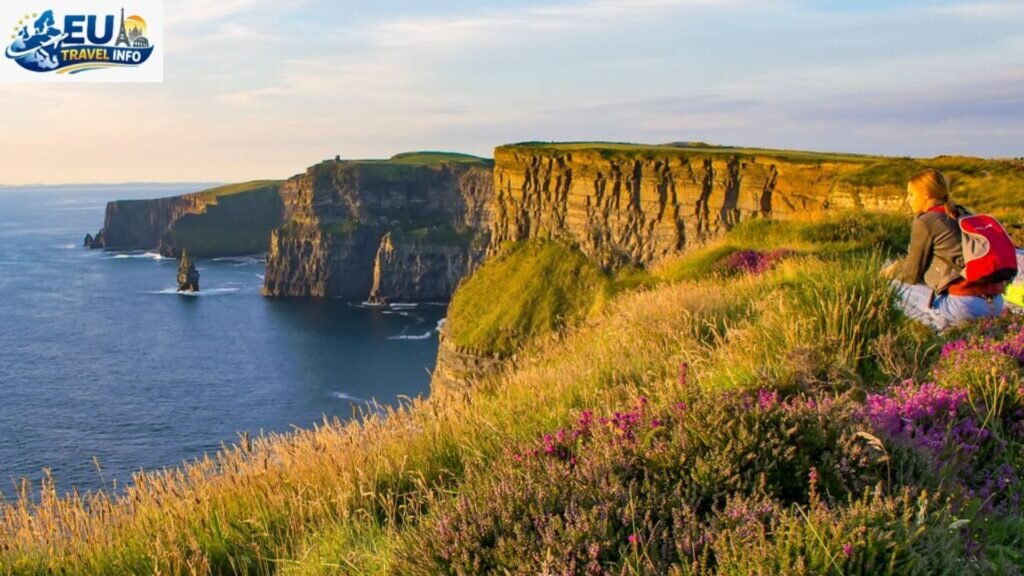
Summer (June, July, and August) is the most popular time for a reason. The weather is at its warmest and driest during these months. You will see the sun for 16 to 18 hours every single day. Imagine that. You can eat dinner at 9:00 PM and the sky is still bright. This is the best weather in Ireland by month if you want to be outside. Additionally, all the big sites are open. You can visit the Skellig Michael islands to see the puffins until the first week of August. On top of that, the temperature stays around a comfortable 20°C.
However, there is a catch. Thousands of other people have the same idea. Summer is the peak season. This means you will face large crowds at the Cliffs of Moher and the Ring of Kerry. Dublin becomes very busy. This might be the worst time to visit Dublin if you hate waiting in long lines or paying high prices for hotels. Everything books up months in advance. Therefore, you must plan your best time to visit ireland 2026 trip very early.
Is May a Good Time to Visit Ireland?
 Many people ask this question. The answer is a loud yes. Is May a good time to visit Ireland? It is actually one of the best-kept secrets. May sits in the “shoulder season.” This is the time between the busy summer and the quiet winter.
The landscape bursts into life in May. You will see vibrant green fields and wildflowers everywhere. On top of that, you can see newborn lambs and calves frolicking in the fields. It is a heartwarming sight for any nature lover. The weather is mild, with average high temperatures around 12°C. Also, the crowds are much smaller than in July. You get more space to breathe at the Rock of Cashel or Kilkenny Castle. Similarly, you will find it easier to book a room at a fancy place like Ashford Castle or Ballyfin Demesne.
The Beauty of the Autumn Colors
Later in the year, Ireland turns into a palette of gold and orange. Autumn (September, October, and November) is a magical time to explore. The air turns crisp. The scent of woodsmoke fills the air. This is a fantastic time for a road trip.
You should visit the Wicklow Mountains or Killarney National Park to see the leaves change. The deep reds and oranges are stunning. Additionally, autumn is the season of festivals. You can attend the Cork Jazz Festival in October. If you love food, the Savour Kilkenny festival celebrates the best local treats late in the month.
Plus, you can experience the Derry Halloween celebration. It is known as one of the best Halloween parties in the whole world. The city of Derry transforms into a spooky, fun spectacle with parades and fireworks. However, you must pack your rain gear. November is often the rainiest month in Ireland. The rainy season in Ireland is not a single month, but damp weather is very common as winter nears.
Winter: The Northern Lights and Cozy Pubs
You might think winter is the worst time to go to ireland. The days are very short. The wind is stiff and the rain is cold. Some smaller shops and sights in the countryside even close down.
On the contrary, winter has its own charm. It is the cheapest time to visit ireland. You will find “soft” prices for hotel rooms. You can walk through the streets of Dublin and enjoy the city sites without any crowds.
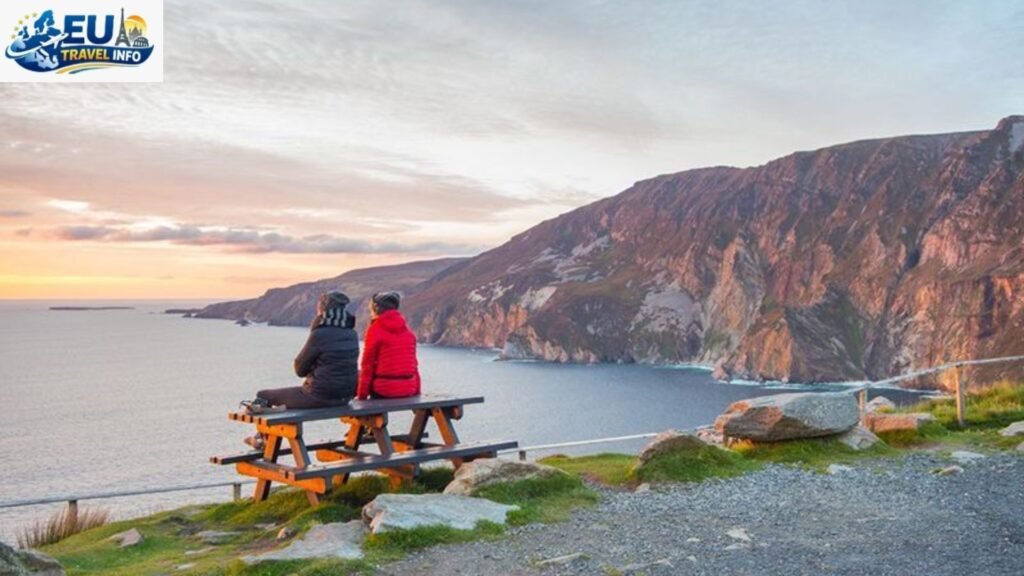
Most importantly, winter is the best time to visit ireland to see northern lights. You need long, dark nights and clear skies to see the Aurora Borealis. You should head to the northern parts of the country, like County Donegal, for the best chance. Imagine standing on a rugged cliff and seeing green lights dance in the sky. Magic. Pure magic.
Later, you can warm up in a traditional pub. There is nothing like a roaring peat fire on a cold night. You can sit with a pint and listen to a traditional music session. It is an intimate and authentic experience that you do not get during the busy summer.
Statistical Data for Your 2026 Trip
To help you plan, look at these average temperatures for the different seasons:
- Spring (March – May): High of 12°C, Low of 6°C.
- Summer (June – August): High of 19°C, Low of 11°C.
- Autumn (September – November): High of 13°C, Low of 9°C.
- Winter (December – February): High of 8°C, Low of 4°C.
You should also note that daylight hours change a lot. In the winter, the sun might set by 4:30 PM. In the summer, it stays up until 10:30 PM. This makes a huge difference in how much you can see in one day.
Recommendations for Mature Travelers
If you love luxury and history, you have many choices. You might enjoy a stay at Adare Manor in County Limerick. The gardens are beautiful in the autumn. Alternatively, Mount Juliet Estate in Kilkenny offers a peaceful retreat with fine dining.
For those who love the sea, a boat tour around the Skellig Islands is a must. You can see the second-largest colony of gannets in the world on Little Skellig. The birds are fast and strong. You will also see guillemots and razorbills nesting on the cliffs.
How to Handle the Weather
You must expect rain no matter when you go. The Irish call it “liquid sunshine.” Do not let it stop you. You should dress in layers. A good waterproof jacket is your best friend. Gradually, you will learn to take advantage of the “bright spells” when the sun peeks through the clouds.
Therefore, the best time to visit is truly up to you. If you want warmth and long days, pick July. If you want to see the baby lambs and save some money, choose May. If you want the spooky fun of Halloween and fall colors, go in October. Ireland is waiting for you in 2026.
FAQ
What is the cheapest month to go to Ireland?
The winter months of January and February are generally the cheapest. You will find the lowest prices for hotels and flights during this time because there are fewer tourists.
What is the rainiest month in Ireland?
November is typically the wettest month of the year. However, you should be prepared for rain during any month in Ireland.
How many days are enough for Ireland?
Many guided tours last around 9 days, which allows you to see both the North and South. If you want to explore at a slower pace or focus on specific regions like the Wild Atlantic Way, you may want two weeks or more.
Is Ireland expensive for tourists?
Ireland can be expensive, especially during the peak summer season when prices for rooms and activities increase. Traveling during the shoulder or winter seasons is much more affordable.
Concluding Words
Ireland offers a unique experience in every season, from the 18-hour sunny days of summer to the magical Northern Lights of winter. While summer provides the best weather, the shoulder seasons of spring and autumn offer a perfect balance of mild temperatures, fewer crowds, and better value. You will find beauty in the wildflowers of May, the vibrant festivals of October, and the cozy fireside music of a winter’s night.