The thought of leaving my furry best friend behind during a grand tour of the continent is simply unbearable. I have spent years crossing borders with my dog, Barnaby, and I can tell you that dog friendly sleeper trains Europe are the most civilized way to travel.
You avoid the stress of airplane holds and the cramped seats of a car. The rhythmic click-clack of the tracks becomes a lullaby for both you and your pet. However, you must know the rules before you pack the leash. Can you take a dog on a sleeper train? The answer is a loud yes, but it often requires you to book a private compartment. This guide shares my personal journey through the 10 Best Dog Friendly Sleeper Trains in Europe so you can plan the perfect adventure.
1. The ÖBB Nightjet: The King of European Rails
The Austrian Federal Railways, known as ÖBB, operate the most extensive network of night trains on the continent. I have taken this train from Vienna to Paris and from Munich to Rome. It is a fantastic way to see the heart of Europe.
Rules and Fees: You can only take your dog on the ÖBB Nightjet if you book an entire compartment. This ensures privacy for you and peace for other passengers. You must pay a fee of roughly €29 for the dog, which you can settle directly on the train or in advance by phone. Assistance dogs always travel for free and do not need a muzzle. Though small pets in containers can travel for free, they still require you to book the whole cabin.
The Experience: My Samoyed, Felix, loves the extra space in the private cabins. We usually find two pillows and blankets on each bed, plus a small welcome snack for the humans. There is enough storage area underneath the beds for a large dog bed. Additionally, the train makes several stops where you can stretch your legs and let your dog do their business.
2. The European Sleeper: The New Star
This “Good Night Train” connects Brussels, Amsterdam, Berlin, and Prague. It is a relatively new service that has quickly become one of the best sleeper trains Europe has to offer for pet owners.
Rules and Fees: Dogs and cats are welcome, but only if you book a private compartment. You are allowed to bring a maximum of two small dogs or one large dog. One of the best parts about this operator is that there is no extra charge for your furry travel buddy. However, your dog must stay on the floor and is not allowed on the beds or chairs.
The Experience: The Classic compartments start at about €179.99 and can fit up to five people plus a dog. I appreciate the big fold-up table, which is perfect for board games while Barnaby napping at my feet. Plus, they provide a special dog blanket for your pet to use on the floor.
3. The Caledonian Sleeper: A Scottish Dream
If you want to travel from London to the magical Highlands of Scotland, this is your best bet. It is a legendary route that offers some of the most beautiful views in the United Kingdom.
Rules and Fees: You can accommodate up to two domestic pets in your room for a cost of £30 per journey. This fee covers a deep clean of the room after your trip. You must book a private room, as pets are not allowed in the seated coaches or the Club Car.
The Experience: The staff once gave my Manchester Terrier, Arty, a complimentary bag of 100% natural treats. The berths are surprisingly comfortable with soft mattresses and USB ports for your phone. On top of that, the train crew will notify you of longer stops so you can disembark for a quick walk.
4. SJ EuroNight: Berlin to Stockholm
The Swedish railway, SJ, offers a wonderful link between Germany and Sweden. This is the ideal choice for anyone looking to explore the vast forests and lakes of Scandinavia.
Rules and Fees: Pets may only be taken along if you book an entire compartment. You are limited to two pets per cabin. For this specific international route, you must use specific compartments, such as couchette car number 22. Small children under seven also travel for free if they share your bed, making it a great family option.
The Experience: The quiet time on this train is between 9:00 p.m. and 5:00 a.m.. I found the breakfast, which is included in the sleeper cabin price, to be a great start to our morning in Stockholm. Therefore, you do not have to worry about finding food the moment you arrive.
5. SJ Domestic Night Trains: Crossing Sweden
Sweden is a massive country, and the domestic night trains are a lifesaver. You can travel from Malmö all the way up to Narvik in Norway.
Rules and Fees: The rules are similar to the international route. You must book a whole couchette compartment. Each couchette car has a designated compartment (berths 21-26) specifically for passengers with pets. Plus, you cannot bring your own alcohol on these trains due to Swedish legislation.
The Experience: The cabins come in different classes, including Deluxe compartments with their own shower and toilet. Barnaby usually settles into the floor space of the 2nd class couchette without any trouble. Similarly, the train is very punctual, which is a trait highly regarded in the Nordic countries.
6. Snälltåget: The Seasonal Adventure
This operator runs trains from Berlin and Hamburg to Stockholm and even up to the ski resorts in the north. It is a fun, energetic way to travel.
Rules and Fees: You must book a private compartment if you want to bring a pet. For international services, it is unfortunately not possible to bring bicycles, so plan accordingly. The booking period is usually 60 days in advance.
The Experience: The seating cars and couchettes are clean and functional. I find that the atmosphere on Snälltåget is a bit more casual than on the national carriers. Additionally, they have a great digital booking system that makes it easy to add your pet.
7. CFR Calatori: The Romanian Sleeper
Traveling through Eastern Europe can be a bit more complex, but the Romanian state railway offers some great dog-friendly options. The Ister and Dacia Express are the main lines to look for.
Rules and Fees: Dogs and cats are allowed if you purchase tickets for an entire compartment. Small pets in containers travel for free. For larger dogs, you must pay a fee that is usually half the price of a second-class ticket.
The Experience: The compartments are often older but very cozy. I have taken the route from Bucharest to Vienna and found the staff to be very accommodating. Though the trains might be slower, they offer a real sense of adventure.
8. HŽPP: The Croatian Coastal Route
Croatia is a stunning destination, and their night trains connect the capital, Zagreb, with the coast. It is a perfect way to reach the Adriatic Sea with your dog.
Rules and Fees: Small pets up to 30 cm in height travel for free in containers or on your lap. Larger dogs require a 50% discount ticket and must wear a muzzle. Just like other lines, you must book the entire sleeping section for exclusive use.
The Experience: The journey from Zagreb to Split is a classic. The staff is generally courteous and many speak excellent English. Additionally, you can find joint tickets that include local bus or tram transport in cities like Zagreb or Osijek.
9. VR: The Finnish Arctic Express
Finland is a high-technology welfare state with vast areas of unspoiled nature. Their sleeper trains from Helsinki to Lapland are top-tier.
Rules and Fees: Pets can be taken on trains for a small fee of about €5. You must book seats or cabins in the designated pet compartments. An overnight journey in a sleeper cabin typically costs between €150 and €250 for two people.
The Experience: The modern sleeper cars have en suite showers in the upper-floor cabins. Barnaby loves the cool Finnish climate. Plus, the restaurant cars serve simple but real meals like reindeer soup.
10. ZSSK: The Slovakian Connection
The Slovakian railways offer reliable night services, particularly the route from Košice to Prague. It is a vital link in Central Europe.
Rules and Fees: A seat in a couchette costs about €11, while a bed in a three-person sleeper is €15. Pets are generally accepted, but you must follow the standard rule of booking the entire compartment for international trips. However, carriage of animals between Slovakia and Austria or Czechia is sometimes restricted, so always check the specific train number.
The Experience: The trains are often quite full, so I recommend booking at least two weeks in advance. The night’s rest is strictly enforced between 10:00 p.m. and 6:00 a.m..
Important Paperwork: The EU Pet Passport
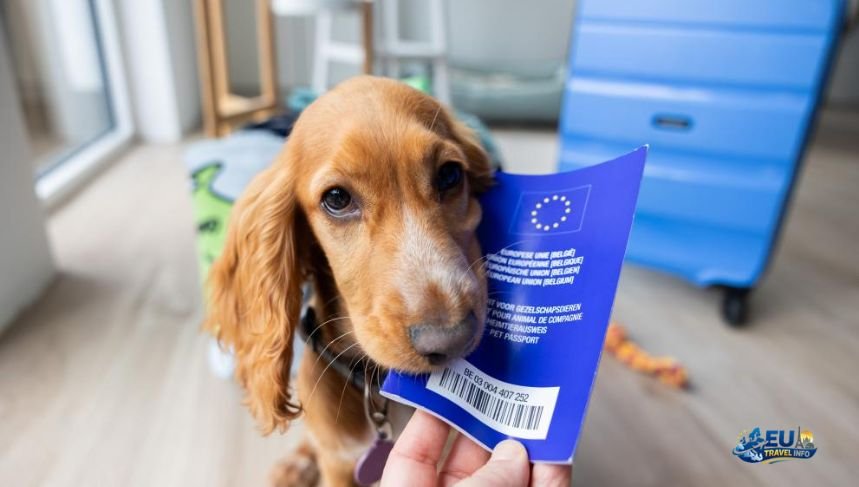
First of all, you cannot even think about travel to europe dog without the proper documents. The European pet passport is your most important tool. It is a standard model mandatory for travel between EU countries.
Requirements for the Passport:
- Microchip: Your pet must be microchipped before they receive their rabies vaccine.
- Rabies Vaccination: The pet must be at least 12 weeks old for their first shot. You must wait 21 days after the primary vaccination before you can travel.
- Tapeworm Treatment: If you are heading to Finland, Ireland, Malta, or Norway, your dog needs a specific treatment between 1 and 5 days before arrival.
Later, if you are coming from a non-EU country like the UK, you will need an EU animal health certificate instead. This document must be issued by an official vet no more than 10 days before you arrive in the EU. It is valid for travel between EU countries for four months.
Are Dogs Allowed on Trains in Europe? A Country Breakdown
Though sleeper trains have their own rules, you will likely use regular trains too. Are trains dog friendly across the board? Mostly, yes.
- France (SNCF): Small pets under 6 kg in boxes pay €7. Larger dogs on a lead also pay €7.
- Germany (Deutsche Bahn): Small dogs in carriers go for free. Larger dogs pay a fee and must be leashed and muzzled.
- Italy (Trenitalia): Pets in carriers (max 70x30x50 cm) are free. Larger dogs pay half the second-class fare.
- Netherlands (NS): Small pets are free. Large dogs require a Dagkaart Hond for €3.30.
- Spain (Renfe): Spain is tougher. Only dogs under 10 kg are allowed on most long-distance trains. However, a new pilot program allows dogs up to 40 kg on certain routes for €35.
Practical Tips for the Sleeper Train Experience
Can dogs ride on trains in europe without a muzzle? Usually, the answer is no. Even if your dog is the friendliest golden retriever, train staff have the right to ask you to use one in public areas like corridors. I always keep one in my pocket just in case.
Potty Breaks: This is the number one question people ask me. sleeper train with dog travel requires planning. Most night trains have stops that last 15 to 30 minutes. Ask the conductor about these “comfort stops” when you board. My dog has learned to go quickly on the platform during these breaks.
Food and Water: The dry air on trains makes dogs very thirsty. I always bring a spill-proof water bowl. Also, remember that you cannot take meat or dairy products from the UK into the EU due to Brexit rules. Therefore, only bring enough regular food for the crossing and buy more once you are in mainland Europe.
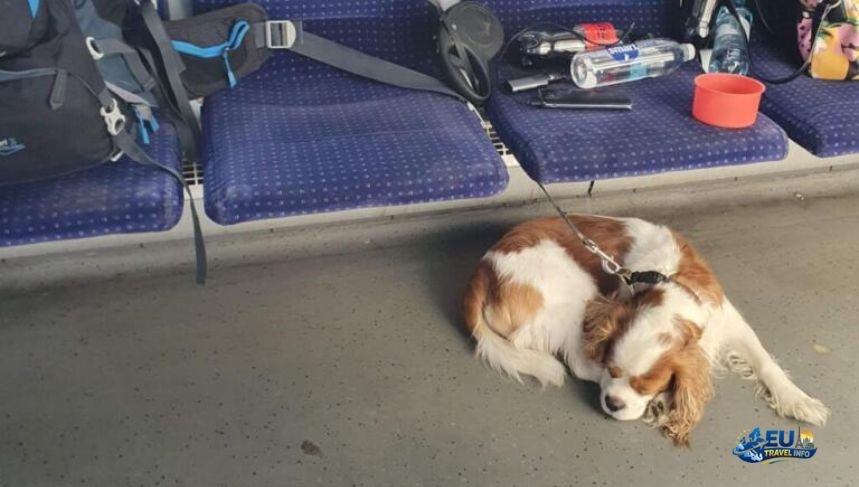
Space Management: The cabins are small. First of all, do not bring massive suitcases. I use the storage space under the bottom bunk for my gear and let Barnaby have the floor space. On top of that, I bring a familiar blanket from home so he feels safe in the new environment.
Statistical and Numerical Data to Remember
- Microchip Date: Must be done before the rabies vaccine.
- Waiting Period: 21 days after the first rabies shot before crossing borders.
- Caledonian Sleeper Fee: £30 per pet.
- Nightjet Pet Fee: €29 per pet.
- European Sleeper Limit: 1 large dog or 2 small dogs.
- Small Dog Weight Limit: Often defined as under 5 or 6 kg.
- Pet Carrier Size: Usually around 45 x 30 x 25 cm or 70 x 30 x 50 cm depending on the country.
European Sleeper Pass and Travel Planning
If you plan to take several trips, you might look into a European Sleeper Pass or a European Sleeper subscription. Plus, using an Interrail or Eurail pass can save you money, though you still have to pay the full supplement for the sleeper cabin and the dog fee.
Gradually, you will realize that rail travel is far more rewarding than flying. You see the transition of the landscape from the window. You meet fellow travelers who also love animals. Finally, you arrive at your destination refreshed and ready to explore with your best friend by your side.
Dealing with Delays and Rights
Sometimes things go wrong. If your sleeper train is delayed by more than 60 minutes, you might be entitled to a full refund of the berth supplement. Similarly, if the railway cannot provide the cabin you booked, they must upgrade you or refund the difference. Always keep your tickets and ask the conductor to certify any issues in writing.
The Cultural Aspect of Dog Travel
In many parts of Europe, dogs are treated like small humans. In Finland, Finns love their nature and dogs fit right in. In Italy, it is normal to see dogs in cafes. However, some countries like Spain view larger dogs more as working animals, which explains their stricter train rules. Understanding these cultural shifts helps you stay patient and polite.
FAQ
Are dogs allowed on European sleeper trains?
Simple stuff. Dogs can board most night trains. However, you have to book a private cabin for your entire party. On top of that, you must pay fees that range from zero to thirty pounds per trip.
Can I travel by train with my dog in Europe?
Yes. Most countries welcome pets on their rails. Similarly, each company has its own rules for leashes and muzzles.
Is Eurostar dog friendly?
Not at all. Eurostar does not allow pets on trains to or from London. Only guide dogs can travel on these routes.
Can I travel throughout Europe with my dog?
A huge deal. You can cross borders with your pet if you have the right documents. First of all, get a microchip and a valid pet passport.
Is Eurail pet friendly?
Yes. Eurail passes work for dogs on many lines. Plus, you must buy a dog ticket or pay a supplement for the cabin.
Do trains in France allow dogs?
Certainly. Small dogs in boxes pay a low seven euro fee while large ones pay half fare.
Can dogs sit on train seats?
No, never. They must stay on the floor or in a carrier on your lap.
Can I take my dog on the chunnel?
Yes. You can use a taxi or car to ride the shuttle. Later, you and your dog remain in the vehicle for the whole trip.
How to travel in Europe with dogs?
First of all, visit your vet for a microchip and shots. Later, carry a pet passport and check the train operator rules.
Concluding Words
Ready for a journey? Sleeper trains provide a wonderful way to see the continent with a pet. However, you must book a private cabin for your party. First of all, get an EU pet passport to avoid any trouble at the border. Additionally, keep your dog on the floor to follow the house rules. Finally, choose one of these ten routes for a perfect trip.