I remember the first time I packed my bags for a French adventure with my furry best friend. The excitement was real. The planning? It was a bit overwhelming at first. However, I discovered that dog-friendly France is more than just a dream; it is a reality for the 10 million dogs that live there. In fact, research shows that 40 percent of French pet owners believe their animals are the most important part of their lives. There are roughly 17 dogs for every 100 people in the country. This means you will find a pet-loving culture almost everywhere you go.
Finding the Perfect Dog Friendly Stay in France requires a bit of insider knowledge, but the rewards are endless. Whether you want a luxury palace in the city or a rustic cottage in the vines, there are Options for Every Budget. I have traveled from the rocky cliffs of Normandy to the sunny shores of the South, and I want to share everything I learned with you.
The Essentials: Paperwork and Preparation
First of all, you cannot just hop on a plane or boat without the right papers. I learned this the hard way when I started my research. For those of us coming from the UK, the Animal Health Certificate (AHC) is the golden ticket. You must get this from an official veterinarian within 10 days of your travel date. It usually costs between £150 and £350.
Your dog must have a microchip and a valid rabies vaccination. Additionally, you have to wait 21 days after the first rabies shot before you can enter France. If you are an American traveler like the Reddit user NINESEVEN, you will need a USDA-endorsed health certificate. Plus, your dog should be at least 12 weeks old before they get that rabies jab.
Top Tip: I always keep a digital folder with my pet’s health records. It saves so much stress at the border!
Getting Around: Trains, Boats, and Metros
My favorite way to cross the channel is LeShuttle. It only takes 35 minutes, and your dog stays right in the car with you. They even have dedicated exercise areas at the terminals. Therefore, it is a very low-stress option for nervous pups.
Once you are on French soil, the public transport is surprisingly welcoming. All public transport in Paris is pet-friendly. Small dogs usually travel for free if they are in a carrier bag or a basket. However, larger dogs need a ticket. On the SNCF national trains, a large dog usually costs about €7 or half of a second-class fare.
I noticed that large dogs must wear a muzzle and stay on a lead on trains and the Metro. Though my dog was not a fan of the muzzle at first, he gradually got used to it. Similarly, the RER and Metro allow dogs for free as long as you follow the rules. On the contrary, buses can be a bit more strict. Many only allow small dogs in bags.
Finding a Home Away from Home
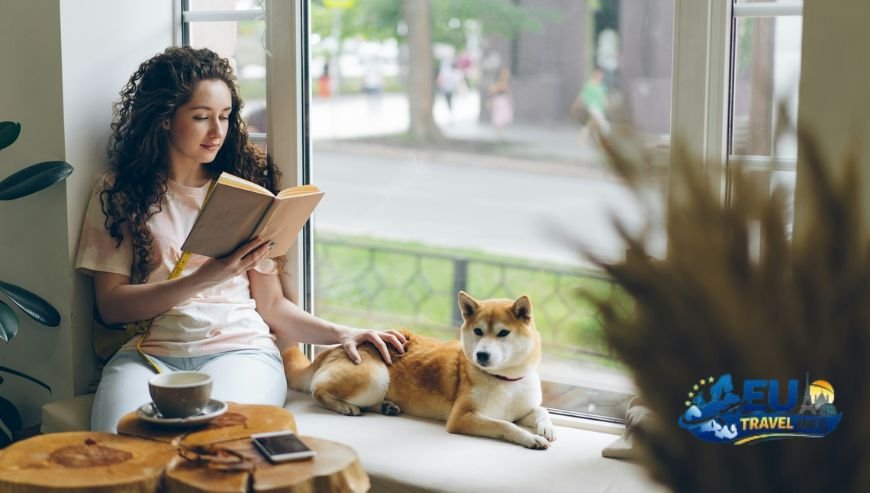
When it comes to Finding the Perfect Dog Friendly Stay in France, you have so many choices. I have stayed in everything from a dog friendly hotels paris palace to a budget-friendly ibis hotels france room.
Luxury and Boutique Stays
If you want to treat yourself, the Le Bristol Paris is legendary. They offer dog spa treatments and a custom menu. I also fell in love with the Grand Hôtel des Bains in North Brittany. The garden leads directly to a dog-friendly beach. It is pure bliss. Another great find was Château de la Resle in Burgundy, which is a very elegant bed-and-breakfast.
Budget and Mid-Range Options
For those on a tighter budget, look for the ibis hotels france chain. They are very reliable and usually welcome pets for a small fee. Airbnb is also a fantastic tool. I always use the filters to find homes with fenced gardens. It makes such a difference when your dog can stretch their legs safely.
The Magic of Gîtes
A gîte is a traditional French holiday cottage, and many are incredibly welcoming. I highly recommend Gîtes de Sevenne in Lot-et-Garonne. It has a huge garden and even fruit trees for picking. Similarly, the Old Presbytery Guest House in the Dordogne is a calm haven surrounded by vineyards. On top of that, Kergudon Gîtes in Brittany are located near beautiful beaches and even have a dog-friendly pub in the village.
Exploring the Loire Valley: Castles for Canines
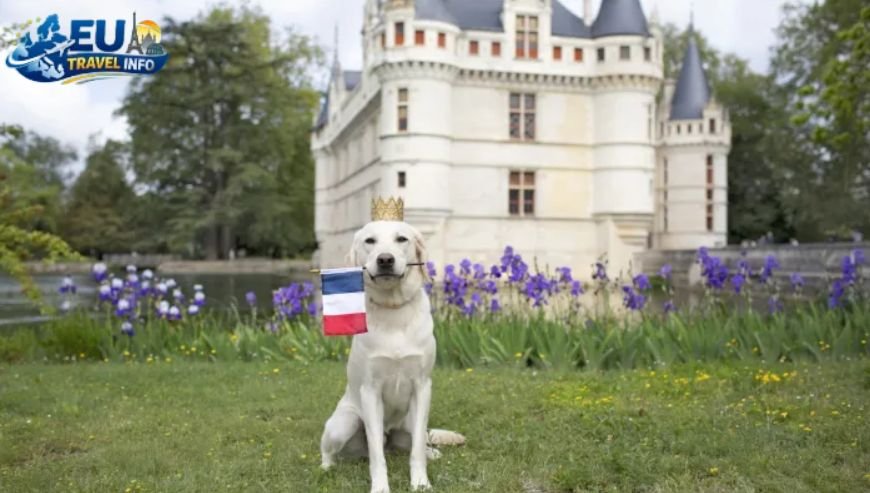
You might think castles are off-limits for pets. You would be wrong! I was amazed to find 19 Loire valley castles that you can visit with your dog. Not every château allows dogs inside, but many have stunning parks and gardens where leashed dogs are welcome.
- Château d’Ussé: This is the “Sleeping Beauty” castle. Dogs are welcome in all the places you visit here, including the tiered gardens.
- Château de Langeais: This castle is a mix of medieval and Renaissance styles. Dogs are allowed in the park and the interiors.
- Château de Montsoreau: This spot is dedicated to contemporary art. They allow dogs both inside and outside the museum on a leash.
- Château de Serrant: This place has an incredible library. Dogs are allowed on a lead.
- Château de Montpoupon: It emerges from a forest and has a museum dedicated to hunting. Dogs are welcome.
- Chenonceau Castle: This is arguably the most beautiful castle in the valley. Small dogs can go inside if they are carried in a bag, while larger dogs are allowed on a leash in the gardens.
- Villandry Castle: The gardens here are breathtaking. Dogs on leads can explore the gardens, but only small dogs in bags can go inside the castle.
- Château Royal d’Amboise: This castle houses the tomb of Leonardo da Vinci. Dogs on leads are allowed in the park.
- Clos Lucé: This was Leonardo da Vinci’s last home. Dogs must be carried inside but can walk on a leash in the park.
- Château de Sully-sur-Loire: This castle has an immense 42-hectare park for walking.
- Château du Lude: The park here is bordered by a river. Dogs are allowed in the gardens on a leash.
- Château Forteresse de Chinon: This medieval fortress overlooks the Vienne River. Dogs are allowed in the park.
- Château de Brézé: This castle has an amazing underground cave network. Dogs can go inside if they are carried.
- Château de Meung-sur-Loire: This former fortified palace allows dogs in baskets.
- Château de Montrésor: This small castle is integrated perfectly into its natural framework.
- Chambord Castle: This is the most impressive castle in the region. Dogs on leads are allowed in the massive park.
- Valençay Castle: The interior is richly furnished, and dogs are welcome in the park on a leash.
- Chaumont-sur-Loire: Famed for its contemporary gardens. Dogs are allowed in the festival areas.
- Château du Rivau: This magical castle has 15 remarkable gardens. Leashed dogs are very welcome in the gardens.
Warning: Do not try to take your dog to Château de Cheverny. They have a pack of 100 hunting dogs on the estate, so other pets are strictly banned for safety.
Coastal Adventures: 20 Best Dog-Friendly Beaches
France has a massive coastline with hundreds of miles of sand. There are over 250 dog-friendly beaches to choose from. I put together a dog friendly hotels france map in my head of the best spots to hit.
- Le Touquet-Paris-Plage: This is a chic town near Calais. The Baie de Canche area is perfect for long walks in the dunes.
- Berck-sur-Mer: The Plage des Sternes is very welcoming. The town even has a “toutourisme” certificate.
- Escalles Beach: Located near the Cap Blanc-Nez cliffs. The views are breathtaking.
- Wissant: There are three beaches here. Plage Dune d’Aval allows dogs all year round.
- Omaha Beach: This famous D-Day beach is a 2.5 km stretch of white sand where dogs are welcome all year.
- Quiberville-sur-Mer: You can walk on the sand and the pebbles here. Plus, you can buy fresh oysters nearby.
- Gouville-sur-Mer: This is an unspoilt spot where your dog can run with a lot of freedom.
- Plage d’Antifer: Access this hidden gem by a walk on foot. It is very peaceful.
- Santec (Dossen Beach): This area offers kilometers of sand for exploration.
- Laber Beach: A perfect place in Roscoff with crystal-clear water.
- Hirel Beach: If you visit Mont Saint-Michel, stop here. You can let your dog off the leash at low tide.
- La Tranche-sur-Mer: This town is a leader in welcoming dogs. Terrière Beach is wild and natural.
- Belle Henriette Beach: This beach is 3 kilometers long and open to dogs all year.
- South Beach (Fouras): A popular choice near La Rochelle.
- Mimizan (Plage de la Garluche): The Landes region has 106 km of sandy beaches. Mimizan is a great choice.
- Bandol Dog Beach: This is one of the best dog friendly hotels south of france locations for swimmers. It is a dedicated pebble beach.
- La Grande Motte: This is a massive sandy beach open all year at Access 60.
- Agde (Plage de la Tamarissière): This is the only official dog beach in its area. It is next to a forest for shade.
- Santa Giulia: Located in Corsica. The water is shallow and perfect for paddling.
- Palombaggia: This is the top-rated beach in Corsica. It has white sand and red rocks.
Strategic Advice: During the summer months of July and August, many public beaches have restricted hours. Usually, you can only visit before 8 am or 9 am and after 7 pm or 8 pm.
Regional Highlights and Road Trips
If you are looking for dog friendly hotels in france en route to spain, I suggest a road trip through Lyon or Bordeaux. Driving from Calais to Paris takes about 3.5 hours, and from there, you can head south. Lyon is known for being very dog-friendly. Bordeaux is also a great stop, especially the wineries in the Dordogne region.
Provence is another dream. Walking through the lavender fields with your dog is a memory I will never forget. The Luberon Valley Trails are ideal for long, leisurely walks. Additionally, many wineries in this region are happy to have leashed dogs join you for a tasting.
Brittany offers a wilder experience. The rugged coastline is a visual feast. I love the Presqu’île de Crozon for its lovely walks and lack of restrictions. Similarly, the sprawling countryside makes it a popular destination for those who love to hike.
Dining Out and Etiquette
One thing that surprised me about France? Dogs are welcome in almost every cafe and restaurant. In the States, I would never dare walk into a restaurant with a dog. In France, I just walk straight in. Most of the time, the waiter will even bring a bowl of water for the dog without me asking.
However, keep a few things in mind. Grocery stores and boulangeries are usually off-limits for hygiene reasons. You will often see metal hooks outside where you can tie your dog up. Also, never let your dog sit on the furniture. I have never seen a dog on a chair or a table in a French restaurant. It is polite to keep them on the floor at your feet.
Budget Planning: What Will It Cost?
Traveling with a pet does add a bit to the bill, but it is manageable. Here is a quick breakdown:
- SNCF Train Ticket: €7 for small pets; half-fare for large ones.
- Trenitalia Ticket: €30 for dogs over 5kg.
- Pet Health Certificate: £150–£350.
- Fines for Rule Breaking: €150 for beach violations; up to €400 for not picking up waste.
- Hotel Pet Fees: These vary, but many budget hotels charge around €10–€15 per night.
Staying Safe in the Heat
The French summer can be brutal. I always carry a collapsible water bowl. I also avoid the beach during the hottest hours, from 10 am to 4 pm. Sand temperatures can reach 50 degrees Celsius. If it is too hot for your hand, it is too hot for their paws! Plus, salt water can irritate their skin. Therefore, I always rinse my dog with fresh water after a swim.
Helpful Labels to Look For
When you are searching for a place to stay, look for the “Toutourisme” label. Towns with this label have tourist offices that give out “Toutoupacks” with treats and waste bags. There are over 60 destinations with this label now. Similarly, the “Qualidog” label helps you find the best hotels and campsites. Establishments get a rating from 1 to 4 “truffles”. A 4-truffle rating means they are top-tier for pets.
FAQ
Where to stay in France with a dog?
You have many choices for a comfortable place to rest with your pet. You can choose a luxury hotel such as the Grand Hôtel des Bains in North Brittany, where the garden leads directly to a beach. Additionally, Gîtes de Sevenne in Lot-et-Garonne offers a large garden and a pool for a perfect family escape. On top of that, holiday homes like La Ferme & La Bergerie in Calvados provide enough space for your dog to run free. Therefore, you can find a home regardless of your bank balance.
I will now discuss which part of the country is the most welcoming for your pet.
Where is the most dog friendly place in France?
The local people on this island do not mind animals as much as people on the mainland. However, the Pas-de-Calais region in the north is also a great choice because it uses the “Toutourisme” program. At that time, I found the northern coast to be full of wide open space for my dog.
If you fall in love with these regions, you might think about moving there forever.
Can I take my dog to live in France?
Yes, you can live in France with your dog. French law says a landlord cannot forbid you from having a pet in a residential rental. This rule applies to both unfurnished and furnished flats. Though you must ensure your pet does not disturb the neighbors with loud noises. Plus, your dog must not belong to a dangerous breed category, such as a Mastiff or a Pitbull type.
Life in France means you will likely spend a lot of time eating at local spots.
Are dogs allowed in restaurants in France?
Yes, restaurants generally welcome dogs, especially on their terraces. I learned that you can often walk straight in because most cafes and bistros will accommodate you. However, you must keep your dog out of food preparation areas for health reasons. On top of that, it is polite to ask the staff for permission before you enter.
Before you can eat at a bistro, you first need to know how to get into the country.
How do I travel to France with my dog?
First of all, you can travel by air, sea, or land. I prefer using LeShuttle, which only takes 35 minutes. You must have a microchip, a rabies vaccine, and an Animal Health Certificate. Later, you will need to show these papers to customs officers at the border.
When you arrive in the capital, you might need to use the city trains.
Can dogs ride Paris metro?
Yes, they can ride the metro and the RER. Small dogs travel for free if they stay in a bag or a basket. Similarly, large dogs are allowed if they stay on a lead and wear a muzzle. You must buy a child’s half-price ticket for a bigger dog.
You might compare the French culture to other nations in Europe.
Which country in Europe is the most dog friendly?
France is considered one of the most pet-centric countries in the whole world. The nation has about 10 million dogs in its population. Therefore, it is often cited as the capital of dog-friendliness. Plus, there are around 17 dogs for every 100 people in the nation.
If you travel by sea to reach the coast, you need to know the ship rules.
Can I stay with my dog on a ferry?
Yes, you can stay with your pet on certain routes. Many ferries now offer dog-friendly cabins. This makes a long trip much easier for your animal. Additionally, some ships provide dedicated exercise areas at the terminals.
Do indoor dogs need rabies vaccines?
Yes, they do. The law requires every dog to have a valid rabies vaccination to enter France. You must wait 21 days after the first shot before you can travel.
Concluding words
I have shared my journey of Finding the Perfect Dog Friendly Stay in France. You can choose a luxury hotel in Paris or a rustic gîte in the countryside. France is a pet paradise with over 250 dog-friendly beaches and many castles that welcome your best friend. Do not forget to prepare your paperwork and vaccinations early. Finally, you will find that a French holiday is much better when your dog is by your side.