I used to think that a Pet Friendly Vacation in Madrid, Spain was just a dream. My dog, a lively companion, always looks at me with those sad eyes when I pack my bags. I finally decided that she was coming with me. Is Madrid dog friendly? I asked myself this a thousand times before I booked my flight. Is Spain dog friendly? The answer is a loud and happy yes. My journey through the sun-drenched streets of the Spanish capital taught me so much. I want to share every single detail with you. You deserve a stress-free trip with your furry best friend.
First of all, I had to handle the paperwork. This part feels like a mountain of stress. However, it is just a series of steps you must follow. Your pet needs a working microchip before anything else. I learned that this transponder must be ISO-compliant. My vet scanned the chip before giving the rabies vaccination. This is a strict rule. If the vaccine happens before the chip, it does not count. My dog had to wait at least 21 days after her first shot before we could even think about landing in Spain. This wait period ensures she has proper immunity.
Additionally, I had to deal with the United States Department of Agriculture (USDA). The health certificate is a massive deal. I had to choose between a “non-commercial” and a “commercial” certificate. I traveled within five days of my dog, so I used the non-commercial one. This document is valid for 30 days after the vet issues it. On top of that, the USDA must ink-sign and emboss the certificate. I made sure my vet was USDA-accredited. I even had to provide a prepaid mailing label to get the papers back in time. The timing is tight. The USDA must endorse the papers within 10 days of your arrival in the European Union.
Arriving and Staying in Style
We landed at Madrid–Barajas Airport (MAD). The airport is very welcoming to pets if you give the airline a heads-up. I felt a bit nervous at the customs area. I had to take my dog to a special area to clear her documents. The officers checked her microchip to see if it matched my papers. It was quick. It was easy. Finally, we were out in the warm Madrid air.
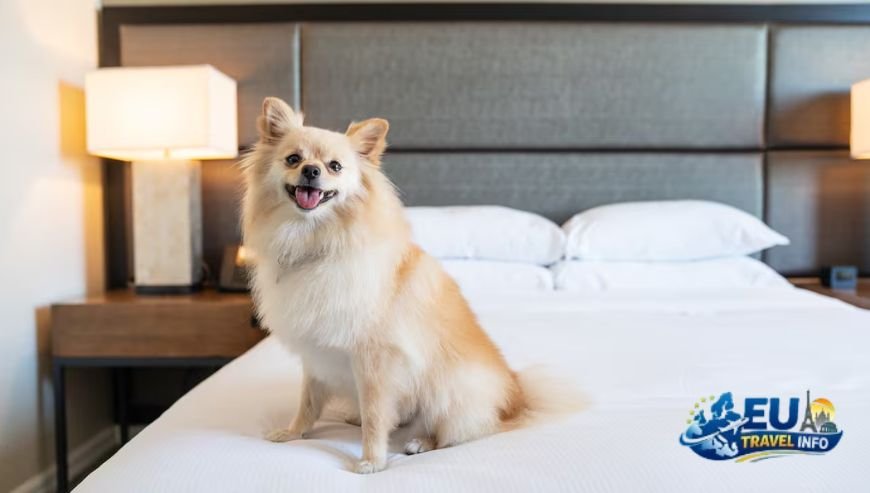
I spent a long time researching the best pet friendly hotels in Madrid. I wanted luxury but also comfort for my dog. I found some amazing spots.
- Only YOU Boutique Hotel Madrid is a total gem with a 9.2 rating. They actually give dogs their own welcome kit. It costs around €250 per night.
- Hotel Indigo Madrid – Gran Vía has an 8.9 rating and a rooftop pool. It is very central and costs about €160.
- NH Collection Madrid Gran Vía is great if you have a small pet and want professional service. It has a 9 rating and starts at €150.
- Hotel Catalonia Plaza Mayor is perfect for art lovers. It is close to the Prado Museum and has a 9.1 rating. The price is around €140.
- Petit Palace Savoy Alfonso XII sits right across from Retiro Park. This is the best spot for morning walks. It has an 8.8 rating, and pets stay free. Rooms start at €130.
Gradually, I realized that some neighborhoods are better for pets than others. I looked at Lavapiés first. It is very diverse and has great food. However, some people say it is a bit “rough around the edges” with some loitering and petty theft. I preferred the vibe of Chamberí and Salamanca. These areas felt a bit safer for late-night walks. Similarly, staying near Atocha is smart if you want to take day trips to places like Toledo.
Navigating the City Streets
I was worried about getting around. Is Madrid dog friendly when it comes to the train? Yes, but there are rules. The Madrid Metro allows dogs. I could not go during rush hours though. On weekdays, dogs are banned from 7:30 to 9:30, 14:00 to 16:00, and 18:00 to 20:00. In July and August, they can ride all day. My dog had to wear a muzzle and be on a lead shorter than 50 centimeters. We always had to stay in the last carriage.
The Cercanías commuter trains also allow dogs of any size for free. They must be muzzled and on a lead. On top of that, I discovered the Renfe high-speed trains. They have a great program for dogs up to 40 kg. I had to pay an extra €35 for my dog to have the seat next to me. Renfe provided a travel kit with a seat cover and a mat. I had to arrive 40 minutes early to show her vaccination record and insurance policy. They recommend not feeding the dog for three hours before the trip to avoid sickness.
Walking is still the best way to see the city. I noticed that most people in Madrid adore dogs. You will see water bowls outside many cafes. Therefore, you do not always need to take the train. Just bring comfortable shoes.
Discovering Dog Friendly Places in Spain: Madrid’s Parks
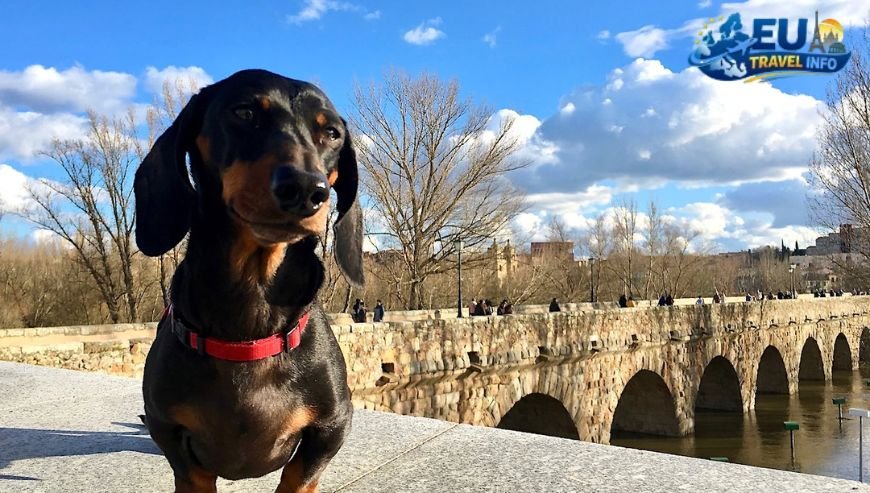
Madrid is a “green lung” full of parks. My dog’s favorite was definitely Retiro Park (El Retiro). It is huge. It has a lake where you can even rent boats. Dogs can be off-leash during certain times, usually early morning and late evening. I found two designated off-leash areas and even agility zones.
- Madrid Río is a long promenade along the river. It has grassy banks and cafes.
- Casa de Campo is the largest space. It feels like a wilderness. It is perfect for long hikes.
- Parque Juan Carlos I is a bit further out but very modern. It has sculptures and lots of room to run.
- Parque del Oeste offers beautiful views of the Royal Palace. It is very peaceful.
- Parque de la Cuña Verde de Latina has a dedicated fenced area with agility equipment.
- Parque de Berlín is charming and has pieces of the Berlin Wall.
Later, I ventured a bit outside the city center. Parque Cerro del Aire in Majadahonda has one of the largest dog parks at 30,000 square meters. It even has tunnels and seesaws for the pups. Additionally, the Sierra de Guadarrama mountains are just an hour away. My dog loved the trails and cooling off in the streams.
Culture and Dining with Your Best Friend
You might think museums are off-limits. You would be wrong. The Museo Nacional de Ciencias Naturales (MNCN) is one of the first in the world to let dogs inside. They call it “Dogs day”. My dog could join me every day during opening hours. I had to keep her on a lead shorter than 2 meters. She needed her vaccination record and liability insurance. However, she was not allowed in the museum gardens. It was such a cool experience to see dinosaur bones with my dog by my side.
Food is a big part of travel. I found many dog friendly places in Spain to eat.
- Frida Café in Chueca has a lovely terrace for pets.
- El Perro y la Galleta is actually dog-themed and gives out treats.
- Federal Café has several spots with dog-friendly patios.
- The Toast Café in Chamberí is great for brunch.
- Yeca Estrit Fud in Lavapiés serves inspired Asian dishes on their terrace.
I always checked the rules before sitting down. Some places are stricter than others. Generally, if there is a terrace, you are usually safe. Madrileños love to eat late, often after 10 PM, because it is cooler. You will see many people walking their dogs at midnight for the same reason.
Local Rules and Fines
You must be careful with the local laws. Madrid takes its rules seriously. First of all, dogs must be leashed in all public areas like streets and plazas. If you are caught with an off-leash dog where it is not allowed, you could face a fine between €300 and €600.
Cleaning up is the most important rule. You must pick up dog waste immediately. Fines for leaving a mess are heavy, ranging from €750 to €1,500. Some people even recommend washing away dog urine with water. If you do not, you might get a warning or a small fine of €150 to €300.
Plus, there are special rules for Potentially Dangerous Breeds (PPP). This includes breeds like Pit Bulls, Rottweilers, and American Staffordshires. These dogs must wear a muzzle at all times in public. Their owners must be over 18 years old and have specific insurance. Walking one of these dogs without a muzzle can cost you up to €2,400.
Services and Health
If you want to spoil your pet, Madrid has plenty of options. There is a Mr. Miau & Mrs. Guau Pet Spa for luxury grooming. Urban Dog Club is a high-end boutique if you want to buy a stylish new collar. I also noticed huge pet stores like Kiwoko and Tiendanimal all over the city. Kiwoko stores even have an “experiential approach” where you can shop with your pet.
Additionally, I kept a list of emergency vets. You never know what might happen.
- Hospital Veterinario Puchol on Calle Embajadores is open 24/7.
- Hospital Veterinario Los Madrazo on C/ San Lucas is another 24-hour option.
- Madrid Centro veterinary clinic is a massive new facility covering 1,000 square meters for emergency care.
Having these numbers made me feel much safer. My dog is a senior, so I always worry a little more. Gradually, I relaxed and just enjoyed the city.
Practical Tips for a Smooth Trip
I learned a few “pro tips” during my stay.
- Bathing your dog the day before a long train or flight helps with odors.
- Bringing a familiar blanket or a quiet toy makes them feel at home.
- Avoid using escalators at train stations; elevators are much safer for paws.
- Check the weather. Madrid gets very hot in August, often hitting 100 degrees. We walked in the shade as much as possible.
- Keep all documents handy. I carried her passport, rabies certificate, and insurance papers everywhere.
One more thing to remember is the tapeworm treatment. If you plan to leave Spain and visit Ireland, Finland, or Norway, your dog needs a special treatment 1 to 5 days before you go. Spain does not require this for entry, but those other countries do.
FAQ
- Is Madrid, Spain dog friendly?
- Yes, Madrid is considered an incredibly dog-friendly city. It features sprawling green spaces, pet-friendly cafés, and public transportation that accommodates dogs under specific conditions.
- Can I bring my dog to Spain on vacation?
- Yes, you can bring your dog to Spain by ensuring they are identified with a microchip, have an up-to-date rabies vaccination, and possess a European pet passport or a valid health certificate.
- Can dogs take the metro in Madrid?
- Yes, dogs are allowed on the Madrid Metro outside of rush hours. They must be muzzled, kept on a lead shorter than 50 centimeters, and travel in the last carriage. Small dogs in carriers are permitted at any time.
- Are dogs allowed in taxis in Spain?
- Many taxis and rideshares in Madrid accept dogs, though travelers should always confirm this when booking the service.
- Can dogs go in restaurants in Spain?
- Many restaurants and cafés in Madrid allow dogs, particularly on outdoor terraces. Some specific establishments, like El Perro y la Galleta, are dog-themed and especially welcoming.
- Do buses in Spain allow dogs?
- In Madrid, buses generally only allow small pets if they are inside a carrier.
- Can dogs go on beaches in Spain?
- Yes, there are specifically authorized beaches for dogs in Spain.
- Can I take my dog on international flights?
- Yes, dogs can travel on international flights provided they meet the health and documentation requirements of the destination country and comply with airline-specific policies.
- What to do in Madrid with a dog?
- You can visit large parks like El Retiro or Casa de Campo, visit the National Museum of Natural Science (MNCN) on designated days, or enjoy pet-friendly cafés in neighborhoods like Chueca and Lavapiés.
- What are the dog rules in Spain?
- Dogs must be leashed in public, and owners must pick up waste immediately to avoid heavy fines. Potentially dangerous breeds (PPP) must wear a muzzle at all times and have specific liability insurance.
- Is Madrid pet friendly?
- Yes, it is described as a city that perfectly balances urban life with nature, offering many dog-friendly parks, transport, and restaurants.
- How can I take my dog on holiday to Spain?
- Preparation involves microchipping, rabies vaccination, obtaining a health certificate endorsed by the USDA (for U.S. travelers), and booking pet-friendly accommodation.
Concluding words
Madrid is a premier destination for a pet-friendly vacation, offering a vast array of dog-friendly parks like El Retiro and Casa de Campo. The city facilitates easy travel with accessible public transportation on the metro and commuter trains, alongside a variety of hotels and restaurants that welcome four-legged guests. By following local regulations—such as mandatory microchipping, vaccinations, and leashing—you and your pet can enjoy a seamless and cultural Spanish experience.