I have walked the cobblestone streets of Paris more times than I can count. Every time I return, the magic of the city stays with me. It is a place of style, culture, and deep history. Many people tell me that they avoid this beautiful country because they fear the cost. They see the fancy hotels and the expensive menus and they turn away. I am here to tell you that a journey through France does not have to empty your bank account. In fact, France welcomes over 90 million travelers every year because it offers so many affordable ways to explore. You just need to know the right Budget Travel Tips France fans use to save their hard-earned money.
Paris. The city of light. A dream for many. It is true that Paris can be a “moveable feast” as Hemingway said. However, you do not need a king’s treasure to enjoy it. If you plan with care and avoid a few common mistakes, you will have a trip that you will remember forever. I have put together this best travel guide for France to help you navigate the year 2026.
Understanding Your France Travel Budget
First of all, you must understand the numbers. How much is a trip to France for a week? This is the question everyone asks me. The answer depends on your style. If you are a backpacker, you can survive on about 80 EUR per day. This covers a bed in a hostel, simple meals, and free sights. Similarly, a mid-range traveler will likely spend around 175 EUR per day. This allows for a private room and more paid tours. If you want a more comfortable experience, a total daily expense of about 155 € per person is a solid estimate for a pair of travelers. This budget breaks down into approximately 25 € for transport, 65 € for a hotel, 50 € for food, and 15 € for sights.
Your france travel budget will go much further if you look beyond the big names. Paris is wonderful, but it is also one of the most expensive spots. Add 30% to hotel prices when you stay in the capital. Later, I will show you how to find cheaper cities that are just as beautiful.
The Cheapest Way to Travel in France
I always tell my friends that how to travel around France by train is one of the most important skills to learn. The train network is fast and covers the whole country. A Eurail Pass is a great value for those who want to see many regions. You can choose a Global Pass for all companies or a One Country Pass if you stay within the borders. Plus, most trains do not even require a seat reservation, though high-speed TGV trains do.
However, the train is not always the cheapest way to travel in France. If you want to save every cent, look at the bus. BlaBlaCar Bus offers incredible deals. I have seen tickets from Paris to Reims for as low as 4.99 €. You can even go from Lyon to Saint-Étienne for just 3.99 €. These buses are comfortable and reliable. On top of that, you can manage your whole trip from your phone.
Another secret is ridesharing. BlaBlaCar lets you join local drivers who are already going your way. You just help pay for gas. It is often cheaper than the train and much more interesting because you get to talk to locals.
How to Go to France for Cheap: Sleeping and Eating
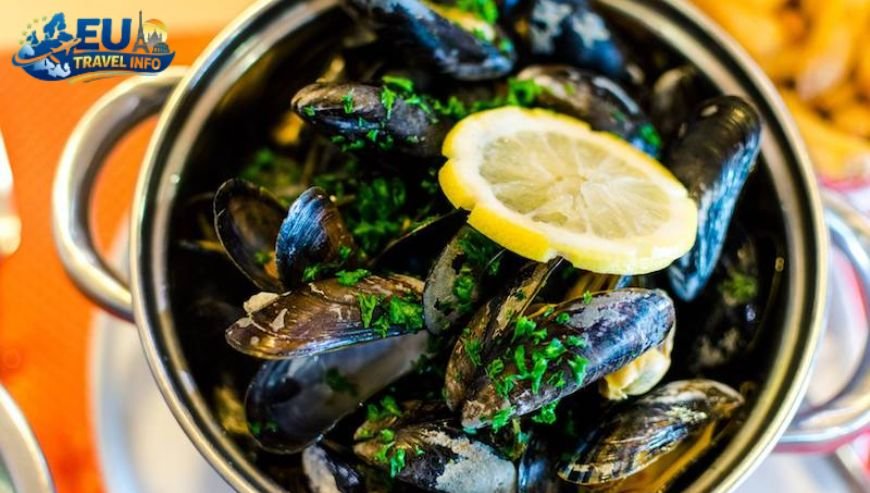
Where you sleep will be your biggest cost. A double room in a one-star hotel averages about €75, while a two-star is €95. Bed and Breakfasts, known as Chambres d’Hote, are also around €75 per room. I suggest that you book your hotels well ahead of time, especially in Paris or the Riviera.
Eating out is where many travelers lose their budget. A typical “Menu du jour” or menu of the day in a traditional restaurant costs between 16 € and 28 €. This usually includes three courses and bread. Therefore, I always eat my main meal at lunch. Many restaurants offer these fixed prices only during the day. In the evening, the same food might cost much more.
Additionally, you should avoid “tourist traps.” These are easy to spot. Look for staff standing outside trying to pull you into the restaurant. Avoid them at all costs. Instead, do as the locals do. Go to the market. The Marché d’Aligre in Paris is a fantastic place to buy fresh food. A traditional baguette costs only about €1.30. Buy some cheese, fruit, and wine, and have a picnic in a park. It is fun and saves a lot of money.
When you need groceries, choose your store wisely. E.Leclerc is my favorite for quality and low prices. Lidl and Aldi are also very cheap options. On the contrary, stores like Monoprix are much more expensive and are better for wealthy shoppers.
Paris: The Royal Crossing on a Budget
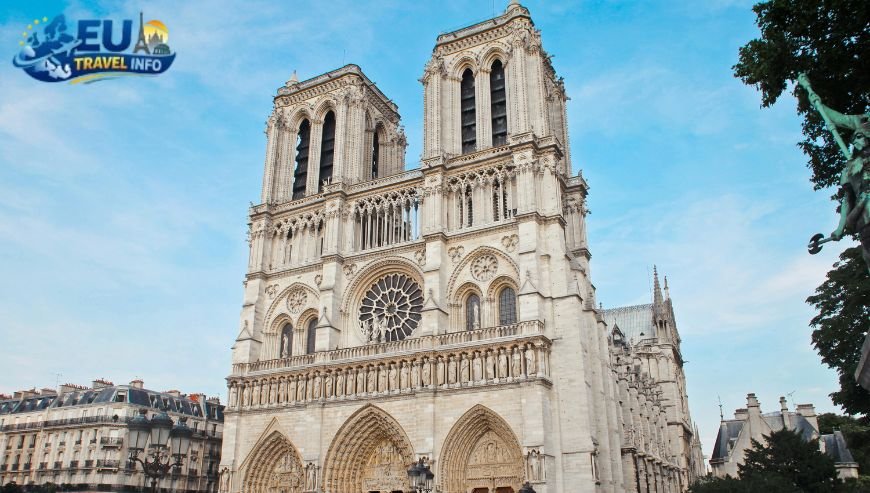
You do not need to pay for every view in Paris. The city itself is an open-air theater. I love the “Royal Crossing.” You start at the Tuileries Garden and walk toward Notre Dame. You can see the Louvre palace grounds and the oldest clock in Paris at the Conciergerie for free.
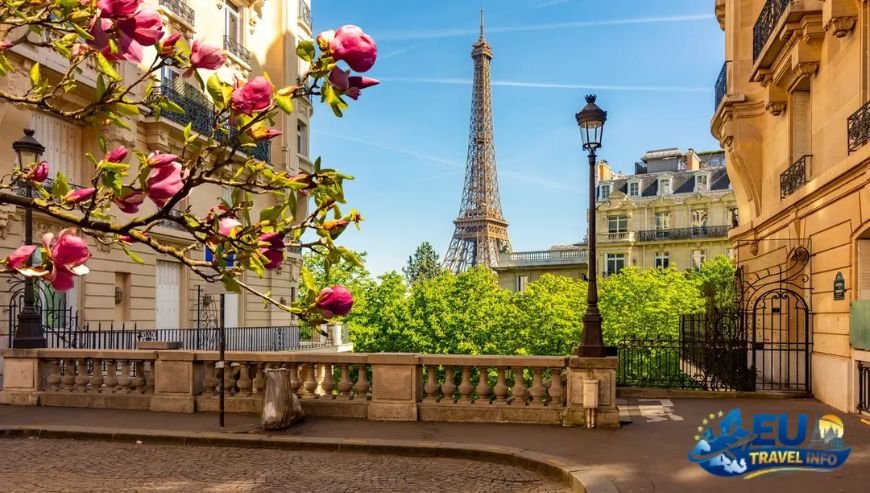
If you want the best view of the skyline, do not wait in the long lines for the Eiffel Tower. Head to the roof of Galeries Lafayette. Access is free, and the view of the Opéra Garnier and the Eiffel Tower is breathtaking. Another great spot is the Belvédère de Belleville, where the Eiffel Tower aligns perfectly with the other monuments.
Museums can also be free. Many municipal museums, like the Musée Carnavalet, have free permanent collections all year. These collections show the history of Paris and are housed in beautiful historic buildings. Also, national museums like the Louvre and Orsay are free on the first Sunday of every month. Be careful, though. These days are very crowded. If you plan to see many museums, a Paris Museum Pass is a must. A two-day pass costs 52 EUR and lets you skip many lines.
South of France on a Budget
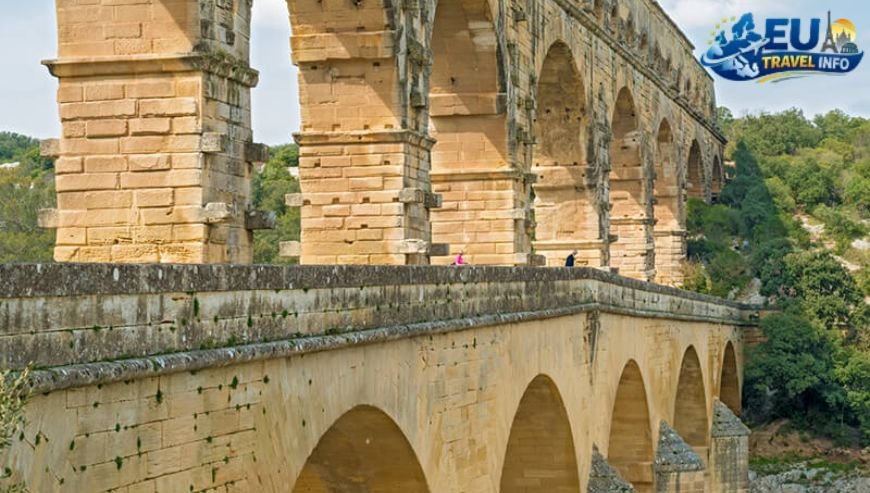
Most people think of the expensive Riviera when they hear “South of France.” I am here to tell you that you can enjoy the South of France on a budget if you pick the right towns.
Albi is a stunning city in the south known for its red brick buildings. The Sunsili Cathedral is a masterpiece that dominates the skyline. You can wander the narrow cobblestone lanes of the old town for free. Similarly, Béziers is one of the oldest cities in the country. The view from the Pont Vieux bridge is one of the most famous in France. You can also visit the nine locks of Fonseranes, which is a remarkable feat of engineering on the Canal du Midi.
Further west, you will find Tarbes at the base of the Pyrenees. It offers clear views of snow-covered peaks. You can walk through the Jardin Massey, a beautiful 19th-century botanical garden. Finally, Perpignan sits near the Mediterranean Sea and has a strong Catalan feel. The Palace of the Kings of Majorca rises above the city and offers wide views of the rooftops. These cities offer a real French experience without the high prices of the coast.
Hidden Gems You Should Not Miss
Gradually, I have learned that the best travel memories come from the “hidden gems.” These are smaller towns that most tourists skip. Poitiers is often called the “city of 100 spires” because it has so many historic churches. The Baptistry of Saint-Jean is one of the oldest Christian monuments in Europe.
Saint-Étienne is another great choice in east-central France. It was once an arms factory, but now it is a center for design and creativity. You can even take a guided tour of a former coal mine to see the city’s industrial roots.
In the northeast, Metz is a city shaped by a long history. The Metz Cathedral is known as “God’s Lantern” because of its vast stained-glass windows. You can also visit the Centre Pompidou-Metz for contemporary art. These destinations are much cheaper than Paris but just as full of culture.
Practical France Travel Tips for 2026
I have a few more tips to help you stay safe and save money. First of all, the water is free! In any restaurant, you can ask for a “carafe d’eau”. This is tap water, and it is perfectly safe to drink. Do not let them charge you for bottled water. Also, Paris has many Wallace fountains that provide free clean water to everyone.
Additionally, be aware of “tourist scams” in big cities. People might ask you to sign a petition or try to play a card game on the street. Simply decline and walk away. Petty theft can happen on crowded trains, so keep your wallet in a safe place.
Public transport in Paris is very efficient. A single metro ticket costs 2.50 EUR. However, if you use the train a lot, a day pass for 12 EUR might be a better deal. Avoid taxis because they are very expensive. Uber is a bit cheaper, but the metro is always the best choice for your wallet.
Why You Should Visit France Now
France is more than just a place on a map. It is a feeling. Whether you are eating a crepe on a park bench or looking at a 13th-century cathedral, the experience is priceless. I have found that you do not need luxury to find beauty. In fact, staying in a local rental and cooking your own meals can make you feel like a resident rather than a tourist.
The year 2026 is a perfect time to go. The country is ready for visitors and offers so much variety in scenery and culture. From the volcanic stone of Clermont-Ferrand to the porcelain history of Limoges, there is a story at every corner.
Finally, do not forget to slow down. Do not try to see everything in one week. Spend a few nights in each stop. This allows you to really know the place. It also saves you money on transport.
I hope this guide helps you plan your dream trip. France is waiting for you. It is time to pack your bags and go!
“If you are lucky enough to have lived in Paris as a young man, then wherever you go for the rest of your life, it stays with you…” – Ernest Hemingway.
FAQ
How to travel cheaply in France?
You should use the BlaBlaCar Bus for long trips across the country. Some tickets for these buses cost less than 5 €. Additionally, you should choose a Eurail Pass for the train system. You will save a lot of money if you avoid expensive taxis.
How much should I budget for a trip to France?
A backpacker needs about 80 EUR per day to cover basics. On the contrary, a midrange traveler spends around 175 EUR per day for more comfort. Travelers in pairs should budget about 155 € per person for their daily total. Hotel prices average about 75 € for one star and 95 € for two stars.
What are some travel tips for France?
First of all, you must book your hotels early to get the best deals. You should also ask for a free carafe d’eau at dinner to avoid paying for water. Later, you can get a Paris Museum Pass to save on entrance fees. Plus, you should eat your main meal at lunch when prices are lower.
What is the cheapest way to go to France?
Buses from nearby countries like The Netherlands start at 18.99 €. Plus, ridesharing through BlaBlaCar is an affordable option for travelers. You can also find cheap flights by using search engines like Skyscanner.
How much is a 3 day metro pass in Paris?
A one-day pass costs 12 EUR. A ParisVisite pass for one to five days starts at 12 EUR as well. Therefore, a three-day pass will likely be more than this starting price.
Is $5000 enough for a vacation?
This amount is plenty for a long trip. A midrange traveler spends about 175 EUR a day, so this money would last for nearly a month. On top of that, a backpacker could travel for two months with this budget.
How much money is required for a France trip?
You need at least 80 EUR each day for a basic experience. Therefore, a week in the country costs roughly 560 EUR plus the cost of your flight.
Is France an expensive country to visit?
It has a reputation for high costs, but it is accessible if you use local hacks. You can find many free museums and cheap street food if you look for them.
How much does a Paris trip cost?
Hostel beds in the city cost between 40 and 90 EUR. A budget hotel room is usually between 100 and 200 EUR. Additionally, a prix-fixe lunch costs between 20 and 35 EUR.
How much to budget for Nice, France?
The Riviera is very busy and more expensive in the summer months. You must book well ahead for hotels in this region. Hotel prices in the South of France on a budget may be higher than in smaller central towns.
What to beware of in Paris?
You must watch out for pickpockets on the metro and in crowded spots. Also, you should avoid people who ask you to sign petitions on the street. Be careful of the ring scam and the card game scam as well.
What is the #1 tourist attraction in France?
The Eiffel Tower is the most famous symbol of the city and the country. It was built for the 1889 World Fair and is now loved by everyone.
What are your top 10 travel tips?
Book your rooms and tickets ahead of time. 2. Eat the fixed lunch menus. 3. Use the metro instead of taxis. 4. Request free tap water. 5. Have a picnic in the local parks. 6. Buy a Museum Pass to skip lines. 7. Visit national museums for free on the first Sunday of the month. 8. Use BlaBlaCar for cheap travel. 9. Slow your pace and stay longer in each town. 10. Shop for fresh food at local markets.
What is the cheapest part of France to visit?
Lesser-known towns like Poitiers, Limoges, or Albi are very affordable. Uzerche and Mirepoix also offer an authentic lifestyle at a low cost. These smaller locales are perfect for travelers who want to save money.
Concluding words
France offers a beautiful mix of history and culture that anyone can enjoy in 2026. You can save a lot of money by using buses, eating lunch menus, and visiting smaller towns. You should slow down your pace to see the true beauty of the country.
My best travel guide for France shows that a dream vacation is possible without a high cost. You should start planning your affordable journey through the South of France on a budget right now.