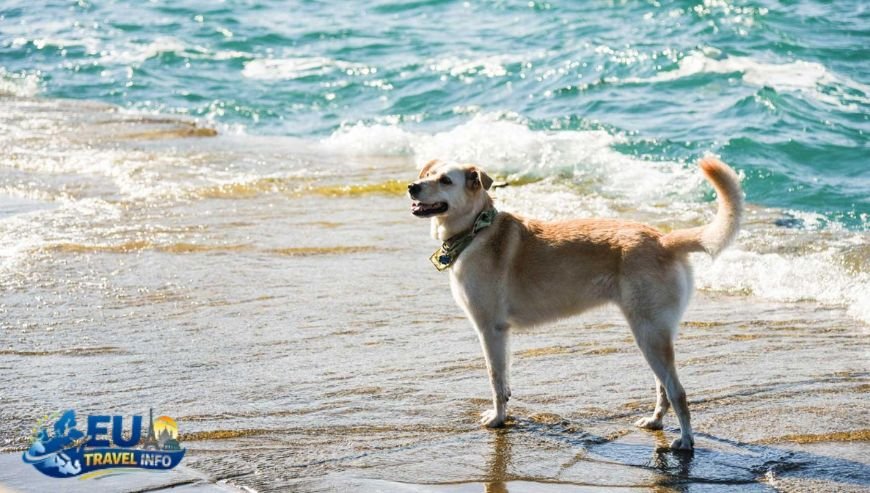
I love to travel across the beautiful country of France with my four-legged best friend. France is a true heaven for all canines because of its massive coastline. You will find hundreds of miles of beaches that provide plenty of chance for sandy paws and soggy coats. This experience is utter bliss for us both. However, I learned the hard way that not every beach is open to pets. France has about 10 million dogs in its population. A study even shows that 40 percent of French owners think their pets are the most important thing in their lives. Therefore, it is no surprise that there are over 250 dog friendly beaches in France to choose from.
First of all, I want to share my personal list of the top spots you should visit. This guide will help you find the best Some Dog Friendly Beaches in France. You can use a dog-friendly beaches france map to see all these wonderful locations. My travels usually begin where the sand is vast and the air is crisp.
The North and the Opal Coast
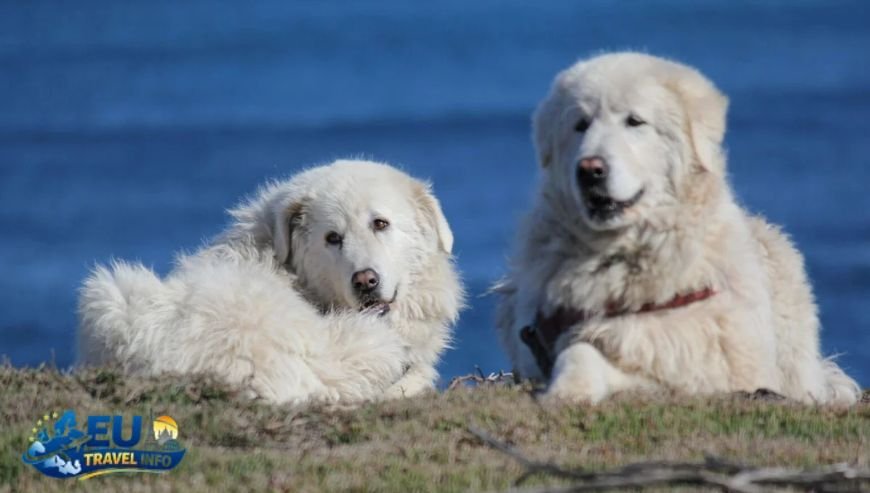
I always start my trips in the north. A short 55-minute drive from Calais brings you to this chic seaside town. The le touquet dog friendly beach is a real treasure for nature lovers. Plus, the Baie de Canche area offers a beautiful natural setting with dunes and a huge stretch of sand. My dog loves to run here. You must keep your dog on a lead near the nautical base. Additionally, dogs are allowed outside the zone with beach cabins. The rules change during the summer season. From March 15 to September 15, you cannot go to the central part of the seafront. However, the nautical base areas remain open to us. It is a wonderful place for a long walk in the sea air. This town has two beaches, Plage Nord and Plage des Dunes, which allow dogs all year round.
Later, I often drive an hour south of Calais to reach Berck. The Plage des Sternes is very welcoming to our furry friends. It is a vast beach with fine sand. Dogs are allowed outside the monitored swimming areas. Also, you must use a lead when you are near the crowds. Every April, the town holds an International Kite Festival. At that time, the sky is full of bright colors. On top of that, there is a large colony of seals here. I do not take my dogs too close because they might bark and scare them. Therefore, I stay in the quiet North Beach area. Plus, the town has a “toutourisme” certificate which means they really love doggy guests.
The journey continues toward even more dramatic views. Escalles is only a tiny distance from Calais. This village is surrounded by green hills and huge cliffs. The beach is very large and flat. It is perfect for active dogs who need to burn off energy. At that time, I felt like I was in a different world. Dogs are allowed on the beach all year. However, they are banned from May 15 to September 15 during the day. You must keep your pet on a lead at all times here. The views of the Cap Blanc-Nez cliffs are breathtaking. Similarly, the nearby WWI monument adds a bit of history to your walk. It is a wild and peaceful haven for us.
The Opal Coast has many secrets for travelers. Wissant is a quaint town located only 25 minutes from Calais. It has three different beaches. The one you should look for is Plage Dune d’Aval. The local government permits dogs here all year round. Plus, the scenery with the cliffs is spectacular. Dogs are allowed on the north and south sides of the beach. On the contrary, they are not allowed on the sand in the bathing area during summer. This ban lasts from July 1 to August 31 between 10 am and 8 pm. Therefore, I prefer to visit in the early morning. The wide open spaces are great for freedom.
The beaches of the ‘Opal Coast’ stretch for around 10 miles along the coast. You will find them just north of Dunkirk up to the Belgian border. The beach of the Dune Marchand is shared between the town of Bray-Dunes and Zuydcoote. Also, the West beach of Bray-Dunes stretches along the Digue de la Mer. The end of this beach is reserved for beach sports like sand yachting or windsurfing. Please note that dogs are allowed on a lead on this beach outside the supervised area. Gradually, we reach the most northerly spot. Perroquet Beach offers a totally wild environment towards Belgium. It is bordered by a protected natural site with paths for a walk. This vast sandy beach is bordered by imposing dunes. However, be careful as swimming is not supervised. Dogs on a leash are tolerated on the seafront.
These northern shores offer a perfect start for any pet owner who wants to explore.
Normandy Adventures and History
Next, I head into Normandy. This region has a record of over 40 beaches that allow pets. You should definitely check a dog friendly beaches normandy map to plan your route. Omaha Beach is one of the most famous D-Day beaches. It is a stunning 2.5 km stretch of white sand. My dog finds it very exciting to explore the history here. You can find many monuments to the Allied landing from June 6, 1944. Dogs are welcome all year round on the sand. However, you must use a lead during the summer months. The beach is supervised in July and August. Plus, it is very quiet at the ends of the beach. Dogs on a lead are permitted on the beaches at Vierville-sur-Mer, Grandcamp-Maisy, and Colleville-sur-Mer, but not in the bathing areas.
The central beach at Quiberville-sur-Mer is a real beauty. It is part of the Terroir de Caux region. Massive cliffs of the Alabaster Coast tower over the sand and pebbles. Dogs can go on both the sand and the pebbles. The area gets very busy in the summer. There is a water sports center and a playground for children. Therefore, you should keep your dog on a lead. Later, you can buy fresh fish or oysters from the huts on the promenade. On top of that, the water is crisp and clean. It is a great place to stop for a few hours.
The coast of Normandy never fails to impress. I often travel to the small town of Coutances in the Manche department. The main beach at Gouville-sur-Mer is the most dog-friendly in the area. It is an unspoilt spot where you often see fishermen on the shore. Dogs on a leash are allowed here. Also, the beach has supervisors during July and August. The nearby Anneville-sur-Mer beach also has vast sand flats. It is far from the crowded tourist zones. Therefore, your dog can run with a lot of freedom. Similarly, the dunes are a fun place to explore.
Another spot is hidden away from the main roads. Plage d’Antifer is one of the most gorgeous beaches in Normandy. It is dominated by the shimmering cliffs of Etretat. Access is only possible by a walk on foot from the center of Le Tilleul. Though it takes some effort, the views are worth it. You will see a sweep of shingle and sand banks at low tide. Dogs must stay on a lead at all times. Additionally, the beach is very peaceful. You can soak up the views of Cape Courtine while your dog sniffs around. It is a true hidden gem for us.
History and nature blend perfectly in these Normandy towns.
The Rugged Beauty of Brittany
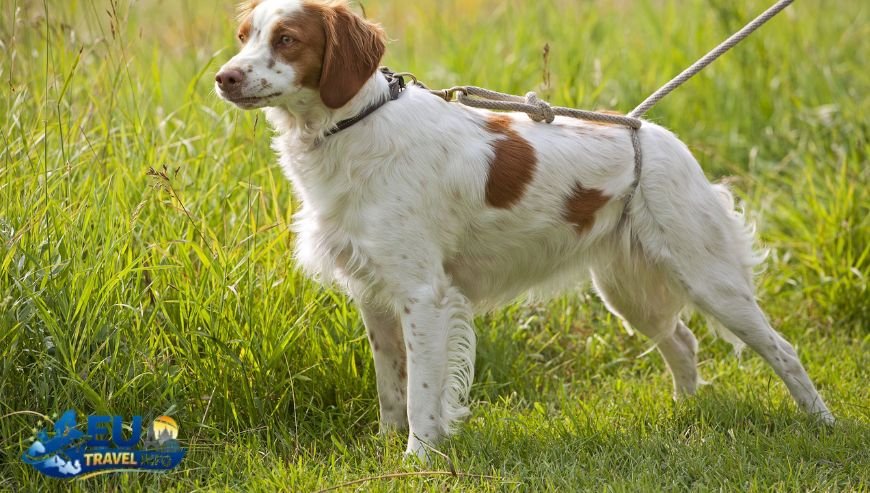
Dog Friendly Beaches in France are also plentiful in the west. Brittany is my next big stop. All beaches in the Santec region are now dog-friendly. You should consult a dog friendly beaches brittany map to see how the coast is shaped here. Dossen Beach offers kilometers of sand for free exploration. Plus, it is a great spot for water sports like surfing. I find the wide open space very relaxing. Similarly, the Plage de l’Horn to the south is rare and insolite. It is hidden near a forest and dunes. Your dog can enjoy the maritime plants and sand. At that time, it felt like our own private paradise.
The port towns have their own charm. When I arrive in the port town of Roscoff, I head straight to Laber beach. It has crystal-clear blue water and golden sand. It is a perfect place for a walk all year round. You must keep your dog leashed, but the area stays quiet even in the high season. Later, you can visit a café on the square for an espresso. The wild dunes are a fun place to play. Additionally, the beach is long enough for a good exercise session. It is a top choice for brittany dog-friendly beaches.
The north-west is filled with magical sights. If you visit the castle of Mont Saint-Michel, do not miss Hirel Beach. It is just along the coast. The sandy expanses are very wide. Therefore, you can let your dog off the leash at low tide. You can even dip your feet in the water. However, you must watch out for sand yachts. They race along this beach very fast. Similarly, kite surfers are often out on the waves. There is a large playground nearby if you have children. Plus, it is a safe bet for a safe run.
The islands are another great option. The Glenan Islands of Brittany are possibly the highlight of an exploration. The beach has no restriction on dogs. Since only a limited amount of visitors can reach the island on any one day there is plenty of space for dogs to frolic. However, some visitors report that dogs might not be permitted on some beaches there in late summer. It is always best to check the local dog friendly beaches near me map for live updates.
The Quiberon peninsula has a remote end of the earth feel. The savage northern coast is wild with large waves and dramatic cliffs. There is a huge dog friendly beach just under the fort as you cross the isthmus. The sand is silvery and the water is deep blue. On the contrary, the southern coast has sheltered coves but does not allow dogs on the sand. Still, I enjoyed wonderful walks along the rocky coastline.
Brittany offers a wild escape for you and your pet.
The Sun and Sand of the South
Finding dog friendly beaches in south of france can be a bit harder during summer. However, the city of Bandol created a dedicated beach for dogs. It is a pebble beach located near the port. The water is very transparent and clear. Since it is quite new, it is not very crowded yet. It is one of the best spots in the region. Your dog can swim and play without stress. Similarly, the nearby Cassis has the Calanques of Port-Miou which allow pets. The scenery there is famous for its beauty.
The Mediterranean coast has a few more exceptions to its strict rules. The Hérault department is usually very strict. La Grande Motte is an exception. Plage du Grand Travers is open to dogs all year round at Access 60. It is a massive sandy beach. It is perfect for watching the sunset with your pet. The water is shallow, which is good for dogs that are not strong swimmers. On top of that, there are showers and toilets at Access 50. However, it can get very busy in the summer. Therefore, I go early to find a good spot.
Another official spot is near a cool forest. Plage de la Tamarissière in Agde is the only official dog beach in its area. It is open all year. Your dog can run free from 7 am to 9 am and from 7 pm to 9 pm. Outside these hours, you must use a lead. The beach is about 650 meters long and has fine sand. Plus, it is next to a forest. This provides nice shade for those hot days. Similarly, it has parking and restroom facilities nearby. You must pick up all waste because it is monitored strictly.
The French Riviera also has several welcoming spots. You can bring your pet to:
- Cagnes-sur-Mer (Plage de l’Hippodrome, dogs on a leash only).
- Saint-Laurent du Var (Plage des Vespins-Plage du Port).
- Nice (Plage de la Lanterne and Plage de Lenval).
- Cap d’Ail (Plage de la Pointe des Douaniers).
- Villefranche-sur-Mer (Plage de l’Ange Gardien).
- Saint-Jean Cap Ferrat (Plage Cros deï Pin, dogs allowed in the sea).
- Roquebrune-Cap Martin (Plage du Golfe Bleu).
- Menton (Plage du Casino and Plage d’Hawaï, dogs on a leash only).
In Nice, the Plage de la Lanterne and the Plage de Lenval on the Promenade des Anglais were designed for dogs. Quirky dog sculptures mark the area. These represent the mascot Totor the dog. Only dogs belonging to category 3 are permitted to run freely and swim here. Other breeds have restrictions.
The south is hot but very rewarding for a swim.
Crossing to the Island of Beauty: Corsica
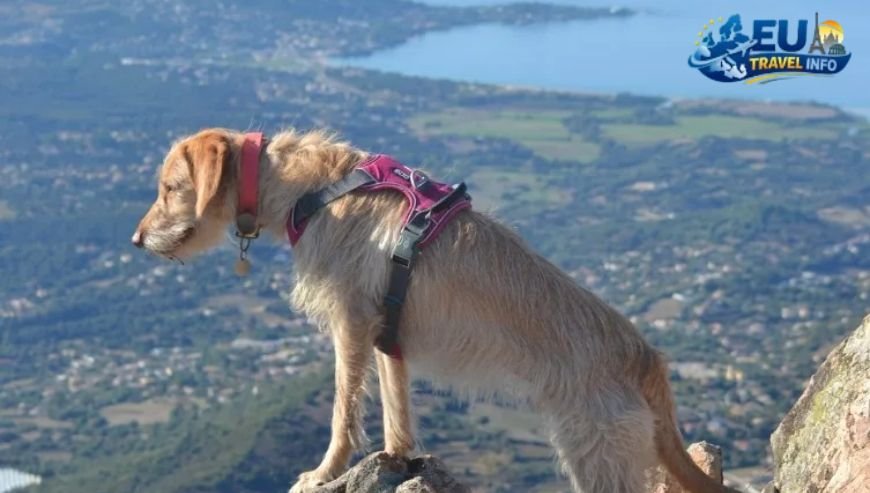
Corsica is a true dog paradise. I believe it is the absolute top spot for us because the local people do not mind pets as much as on the mainland. This island has over 73 dog friendly beaches for you to visit. Santa Giulia is one of the most famous beaches in the south of the island. The water is incredibly clear. You can see the sea floor easily. Dogs are allowed here on a leash. The water is shallow, so it is perfect for “paddling”. However, it gets very crowded during the summer. It is one of the most beautiful spots in all of France. Therefore, you should definitely add it to your list.
The top-rated beach on the island is also pet-friendly. Palombaggia beach has white sand, red rocks, and turquoise water. Dogs are allowed here as long as you are careful about waste. Plus, there are beautiful umbrella pines for shade. It is a dream location for any traveler. My dog loves the soft sand. However, some guides say it is closed to dogs during the peak summer season. It is crucial to check the local signs. Similarly, the Saleccia beach near Saint-Florent offers a wild setting. You can reach it by boat or a 4×4 vehicle. It is truly spectacular.
There are even more hidden coves to explore. Bodri beach on Ile Rousse is particularly popular with dog owners. Also, Caspiu Beach near Porto allows dogs to romp on the sand and swim in the sea. If your dog likes a boat trip, you can visit Ile Ste Marguerite or Ile St Honorat. Surprisingly, both Lérins Islands allow dogs to explore their rocky coves. Just keep them on a lead when you are on land.
Corsica is a stunning place where dogs can truly feel at home.
Exploring the Atlantic Coast and Landes
The Vendée region is a leader in welcoming dogs. La Tranche-sur-Mer is one of the few places with real beach access all year. Terrière Beach is a wild and natural spot. Dogs are allowed on a lead outside of the supervised zones. During summer, restrictions apply between 9 am and 7 pm. However, you can walk freely before or after those hours. The beach is very spacious. Therefore, your pet can run and play in the air. It is a truly relaxing destination for a family.
Another massive stretch of sand waits nearby. Belle Henriette Beach is 3 kilometers long. On top of that, it is open to dogs all year round. The parking is even free for visitors. It is located near a nature reserve lagoon. Therefore, the scenery is very beautiful. Additionally, it is a great place to avoid the big crowds. Gradually, you will see why this town has the “Toutourisme” label. They even offer special kits for pet owners at the tourist office.
Further south, the landscape changes. When people ask for dog friendly beaches near me, I suggest looking in Charente-Maritime. The South Beach of Fouras is a popular choice. It is located near the town of La Rochelle. The area is very pretty for a family holiday. Dogs are allowed here, though you should always check the local signs. Similarly, the Plage de la Coubre to the south is huge. It has massive dunes and is next to a forest. However, the ocean can be violent there. Therefore, you must be careful if your dog likes to swim.
The Landes region is another massive playground. It has 106 km of fine sandy beaches. Mimizan is a great town for us. It has two beaches that accept dogs: La Garluche and Goélands. These beaches are wide and offer plenty of room to walk. After the beach, I like to take the Promenade Fleurie. It has 400 species of flowers and shrubs. My dog loves the new smells there. Plus, the air is very fresh. It is a wonderful place for a day of relaxation.
The Atlantic coast offers vastness that few other places can match.
Strategic Planning for Your Coastal Adventure
Travel to France with a dog is easy if you plan ahead. First of all, you need a pet passport, a microchip, and a rabies jab. For people from the UK, you now need an Animal Health Certificate. If you use LeShuttle, the crossing only takes 35 minutes. They even have special exercise areas for dogs. Additionally, many ferries now offer “dog-friendly” cabins. This makes the long trip to Corsica much better for your pet.
Understanding the beach rules is very important. You should know that there are three types of beach access. Plages autorisées allow dogs all year. Usually, you must keep them on a lead. Plages tolérées have restrictions. These might be special hours like before 9 am or after 7 pm. Finally, Plages interdites are totally banned in summer. If you break the rules, you can get a fine of 150 euros. Additionally, not picking up waste can cost you up to 400 euros. Therefore, always read the signs at the beach entrance.
You must also consider special training. If you have a dog classed as Category 2, you might need to attend a day of certified training to get a permit. Categorized dogs must always be muzzled in public places. If you walk around without a muzzle, you risk a fine of 150 euros.
Preparation is the secret to a stress-free holiday with your pup.
Keeping Your Dog Safe and Healthy
The summer heat in France can be very dangerous. Make sure you have plenty of fresh water and shade. Do not take your dog to the beach during the hottest hours from 10 am to 4 pm. Sand temperatures can reach 50 degrees Celsius. If it is too hot for your hand, it is too hot for their paws. Tarmac roads also get very hot. When it is 25°C outside, the tarmac can reach 52°C. This can cause serious burns.
Sun protection is also vital for pets. You can apply special sunscreen to their nose or ears. Also, salt water is not good for their skin. Therefore, you should rinse them with fresh water after they swim. Make sure they do not drink salt water to avoid intoxication. Salt water can cause digestive or nervous disorders.
Watch out for local nature risks too. In the pine forests of the south, you must beware of processionary caterpillars in spring. These have stinging hairs that cause strong allergic reactions. Anaphylaxis can even lead to death if the dog cannot breathe. If your dog shows signs of discomfort, take it to a vet immediately. Similarly, in Corsica, you should vaccinate against Leishmaniasis. This disease is transmitted by sandflies, which are small mosquitoes very present on the island.
Health and safety must always come first on your travels.
Helpful Labels and Tips for Travelers
Look for the “Toutourisme” label when you travel. Towns with this label have tourist offices that give out “Toutoupacks”. These kits have treats, waste bags, and guides for pet owners. There are over 60 destinations with this label now. Similarly, the “Qualidog” label helps you find the best hotels and campsites. Establishments get a rating from 1 to 4 “truffles”. A 4-truffle rating means they have great services like dog-sitting or welcome kits.
You can also find dog friendly beaches near me by looking for private beaches. In seaside resorts where dogs are not allowed on public sand, some private beaches are dog friendly. It is worth phoning to check if your dog is welcome if you book a sun mattress. French people are usually dog-friendly. This is actually a great way to start a casual chat and meet locals.
The more you know about these labels, the easier your trip will be.
FAQ
Where is the most dog friendly place in France?
I believe Corsica is the absolute top spot because the island has over 73 dog friendly beaches for you to visit. Also, the Pas-de-Calais region in the north is very welcoming and uses the “Toutourisme” program to help owners. Therefore, you will find plenty of space there for your furry friend. Similarly, Normandy is a leader with over 40 beaches that allow pets on the sand.
What beach is the most dog friendly?
I would say Belle Henriette Beach in La Tranche-sur-Mer is the best choice for us. It is 3 kilometers long and allows dogs all year round. Additionally, the Plage de la Tamarissière in Agde is a great spot because it is the only official dog beach in its area. Plus, it is next to a forest that provides cool shade.
Can I take my dog on a beach?
You can certainly take your pet to the coast. France is a true heaven for all canines because of its massive coastline. There are more than 250 dog friendly beaches in France to choose from. However, most public beaches are closed to dogs during the busy summer months. Though it is difficult, you can often find a private beach that allows dogs even if the public sand does not.
Can dogs go on French beaches?
Dogs are allowed on many stretches of sand across the nation. You should look for signs that say plages autorisées to be safe. Additionally, many municipalities are more tolerant with dogs during the winter season. Therefore, a winter walk is often much easier to plan than a summer one.
Which beach is best for dogs?
I think Belle Henriette Beach is the winner because of its massive size. It is a wild and natural spot where dogs are welcome all year. Similarly, Omaha Beach in Normandy is excellent because it offers 2.5 kilometers of white sand. It is very quiet at the ends of the beach, which is perfect for a long run.
Are dogs allowed on Normandy beaches?
Yes, they are! Normandy has over 40 dog friendly beaches along its coastline. You can visit the historic Omaha Beach or the beautiful Gouville-sur-Mer. However, you must keep your dog on a lead during the busy summer months. Plus, it is helpful to use a dog friendly beaches normandy map to find all the best spots.
Is Cote d’Azur dog friendly?
The French Riviera has several spots that welcome our four-legged friends. Cities like Nice have dedicated dog beaches on the Promenade des Anglais. Additionally, several private beaches in towns like Antibes allow pets if you book a sun mattress. However, the region can be very crowded in the summer, so you should go early to find a quiet spot.
What are the rules for taking dogs to France?
You need to plan ahead to ensure a smooth trip. First of all, your pet must have a pet passport, a microchip, and a rabies jab. Travelers from the UK now need an Animal Health Certificate. Plus, you must always pick up waste to avoid a fine that can reach 400 euros in some towns.
Concluding words
France is a wonderful place for any traveler who wants to bring a pet along. You can find over 250 dog friendly beaches from the northern cliffs of Normandy to the clear blue waters of Corsica. Though summer rules can be strict, many regions like Vendée and Pas-de-Calais offer plenty of space for your pet to run. First of all, you must check the local rules and signs at the beach entrance.
Additionally, always carry fresh water and avoid the hottest parts of the day to keep your dog safe. This guide helps you find the best spots for sandy paws and happy memories. Finally, grab your leash and start your coastal journey with your best friend today!