I remember my first winter day in Prague very clearly. It was a cold afternoon, just after Christmas, and I was hiding from the snow inside a warm cafe. Suddenly, a man walked in with a large dog on a short leash. I heard a friendly “woof” from across the room because another dog was already sitting there. I realized then that this country is different. A true paradise for pups. No doubt about it.
If you love your pets as much as I do, you probably want to take them everywhere. Is czech republic dog friendly? Absolutely. In fact, it is one of the most dog-friendly places in all of Europe. This country is the 11th most peaceful nation in the world and has the second-highest number of pets per person in Europe. Everyone seems to own a furry friend. You will see dogs in cafes, shops, and even some high-end stores.
I have spent a lot of time exploring this medieval pearl with my own dog. I want to share everything I learned about Dog Friendly Public Transports in The Czech Republic. This guide will help you navigate the trains, trams, and buses without any stress.
Getting Your Dog Ready for the Trip
First of all, you must handle the paperwork. The Czech Republic is a member of the European Union, so standard EU rules apply. Your dog needs an EU Pet Passport to move across borders. This document is like a golden ticket for animal travel.
You must make sure your dog has a microchip implanted by a veterinarian. This chip must be ISO-compliant with 15 digits. Additionally, your dog needs a valid rabies vaccination. You must get the vaccine after the microchip is put in, not before. If you come from outside the EU, you might also need a health certificate and a blood test for rabies antibodies.
I always suggest a visit to the vet for a full check-up before you leave. It is also a good idea to protect your pet against ticks, especially during the warm summer months. On top of that, I recommend that you clean after your pet at all times. The penalty for leaving a mess is not very high, but it does exist.
Exploring Prague: The Best Way to Move Around
Prague public transport dogs can travel almost anywhere with you. The city has one of the most reliable transport networks in Europe. I love taking the trams because they are so picturesque. However, there are some rules you need to follow so you do not get into trouble.
Trams and Buses in the Capital
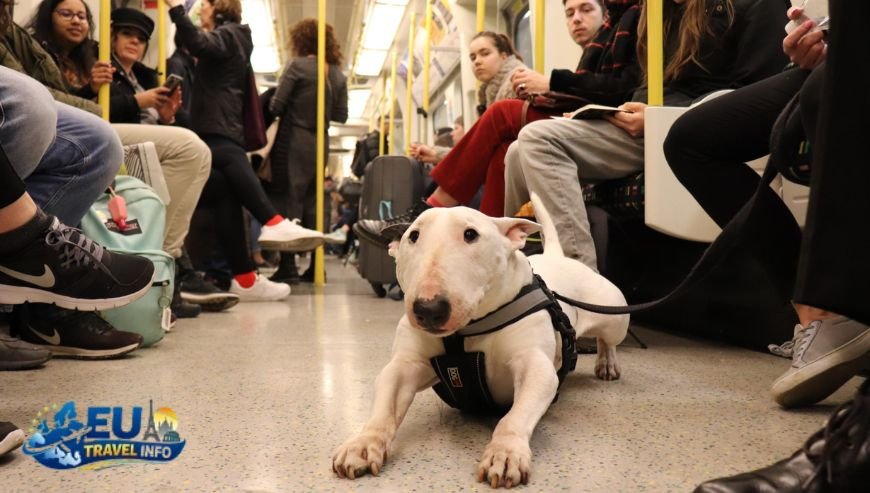
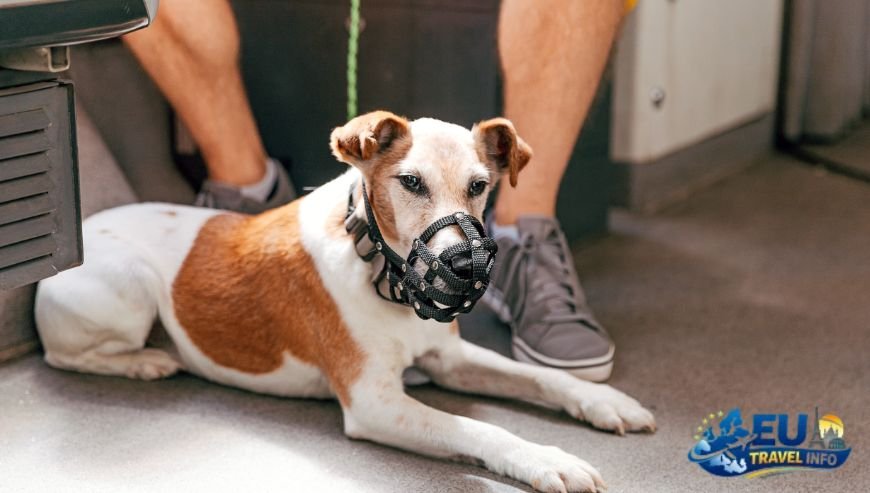
You will find that most trams and buses allow dogs on board. First of all, you must use a short leash. Plus, a muzzle is mandatory for larger dogs. I noticed that tram drivers are very strict about muzzles on crowded tourist routes. I once saw a traveler get kicked off a tram because they did not have a muzzle. Do not let that be you!
If your dog is small, you can carry them in a bag or a box. The box must have a solid, impermeable bottom so no accidents happen. If the carrier is smaller than 25 x 45 x 70 cm, your dog travels for free. This is a great deal.
Later, you might wonder about larger dogs. If you have a ticket that is valid for 24 hours or longer, your dog can usually travel for free within Prague city limits. On the contrary, if you only have a short-term ticket, you might need to pay a small fee of about 20 or 25 CZK. I find the PID Litacka app very helpful for buying these tickets.
The Prague Metro Experience
The subway is another great option. However, you should be careful with the escalators. Some of them are very long and scary for animals. I usually carry my dog on the escalators to avoid any injuries. You can also look for elevators, though not every station has one.
Only one dog is allowed on the platform at each subway door. This helps keep things calm. Similarly, you should not let your dog sit on the seats. This rule is for all transport types. Even if your dog is clean, the staff will not like it.
Long Distance Travel: The National Railways
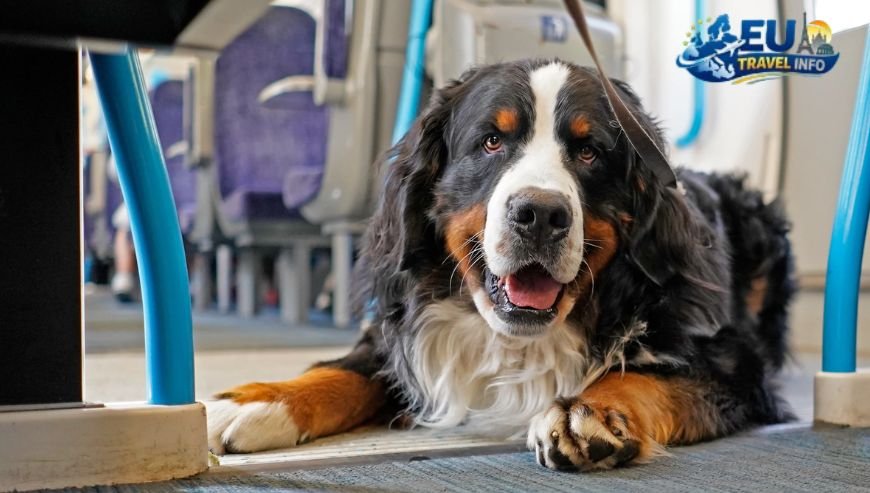
I think the best way to see the country is by train. The views are amazing. The monotonous rhythm usually keeps dogs calm and relaxed. Ceske Drahy is the main national carrier, and they are very welcoming to pets.
Booking Your Eeské dråhy Dog Ticket
When you travel on Ceske Drahy, you will need an Eeské dråhy dog ticket for any dog that is not in a small carrier. The prices are very fair. For distances under 150 km, you pay only 30 CZK. If you go further than 150 km, the price is 50 CZK. That is less than 2 Euros to cross half the country!
I suggest buying your ticket at the station counter or through the MujVlak app. Finally, you can also buy it directly from the conductor on the train, but it might cost a little more in fees. Small dogs in carriers smaller than 90 x 60 x 40 cm travel for free as hand luggage.
Rules for the Train
You can take your dog in 2nd class carriages on almost all trains. However, dogs are usually not allowed in 1st class, restaurant cars, or quiet compartments. Guide and assistance dogs are the only exception to this rule.
Your dog must always wear a muzzle and stay on a short leash while on the train. I recommend bringing a muzzle your dog is comfortable with. If you travel internationally, be careful. Crossing the border into another country can make the ticket price jump to half of a human fare. Gradually, you will get used to the rules, and it will feel like second nature.
Bikes on czech trains are also very common. Many trains have a special car for bicycles, which is marked with a bike symbol. If you are an active traveler, you can bring your bike and your dog on the same journey. Therefore, you can enjoy a nice cycling trip in the mountains once you arrive.
Traveling with Private Companies: RegioJet and Leo Express
You have other choices besides the national carrier. Private companies like RegioJet and Leo Express also run trains and buses in the Czech Republic.
RegioJet Train Rules
On RegioJet trains, small pets in a lockable carrier with a solid bottom travel for free. However, larger dogs are only allowed in 2nd class carriages on certain “R” trains. You must pay a fee of 50 CZK for them. I noticed that they do not allow larger dogs on their long-distance international trains, except for guide dogs.
Leo Express and Long-Distance Buses
Leo Express has similar rules for their trains. Your pet must be in a carrier that does not exceed 40 x 50 x 50 cm. Additionally, they allow dogs outside of carriers in 2nd class if they are muzzled and leashed. The price for this is 30 CZK.
If you are thinking about taking a long-distance bus, you should know that most of them do not accept larger dogs. RegioJet buses allow small dogs under 10 kg in a carrier for free. They usually travel on your lap or under your feet. Student Agency buses also only take very small dogs in handbags. Therefore, the train is usually the better choice for a big dog.
Beyond Prague: Public Transport in Brno
I also visited Brno, which is the heart of the South Moravian region. The public transport system there is called IDS JMK. It is very reliable and well-connected.
In Brno, small animals in boxes up to 20 x 30 x 50 cm travel for free. If your dog is larger, you must pay a discounted fare. You can buy a 24-hour dog ticket for all zones for 125 CZK. On top of that, if you use the Poseidon app, the price drops to 115 CZK.
Similarly to Prague, you must get the driver’s consent before boarding a vehicle with a dog in Brno. Just wave your hand as the bus or tram arrives to show you have a pet. Therefore, you can avoid any confusion with the staff.
Practical Tips for Your Daily Adventures
Living in the Czech Republic with a dog is easy because people are so kind to animals. I once saw a store owner give a traveler free bottled water just because their dog looked thirsty. First of all, you should know that dogs are welcome in most parks. Prague has over 100 green spaces, and many of them allow dogs to run off-leash.
Dining Out with Your Pet
One of my favorite things is eating out with my dog. Most restaurants and cafes will let you bring your pet inside. I have never been rejected by a restaurant in Prague. However, it is always polite to ask at the door first. Many places will even bring a bowl of water for your pup without you asking.
Gradually, I learned that Czech food is delicious and very affordable. You should try some traditional dishes like goulash or schnitzel while you are there. Also, there is even a dog bakery in Prague if you want to treat your furry friend to something special.
Accommodation for Travelers
Finding a place to stay is not hard at all. About 49% of hotels and guest houses in Prague allow dogs. However, you should expect to pay an extra fee. This is usually around 100 to 500 CZK per night. Additionally, some luxury hotels might charge more, but they often provide extra pets and attention.
Therefore, I recommend booking in advance and using the “pet-friendly” filter on travel websites. Plus, many Airbnb hosts in the country are dog owners themselves and will be very happy to host you.
Sightseeing and the Famous Prague Dog Statue
There is so much to see! You can walk across the Charles Bridge with your dog. It is best to go early in the morning before the crowds of tourists arrive. Additionally, the grounds of Prague Castle are open to dogs on a leash. You cannot go inside the buildings, but the grounds are massive and beautiful.
You might hear locals talk about a prague dog statue. While there are many historic statues on the Charles Bridge, dogs are a common theme in Czech art and history. One of the best places to visit is the Prague Zoo. They allow dogs for a fee of 100 CZK. Most of the animals are outside, so your dog can see everything with you.
Finally, if you want to leave the city, I suggest a trip to Karlstejn Castle. It is only a 40-minute drive or a short train ride from Prague. Dogs are allowed in the castle grounds, and they will love the surrounding forest.
Important Things to Remember
I want your trip to be perfect. Therefore, I have put together a few final reminders for your journey.
- Muzzle and Leash: Always keep these with you. Even if the bus is empty, you might need them.
- Carrier Size: Remember the limits. For Prague, it is 25 x 45 x 70 cm for free travel. For Ceske Drahy trains, it is 90 x 60 x 40 cm.
- Prague Public Transport Luggage: If your dog’s box is big, you might have to pay a luggage fee. This is usually 25 CZK.
- Ticket Inspections: Inspectors are common. They do not wear uniforms but will show you a badge. Always show them your ticket and your dog’s ticket if you have one.
Initially, traveling with a pet can feel like a lot of work. However, the Czech Republic makes it so easy. The trains are cheap, the people are friendly, and the sights are breathtaking. Just me and my furry best friend. Exploring the world together. It is an experience I will never forget.
I hope this guide helps you plan your next adventure. The Czech Republic is waiting for you and your dog. Good luck and happy travels!
Key Statistics for Your Trip:
- Dog Population: 41% of Czech households have at least one dog.
- Train Ticket Cost: 30 CZK (<150km) or 50 CZK (>150km) on Ceske Drahy.
- Prague Zoo Entry: 100 CZK for your dog.
- Prague Transport Fine: Up to 1,000 CZK for violating animal rules.
- Dog-Friendly Hotels: Roughly 49% of accommodations in Prague accept pets.
FAQ
Can dogs go on public transport in Prague?
Yes, dogs are welcome on all forms of public transport in Prague, including the metro, trams, and buses. Small dogs in carriers travel for free, and larger dogs on a leash and muzzle are also free within Prague city limits, except on non-metro trains where a small fee applies.
Is Prague a dog friendly city?
Prague is considered one of the most dog-friendly cities in the world. Dogs are commonly permitted inside restaurants, cafes, and many shops, and the city offers numerous green parks for exercise.
Is the Czech Republic dog friendly?
The Czech Republic is among the most dog-friendly countries in Europe, boasting a high number of pets per capita. Traveling with a dog is easy as they are accepted in most public transport, restaurants, and varied accommodations.
Can I bring pets on public transport?
Yes, pets are generally allowed on public transport across the country. Small animals must be in enclosed carriers with solid bottoms to travel, while larger dogs usually require a leash and a muzzle.
Can I bring my dog to Prague?
Yes, as long as you follow EU import rules, which require your dog to be microchipped, have a valid rabies vaccination, and possess an EU pet passport or health certificate.
Can you take dogs on local buses?
Dogs are allowed on local buses in major cities like Prague and Brno. In Prague, you should signal the driver before boarding and use the doors marked with a dog symbol.
Are dogs allowed in Prague Zoo?
Yes, dogs can visit the Prague Zoo for a fee of 100 CZK, though only one dog is permitted per person. They are allowed in outdoor areas but are restricted from entering the indoor pavilions.
Which city is the most dog friendly?
Prague is frequently highlighted as a top-tier dog-friendly city by travelers and residents.
What to beware of in Prague?
Owners should be careful on long metro escalators, as they can be dangerous or frightening for dogs. Also, look out for “Pozor Tram” signs, which indicate that trams have the right of way and will not stop for pedestrians.
Can I bring my dog in the bus?
Yes, though rules for long-distance buses vary; RegioJet allows only small dogs in carriers up to 10kg, while many other intercity buses only allow guide dogs. Local city buses accept all dogs provided they are leashed and muzzled.
Can I take my dog with me in a taxi?
Yes, ride-sharing services like Uber are generally available for dog owners in Prague, though you may need to order a specific “Uber Animal” taxi in some cases.
Are dogs allowed to sit on bus seats?
No, dogs are strictly forbidden from sitting on seats in any form of public transport, including buses, trams, and trains.
Concluding words
Traveling with a dog on public transport in the Czech Republic is both affordable and accessible. Most urban networks allow pets for free or a nominal fee if they are in carriers or properly muzzled and leashed. Major train operators like České dráhy and RegioJet provide clear guidelines for pet travel, ensuring that owners can easily navigate the country with their furry companions.