I have spent many years traveling across the beautiful lands of Europe. I love the old streets of Prague and the sunny coasts of Spain. I often see the blue flag with the gold stars flying over new bridges and shiny train stations. This makes me think about the money behind it all. The European Union Budget By Country is a huge topic. It is the fuel that keeps the engine of Europe running. I want to share what I have learned about where this money comes from and how it helps us as travelers.
The European Union Budget By Country is a shared pot of money that 27 nations use to build a better future together. It is not just a bank account. It is a tool for peace and growth. For the years 2021 to 2027, the EU has a massive plan worth about €2.018 trillion. This plan helps with everything from farming to digital tech.
The Big Picture of the EU Budget
I used to think the EU budget was too big to understand. I was wrong. It is actually quite small when you compare it to the size of the whole economy. It is usually only about 1% of the Gross National Income (GNI) of the member states. Think of it like this. If a country makes one hundred dollars, it gives about one dollar to the EU.
The current plan is special. It has two main parts. First, there is the regular long-term budget. We call this the Multiannual Financial Framework (MFF). Second, there is a one-time recovery fund. We call this NextGenerationEU (NGEU). This second part was created to help Europe recover from the COVID-19 pandemic.
Net Contributors vs. Net Beneficiaries
I often hear people talk about “winners” and “losers” in the budget. This is a simple way to look at it. However, it does not show the whole truth. Some countries are net contributors. This means they pay more into the pot than they get back in direct funding. Others are net beneficiaries. They get more money back than they pay in.
The Top Payers
Germany is the largest net contributor in absolute terms. In 2023, Germany paid about €25.6 billion more than it received. France is second, paying about €12.4 billion net. The Netherlands is also a major payer, giving €6.9 billion more than it got back.
The Top Receivers
Poland is the largest net receiver of EU funds. In 2023, it received about €11.9 billion more than it contributed. Greece and Romania are also high on the list of beneficiaries. Greece received about €4.3 billion net, and Romania received about €6.5 billion.
Later, I learned that even the countries that pay more get a lot of benefits. They have access to a huge market. They can sell their goods to millions of people without extra taxes. As the European Commission says, “The EU budget is not a zero-sum game”. Everyone wins in the end.
The Europe Union Country List
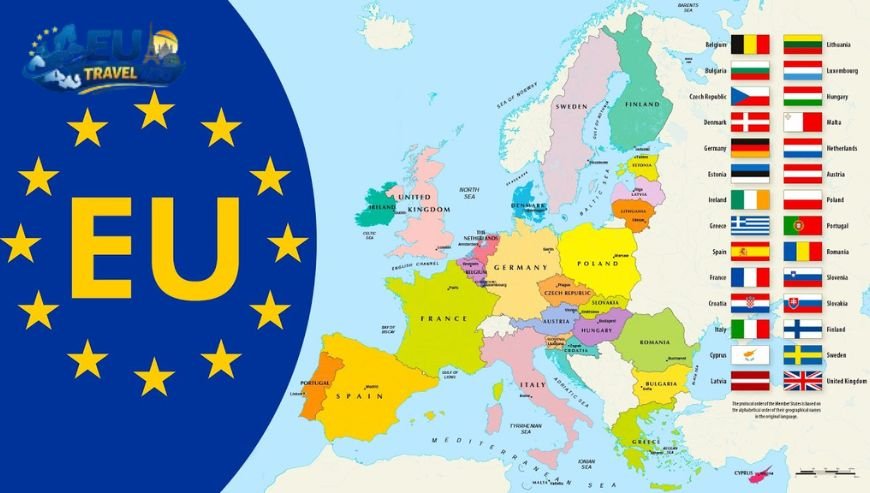
I love keeping track of the europe union country list. It has changed over time. Today, there are 27 member states. Here is the europe union country list for you to remember:
- Western Europe: Belgium, France, Ireland, Luxembourg, Netherlands.
- Central Europe: Austria, Czechia, Germany, Hungary, Poland, Slovakia.
- Southern Europe: Croatia, Cyprus, Greece, Italy, Malta, Portugal, Slovenia, Spain.
- Northern Europe: Denmark, Estonia, Finland, Latvia, Lithuania, Sweden.
- Southeastern Europe: Bulgaria, Romania.
Gradually, more countries want to join. I have visited some of these “candidate countries” like Ukraine and Moldova. They are working hard to meet the rules so they can be part of this group too.
European Union Defense Spending By Country
This is a hot topic lately. European union defense spending by country used to be very small at the EU level. Most defense spending happens within each nation. However, the world is changing. The EU now has a European Defence Fund.
In the 2024 budget, the EU gave about €638 million to this fund. It also spent €251 million on “military mobility”. This helps make sure that roads and bridges are strong enough for heavy military vehicles to cross quickly. While this is small compared to national budgets, it is a big step for working together.
Therefore, we are seeing more focus on security. Plus, the EU is helping Ukraine with billions of euros for defense and survival. By the end of 2024, the EU had mobilized over €130 billion for Ukraine.
NextGenerationEU and the Recovery Plan
I remember when the world stopped because of the pandemic. It was a scary time. The EU stepped up with a massive plan called NextGenerationEU. This plan allows the EU to borrow money on the markets. It is worth about €806.9 billion.
The biggest part of this is the Recovery and Resilience Facility (RRF). This provides €723.8 billion in grants and loans. Countries must use this money for two main things. They must spend 37% on climate goals. They must spend 20% on digital projects.
Similarly, I see this at work when I visit Italy. Italy is the largest user of this fund. They have an allocation of about €194.4 billion. By late 2024, they had already received about €140.4 billion. Spain is also a big user, with an allocation of €163 billion.
Budget European Countries: The Deficit and Debt
I must mention how countries manage their own money. There are rules called the Stability and Growth Pact. Countries should keep their yearly deficit below 3% of their GDP. They should also keep their total debt below 60% of their GDP.
In 2024, the average deficit in the EU was 3.1%. Some countries are doing very well. Denmark had a surplus of 4.5%. Cyprus had a surplus of 4.1%. On the contrary, some are struggling. Romania had a deficit of 9.3%. Italy had a deficit of 7.2% in 2023.
Debt is also a mixed bag. Estonia has the lowest debt at only 23.5%. Greece has the highest at 154.2%. Italy is also high at 134.9%. These numbers matter because they show how much a country can afford to spend on its own people.
Why Travelers Should Care
You might wonder why a person who loves tours should care about a budget. I care because it changes my experience.
- Erasmus+: Over 16 million people have studied or worked abroad through this program. It makes Europe feel like one big home.
- Infrastructure: Have you heard of Rail Baltica? It is a massive project. It will connect Poland, Lithuania, Latvia, and Estonia with a fast train. The EU budget pays for most of it.
- Environment: The budget pays for rescEU. This is a fleet of airplanes that fight forest fires across Europe. I feel safer knowing they are there.
- Innovation: The Galileo satellite system is funded by the EU. It helps my GPS work better when I am driving through the mountains of Austria.
Also, the budget helps preserve our history. I see many old castles and churches being fixed with EU money. It keeps our culture alive for our children.
How the Money is Managed
The EU is very careful with this money. There are three ways they spend it.
- Shared Management: This is the most common way. About 70% of the budget is managed by both the EU and the national governments. This is used for farming and regional roads.
- Direct Management: The EU Commission manages this directly. This is for things like research.
- Indirect Management: Other groups like the United Nations manage this.
On top of that, there is an audit every year. The European Court of Auditors checks the books. In 2023, they found an “error rate” of 5.6%. This means some money was not spent exactly right. It is not always fraud. Sometimes it is just a mistake in the paperwork. But the EU works hard to fix it.
Protecting the Budget
I was happy to learn that the EU has strong rules against corruption. They have a group called OLAF that investigates fraud. There is also a new European Public Prosecutor’s Office (EPPO). They go after criminals who try to steal EU funds. In 2024, the EPPO was looking into cases worth more than €24 billion.
Furthermore, there is a “Rule of Law” rule. If a country does not follow the basic rules of democracy, the EU can stop their funding. This protects our taxpayer money. It ensures the money goes where it belongs.
The Future of the Budget
Finally, let us look at what is next. The current plan ends in 2027. The EU is already thinking about the next one for 2028 to 2034. They want it to be more flexible. They want it to be easier for small businesses to get money.
A big challenge will be enlargement. If countries like Ukraine join, the budget will need to change. Ukraine is a big farming country. It would get a lot of support under the current rules. Some estimates say the budget might need to grow to 1.23% of GNI to cover this.
Also, the EU must start paying back the money it borrowed for the recovery fund. This starts in 2028 and will continue until 2058. This is a long commitment. But it was necessary to save the economy.
FAQ
Who are the big 3 in Europe?
Germany, France, and Italy are usually called the big three because they have the largest economies.. These nations drive much of the political and financial action in the union.. A powerful group? Absolutely.
What is the total budget of all EU countries?
The combined package for the 2021 to 2027 period is about €2.018 trillion.. This includes the regular long-term plan and the recovery fund.. Plus, the annual budget usually sits between €160 billion and €200 billion..
What country funds the EU the most?
Germany is the top funder.. In 2023, its net contribution was about €25.6 billion.. This means they paid far more than they received back in grants..
Which country is the richest in the EU?
Luxembourg and Ireland often rank at the top when you look at wealth per person.. Ireland saw a massive jump in its wealth over the years.. It even moved from being a receiver of funds to a net payer in 2013..
What are the top 3 strongest countries in Europe?
Germany, France, and Italy hold the most economic power.. When you look at defense spending, Germany and the United Kingdom (which is in Europe but not the EU) spend the most.. Germany spent about €93.7 billion on defense recently..
Is the UK still paying the EU?
Yes, the UK still makes payments under the Withdrawal Agreement.. In 2023, these payments were worth about €681 million.. This settles the financial promises made before they left the group..
How much does Germany pay to the EU?
Germany paid a net amount of €25.6 billion in 2023.. Its total share in national contributions is about 23.6%.. A huge portion? Definitely.
Which EU country pays the most benefits?
Germany spends the highest share of its budget on social transfers.. About 51.2% of its total expenditure goes to these benefits.. Belgium and the Netherlands follow closely at 47.3%..
What 7 countries do not use the euro?
The seven members that still use their own national currencies are Bulgaria, Czechia, Denmark, Hungary, Poland, Romania, and Sweden.. Denmark even has a special agreement to stay out of the euro..
Who pays for the EU budget?
The 27 member states pay for the budget.. Most of the money comes from a slice of their Gross National Income.. Additionally, they pay through a part of their VAT and taxes on customs duties and plastic waste..
Concluding words
The European Union Budget By Country is a complex system that aims to bring all members to a similar level of wealth. Wealthier nations like Germany and France pay the most into the pot.. Poorer regions use this money to build better roads and schools..
Though the system has many rules, it helps Europe stay strong and unified.. Every traveler enjoys the results of this budget through better trains and safer borders.. Is it a fair deal? Most countries believe the benefits of the single market far outweigh the costs..