I am standing on a busy corner in the 10th arrondissement of Paris, and the smell of butter is so thick I can almost taste it. Many people ask me the same question before they book their flights. Is france expensive to travel? I used to think so. I imagined every meal would cost a week of rent. However, I discovered a secret world of affordable luxury. I have spent the last few months living like a local. I learned that you can eat like a king on a tiny france travel budget. This guide is my personal map to the best eats. I will show you how to navigate the cobblestone streets without a financial hangover. You do not need a fortune. You just need a plan.
My Personal France Travel Cost Calculator
I found that the best way to manage money is to have a daily strategy. I call it the €20 a day rule. This is my secret to maintaining a low cost of food in france per day. First of all, I skip the expensive hotel breakfast. Those often cost between €12 and €22. That is a waste of money. Instead, I follow this simple breakdown:
- Breakfast (€3): A fresh pastry from a local bakery and an espresso.
- Lunch (€11): A large main meal using a set menu deal.
- Dinner (€6): A gourmet supermarket picnic or a deal from a food-saving app.
This adds up to exactly €20 per day. If you are planning a 2 week trip to france cost analysis, you can see how this saves hundreds of euros. On top of that, the cost of food in paris per day does not have to be higher if you walk two blocks away from the big monuments. I call this the two-block tango.
The Magic of the Bakeries
I start every morning at a Boulangerie Artisanale. This is an important distinction. By French law, a shop can only call itself a “boulangerie” if they bake their bread from scratch on the premises. I look for the words “Artisan Boulanger” on the sign. I avoid big chains like Paul or Brioche d’Or. Those are just the fast food of the bread world.
I always lead with one magic word: “Bonjour”. This is the most important life hack in the country. I have seen people get grumpy service because they forgot this simple greeting. I say “Bonjour” and wait for a reply before I ask for anything. Plus, I always order a Baguette Tradition. It costs a few cents more than a regular baguette, but the quality is much higher.
My favorite morning treats are cheap. A Croissant au Beurre is usually €1.15. A Pain au Chocolat is about €1.45. If I am in the south, I might have to call it a Chocolatine to avoid a “civil war” with the baker. Later, I might grab a Jambon-Beurre for lunch. This is a simple ham and butter sandwich on a fresh baguette. It is a culinary artifact. I eat it upside down because my palate thanks me for the direct contact with the butter.
Hunting for the Midday Feast

Lunch is the time when the savvy traveler saves the most money. I always look for the Formule de Midi or the Plat du Jour. These are set menus. A restaurant that charges €35 for a steak at dinner will often serve a similar meal for €12 at lunch. I look for chalkboard menus, also called an Ardoise. If I see locals in line, I know the food is legit.
I also love the historical Bouillon restaurants. These places are a dream for a food budget travel france enthusiast. They started in the 1800s to give workers a hot meal for a low price. I highly recommend Bouillon Chartier. The dining room is a lavish Belle-Epoque monument with huge mirrors and wood carvings. I can eat classic dishes like beef bourguignon or escargot without breaking the bank.
Another great option is Bouillon Julien. It was renovated recently and is beautiful. Their broth is lighter and features ginger and lemongrass. Additionally, Petit Bouillon Pharamond is one of the oldest and served people like Ernest Hemingway. These spots prove that you do not need to spend a lot to enjoy history. Therefore, I can save my money for other parts of the trip.
Mastering the Supermarket Strategy
I do not always eat at restaurants. Every few days, I go to a supermarket for a picnic dinner. However, I have learned that not all stores are equal. I avoid Monoprix and Casino when I want to save. They are the most expensive. Similarly, I avoid small city-center shops like Carrefour City or Franprix because the prices are higher for the convenience.
Instead, I hunt for a Lidl, Aldi, or E.Leclerc. Lidl is fantastic for the “best bang for the buck”. I can spend about €30 to €45 a week there and have plenty of protein and fresh food. E.Leclerc is often the absolute cheapest, especially their Eco+ brand. I once saw them sell baguettes for €0.29.
When I am at the store, I buy a €6 Gourmet Picnic Combo. It includes:
- A Baguette Tradition (€1.00).
- A block of Camembert or Brie (€2.20).
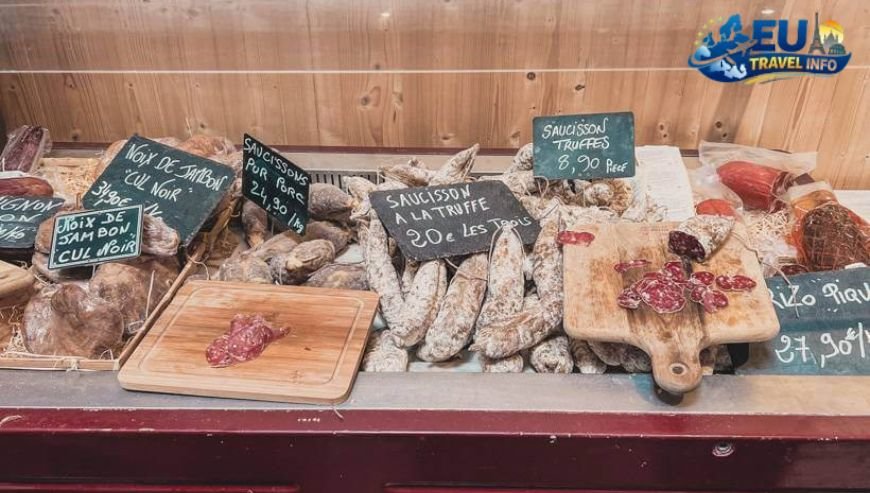
- Some Saucisson or salami (€1.80).
- A piece of seasonal fruit (€1.00).
I take these items to a park like the Jardin du Luxembourg or the banks of the Seine. I find that a picnic is often more fun than a restaurant because I can watch the city move around me. Additionally, I always bring my own reusable bag. Stores will charge me extra for a plastic one.
The Art of Drinking for Less

I have a golden rule for staying hydrated. I never buy bottled water in a restaurant. I always ask for “une carafe d’eau”. This is free tap water. It is a right in this country. I have seen tourists complain that they cannot find water, but they are just afraid to ask. I even fill my bottle at public fountains or cemeteries. Most cemeteries have a drinkable water source near the entrance.
When it comes to wine, I do not order a full bottle. I order a pichet or a carafe. This is house wine sold in fractions like a quarter liter or a half liter. It is much cheaper and usually very good. On top of that, I look for Happy Hour in university towns. I can find beers for half the price between 5 PM and 8 PM.
I also do not feel forced to tip. In France, the service is already included in the price. I might leave a couple of coins if the service was amazing, but it is not mandatory. I never snap my fingers at a waiter. That is incredibly rude and will ensure I wait even longer for my bill.
Modern Tools and Apps
I rely on several apps to keep my costs down. First of all, I use Too Good To Go. This app connects me with bakeries and restaurants that have unsold food at the end of the day. I can buy a “surprise bag” of fresh pastries or meals for a fraction of the original cost, usually around €4 or €5.
Later, I use TheFork to book dinners. Some restaurants offer up to 50% off the menu if you book through the app during early hours. For moving around, I use Citymapper. It gives me real-time info on the metro and buses so I do not waste money on expensive taxis.
If I want to exercise and save money on transport, I use Vélib’. This is the city’s bike-sharing network. It is very affordable and eco-friendly. Plus, I can see the beautiful architecture while I ride. Gradually, these small savings add up to a big difference in my how much is a trip to france for a week calculations.
Street Food Secrets
I have found that the street food scene in 2026 is better than ever. I am a huge fan of the French Taco. Despite the name, it is not Mexican. It is a grilled wrap stuffed with meat, French fries, and a heavy cheese sauce. It is the ultimate filler. It costs about €7.50 and is so heavy that I do not need to eat dinner.
I also love Galettes. These are savory crepes made from buckwheat flour. I look for a creperie where they make them fresh on the griddle. They are a healthy and balanced meal for about €6 to €8.50. If I am in Nice, I look for Socca. It is a chickpea pancake that is vegan and gluten-free. It only costs about €3 and is a great regional specialty.
Similarly, I find that moving away from the city center leads me to the best global flavors. I have had amazing Vietnamese Pho in the 13th arrondissement for €13. I have found Lebanese Manakiches for €7. These neighborhoods, like Belleville or Oberkampf, have genuine flavors and fair prices.
Exploring the Regions
I always tell my friends to leave the big cities if they want to save. I follow the food to its source. If I want the best chicken, I go to Bresse. If I want olives, I go to Nice. The food tastes better and is much cheaper when you are in the rural areas where it is produced.
I also look for Logis de France. These are family-owned inns that usually have a great restaurant attached. I can often get a “half-board” deal that includes a room and two meals for a great price. If I want to cook for myself, I stay in a Gîte. These are vacation rentals with kitchens. I shop at the local morning markets and cook my own feasts.
I must mention the Slow Food movement. It is a big part of life here. I take my time with meals. I do not rush the waiter for the check. I sit back and enjoy the joie de vivre. This is the real luxury of the country. It does not cost anything to sit in a beautiful square and enjoy the atmosphere.
FAQ
How much should I budget for food in France?
A daily budget of €20 is a great goal for a france travel budget. This amount covers a fresh pastry breakfast, a lunch set deal, and a supermarket dinner. A single person living in Paris needs roughly €216 each month to eat a healthy diet and enjoy social meals.
How much should I budget for food when travelling?
You should set aside about €20 per day to eat well without overspending. This keeps the cost of food in france per day low. Additionally, you can find cheaper groceries if you visit discount stores like Lidl or Aldi.
How much to budget on food per day?
An ideal daily breakdown includes €3 for breakfast, €11 for lunch, and €6 for dinner. The total cost of food in france per day is then exactly €20 for one person.
Is 300 Euros enough for 3 days in Paris?
This amount is more than enough. Is france expensive to travel? Not if you only need about €216 for a whole month of food and social dining in the capital. You could eat very high-quality meals for three days with this much money.
Is 1500 Euros enough in France?
A family of four only needs about €757 per month for food and social functions in Paris. Therefore, 1500 Euros is a very large amount that will last for a long time.
Is $300 a month enough for food?
A healthy diet for one person in France costs about €183 a month. $300 is roughly €276, so you will have a very generous budget for groceries.
Is $1000 enough for a week in Paris?
A single person spends about €216 a month on food and social dining in Paris. $1000 is about €920, so you will have much more than you need for only seven days.
How much money should I take to Paris for 7 days?
You should take about €140 for food if you follow the €20 daily rule to manage how much is a trip to france for a week. A healthy food budget for a whole month is about €216. Similarly, you should factor in small costs for transport like the Vélib’ bikes.
Is $50 a week enough for food?
One person can spend as little as €30 to €45 a week if they shop at discount stores. $50 is about €46, so it is enough to eat well for a week.
Is $60 a day good? $60 is roughly €55, which is almost triple the suggested daily food budget. This is an excellent amount that allows for more restaurant meals.
How to calculate food cost per day?
You can act as your own france travel cost calculator by adding the cost of a pastry breakfast, a set lunch menu, and a supermarket picnic. The cost of food in paris per day stays low if you use this simple method.
Concluding words
You can eat like a king in France on a small budget if you follow a smart plan. Real luxury comes from fresh bread, local markets, and set lunch deals. You should avoid tourist traps and use modern apps to find lower prices. These secrets make French food culture affordable for every traveler in 2026. Pure gold.