You are probably sitting at your desk right now and dreaming of a Multi Country Europe Itinerary that actually makes sense. You want to see the Eiffel Tower, eat pasta in Rome, and maybe see the northern lights in Sweden.
A multi country europe trip feels like a giant puzzle with too many pieces. However, I have traveled through sixteen countries and fifty-five cities across the continent, so I know exactly how to help you. You do not need to be a millionaire to travel like a pro in 2026. You just need to be smart about your choices.
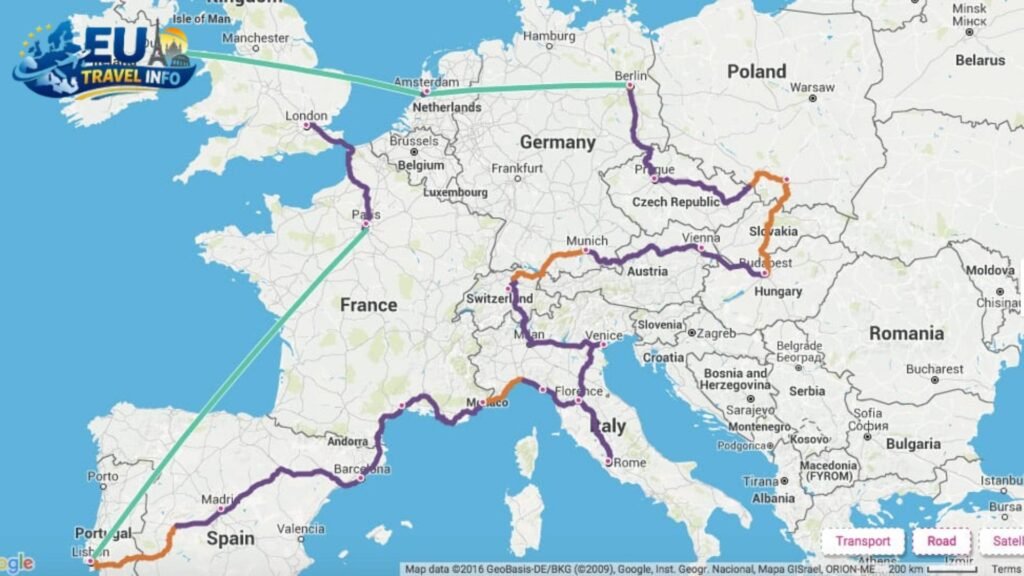
Smart travel is all about connecting cities in a way that saves you time, money, and stress. First of all, you must realize that Europe looks small on a map, but border hopping takes time. You can lose half a day just moving from one spot to another. Therefore, grouping your destinations by geography is the secret to a great trip.
The Secret to Picking Your Spots

You might think that visiting more countries makes for a better trip. On the contrary, trying to see everything at once is a recipe for exhaustion. I once tried to cram Paris, Rome, Berlin, and Amsterdam into two weeks. The result? A blur of check-ins and one very sad twelve-hour airport layover. You will find more magic if you pick three core experiences instead of a long list of cities.
Gradually, you will learn that lingering longer in one spot feels much more human. Plus, a slower pace lets you chat with locals and find hidden gems like local jazz nights. If you have two weeks, stick to three or four countries at most. If you have a full month, you can maybe push it to five or six.
Additionally, you must leave room for the unexpected. A missed train or a sudden rainstorm can ruin a rigid schedule. Also, flexibility leads to the most amazing adventures you never planned.
Smart Transportation for Your Cross Country Europe Trip
You have many ways to get around, but each has its own rules. Best multi country europe trips often use a mix of every mode.
- The Magic of the Train I love the European rail system because it is one of the best in the world. High-speed trains can travel at speeds up to 200 mph. You can get from the center of London to the center of Paris in just over two hours.
- However, trains can get expensive if you book them at the last minute. You should book a week or more in advance to save up to 30%. Additionally, a rail pass like a Eurail Pass is a great money-saving option if you do not want to fly. It works best if you travel every other day. Just remember that some high-speed lines in France, Italy, and Spain require a paid seat reservation that costs between 5 EUR and 35 EUR.
- Budget Airlines: Fast but Tricky Budget airlines are common and very cheap. You can often find flights for as little as 15 EUR. I use Skyscanner to find these deals. Though these fares look great, they make money through extra fees. They are very strict about baggage limits. They might even charge you if you forget to print your boarding pass at home. On top of that, budget airports are often far from the city center. For example, the airport for Paris might be ninety minutes away from the actual city.
- The Humble Bus Taking the bus is the cheapest way to travel. FlixBus has routes all over the continent with prices starting at 5 EUR. These buses include Wi-Fi and outlets, so they are quite comfortable. Later, you might find that the bus is slower than the train, but it saves your budget for better food.
- Car Sharing and Rentals BlaBlaCar is a popular service where you hitch a ride with locals. It is often faster than the bus and much more interesting because you get to meet real people. If you want total freedom, you can rent a car for about 25 EUR per day. In the Balkans, you can find local rentals for as low as 12 EUR per day. Finally, remember that gas is expensive in Europe, and many cities have narrow streets that are hard to navigate.
Multi Country Europe Trip Ideas for 2026
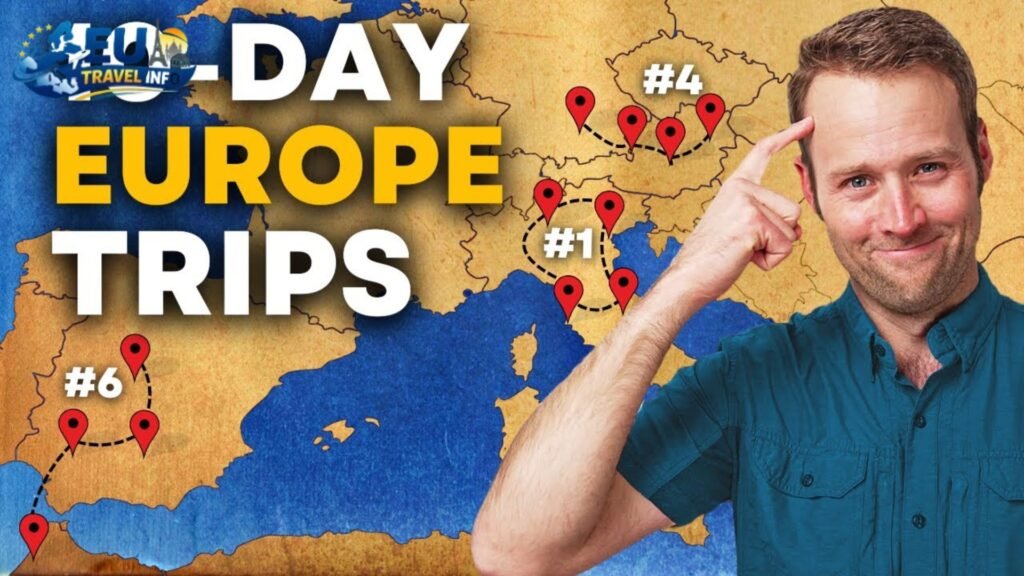
You need a logical loop to avoid the “zig-zag trap”. First of all, let us look at some of the best multi country europe trips based on my favorite routes.
The Central Europe Cultural Loop (10 Days)
This route covers the Czech Republic, Austria, and Hungary.
- Days 1–3: Prague, Czech Republic. Start in this magical capital. You should walk across the Charles Bridge and visit the Hradcany Castle. Also, do not miss the Astronomical Clock in the Old Town Square.
- Days 4–6: Vienna, Austria. Take a train from Prague to the “City of Music”. You must see the Schönbrunn Palace and the grand buildings along the Ringstrasse.
- Days 7–10: Budapest, Hungary. This city is divided by the Danube River. Spend your time at Heroes’ Square and then relax in a thermal bath. Gradually, you will see how these three cities perfectly complement each other.
The Mediterranean Triangle (12 Days)
This cross country europe trip takes you through Spain, France, and Italy.
- Madrid, Spain: Visit the Prado Museum and the Palacio Real. At that time, you can enjoy a flamenco show in the evening.
- Barcelona, Spain: Take a high-speed train to see the twisting spires of La Sagrada Familia. Walk down Las Ramblas and enjoy the mosaics at Park Güell.
- French Riviera: Travel through Provence to see the lavender fields and the beaches of Nice.
- Florence and Rome, Italy: See the Leaning Tower of Pisa on your way to Florence. Finally, end in Rome to see the Colosseum and the Vatican.
The Scandinavian Adventure (10 Days)
Scandinavia is full of design and nature.
- Stockholm, Sweden: Walk the cobblestone streets of Gamla Stan and visit the ABBA Museum.
- Copenhagen, Denmark: See the Little Mermaid statue and enjoy the colorful harbor of Nyhavn.
- Norway: Take a ship to Oslo and then the famous Flåm Railway through the fjords. Gradually, you will see some of the most beautiful mountains in the world.
Smart Travel Logistics and Hidden Costs
You must know about the Schengen Area before you go. It is a group of countries that allows travel without internal borders. For most travelers, you can stay for 90 days out of any 180-day period. However, if you enter a non-Schengen country like the UK, you will need your passport for control. On top of that, starting in 2026, many travelers will need a quick online travel permit called ETIAS.
Budgeting for your trip? Costs vary a lot by region.
- Eastern Europe: You can spend 40–60 EUR per day. A meal in Prague might be under 10 EUR.
- Western Europe: Budget for 70–120 EUR per day.
- Scandinavia and Switzerland: These are expensive! You might need 120 EUR or more per day. For example, a pizza in Zurich can cost 22 EUR.
Watch out for hidden costs:
- City Taxes: Most cities charge a “tourist tax” of 1 to 5 EUR per night.
- Public Toilets: These often cost 0.50 to 1 EUR.
- Budget Airport Transfers: Getting to a far-away airport can cost 15–30 EUR. Additionally, I always use a Wise card to avoid bad exchange rates.
Handling Flight Displacements Like a Pro
Flights go wrong more often than we would like. However, you have rights. Under EU law, you might be eligible for up to 600 EUR in compensation if your flight is delayed or cancelled. I use a service called AirHelp to handle this automatically.
They once got me 400 EUR for a delay in Prague. Plus, they can give you lounge access during long waits. Having a quiet place to sit makes a huge difference when you are tired.
Planning Tips from the Reddit Community and Experts
If you look for multi country europe trips reddit, you will see that people always say to pack light. First of all, try to travel with only a carry-on bag. Navigating cobblestone streets with a giant suitcase is a nightmare. Use packing cubes to stay organized.
Similarly, good walking shoes are everything. You will walk miles every single day. Also, avoid wearing sweatpants unless you are sleeping. Europeans usually dress a bit more neatly than North Americans.
The Balkan Road Trip: A Budget Favorite
If you want something different, a cross country europe trip through the Balkans is amazing. It is cheap, safe, and beautiful.
- Montenegro: Visit the Bay of Kotor and take a boat trip on Lake Skadar.
- Croatia: Explore the Roman palace in Split and the waterfalls at Krka.
- Albania: The Albanian Riviera has beaches that look like Greece but cost much less. Gradually, you will see that this region is one of the best for a self-drive adventure. Just remember that you need a Green Card for your car insurance when crossing borders. Additionally, some countries like Bulgaria and Romania require a road tax sticker called a vignette.
Frequently Asked Question
How do I plan a multi-country European trip?
Start by picking a logical geographic loop to avoid extra travel time. Group your cities in clusters like “Western” or “Central”. Use tools like Omio to compare trains, buses, and flights for the best prices.
Which countries in Europe can be done together?
Prague (Czech Republic), Vienna (Austria), and Budapest (Hungary) are a classic trio that are easy to reach by train. Another great group is Spain, France, and Italy along the Mediterranean coast.
Which two European countries to visit together?
Norway and Sweden are excellent to pair for a ten-to-fourteen day trip focusing on northern nature and design. You can also easily combine France and Switzerland using high-speed rail.
What are the 7 countries Europe trip?
A popular long route often includes the UK, France, Belgium, Netherlands, Germany, Switzerland, and Italy. This covers major western and central highlights using the extensive rail network.
Is 1000 euros enough for 2 weeks in Europe?
It is possible in Eastern Europe where daily costs are 40–60 EUR, totaling about 840 EUR for two weeks. However, it is very tight for Western Europe or Scandinavia where daily costs often exceed 100 EUR.
What’s the cheapest month to go to Europe?
The shoulder seasons of May and September offer lower prices and fewer crowds while the weather is still nice. Winter is even cheaper for cities, but many coastal towns shut down completely.
Where can you stand in three countries at once in Europe?
One famous spot is at the border of Belgium, Germany, and the Netherlands at Vaalserberg (though this specific detail is from general travel knowledge outside the provided source snippets).
Concluding Words
Planning a Multi Country Europe Itinerary Guide 2026 for Smart Travel requires balancing your dreams with realistic logistics. By grouping countries geographically and mixing transport modes like high-speed trains and budget buses, you can see more for less.
Do not forget to account for the Schengen 90-day rule and use safety nets like AirHelp for flight delays. Whether you choose the cultural gems of Central Europe or the stunning fjords of the North, quality time in each city always beats a rushed schedule.