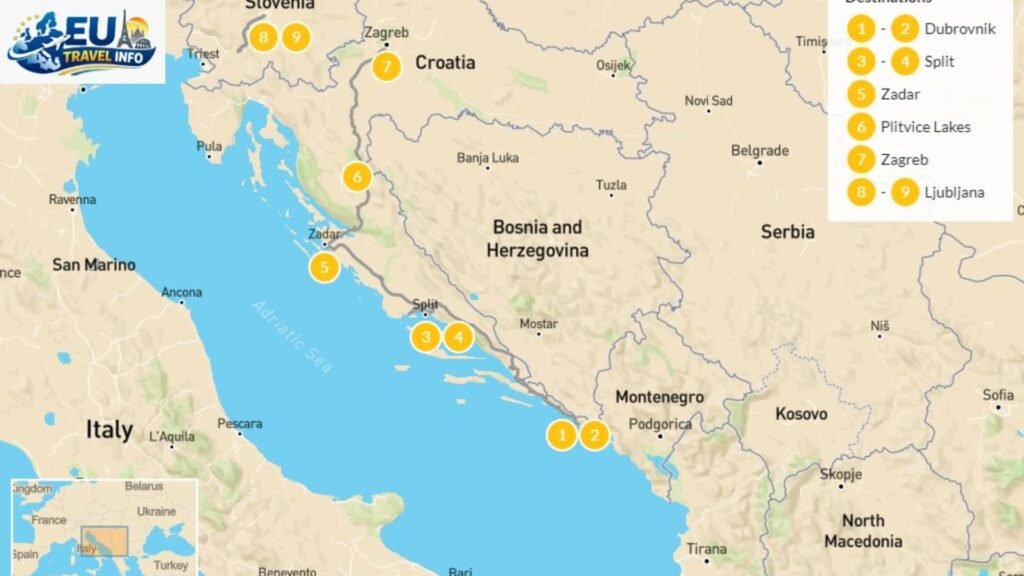
You are about to plan the most incredible journey of your life for 2026. This Slovenia and Croatia Itinerary Travel Planning Guide 2026 provides everything you need to know. You will find that these two countries border each other and offer different but beautiful landscapes. Slovenia brings you alpine mountains and glacial lakes. Croatia gives you a stunning coastline and historic stone towns. Together, they create a perfect balance for your vacation.
You should know that both countries use the Euro as their main currency in 2026. Also, border crossings between them are not monitored in a conventional way because both belong to the European Union. This makes travel easy and smooth. You will enjoy your time more if you prepare well.
The Best Time for Your Adventure
You must choose your dates with care. The peak tourist season runs from mid-May through early October. It hits its highest point in early August. During July and August, temperatures and prices soar. You will find that boats, buses, and hotels are very crowded at that time.
The shoulder season is often the favorite time for smart travelers. This includes mid-May to June and September to early October. You get a great mix of good weather and fewer people. Milder weather makes your daily walks much more pleasant.
The off-season from mid-October to mid-May is very quiet. Small towns can feel empty. Some mountain roads, like the Vršič Pass, even close because of snow. You should skip the smaller coastal towns during winter. However, bigger cities like Split and Dubrovnik remain active for you to visit.
Budgeting for Your 2026 Trip
You need to know what a trip like this costs. Statistical data shows that travelers spend about $120.60 per person per day on average. This includes your room, food, and local travel.
Middle-range hotels and guesthouses usually cost around $126.98 per night for two people. You should budget about $29.10 per person per day for food and alcohol. This assumes you eat out for most of your meals. You will find that Slovenia and Croatia are not the cheapest countries in Europe, but they are also not overly expensive.
The Master 14-Day Route
A slovenia and croatia itinerary 14 days allows you to see the best sights without feeling rushed. You can explore mountains, lakes, and the sparkling sea.
Days 1-4: The Magic of Slovenia
You start your journey in Ljubljana, the vibrant capital of Slovenia. You can walk along the Ljubljanica River and cross the famous Triple Bridge. Do not miss the Ljubljana Castle for the best views of the city.
On your second day, you head to Lake Bled. You can take a traditional pletna boat to the island in the middle of the lake. You might also enjoy the quieter Lake Bohinj nearby. It is a stunning glacial lake that offers more peace.
Your third day belongs to Triglav National Park. You can walk through the Vintgar Gorge, which is only ten minutes from Bled. You will see the emerald Soča River and might even drive the Vršič Pass if the weather is clear.
On the fourth day, you go underground. You can visit Postojna Cave and the nearby Predjama Castle, which is built into a cliff. Alternatively, you might choose the Škocjan Caves, which feature a massive underground river.
Days 5-10: Northern Croatia and Istria
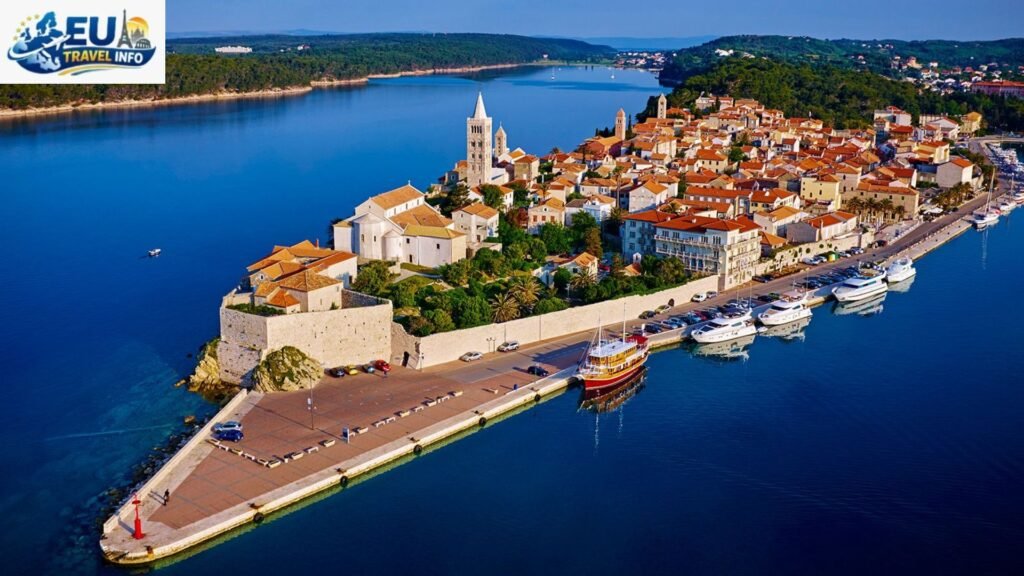
This part of your trip focuses on a slovenia and northern croatia itinerary. You drive into the Istria peninsula. It is famous for truffles, wine, and hilltop towns.
You spend your first Istrian days in Rovinj. You will love the narrow stone streets and the St. Euphemia’s Church. Later, you visit Pula to see one of the best-preserved Roman amphitheaters in the world.
You should also explore the hilltop villages like Motovun and Grožnjan. They offer amazing views over vineyards. On your way south, you must stop at Plitvice Lakes National Park. It consists of 16 cascading lakes and hundreds of waterfalls. You should walk the boardwalks early in the morning to avoid the largest crowds.
Days 11-14: The Dalmatian Coast
You continue south to Split. You can walk through the Diocletian’s Palace, a massive Roman ruin where people still live and work today.
Your next stop is the islands. You can take a ferry to Hvar or Brač. You might relax on the famous Zlatni Rat beach on Brač. Finally, you end your two-week trip in Dubrovnik. You can walk the ancient City Walls and enjoy a sunset drink at a bar on the cliffs.
A Compact 12-Day Plan
A slovenia and croatia itinerary 12 days is a great middle ground. You can follow the 14-day plan but spend less time in Istria. You might choose to skip some of the smaller hilltop towns to gain time for the southern islands. You still get to see Ljubljana, Lake Bled, Plitvice, and Dubrovnik.
The Popular 10-Day Option
A slovenia and croatia itinerary 10 days is very popular for people with less time. You spend four days in Slovenia and six days in Croatia.
- Days 1-2: Ljubljana and Lake Bled.
- Day 3: Triglav National Park.
- Day 4: Postojna Cave and then drive to Istria.
- Day 5: Rovinj and Pula.
- Day 6: Plitvice Lakes.
- Day 7: Zadar and the Sea Organ.
- Day 8: Split and Diocletian’s Palace.
- Day 9: Island hopping.
- Day 10: Dubrovnik.
This plan moves fast. You will see many famous places in a short time.
Short Trips and Special Groups
You might only have one week. A slovenia and croatia itinerary 7 days should focus on either the north or the south. If you choose the north, you can see Ljubljana, Bled, and Istria. If you choose the south, you can visit Dubrovnik, Split, and the islands.
A slovenia and croatia itinerary 5 days is very short. You should probably pick just one or two major spots, like Dubrovnik and Split, or Ljubljana and Lake Bled.
If you plan a slovenia and croatia itinerary with kids, you should include active stops. You might go rafting on the Soča River or explore the underground train in Postojna Cave. The beaches in Istria and the Dalmatian islands are also perfect for families.
Cross-Border Adventures
You can expand your horizons by adding other countries. An austria slovenia and croatia itinerary often starts in Vienna or Salzburg. You can drive south through the Alps into Slovenia.
An italy slovenia and croatia itinerary is very easy to do. Many travelers take a ferry from Venice to Rovinj or Pula. The ferry journey from Venice to Rovinj takes about three hours. You can also travel from Trieste to Poreč in just under two hours. These routes turn your travel into a scenic part of your adventure.
Important 2026 Travel Updates
You should know about major improvements to the railway system in 2026. Croatia is working on a Capacity Strategy for 2026 to make train travel better.
New projects will finish by the end of 2025. You will see speeds of up to 160 km/h on some sections of the track. For example, the line between Križevci and the state border is being modernized. This will reduce travel times for you.
Additionally, the section between Kustošija and Zagreb Glavni kolodvor is being updated. You will find better stations and easier access for people with reduced mobility. These changes make the train a more viable option for your 2026 travel.
How to Get Around
You have several choices for moving between cities. Renting a car provides the most flexibility for your road trip. You can stop at small villages and hidden viewpoints whenever you want.
You must remember to buy a vignette sticker for Slovenian highways. You can buy these at petrol stations. Croatia uses a different system with toll booths on its highways. You can pay these tolls with cash or a credit card.
Buses are a reliable alternative if you do not want to drive. Companies like FlixBus have a very large network in both countries. A bus from Ljubljana to Split takes about eight to nine and a half hours.
Trains are often the slowest option but can be comfortable for long distances. You can even book a sleeper car for overnight trips. However, a direct train from Ljubljana to Split takes 12 to 13 hours because it goes through Zagreb.
Savoring the Culture and Food
You will experience a rich culture in both nations. Slovenia is the European Region of Gastronomy. You should try the Carniolan sausage, which has been popular since 1896. Another must-taste is potica, a traditional cake with many different fillings.
You will find that Slovenia is a land of world records. You can see the oldest grapevine in the world in Maribor. It is nearly five centuries old and still produces wine. You can also see a wooden wheel that is over 5,000 years old in Ljubljana.
In Croatia, seafood is the star of the show. You should try fresh sea bass or scampi while sitting by the water. Istria is famous for its truffle-based dishes. You will find many small shops selling truffle oil and paste in hilltop towns like Motovun.
Packing and Practical Tips
You must pack layers for this trip. It will be cooler in the mountains and in Slovenia. On the contrary, the Croatian coast and islands will be much warmer. You should also bring comfortable walking shoes for the stone streets.
You need to remember some driving rules in Slovenia. Using dipped headlights is mandatory even during the day. You must also carry a first-aid kit and a warning triangle in your vehicle.
Explore the Hidden Gems
You might want to find places off the beaten path. Lake Bohinj in Slovenia is often preferred by those who find Lake Bled too busy. In Istria, the tiny village of Hum is called the smallest village in the world. It has a population of fewer than 50 people.
You could also visit the Soča Valley for its incredibly clear water. It is a paradise for hikers and lovers of nature. If you like history, the Walk of Peace in the Soča Valley takes you through sites from World War I.
Magical Moments Await You
Your Slovenia and Croatia Itinerary Travel Planning Guide 2026 is now complete. You have the data, the routes, and the tips. You will see ancient Roman ruins and walk through primeval forests. You will swim in turquoise water and eat world-class food.
You should start your planning today. 2026 will be a fantastic year to visit these two gems of the Adriatic. You will create memories that last a lifetime.
FAQ
Can you do Slovenia and Croatia together?
Yes, you can easily combine these two countries in one trip. They share a border and both use the Euro, which makes travel between them very simple. Most travelers spend about 10 to 14 days to see the main highlights of both nations.
How many days in Slovenia is enough?
You should plan for at least four to five days in Slovenia to see the major sights. This allows you to visit the capital, Ljubljana, as well as the famous Lake Bled and Triglav National Park. If you love hiking and mountains, you might want to stay longer.
Which country can I combine with Croatia?
You can combine Croatia with several neighbors. Slovenia is the most popular choice. However, many people also add Bosnia-Herzegovina to see Mostar, or Montenegro to see the Bay of Kotor. You can also easily arrive from Italy by taking a ferry across the Adriatic.
Concluding Words
Your Slovenia and Croatia Itinerary Travel Planning Guide 2026 shows that these two countries offer a perfect mix of mountain beauty and coastal charm. You can explore the alpine lakes of Slovenia before heading to the historic stone towns and sunny islands of Croatia. With new train improvements and easy ferry routes from Italy, 2026 is an ideal time for your adventure. You will enjoy amazing food, rich history, and stunning nature every step of the way.