You are about to start a journey that you will remember for the rest of your life. The Alps offer a view that is hard to find anywhere else on Earth. Jagged peaks. Medieval cities. Fairytale castles. You will see them all.
This Switzerland and Austria Itinerary 10 Days guide is for the traveler who wants to see the best of both worlds. You will move through mountain villages. You will gaze at vast glacial lakes. You will feel the history in the cobblestone streets.
First of all, you need to decide when to go. The summer months from May to October are the best for hiking and clear views. May through October is a popular time for a reason. However, if you love the snow, the winter months offer a different kind of magic.
You should prepare for a fast-paced adventure. This plan covers two beautiful countries in a short time. Additionally, you will get a taste of Germany if you start in Munich as many do. But for this specific guide, we will focus on a route that highlights the core of the Swiss and Austrian experience.
Why Choose This Trip?
You might wonder why you should combine these two places. They are very close. They share borders. They also share a language. Both countries speak German. Therefore, you can learn a few basic phrases and use them in most places you visit. Similarly, both countries offer natural landscapes like lakes and mountains.
On top of that, the travel systems are great. You can choose to drive or take the train. The roads are in good condition all year. The trains are fast and clean. Plus, the food is amazing. Fondue. Schnitzel. Chocolate. You will not go hungry here.
Gradually, you will see how these two nations fit together like pieces of a puzzle. One is famous for its watches and banks. The other is famous for its music and palaces. Together, they make the perfect vacation.
Choosing Your Way: Train or Car?
You have a big choice to make before you leave. Do you want to drive yourself or sit back on a train? An austria and switzerland itinerary by train is very popular because the views from the window are stunning. You do not have to worry about parking. You do not have to worry about maps.
On the contrary, a car gives you more freedom. You can stop whenever you want. You can take a shortcut if you see something pretty. Driving in the Alps is an experience of its own. The roads are narrow and winding in the mountains. This is especially true when you cross a mountain pass.
If you choose a car, you must know about the Vignette. This is a sticker for your windshield. You need it to use the highways in Austria and Switzerland. In Austria, it costs less than 20 EUR. In Switzerland, it is about 40-45 USD. Do not forget this. You could get a big fine if you do not have one.
If you choose the train, you should look into a Swiss Travel Pass or a Eurail Pass. These can save you a lot of money. For example, the Swiss Travel Pass covers boat cruises and many museums for free.
Day 1: Arrival in Zurich and the Move to Lucerne
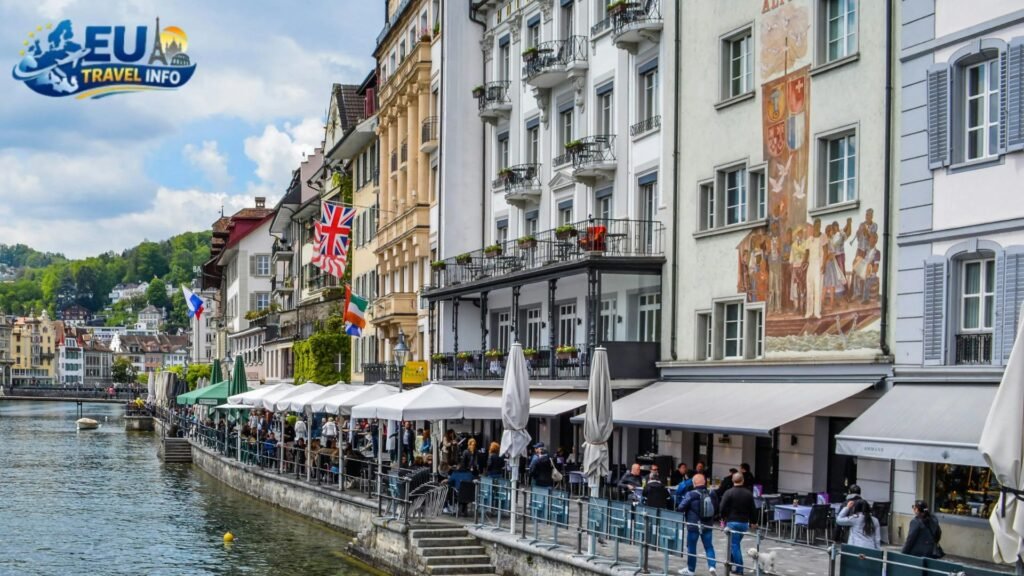
Your adventure begins in Zurich. This is the largest city in Switzerland. It is a center for history and culture. First of all, pick up your rental car at the airport or head to the train station.
Zurich is a busy business city. However, the Old Town is very charming. You can walk the Bahnhofstrasse. This is one of the most exclusive shopping streets in the world. Look at the lake. It is beautiful.
Later, you should head to Lucerne. The drive is only about 45 minutes. It is a much more quintessential Swiss town. It sits right on the edge of a lake. It is surrounded by mountains.
You should walk across the Chapel Bridge. This is a wooden footbridge from the 1600s. It is the most famous landmark in the city. Plus, you can see the Lion Monument. This is a statue carved into rock to honor Swiss guards from the French Revolution.
- Distance to Lucerne: 52.5 km (32 miles).
- Time by train: 40 to 60 minutes.
Finally, enjoy a Swiss dinner. Try some cheese fondue. It is the classic choice.
Day 2: The Peaks of Mount Pilatus
You cannot visit Lucerne without going up a mountain. Mount Pilatus is the best choice here. You can take a boat cruise on the lake first. The mountain views from the water are breathtaking.
Therefore, you should take the world’s steepest cogwheel railway to the top. It has a gradient of 48%! At the summit, you will see a panoramic view of the Alps. You can see the surrounding lakes and peaks for miles.
On top of that, you can descend by an aerial cable car. It is a thrill. You feel like you are floating over the trees.
If you have extra time, explore the local shops. Lucerne has many boutiques. You can find the perfect souvenir there.
Day 3: Interlaken and the Valley of 72 Waterfalls
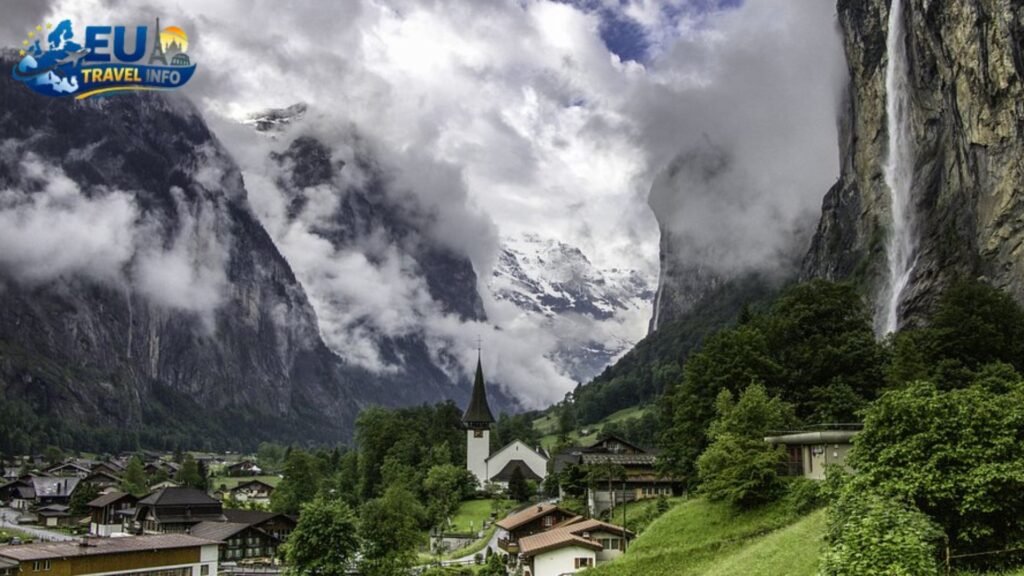
Today, you move into the heart of the Bernese Oberland. Drive or take the train to Interlaken. This town sits between two emerald lakes. It is a gateway to the high Alps.
However, you should not stay only in the town. Head to Lauterbrunnen. This place looks like a storybook. The valley is deep. The rock walls are sheer. There are 72 waterfalls here!
You can walk the valley floor. It is flat and easy. You will see the Staubbach Falls. Additionally, you should visit Trümmelbach Falls. These are subterranean waterfalls inside the mountain. They carry 20,000 liters of water per second from the glaciers. It is powerful. It is loud.
For a thrill, you can go paragliding in Interlaken. You will fly over the blue lakes. You will see the mountains from a new angle.
Day 4: Grindelwald and the Top of Europe
You have seen the valley. Now you must see the glaciers. Head to the village of Grindelwald. It is a chalet-style town. It sits under the massive Eiger mountain.
From here, you take a train to the Jungfraujoch. They call it the Top of Europe. The station is at 11,000 feet. It is the highest railway station on the continent.
You will see the longest glacier in Europe. You can walk through an Ice Palace with sculptures carved into the frozen ground. The air is thin. The sun is bright. Do not forget your sunglasses!
Later, return to Grindelwald. You can walk the Cliff Walk for more views. Or you can drive a mountain cart down the slopes.
Gradually, the day will end. You should enjoy one last night in the Swiss Alps. The peace is total.
Day 5: Crossing the Border to Innsbruck
Today is a travel day. You are leaving Switzerland. You are heading to Innsbruck, Austria. This drive is long but very pretty. You will drive about 380 km (236 miles).
You will pass through Liechtenstein on the way. This is one of the smallest countries in the world. Stop in the capital, Vaduz. You can see the castle on the hill.
Later, you will cross the Arlberg Pass. This is one of the most scenic mountain passes in the Austrian Alps. The mountains keep coming. The valleys are deep.
You will arrive in Innsbruck. It is a charming Alpine town. It was once the home of the Habsburg royals. You should visit the Golden Roof. It is a symbol of the city. It has over 2,600 gilded copper tiles.
First of all, walk the Old Town. It is full of medieval buildings. Eat some apple strudel. It is a local favorite.
Day 6: Salzburg and Musical History
You head east to Salzburg today. This is the city of Mozart. It is also the setting for the movie The Sound of Music.
The drive from Innsbruck is about 2 hours. Once you arrive, head straight to the Old Town. It is a UNESCO World Heritage site. The streets look much like they did 250 years ago.
You should visit Mozart’s birthplace. It is on a famous shopping street called the Getreidegasse. The street has traditional wrought-iron signs.
On top of that, you must go to the Hohensalzburg Fortress. It sits on a cliff above the city. You can take a funicular to the top for 5 EUR. It is the largest fully preserved medieval castle in Europe. The 360-degree views are unbeatable.
Finally, you can enjoy a Mozart Dinner Concert. You eat a traditional meal while musicians play in period costumes.
Day 7: The Magic of Hallstatt
You should take a day trip today. Head to the village of Hallstatt. It is located in the Lake District. Many people think it is the most beautiful village in the world.
It sits between high mountains and a serene lake. You will see 16th-century Alpine houses. You can visit the Hallstatt Salt Mine. It is very ancient.
Additionally, you should go to the Skywalk. It is a platform that hangs over the town. You get a perfect view of the lake.
On the way back, drive around Lake Mondsee. This is where the wedding scene in The Sound of Music was filmed. The church is very pretty.
Similarly, St. Wolfgang is a great stop. It has a famous church and a cog railway that goes up the Schafberg Mountain.
Day 8: Travel to Vienna
You are moving to the final stop. Vienna. This is the capital of Austria. It is a city of palaces and grand boulevards.
The drive from Salzburg takes a few hours. On the way, stop at Melk Abbey. It is a grand building on a rock over the Danube River. Monks have lived there since 1089. The church inside is full of gold and beautiful paintings.
When you get to Vienna, you will feel the imperial history. It was the home of the Austro-Hungarian Empire.
First of all, check into your hotel. Then, head to St. Stephen’s Cathedral. It is in the heart of the city. The roof has colorful tiles in a zigzag pattern.
Later, you can walk the Ringstrasse. This is a grand road that circles the city center. It is lined with massive buildings like the Parliament and the Opera House.
Day 9: The Imperial Grandeur of Vienna
You have a full day to explore the city today. Start at the Schönbrunn Palace. This was the summer home of the Habsburgs. It has 1,441 rooms! You can take a guided tour of the imperial apartments.
The gardens are also grand. You can walk up to the Gloriette for a view of the palace and the city.
Additionally, you should visit the Hofburg Palace. This was the winter residence. It is where you find the Spanish Riding School. You can see the famous white Lipizzaner horses there.
When you get tired, go to a traditional Viennese coffee house. This is a big part of the culture. Order a Sachertorte. This is a rich chocolate cake with apricot jam.
Finally, attend a concert. Vienna is the music capital of the world. You can see an opera or a classical performance in a grand hall.
Day 10: Departure
Your 10 days are coming to an end. You have seen mountains. You have seen palaces. You have experienced the best of the Alps.
If you have a morning flight, head straight to the airport. If your flight is later, visit the Naschmarkt. This is a massive food market. You can buy some local cheese or meat to take home.
Return your rental car at the airport. You will leave with “treasured memories” of your holiday.
Statistical Data and Costs for Your Trip
You should know what to expect for your budget. Traveling in the Alps is not cheap.
- Self-drive tour price: About 2,182 EUR per person for 10 days (including car and stays).
- Gas prices: Between 1.50 EUR and 1.90 EUR per liter.
- Lunch budget: Between 25 EUR and 30 EUR per person per day.
- Dinner at casual spots: Between 30 EUR and 35 EUR per person.
- Train tickets: A 10-day trip can cost around 324 USD if you book early.
Additionally, remember the currency. Germany and Austria use the Euro. Switzerland uses the Swiss Franc. Most places take credit cards, but you should keep some cash for small shops or mountain huts.
Important Tips for Mature Travelers
You should keep these things in mind to stay comfortable.
- Pack layers. The mountains are chilly even in summer. The lowlands can be hot, reaching 30°C to 35°C.
- Wear good shoes. You will do a lot of walking on cobblestones.
- Check for air conditioning. Many historic hotels in Switzerland and Austria do not have it. They use fans instead.
- Drink the water. The water from the fountains in Switzerland is often fresh and drinkable.
- Tipping. In Europe, you do not have to tip a lot. Adding 10% or rounding up the bill is normal.
“Great option for those who want guidance on where to stay and what to see but do not want to travel with large groups,” said Calvin from the United States. You will find that a mix of planning and freedom works best.
Planning Variations
If you have more or less time, you can change this plan.
- Austria itinerary 7 days: Focus on Salzburg and Vienna only.
- Germany, Austria, Switzerland itinerary 7 days: Start in Munich, hit Lucerne, and end in Innsbruck.
- Austria itinerary 5 days: Spend all your time in Vienna with one day trip to Salzburg.
- Austria itinerary 15 days: Add the Grossglockner High Alpine Road and more time in the Tyrol region.
You should also look into the switzerland austria itinerary by train if you want to avoid driving the high passes. The Arlberg Railway connects Zurich to Innsbruck and is very beautiful.
Frequently Asked Question
Is it easy to cross the border between these countries?
Yes. Most of these countries are in the Schengen Area. You will likely not even stop at the border. However, keep your passport ready for spot checks.
Do I need an international driving license?
If you are from outside the EU (like the US or Canada), Austria requires an international driving permit. You should get one before you leave home.
What is the minimum age to rent a car?
The minimum age is usually 19 years old. Drivers under 25 may have to pay a small extra fee.
Is the tap water safe?
The tap water in the Alps is some of the best in the world. You can save money by using a reusable water bottle.
Can I do laundry on the trip?
Facilities are limited in the countryside. You will find laundrettes in the larger cities like Vienna and Zurich. Some hotels offer dry cleaning for a fee.
Concluding Words
This Switzerland and Austria Itinerary 10 Days guide shows you a path through the most beautiful parts of Europe. You will see the high peaks of Zermatt and the grand palaces of Vienna. You will move from the blue lakes of Switzerland to the musical streets of Salzburg.
Whether you choose the freedom of a car or the ease of the train, 2026 is the year to see the Alps. Pack your bags and get ready for a grand adventure.