
I have spent seven years traveling around Europe with my small dog, and I have done several months of research on the places I have not yet visited. Every dog owner knows how naturally these animals become more than a friend; they are family members.
Therefore, when you decide to move or tour, you go together. Europe is truly the most pet-friendly part of the world, but not all countries there are equal. Some spots treat your pooch like a tiny VIP, while others might make you feel unwelcome.
I want to share my best tips and experiences to help you find the most pet friendly countries in europe for your next big adventure.
The Paperwork: What You Need Before You Go
Before we jump into the fun stuff, we must talk about the rules. A move or tour with a pet takes some planning. You cannot just hop on a plane without the right papers.
First of all, the EU Pet Passport is the gold standard. A vet in the EU issues this official document. It proves your dog is microchipped and vaccinated against rabies. This passport is valid for the whole life of your pet as long as you keep the rabies shots up to date. It makes cross-border travel very smooth and stress-free.
However, if you come from outside the EU, like the United States or the United Kingdom, things are more complex. You will need an Animal Health Certificate (AHC). A vet must issue this within 10 days of your arrival in the EU. It is valid for four months of onward travel once you are inside the EU.
Additionally, the cost of an AHC in the UK can range from £100 to £300. Plus, your pet must have a microchip implanted before or at the same time as the rabies vaccine.
Finally, some countries like Finland, Ireland, Malta, and Norway require a tapeworm treatment. A vet must give this to your dog between 24 and 120 hours before you enter.
1. Italy: The True “La Dolce Vita” with Pets

I have to say, Italy is probably the best dog friendly countries in europe. In this country, 79% of owners consider their pets to be family members. This sentiment is even higher among Millennials at 85%. Italy is incredibly dog-loving. You will see pooches in shops, hotels, bars, and even pharmacies.
Northern Italy is a total dream for dog owners. In the Valpolicella wine region, many wineries allow small dogs inside for tours and tastings. Imagine sipping a red wine while your pup relaxes at your feet. Pure bliss.
Additionally, Italy has amazing beaches. The Bau Bau Village in Savona was the first dedicated dog beach in Italy, opened in 1997. It has agility courses and even showers to get the salt out of your dog’s coat. Similarly, Rimini Dog No Problem is one of the largest dog beaches in the region. They even serve “bau gelato,” which is ice cream made just for dogs.
2. France: Chic Companions Everywhere
France is widely considered a top destination because the French are huge pet lovers. Approximately 78% of French owners say their pets are indispensable to their happiness. You will find that dogs are welcome in almost every place you go, including cafes, bakeries, and markets.
Paris is a classic choice, but Nice is also a winner. In Nice, 59% of hotels are pet-friendly. Though some big landmarks like the Eiffel Tower are off-limits, you can still walk through the Marais or the Jardín del Turia.
If you want something fancy, head to the Loire Valley. Dogs are welcome on leads in the grounds of great chateaux. At Château de Chenonceau, you can even take your dog indoors if you carry them. On top of that, France has the top-rated dog beach for 2025: Plage de la Salie Sud. It has 2.4 km of sand and pine forests for off-lead runs.
3. Germany: Organized Affection and Freedom
Germany is one of the most dog friendly countries in europe because dogs are highly integrated into social life. In this country, dogs often go to work or university. However, there are rules. Owners must pay a dog tax called Hundesteuer. In Berlin, this tax is €120 per year for the first dog.
Berlin is a fantastic city for pups. Dogs ride the U-Bahn and trams like seasoned commuters. The city has massive open spaces like Tempelhofer Feld, a former airport where dogs can run free.
Additionally, 50% of German owners have pet insurance. This shows a deep commitment to welfare. Similarly, Munich is great with its extensive beer garden access. Just remember to leave your dog outside when you enter a bakery.
4. Slovenia: A Hidden Pet Paradise
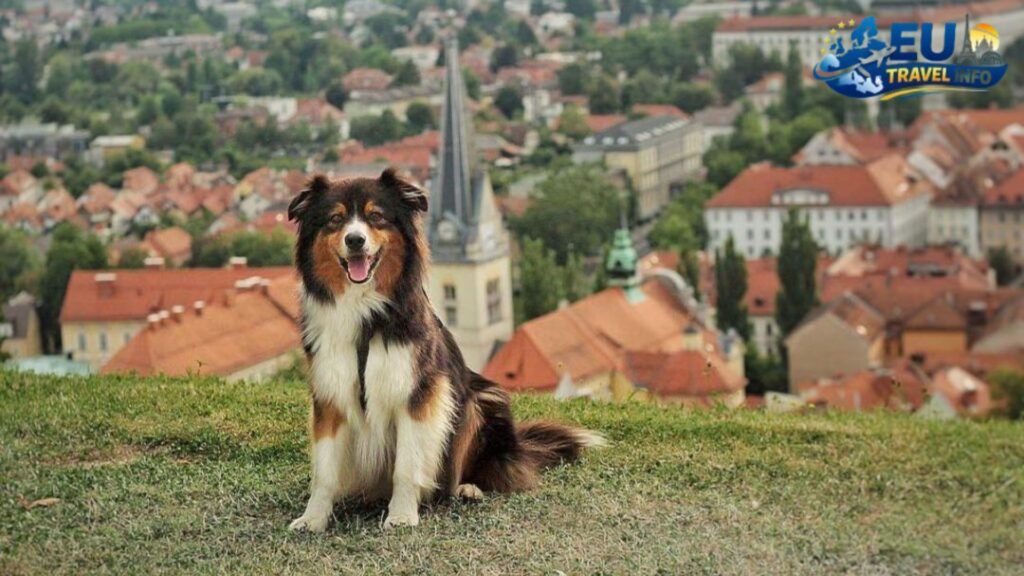
Slovenia is the most dog-friendly country I have visited so far. It is a gem with stunning scenery and welcoming people. In the capital, Ljubljana, even the zoo allows pet dogs to come along!
Lake Bled is a must-see. You can take a dog-friendly boat ride on the lake and explore the mountains. I found it very easy to find hotels and restaurants that allow dogs inside. I even took my dog into a church there, which is almost unheard of in other parts of Europe.
Therefore, if you want a place where your dog is treated almost like a human, Slovenia is the spot.
5. Austria: Alpine Adventures for Pups
Austria is a fellow German-speaking country that is very dog-friendly. You will find that most restaurants, bars, and cafes welcome well-behaved dogs. Dogs are even allowed inside the famous coffee-houses in Vienna.
However, Austria is strict about muzzles. Dogs on public transport must usually wear a muzzle and be on a leash. For nature lovers, the Salzkammergut region offers dog-friendly boat tours on Wolfgangsee.
Similarly, the Hallstatt Lake Walk is an easy, storybook stroll for you and your furry friend. Austria is perfect for hiking in the summer or snow sports in the winter.
6. Switzerland: High Standards and Happy Tails
Switzerland is a contender for the most pet-friendly nation. About 43% of Swiss households have pets, with cats being very popular. Swiss law gives extensive protections for animal welfare. For example, social animals like guinea pigs cannot be kept alone.
In Switzerland, dogs are allowed on trains, buses, boats, and even cable cars. Small dogs under 30cm travel for free if they are in a carrier. Larger dogs need a Day Pass for Dogs, which costs about CHF 25.
Zurich is very accommodating, with 71% of hotels being pet-friendly. However, the laws are strict. You must register your dog in the AMICUS database. Plus, you must ensure your dog does not soil streets or private gardens.
7. The Netherlands: Flat Lands and Friendly Faces
The Dutch have a very laidback attitude toward dogs. The Netherlands even declared “no more stray dogs” after a long effort to stop abandonment.
Amsterdam is a top city for travelers with pets. Dogs can travel for free on most public transport within the city. You will often see dogs in bike baskets or trailers as you ride along the canals. Vondelpark is a great spot with designated off-leash zones.
Additionally, the Scheveningen Dog Beach in The Hague is a sandy haven where dogs can roam freely. Most restaurants and cafes allow dogs, but you should always ask first.
8. Belgium: Beer, Chocolate, and Dogs
Belgium is a dog-lover’s paradise. Most restaurants welcome dogs and will even bring a bowl of water for your companion. Finding a place to stay is usually very easy.
Bruges is a perfect size for exploring on foot with your pup. You can enjoy an outdoor terrace with a Belgian beer while your dog rests beside you. On Belgian Rail, small pets travel for free, and larger ones only need a small fee.
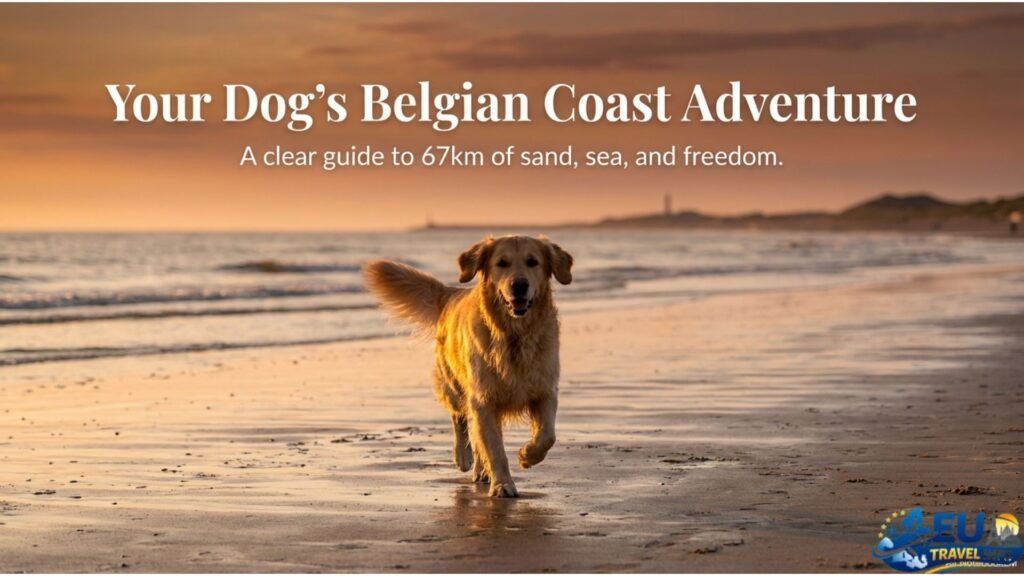
Similarly, on some beaches, dogs are welcome to move off-leash. It is a very easy country to navigate without a car.
9. Romania: The Reigning Pet Kingdom
Romania ranks #1 in Europe for pet ownership. Cats are in 48% of households, and dogs are in 45%. This is the highest rate on the continent. In villages, dogs guard homes, while in cities, they are becoming “beloved companions”.
You will find a growing number of pet-friendly cafes in Bucharest and Cluj. Romania is also set to ban fur farming by 2027. Though finding hotels can sometimes be tricky compared to Western Europe, the people generally love dogs.
On top of that, train travel with a pet is simple and affordable there. It is truly a pet kingdom.
10. Czech Republic: “The Dog Republic”
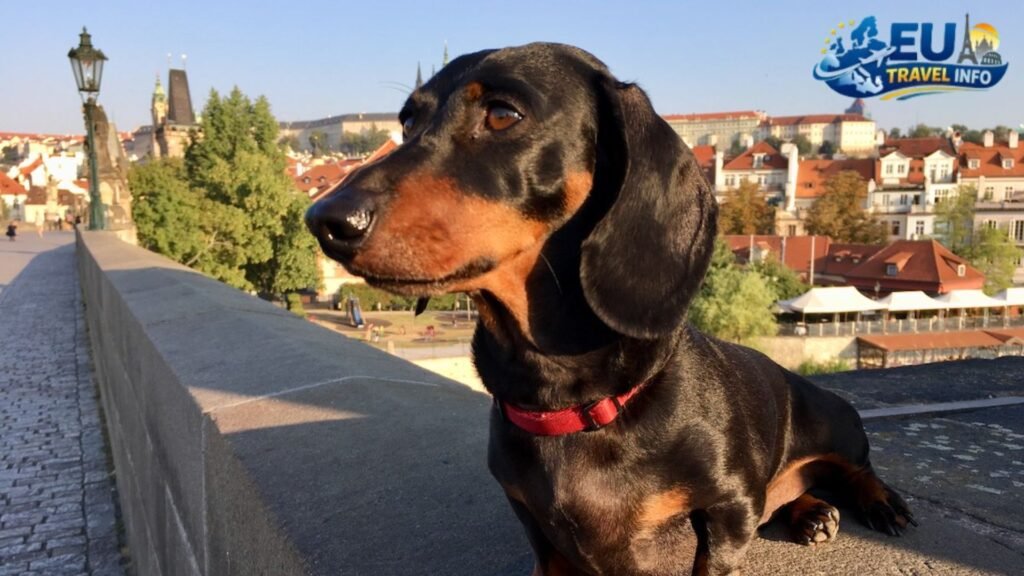
The Czech Republic has earned a funny nickname: “The Dog Republic”. This is because the canine population outnumbers children under the age of ten. Life without a pet is almost unthinkable for locals.
Prague is one of the most pet-friendly cities for travelers. Dogs are frequent companions in pubs and on trams. In fact, dogs of all sizes travel for free on most public transport in the city.
You can even take your dog into many castles and the Prague zoo! There are plenty of dog-friendly dining options and parks across the city.
The Flip Side: Top 10 Least Dog-Friendly Countries in Europe
While much of Europe is a dream, some places are a bit harder to visit with a pup. Here is a list of the Least dog-friendly countries in Europe based on my experiences and other travelers’ reports:
- Albania: Dogs are not very welcomed, especially in restaurants.
- Bosnia & Herzegovina: There are cultural barriers; some people can be aggressive toward dogs.
- Iceland: Despite plans to change, dogs are currently not allowed indoors in restaurants.
- Kosovo: Similar to Albania, dogs are often not tolerated in eateries.
- Moldova: Public places generally do not allow dogs, and there are reports of animals being treated poorly.
- North Macedonia: Travelers report being shunned or ignored when with a dog.
- Serbia: Dogs are almost never allowed inside.
- Norway: It is against the law to take dogs inside restaurants, though patios are okay.
- Poland: Outside of big cities, it is hard to find restaurants that allow dogs inside.
- Portugal: Many places still do not allow dogs indoors, and transport can be hit or miss.
Most Dog Friendly Countries in Europe for Cats?
Do not worry, cat lovers! I have not forgotten you. While dogs get a lot of the spotlight, some countries are also the most cat friendly countries in europe.
Romania is a huge winner here with that 48% ownership rate. France and Germany also have very high cat ownership. In Switzerland, cats are so protected that the law requires you to give them a scratching post and ensure they can climb and play.
If you only have one cat in Switzerland, it must have daily contact with people or see other cats. This shows how much they care about the mental health of our feline friends.
Practical Tips for the Best Experience
When you plan your trip, think about how you will get around. Rail travel is often the best and most pet-friendly way to go. The Swiss Federal Railways (SBB) and the Austrian Federal Railways (ÖBB) have very clear rules.
If you fly, remember that most airlines only allow pets in the cabin if they weigh less than 8 kg. For larger dogs, ITA Airways in Italy is testing a 10 kg limit and even allowing some dogs up to 20 kg in the cabin on certain flights.
Ferry travel is another option, especially between the UK and the continent. Companies like Brittany Ferries and Stena Line offer pet-friendly cabins.
Summary of Fun Stats:
- 82%: Hotels in Helsinki that allow pets.
- 90%: Pets in Sweden that have insurance.
- 6.43 km: The length of Holkham Beach in England, which is dog-friendly year-round.
- €120: The annual dog tax in Berlin.
- 33,000+: Pets that have traveled safely with specialized pet airlines.
FAQ
What is the most dog friendly country in Europe?
I have found that Italy is widely seen as the most dog friendly country on the continent because dogs are welcome in almost every public venue. My personal favorite is Slovenia because it feels incredibly welcoming to animals in a way that is hard to find elsewhere.
Which country is the most pet-friendly?
France and Italy are top choices for the most pet-friendly nations due to their high levels of social integration. These countries allow pets in many restaurants, cafes, and even high-end shops.
Which country in Europe has the most pets?
Romania is the reigning “Pet Kingdom” with the highest ownership rate. Almost half of all households there own a cat or a dog.
Which country is kindest to animals?
Switzerland and Sweden are known as the kindest places because they have very strict animal welfare laws. These countries protect the dignity and mental health of animals by law, ensuring they are never mistreated or neglected.
What are the top 5 animals in Europe?
Cats and dogs are the top choices for companions. Rodents, rabbits, and fish are also very common in many European homes.
What pets are popular in Europe?
Cats and dogs are the most popular pets across the region. Additionally, many people keep ferrets, birds, and reptiles.
Final Thoughts on Your Journey
Traveling with a pet is a big responsibility, but it is so rewarding. You see a side of Europe that other tourists miss. You meet more locals because everyone wants to say hello to your dog.
Each country has its own unique charm. Italy offers freedom and sunshine. Germany offers structure and safety. Slovenia offers quiet beauty. Therefore, choose the one that fits your personality best.
A well-prepared traveler is a happy traveler. Get those vaccines early. Check your microchip details. Pack a travel kit with water and snacks. Your pup is ready for an adventure of a lifetime.
Exploring Europe with a dog is like having a key to a secret club. It opens doors to cafes, parks, and hearts that might otherwise stay closed. Safe travels!