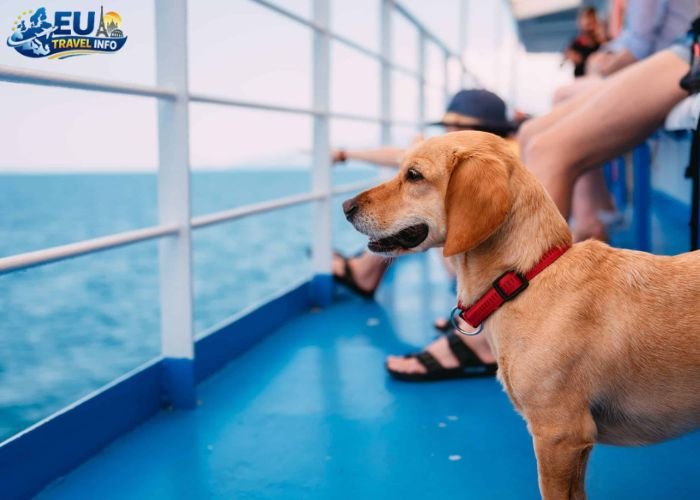
I have explored the winding roads of Tuscany and the busy streets of Paris with my miniature dachshund at my side. Believe me, Travelling Europe with a dog is one of the most rewarding things a person can do. You might feel nervous about the rules or the logistics at first. I certainly was. However, once you learn the Pet-Friendly Ferries & Public Transport Tips in Europe, the whole world opens up for you and your furry friend.
There is so much to see. From the white cliffs of Dover to the sunny beaches of Sicily. This guide will share everything I have learned about making these trips smooth and happy for everyone involved.
The Ultimate Checklist: Paperwork and Preparation
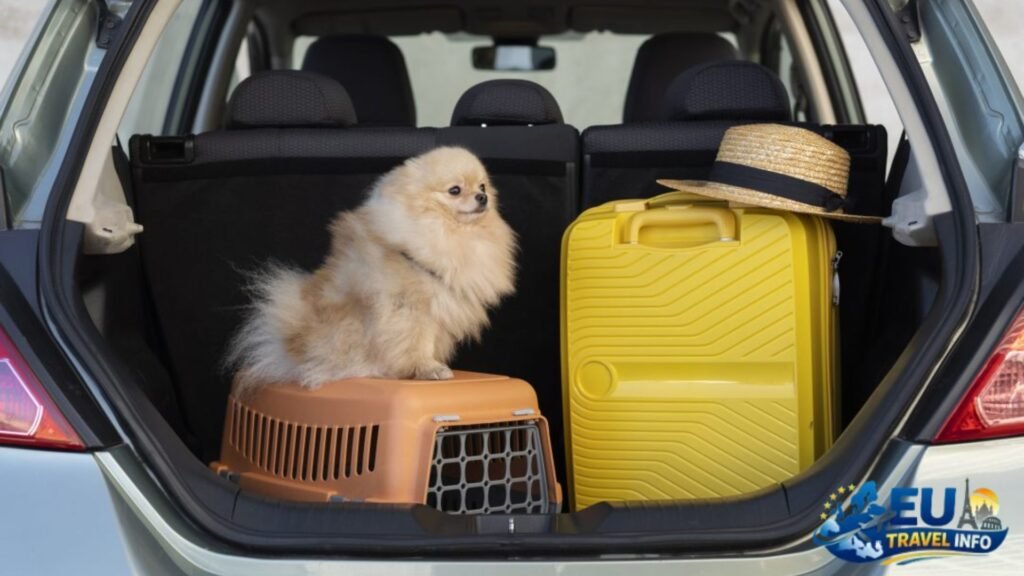
First of all, you must get the paperwork right. It is the foundation of your entire trip. If you do not have the correct documents, officials can deny you boarding or even put your pet in quarantine.
Your pet must have a microchip. This chip should follow ISO standards 11784 or 11785. You must do this before or at the same time as the rabies vaccination. If the vet does it later, the vaccination is not valid for travel.
The rabies vaccination is critical. For a first-time shot, you must wait 21 full days before you can cross a border. Later, if you keep up with booster shots on time, you do not have to wait. Plus, your vet must record everything in an EU Pet Passport or an Animal Health Certificate (AHC).
I should mention a big change for friends in the United Kingdom. Since Brexit, pet passports from Great Britain are no longer valid for entry into the EU. Therefore, you need an AHC for every single trip you take from the UK to Europe. These documents are long. They are often 10 pages and can cost around £180. It is expensive. I know.
Additionally, if you go to the UK, Ireland, Finland, Norway, or Malta, your dog needs a tapeworm treatment. A vet must give this pill between 24 and 120 hours before you arrive at your destination. At that time, I found it helpful to book a vet in the port city to handle this right before boarding.
The “Eurostar Gap” and How to Beat It
Many people ask me, “Can I take my dog on the Eurostar?” The answer is no. With the exception of guide and assistance dogs, pets are not allowed on trains between London and the continent. This is a huge hurdle for Dog-friendly travel Europe.
However, you have other ways to cross the English Channel. You can use a ferry or a car taxi service through the tunnel.
I once used a service called Pet Travel Abroad. They pick you up at Folkestone Central station and drive you through the Eurotunnel in a taxi. You and your dog stay together in the car for the 35-minute journey. It costs around £190 plus the tunnel fee, but it is very low stress.
On the contrary, if you want a cheaper route, the ferry is a great choice. Later in this post, I will give you the full list of the best ships to board.
15 Best Pet-Friendly Ferries in Europe
Choosing the right boat can make or break your trip. Some ships require your pet to stay in the car, while others offer Pet Friendly cabins. Here are my top 15 picks based on my experience and detailed research.
1. Stena Line (Harwich to Hoek van Holland)
This is my top recommendation for travel from the UK to the Netherlands or Germany. It is extremely dog-friendly. You can book a pet-friendly cabin on deck 10. These cabins have hard floors instead of carpet and even a TV channel that shows CCTV of the kennels.
Your dog can stay with you in the cabin for the entire 8-hour crossing. If they need to go to the toilet, you go to the small outside “poop deck” on deck 7. Plus, you can travel as a foot passenger. This is a rare and wonderful option.
2. P&O Ferries (Dover to Calais)
I love the new Pet Lounge on this route. It costs about £12 each way to upgrade. In this lounge, you and your dog can sit on comfy sofas together. They even provide complimentary refreshments for the humans.
There is also an exercise area on the outside deck with obstacles for the dogs to play on. Therefore, your dog does not have to stay in the car for the 90-minute crossing.
3. Irish Ferries (Dover to Calais)
Similar to P&O, Irish Ferries has a Pet Den. This is a dedicated indoor area with seating for owners and an outdoor walkway. I found the Oscar Wilde ship especially good for this.
If you travel to Ireland, they also have pet-friendly cabins on the James Joyce and Isle of Inisheer. This makes the Irish Sea crossing very comfortable.
4. DFDS (Newhaven to Dieppe)
This route is a hidden gem for foot passengers. While some lines only allow motorists, DFDS lets you walk on with your dog. I read some DFDS pet friendly cabins reviews that mentioned they are simple but effective.
You must book your pet into a kennel or a cabin in advance. At that time, I learned they mainly accept small and medium dogs for foot passengers.
5. DFDS (Newcastle to Amsterdam)
This is an overnight route that is perfect if you are heading to Northern Europe. They offer cabins that can hold up to two medium-sized dogs. There is a dedicated pet exercise area nearby. Though the trip is long, having your pup in the cabin makes it feel like a mini-cruise.
6. GNV (Grandi Navi Veloci)
GNV is a leader in the Mediterranean for Dog-friendly travel Europe. They have specific cabins with linoleum floors for easy cleaning. They even provide a welcome kit for your pet. Later, you can walk your dog on the designated outside decks as long as they are leashed.
7. Grimaldi Lines
I highly recommend their “onboard pet in cabin” service. For about €10, you can make almost any cabin pet-friendly. They give you a “Welcome Bag” with a bowl and biodegradable waste bags. On top of that, the cabin gets a special deep cleaning after you leave.
8. Corsica Ferries
This company is very relaxed. They allow dogs inside the cabins and almost everywhere on the ship. In public spaces, your dog just needs to be on a lead and muzzled. Therefore, you do not have to leave your best friend alone at any point.
9. Baleària
If you sail around Spain, Baleària has great options. They have cabins with doggy beds and watering bowls. Some of their ships even have video monitoring in the kennels. You can check on your pet from your phone using their “Smart” system.
10. Trasmed
They offer a “pet seat” option for small animals under 8 kg. The pet stays in a carrier at your feet. For larger dogs, they have air-conditioned kennels with Wi-Fi cameras so you can watch them the whole time.
11. Moby Lines
I love their “four-legged friends formula”. This allows you to book a cabin with an easy-to-clean floor and a disinfecting mat. You can take up to three pets in one cabin.
12. Superfast Ferries
They operate between Italy and Greece. Their pet cabins cost about €50 per pet. On domestic Greek routes, it is often free. They also have kennels on the covered deck for a lower price.
13. Tallink Silja Line
This is my favorite for the Baltic Sea. On their newer ships, like the MyStar, pets in carriers can stay in many passenger areas. They even have sandboxes on the outside decks for toilet breaks.
14. La Méridionale
They have air-conditioned kennels for crossings to Corsica. Assistance dogs travel for free and can stay in the cabins. However, regular pets must stay in the kennel or your vehicle.
15. Minoan Lines
They provide free kennels on all their ships for both international and domestic Greek routes. Many of their ships also have a limited number of pet-friendly cabins. It is a very budget-friendly way to see the Greek islands.
Rail Travel: Country by Country Tips
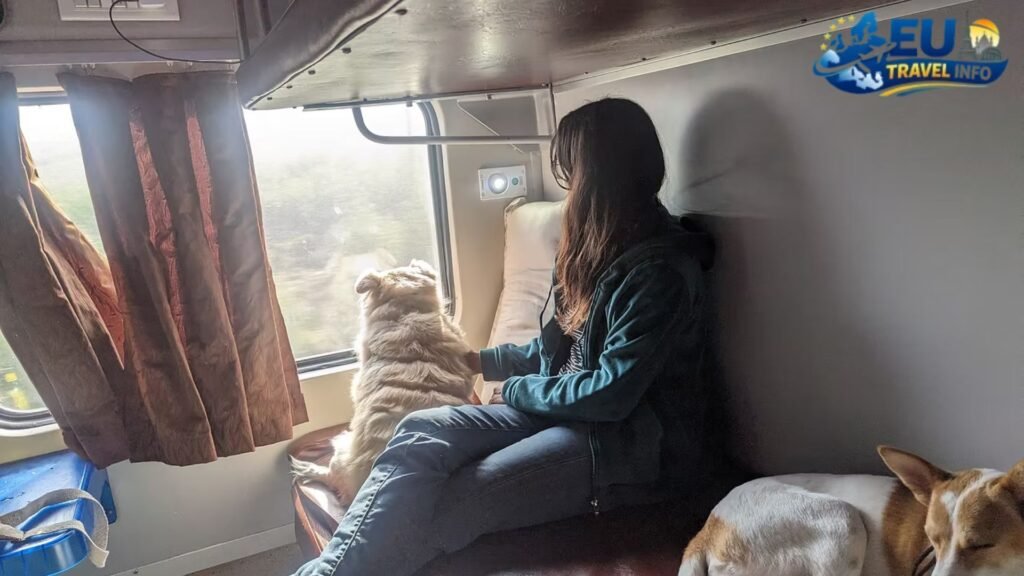
Once you land on the continent, the train is often the best way to move around. Every country has different rules. Similarly, every company has its own fees.
France (SNCF)
In early 2024, France simplified its rules. Now, most pets on TGV and TER trains cost a flat fee of €7. If your dog is over 6 kg, they must be muzzled and on a lead at your feet. Small pets must be in a carrier no larger than 45 x 30 x 25 cm.
Italy (Trenitalia)
Italy is incredibly welcoming. Small pets in carriers up to 70 x 30 x 50 cm travel for free in most classes. Larger dogs need a ticket that is usually 50% of the price of a second-class ticket. You must have your dog’s health booklet or pet passport ready for inspection.
Germany (Deutsche Bahn)
Small dogs (the size of a cat) travel for free in a carrier. Larger dogs require a ticket. Usually, this is half the price of a standard fare. They must be leashed and muzzled at all times.
Spain (Renfe)
Spain used to be very strict, allowing only pets under 10 kg in carriers. However, they now have a pilot program for dogs up to 40 kg on specific high-speed AVE lines. It costs €35, and they even give you a “travel kit” with a seat cover and mat.
Navigating the Big Cities: Metros and Buses
When you get to a big city, you will likely need the subway. Believe it or not, most European cities are very open to dogs.
London
London is a winner. All dogs travel for free on the Tube, buses, and trains. You do not even need a muzzle unless your dog is aggressive. One big tip: You must carry your dog on the escalators. This protects their paws from the moving stairs. If your dog is too heavy, use the lifts or stairs.
Paris
Small dogs in carriers are free. Larger dogs pay a reduced fare on the Metro and RER trains. On the contrary, large dogs are not allowed on buses in Paris. Always keep a muzzle with you, as it is technically mandatory.
Berlin
Berlin is very relaxed. You can take a dog for free on many day-ticket types. Otherwise, you need a “reduced-fare” ticket. The law says your lead must not be longer than one meter.
Madrid
Madrid allows dogs, but there are peak hour bans. You cannot take your dog on the Metro from 7:30 to 9:30 AM, 2:00 to 4:00 PM, or 6:00 to 8:00 PM on weekdays. Also, you must use the last car of the train.
FAQ
Can I take my dog on a ferry to Europe?
Yes. Many ferry companies like Stena Line, DFDS, P&O, and Irish Ferries allow pets. You can book them into cabins, kennels, or keep them in your vehicle depending on the route.
How to travel in Europe with a dog?
You need to meet the standard EU Pet Travel Scheme rules. This includes a microchip, a rabies vaccination (with a 21-day wait for first shots), and a valid EU Pet Passport or Animal Health Certificate.
Where to travel in Europe with your dog?
Italy is often described as one of the most dog-friendly destinations. France, Germany, and Switzerland are also very welcoming on trains and in public spaces.
Which European country is most dog friendly?
Italy is highly rated for its relaxed rules and acceptance of dogs in restaurants and shops.
Is Eurostar pet friendly?
No. Eurostar only allows registered guide and assistance dogs on board for trips to and from London.
Which airlines allow dogs in cabin in Europe?
ITA Airways recently raised their domestic cabin limit to 10kg plus a 2kg carrier. Many other European airlines allow small pets in carriers if they meet weight and size limits.
Which country is the most pet-friendly?
While many are excellent, Italy stands out because dogs are welcome in almost every public setting, including grocery stores and historical sites.
What is the most dog friendly city?
London and Berlin are very dog-friendly. London allows dogs for free on all public transport without a muzzle.
How to travel to Germany with a dog?
You need a microchip, rabies vaccine, and passport or AHC. On trains, small dogs in carriers travel free, while larger dogs need a half-price ticket and must be leashed and muzzled.
Pro Tips for a Stress-Free Adventure
Gradually, you will get into a rhythm. Here are some final pieces of advice to make it easier.
- Food: You cannot take meat or dairy from the UK into the EU. Only take enough food for the crossing and buy more when you arrive.
- Exercise: Walk your pet well before boarding a ferry or train. A tired dog is a happy traveler.
- Etiquette: Not everyone loves dogs. I always ask the people sitting near me if they are okay with my pup being there. This goes a long way.
- Safety: Never give your pet a prescription sedative without talking to a vet. Natural calmers like Zylkène can help with ferry nerves.
I hope this guide helps you feel ready to go. I see so many people on Pet friendly ferries & public transport tips in europe reddit threads asking these questions every day. It seems hard, but it is just a matter of checking the boxes.
Finally, remember that your pet is your best travel partner. They do not care about the sightseeing as much as they care about being with you. Though the paperwork is a bit of a headache, seeing them sniff the air in a new country makes it all worth it.