
I never thought I would find myself staring at a mountain of paperwork just to take my furry best friend across the ocean. The idea of Pet Travel From the United States to Belarus sounded like a grand adventure for a seasoned traveler like me. However, the reality is a bit more complex than a simple walk in the park. You need patience. You need a plan. Most of all, you need to understand the rules. My journey was full of surprises, and I want to share every detail so you do not have to struggle like I did.
The Great Warning: Is it Safe?
First of all, I must talk about the elephant in the room. The United States government currently has a Level 4 – Do not travel advisory for Belarus. It is a serious situation. They mention unrest and the risk of arbitrary detention. Additionally, the U.S. Embassy in Minsk has suspended its operations. This means if you get into trouble, the government has a very limited ability to help you.
I had to think long and hard about this. Therefore, you must have your own evacuation plan. On top of that, you should assume all your electronic devices are being monitored by security services. It is a lot to take in. Plus, the border with Poland has seen major closures recently. At that time, I realized that this trip was not just about my pet. It was about total awareness.
Step One: The Foundation of Health
When I decided to move forward, the first question was the age of my pet. I learned that pets must be at least 4 months old to enter Belarus. This is because of the timing of the rabies shot. You simply cannot rush nature.
The microchip is the most important part. Every pet must have a microchip implantation before anything else happens. I made sure my vet did the chip first. Why? Because the rabies vaccination only counts if the chip is already in place. It is the rule.
I spent a lot of time looking for where to get a health certificate for pet travel. You cannot just go to any vet down the street. You must find a USDA-accredited veterinarian. These vets have special training from the National Veterinary Accreditation Program. If your vet is not accredited in the specific state where you are seeing them, the government will not sign off on your papers. I suggest you call and ask your local office directly if they have someone on staff who is accredited.
The Paperwork Maze: USDA and VEHCS

Once I found the right vet, we talked about the USDA pet travel requirements. The main document you need is the Eurasian Economic Union (EAEU) Form 15. This is the pet health certificate for international travel that Belarus accepts.
The digital age has made some things easier. We used the Veterinary Export Health Certification System, also known as VEHCS. This is a secure online portal. My vet used vehcs pet travel tools to issue the certificate electronically. Then, the USDA officials could digitally endorse it. This saved me a lot of time with the mail.
I had to be very careful with the timing. The health certificate must be issued and signed within 5 days of travel. That is a very small window! If you miss it, you are in trouble. I found a health certificate for pet travel pdf on the USDA website to study it beforehand. It helped me know what questions to expect.
Shots and More Shots: The Medical List
My dog needed more than just a rabies shot. For a dog to enter Belarus, they must be vaccinated against several things. These include distemper, hepatitis, parvovirus, adenovirus infections, and leptospirosis. These shots must happen more than 20 days before you leave, but less than 12 months before travel.
Similarly, cats have their own rules. They must be vaccinated against feline panleukopenia. I also found out that the vet must examine cats for ringworm, which is officially called dermatophytosis. If the cat looks healthy, they do not need a lab test, but the vet has to check.
On top of that, if your pet is over 3 months old, the rabies vaccine is mandatory. If it is their first rabies shot, you have to wait at least 20 days before you can depart. I made a checklist to keep it all straight.
- Microchip (Must be first).
- Rabies Shot (Wait 20 days if it is the first one).
- Dog Combo Shot (Distemper, Parvo, etc.).
- Cat Shot (Panleukopenia).
- Health Exam (Within 5 days of flight).
The Flight: Crates and Comfort
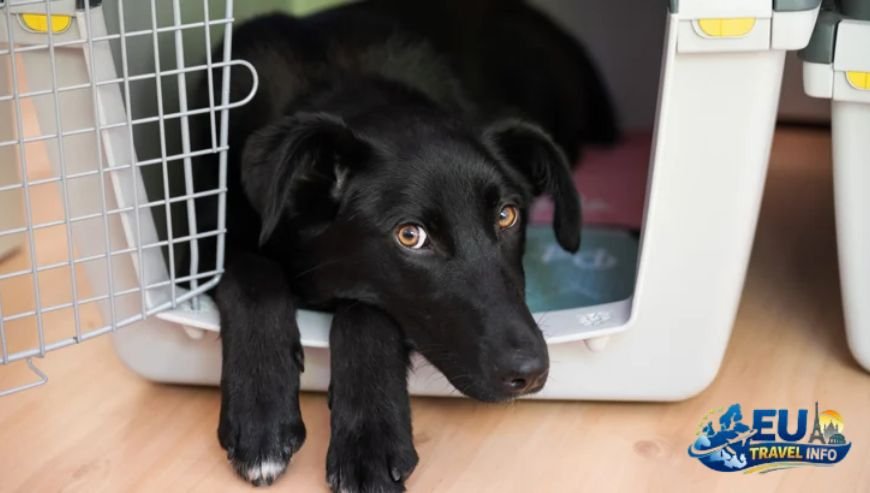
I had to pick an airline that was friendly to animals. Not all of them are. Some have strict rules about the breed or size of the dog. I checked the IATA Live Animals Acceptance Check List to make sure my crate was perfect.
The crate must be the right size. It needs to have enough ventilation. It must be leak-proof and escape-proof. I also learned that some countries do not allow straw for bedding, so I used absorbent pads instead. Finally, I had to put “Live Animal” and “This Way Up” labels on the container.
I worried about the long flight. I found out that airlines keep pets in climate-controlled cargo holds. However, I still felt better booking a direct flight to minimize the time my dog was in the crate. I also provided a 24-hour emergency phone number on the crate labels.
Entering Belarus: The Airport Experience
The only way I would recommend entering is through Minsk National Airport. When you arrive, you must go to the red corridor at customs. You have to tell them you have an animal. They will call a person from veterinary control.
The vet office is located on the 2nd floor, sector 5-6. I had to show all my original documents. This included the usda pet travel certificate and the vaccination booklet. They even scanned my dog’s microchip to make sure it matched the papers.
There is a small fee to pay, but it is not much. I made sure I had some cash on me just in case. After they check everything, they give you an official health certificate for Belarus. Then, you are free to go. But wait! There is one more step. You must register your pet with the local vet authorities within one month of arriving. Do not forget that part.
The Future of Travel: Pets and Robots
While researching my trip, I stumbled upon some fascinating information about how pets might experience the world differently in the future. This is all about how animals live alongside new technology like self-driving cars and delivery robots.
I found it interesting that some dogs react poorly to delivery robots in urban spaces. Around 9% of dogs might react aggressively, while 8% might try to avoid them. On top of that, experts say that the noise from electric vehicles can be hard for animals that rely on sound, like guide dogs.
Similarly, drones can cause a lot of stress for wildlife and pets. Many animals perceive drones as a threat or an intruder. I thought about this because Minsk is a modern city. I might see more of these robots there. Experts are now saying we need to design these systems to be more animal-aware. They suggest that we should consider the non-human perspective when we build smart cities.
Dealing with Complex Logistics
If all of this sounds like too much, you are not alone. Some people use a Diplomatic Pet Relocation service or an Executive Family Pet Relocation company. These groups handle the Embassy Documentation Management for you. They work directly with the USDA to get the health certificate for dogs pdf signed and stamped.
I chose to do it myself to save money, but it was a full-time job for a few weeks. If you are traveling from somewhere else, like pet travel from brazil to usa, the rules are totally different. You always have to check the specific requirements for your “from” and “to” locations.
One thing that surprised me was the EU transit rule. If your flight stops in Germany or another EU country on the way to Belarus, you need an EU transit health certificate. This is basically a second set of papers. On top of that, if you ever want to bring your pet back into the EU from Belarus, the rules just got stricter in September 2024. Now, you need a rabies antibody test because the EU does not trust the rabies control in Belarus right now.
A Summary of My Wisdom
I have learned so much from this experience. It is not just about the destination. It is about the preparation. I want to leave you with a few “pro tips” that saved my sanity.
First of all, keep every single paper in a dedicated folder. I had the original and at least three hardcopies of everything. You never know when a printer will be broken or an official will be grumpy.
Second, talk to your vet early. I started the process about 90 days before my flight. Some shots take time to “settle” in the eyes of the law. For example, that 20-day wait after the rabies shot is non-negotiable.
Third, prepare your pet for the crate. I did not just throw my dog in there on flight day. We spent weeks doing “crate training” at home. I put his favorite blanket inside. I gave him treats in there. Gradually, he felt it was a safe space. This reduced his anxiety significantly during the long journey.
Finally, stay informed. The situation in Belarus changes fast. The USDA website for Belarus was my most visited page. I checked it every morning for updates.
FAQ
Can I bring my dog to Belarus?
Yes, you can bring a dog to Belarus, but you must follow strict health and documentation requirements, including ensuring the pet is at least four months old. You are generally limited to importing a maximum of five pets without requiring special permissions or additional quarantine restrictions.
Can you bring pets from the US to Europe?
Yes, pets can be relocated from the United States to Europe, though each country maintains specific import requirements, health certifications, and embassy approvals. It is essential to comply with international regulations and manage embassy documentation to ensure entry.
Can you fly from the US to Belarus?
Commercial air travel options to Belarus are extremely limited and may become unavailable at short notice. Furthermore, the Federal Aviation Administration (FAA) has prohibited U.S. air carriers, commercial operators, and pilots from operating in the Minsk Flight Information Region due to safety risks.
Can an American travel to Belarus?
The U.S. Department of State advises that Americans should not travel to Belarus for any reason. U.S. citizens currently in Belarus are urged to depart immediately.
Why is Belarus a high risk country?
Belarus is designated as a high-risk (Level 4) country due to political unrest and the risk of arbitrary law enforcement. The U.S. government also has an extremely limited ability to assist detained citizens in the country.
Do they allow dogs in international flights?
Many airlines allow pets on international flights, but policies differ significantly based on the animal’s breed, size, and the specific flight route. Some airlines also have restrictions on brachycephalic (short-nosed) breeds.
Is it safe for dogs to fly in cargo?
They note that airlines follow International Air Transport Association (IATA) standards to ensure pets travel in climate-controlled holds. Professional relocation services aim to minimise stress by selecting direct flights and ensuring the use of airline-approved crates.
Why is there no US embassy in Belarus?
The U.S. Department of State suspended all operations at the U.S. Embassy in Minsk on 28 February 2022. Consequently, there are no routine or emergency consular services available to U.S. citizens within Belarus.
Why can’t we travel to Belarus?
Travel is strongly discouraged because of the potential for arbitrary detention, poor detention conditions, and the U.S. government’s inability to provide consular access or help to its citizens. There is also a risk of harassment by Belarusian officials at border crossings.
Conclusion
Relocating a pet from the United States to Belarus involves a complex process of medical and legal compliance. Owners must ensure their pets are microchipped, vaccinated against rabies, and examined by a USDA-accredited veterinarian within five days of travel to obtain an authorised health certificate.
Despite these established veterinary protocols, the U.S. Department of State currently advises a Level 4 “Do Not Travel” status for Belarus due to political unrest and the suspension of U.S. Embassy operations in Minsk, which severely limits assistance for Americans. Consequently, while pet import is technically possible with the correct paperwork, the broader safety risks and restricted flight options make such travel highly challenging at this time.