I remember the day I decided to leave my old life behind and move to the beautiful town of Kuldīga, Latvia. It is a place of magic. Cobblestone streets. Ancient buildings. The smell of fresh bread in the morning. But there was one big problem I had to solve first. I have a loyal dog who is basically my child. Moving Pets to Kuldīga, Latvia was a task that felt like climbing a mountain. I spent weeks reading about rules and health codes. However, I did it. I made it work. Now, I want to share my story to help you do the same. This is not just a guide. This is my journey.
Why Kuldīga Stole My Heart
First of all, let us talk about the town itself. Kuldīga is often called the Venice of the North. It has a tiny population of only about 13,000 people. It feels quiet. It feels safe. The most famous thing here is the Venta Rumba. This is the widest waterfall in Europe. It stretches 249 meters wide. Can you imagine? At that time, I realized my dog would love the riverside walks.
The cost of living also caught my eye. The average salary in this region is between €14,000 and €18,000 per year. If you want to buy a house, the average price is around €1,300 per m². On top of that, buying property in Kuldīga costs about 50% less than in the capital city of Riga. It is a practical choice for anyone who wants a slower pace of life. A peaceful retreat. A nostalgic atmosphere.
Now that you know why I chose this place, we must get into the hard stuff. The paperwork. The vaccines. The long lists of things to do.
The Great Paperwork Hunt
You cannot just put your dog in a car and drive. There are strict rules. Latvia is a member of the European Union. Therefore, you must follow EU laws for pet travel. If you are coming from inside the EU, it is simple. You just need a standard EU Pet Passport. But if you come from outside the EU, like I did, you need more.
I started by asking everyone, “what is an eu animal health certificate?”. I found out it is a specific document for pets coming from non-EU countries. You might also hear people call it the european health certificate dog form. This paper proves your pet is healthy. It proves they have their shots. You can often find an eu pet health certificate pdf online to see what it looks like. However, a licensed vet must be the one to fill it out.
Gradually, I learned that an official government vet in your home country must also sign it. In the United States, this is the USDA. In other places, it might be a different office. This certificate is only valid for 10 days from the date it is issued until you reach the EU border. Do not wait until the last minute! Additionally, the vet must sign the form in a different color than the printing, usually blue ink. Details matter.
Health Requirements and Microchips
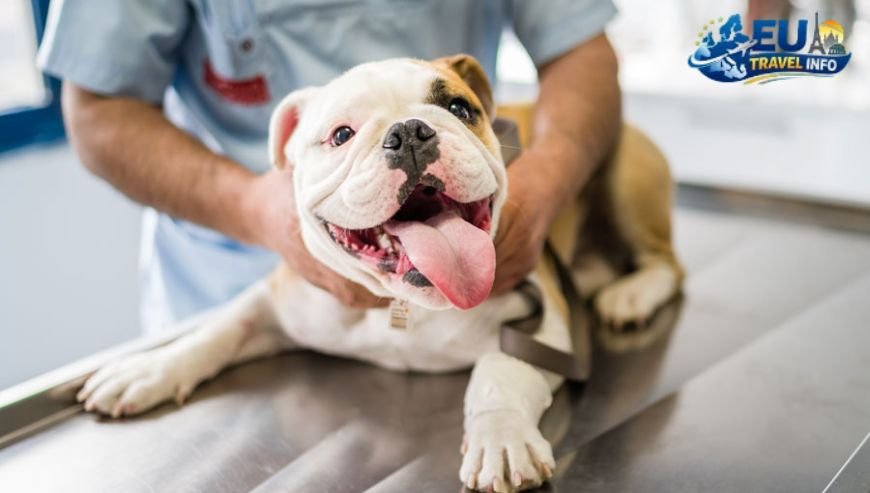
You must get your dog a microchip before anything else. This is the law. The chip must follow ISO Standard 11784 or 11785. If the chip is old or different, you might have to carry your own reader. I made sure my vet used the right one. Plus, the chip must be put in before the rabies vaccine.
The rabies vaccine is the most important part of the european pet certificate process. Your pet must be at least 12 weeks old to get the shot. After the shot, you must wait 21 days before you can travel. This gives the vaccine time to work. My dog had a three-year vaccine, but it had to be less than a year old to count as a “primary” shot in some cases. Always check with your vet.
If you are coming from a “high-risk” country for rabies, you need a blood test. This is called a titre test. The vet must take the blood at least 30 days after the vaccine. Then, you have to wait three months after the test before you can move. Luckily, I was coming from a country that did not need this. You should check the list of countries on the pvd latvia website. They are the Food and Veterinary Service of the Republic of Latvia. They make the rules.
The Five-Day Rule
There is a strange rule you need to know about. It is called the non-commercial movement rule. To count as a pet owner and not a seller, you must travel within five days of your pet. If you do not, the move becomes “commercial.” This makes it much more expensive. It also changes the import requirements. I made sure my flight was on the same day as my dog. We wanted to be together anyway.
During this trip, you can bring up to five pets. If you have more, you need special proof that they are going to a competition or a show. They must also be over six months old for that. Most of us just have one or two furry friends, so this is usually not an issue.
Booking the Flight: airBaltic Experience
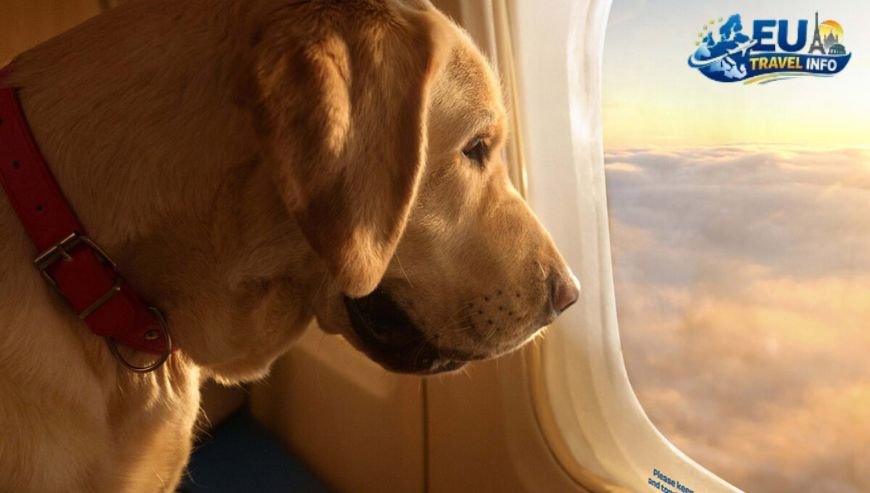
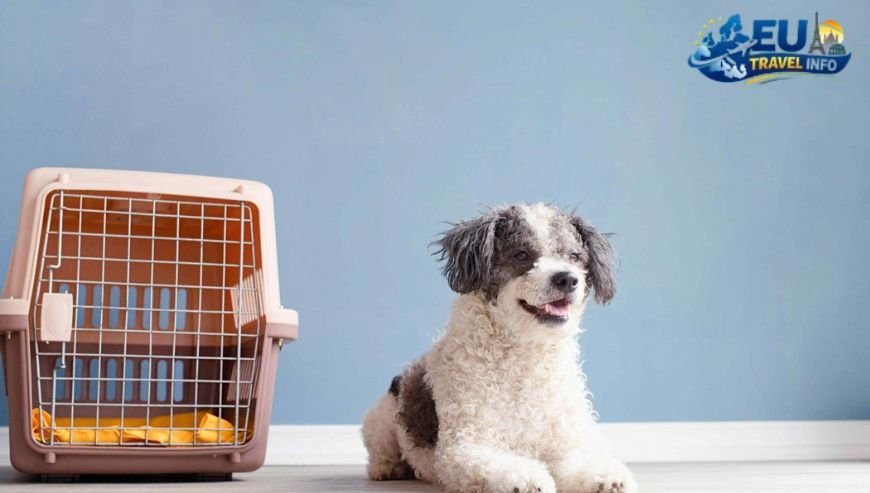
Now, let us talk about the actual travel. Flying is the quickest way to get to Latvia. I chose airBaltic, the national airline. They have very clear rules. If your dog is small, they can stay in the cabin with you. The total weight of the dog and the carrier cannot be more than 8 kg. The carrier size must be no more than 55 x 40 x 23 cm.
My dog is a bit bigger. Therefore, he had to fly in the cargo hold. I was very nervous. However, the cargo area is pressurized and temperature-controlled. The pilots can see that an animal is on board. airBaltic charges about €70 for a pet in the cabin. For the cargo hold, it is €110 if the pet and crate are under 32 kg. If they are heavier, up to 75 kg, the price goes up to €220.
I had to buy a very specific crate. It had to be hard plastic or wood. It must be big enough for the dog to stand up, turn around, and lie down naturally. If the crate is too small, the airline will refuse to take your pet. I also put absorbent material on the floor and attached his name and my contact info to the outside. You should also add a “LIVE ANIMAL” label.
Arrival at Riga Airport
The flight was long. Finally, we landed at Riga International Airport (RIX). This is the main gateway to the country. When you arrive with a pet from a non-EU country, you must go through Customs. They will check your european health certificate dog papers. You must present your pet to the control post.
One thing I learned is that you cannot just walk your dog on a leash inside the airport. They must stay in their carrier bag at all times. Once you get outside, there is plenty of space. But inside, you must follow the signs. Riga is about two hours away from Kuldīga by car. I rented a car because buses in Latvia usually do not allow dogs. This is a very important detail. If you do not have a car, you will find it hard to move between cities with a pet.
Settling into Kuldīga
We finally reached Kuldīga. The air was clean. The grass was green. I felt like I could breathe again. My dog was happy to be out of his crate. We stayed at a place called Roberta Hercberga Apartamenti for the first few nights. They allow dogs of any size for no extra fee. It was a great start.
Later, I looked for a permanent home. Kuldīga is very pet-friendly. Many people here have dogs. You will see them walking in the parks and near the river. Gradually, I found a lovely apartment with a small garden. On top of that, the Boutique Hotel Virkas muiža is another great place if you need a hotel. They even give dogs a complimentary snack. It is the little things that make a place feel like home.
Mandatory Registration: The LDC
You might think the work is done once you arrive. On the contrary, there is one more legal step. In Latvia, all dogs must be registered in a national database. This is the Agricultural Data Center (LDC). You must go to a local practicing veterinarian to do this.
You will need several documents for this visit:
- Your own identity document (passport or ID card).
- The Pet Passport or the health certificate from your trip.
- A specific registration form.
The vet will check the microchip and enter the data into the system. This must be done within 10 days of importing the dog. It is not just a suggestion. It is a requirement for all dogs by the time they are four months old. This system helps find lost pets. It also makes sure all dogs are vaccinated against rabies.
Finding a Vet in the Region
While Kuldīga is small, there are good services nearby. I found a veterinary pharmacy and shop called “Animu” right on Mucenieku street in town. For major medical needs, many people drive to Riga. There are over 54 veterinary clinics there. Some are open 24 hours, like Vetklinika24.
In Riga, you can find clinics like KAVET or MAZO BRĀĻU HOSPITĀLIS. I personally recommend AMI’S Veterinārā Klīnika if you are in the capital. They are very professional. But for day-to-day things, the local Kuldīga options are just fine. Most younger vets in Latvia speak English very well. This made it much easier for me to explain my dog’s needs.
Life as a Dog Owner in Latvia
Walking my dog in Kuldīga is a dream. We often go to the nature trails. There are so many of them! Ogre Blue Hills is a bit of a drive, but it has a specific dog trail that is about 4.25 km long. Closer to Kuldīga, the Slītere National Park has beautiful views. You can even see Estonia from the lighthouse on a clear day.
Similarly, the Kemeri National Park is a fantastic place for a long walk. It has huge swamps and forests. Just be careful in the wet weather. Some wooden paths can be slippery. Also, watch out for ticks. Latvia has a lot of them. Some carry encephalitis. I made sure my dog was vaccinated against tick-borne diseases, and I checked myself every time we came home from the woods.
Additionally, you should know about the headlight rule. In Latvia, you must keep your car’s low beam headlights on at all times while driving, even during the day. I almost forgot this a few times! Plus, you must have winter tires from December 1st to March 1st. The winters here are cold and damp with strong winds. You will need a warm coat for yourself and maybe a sweater for your dog.
The Community and Culture
Latvians might seem reserved at first. They do not always talk to strangers on the street. However, if you have a dog, people will smile at you. It is a great way to “break the ice”. They love animals. Gradually, I made friends with other dog owners in the park.
Kuldīga has a strong sense of community. There are local festivals and artisan stalls. I love walking through the Old Town, which is a UNESCO World Heritage Site. The cobblestones are beautiful, but they can be hard on your feet. Wear good shoes! My dog does not mind them at all. He just wants to sniff every corner of every ancient building.
On top of that, the air here is incredibly fresh. I met an expat who moved to Jūrmala because the pine trees and sea air helped their breathing problems. Kuldīga has that same clean, natural feeling. It is a healthy place to live. A place to recharge.
Helpful Tips for Your Move
To make your move easier, I have put together a small list of tips:
- Book air travel early. There is a limit on how many pets can be on one flight.
- Check the weather. Airlines will not fly pets if it is too hot (above 85°F) or too cold (below 20°F).
- Learn some Latvian. Even just saying “Sveiki” (Hello) goes a long way.
- Bring your own electronics. Things like laptops can be more expensive here.
- Get a car. Public transport is okay in Riga, but a car is a must for a pet owner in the countryside.
Therefore, if you plan well, the move will be smooth. Do not let the paperwork scare you. Just take it one step at a time. First the chip. Then the rabies shot. Then the european health certificate dog form. It is a process. But it is worth it.
FAQ
Can I bring my dog to Latvia?
Yes, you can bring your dog to Latvia as long as you meet the country’s entry requirements. These include ensuring your dog has an ISO-compliant microchip, a valid rabies vaccination administered at least 21 days before travel, and an EU pet passport or a health certificate issued by a licensed veterinarian.
Does Air Baltic allow pets in cabin?
Yes, airBaltic allows small cats and dogs to travel in the cabin. The pet and its carrier combined must not exceed a maximum weight of 8 kg, and the carrier must fit under the seat in front of you with maximum dimensions of 55 x 40 x 23 cm.
What to be careful of in Latvia?
You should be particularly careful of ticks, which can carry encephalitis and Lyme disease; vaccination for encephalitis is strongly recommended even if you only visit city parks. Additionally, be aware that Latvian roads can be in poor condition, and you are legally required to use low beam headlights at all times while driving. In Riga, avoid leaving valuables visible in unattended cars to prevent theft.
How to move pets from one country to another?
There are three primary ways to move a pet by plane: in-cabin (under the seat), as checked baggage (in a temperature-controlled cargo hold on your flight), or as manifest cargo (shipped independently via a pet relocation company). Regardless of the method, you must fulfill documentation requirements, including microchipping, rabies vaccinations, and obtaining a veterinary health certificate within 10 days of the move.
Can pets fly on international flights?
Yes, pets can fly on international flights, including both short-haul and long-haul routes. They must meet international standards for carriers, which require that the animal can stand up, turn around, and lie down in a natural position.
Can I speak English in Latvia?
Yes, English is commonly used, especially among the younger generation and in major cities or international business environments like Riga.
How do pets pee on long flights?
For pets traveling in the cargo hold, it is required to line the crate with absorbent material. For pets in the cabin, it is recommended to feed them no later than four hours before the flight and manage their water intake before boarding.
What airline will ship pets?
Airlines mentioned that ship or transport pets include airBaltic, Lufthansa, KLM, and Alaska Airlines.
Concluding words
Moving a pet to Kuldīga, Latvia, is a manageable process that requires adherence to EU pet import regulations, including mandatory microchipping, rabies vaccinations, and a valid veterinary health certificate. Kuldīga offers a peaceful, historic atmosphere with the widest waterfall in Europe and a variety of pet-friendly accommodations ranging from boutique hotels to private Airbnbs.
Travelers should plan to fly into Riga and then proceed to Kuldīga by car or train, as long-distance buses in the region generally do not permit pets. While the town is welcoming to furry companions, owners should remain vigilant against local ticks and ensure their pets are registered in the national database upon arrival.