Have you ever looked at those tall, white mountains and wished your best furry friend could be there with you? I did. Every single day for a year. Switzerland with Dogs – A Complete Guide to Pet Friendly Travel Spots is not just a title for me. It is a memory of crisp air, wagging tails, and the most polite society I have ever seen. Switzerland with Dogs is a dream come true for any traveler. However, it requires a lot of prep work. I found that out the hard way. Rules. So many rules. But the effort is worth it. Plus, the views are better when shared with a four-legged companion.
First of all, let us talk about your arrival. Taking a dog to switzerland from uk or anywhere else starts at the border. You cannot just drive across and hope for the best. Your dog needs a microchip. Similarly, a valid rabies vaccine is a requirement. You must ensure the vet gives this shot at least 21 days before you enter the country. Additionally, you will need a pet passport. If you come from the UK, you might use an Animal Health Certificate. On top of that, you must register your pet with Customs. Look for the red zone at the border. Tell them you have a dog. They will want to see your papers. Therefore, keep them in your glove box.
Understanding the Strict Switzerland Dog Laws
You might feel a bit worried about the local rules. My friend once told me she was constantly worried about getting fined. Switzerland dog laws are very specific. First of all, the country is very strict about clipped ears and docked tails. The government banned ear clipping on July 1, 1981. They banned tail shortening on July 1, 1997. You are prohibited from importing a dog that has had these surgeries for beauty reasons. Federal Food Safety and Veterinary Office (FSVO) officers watch this closely. However, you may bring such a dog for a short holiday if you pay a deposit at Customs. Later, you get the money back when you leave. But you cannot sell or show the dog there.
Additionally, let us look at the local life. Every dog needs to be registered at the local commune or Kreisbüro. You will pay a dog tax. This fee starts at about 160 francs per year for small dogs. Similarly, insurance is a big deal here. You must have incident insurance. This covers any mess or trouble your dog might cause in public. Plus, it helps you rent an apartment. Landlords love proof of insurance.
Gradually, you will notice that the rules change depending on where you stay. These are called cantonal regulations. For example, the Canton of Zurich has a new law starting June 1, 2025. All dog owners will need to take mandatory training courses. If you are a first-time owner, you must pass a theory course. Every dog must also do a practical course of six lessons. This applies to all dogs brought into Zurich after that date. Therefore, always check the local rules before you unpack your bags.
Is Switzerland Dog Friendly? The Real Vibe
I often get asked this question. Is switzerland dog friendly in everyday life? My answer is a big yes. In the United States, dogs are often not allowed in shops or cafes. On the contrary, Europe is a whole different story. In Switzerland, dogs are part of the family. You will see them everywhere. Snuggled in cafes. Sleeping under chairs in fancy restaurants. They even trot alongside bicycles.
You can assume your dog is welcome in an eatery unless you see a sign that says “no”. I have moseyed into many places and tucked my fuzzy friend under the table while I ate fondue. Some restaurants even provide a water bowl without you asking. NENI Zürich is a great spot for falafel where dogs are welcome. Similarly, the Hotel Oberland in Lauterbrunnen is famous for its “Trucker Rosti” and its friendly staff.
However, you must follow the unwritten rules of Swiss dog culture. Swiss people are very polite. They expect your dog to be well-behaved. Barking and growling in public is frowned upon. Do not let your dog run up to every stranger or every other dog. Always ask before you let your dog interact with others. Plus, the Robidog system is amazing. You will find hundreds of these green bins all over the country. They provide free plastic bags. You must clean up after your dog. Always. Everywhere. Therefore, keep a few bags in your pocket just in case.
Getting Around: Public Transport and Road Trips
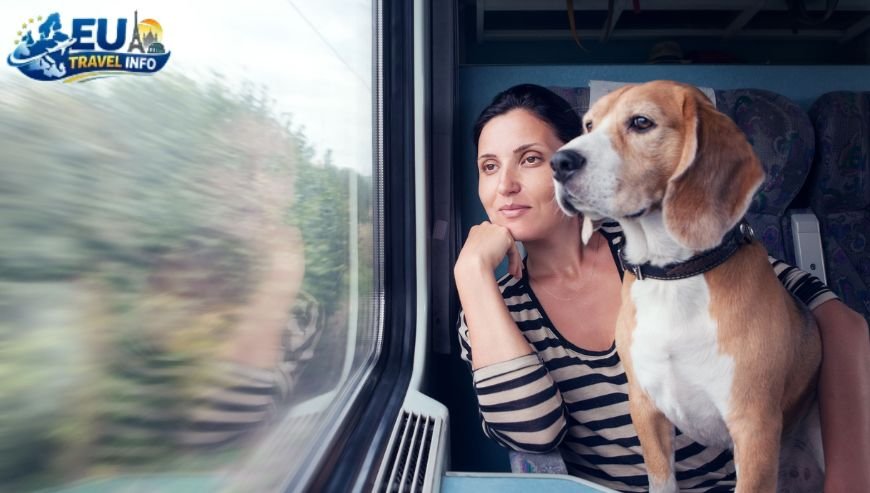
A switzerland road trip with dog is a fantastic idea. But you do not actually need a car to see the sights. The transport system is incredible. Dogs are allowed on almost all trains, buses, and boats. But they do not ride for free. In the eyes of the train operators, a dog is like half a human.
If your dog is small (under 30 cm at the shoulder) and stays in a bag or carrier, it is usually free. However, larger dogs need a half-fare ticket. If you plan to travel a lot, I recommend the Day Pass for Dogs for 25 francs. Additionally, there is a yearly dog pass that costs 805 francs.
I once took a train from Interlaken to Lauterbrunnen. It was so easy. The dog sat under my seat and watched the world go by. Plus, some regions have special deals. From January 1, 2025, dogs are automatically included in their owner’s Davos Klosters Premium Card. This means they ride buses, trains, and mountain railways for free in that area. Similarly, dogs travel for free on trains between Interlaken and Wengen.
If you choose a road trip instead, you must keep your pet safe. The law says the dog must not interfere with the driver. You should use a car crate or a special harness attached to the seat belt. Also, never leave your dog in a hot car. The mountains get surprisingly warm in the summer.
Things to Do with Dogs in Switzerland: Hiking and More
If you love nature, there are so many things to do with dogs in switzerland. Hiking is the main event. Hiking with dog in switzerland is a way of life. I lived there for two years and never saw a “no dogs” sign on a trail. But you must be smart about it.
First of all, let us talk about the Swiss National Park. This is the one place you cannot go. Dogs are strictly forbidden there, even on a lead. If you enter, the park wardens will find you. Therefore, pick another spot.
Davos Klosters is a premier destination for hikers. It has over 700 kilometers of marked trails. I loved the 9-Alps Tour. It offers simple paths and a fantastic view of the Landwasser valley. Another gem is the Jöriseen Round Trip. It takes about five hours and leads you past turquoise green lakes. Plus, the Emerald Trail from St. Moritz to Sils Maria is a lovely 17-kilometer walk for active pups.
Later, I visited the area around Zermatt. The hike from Rotenboden to Riffelberg is about three kilometers. It is relatively easy with a gentle drop in height. On a clear day, you can see the Matterhorn reflected perfectly in Lake Riffel. It is a sign of luck if the mountain shows its peak to you. My dog loved splashing in the cold water.
When you are out on the trails, keep your eyes open for signs. Some cantons, like Schwyz, require dogs to be on a leash at all times. Additionally, you must leash your dog during wildlife breeding season. This is usually from April 1 to July 31 in forests.
Dangers in the Wild: Cows, Snakes, and Ibex
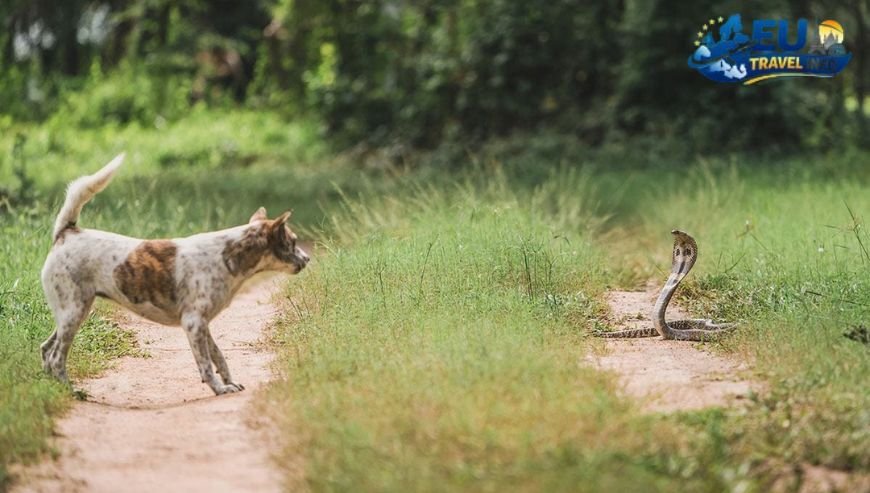
Hiking in the Alps sounds like a fairy tale. However, there are real dangers. First of all, let us talk about cattle. You will often share trails with cows, goats, and sheep. Cows are not always friendly. Mothers are very protective of their calves. They see your dog as a predator. Therefore, give them a wide berth.
Keep your dog on a short leash near a herd. If the cows start to stare or snort, they are threatened. If a cow actually attacks, let go of the leash. Your dog is faster than a cow and can run away. This distracts the cow so you can get to safety. Plus, never try to pet the calves. The mothers will not be amused.
Additionally, watch out for snakes and ibex. There are two types of poisonous snakes in the Alps. They are rare, but they exist. If your dog is bitten, try to carry it so it does not move the limb too much. Seek a vet immediately. Ibex are mountain goats that often stand their ground. They might jump from cliff to cliff. You must ensure your dog does not try to follow them. That would be a disaster.
Finally, keep your dog hydrated. The weather can change from 30 degrees to a snowstorm in one day. Carry plenty of water. A good rule is to offer your dog a drink every time you take one yourself. To check for dehydration, press your finger on your dog’s gum. The color should return instantly. If it takes a few seconds, your dog needs water.
Finding the Best Dog-Friendly Hotels Switzerland
Finding a place to sleep is easier than you think. There are many dog-friendly hotels switzerland. I found that about 90% of places will say yes if you ask nicely.
In Zurich, the 25Hours Hotel Zurich West is a quirky and fun choice. It is located outside the city center. Another option is the Swissotel Le Plaza in Basel. They even left a little dog basket and bowls in my room. Similarly, the Hotel de la Paix in Lucerne is very welcoming. They gave me free bus tickets for both me and my dog.
If you prefer the mountains, Grindelwald is a perfect base camp. It is close to the Eiger Trail and offers scenic gondola rides. In Lauterbrunnen, the Camping Jungfrau Holiday Park allows dogs in the campground. For a more rustic experience, try a farmhouse in Interlaken.
However, be careful with mountain huts or SAC huts. These are often used by hikers on long-distance trails like the Stubai High Trail or the Alpine Circle. The vast majority of these remote huts do not allow dogs in the dormitory rooms. Therefore, you must plan your route carefully if you are doing a multi-day trek.
Famous Switzerland Dog Breeds and History
You cannot talk about Switzerland with Dogs without mentioning the St. Bernard. This is the most famous of all switzerland dog breeds. The most legendary of them all was Barry der Menschenretter. He lived at the Great St Bernard Hospice from 1800 to 1812.
Barry was a search and rescue dog. He is credited with saving more than forty lives. His most famous rescue involved a young boy asleep in a cavern of ice. Barry licked the boy to warm him up and then carried him on his back to the hospice. There is a legend that the forty-first person he tried to save killed him by mistake, but that is not true. Barry actually retired to Bern and died of old age at 14.
Today, you can visit the Fondation Barry in Martigny. They take care of the breeding of these gentle giants. About twenty puppies are born there every year. In the summer, they lead the dogs up to the hospice for tourists to see. Plus, the Natural History Museum of Bern still has Barry’s preserved body on display. It is a must-see for any dog lover.
Things to Remember for a Smooth Trip
As we come to the end of this guide, let us recap a few vital points. First of all, download the robotic-sounding apps for mountain safety if you plan to hike. Additionally, keep the number for a vet handy. Tierklinik Interlaken is a top-notch clinic if you are in that region. Many vets in Switzerland speak English.
Also, be aware of Leishmaniasis. It is a disease spread by sandflies. While it is more common in the south, there have been cases in Switzerland. Use a preventative collar or spot-on treatment. Avoid walking your dog at dusk or dawn when these flies are most active.
Finally, enjoy the journey. Switzerland is a country where dogs are treated with respect. In return, you must respect their culture of quietness and order. Switzerland with Dogs – A Complete Guide to Pet Friendly Travel Spots is really about that balance. Follow the rules. Pay the taxes. Clean up the mess. If you do these things, you will have the best trip of your life.
Summary of Key Data for Your Trip
- Dog Tax: Starts at 160 francs per year.
- Train Fare: Usually 50% of a standard ticket.
- Dog Day Pass: 25 francs for unlimited travel on SBB.
- Annual Travel Pass: 805 francs.
- Zurich Practical Course: 6 lessons required for new dogs.
- St. Bernard Weight: Modern dogs weigh between 54 and 81 kg.
- Davos Hiking Trails: Over 700 km to explore.
- Robidog Bins: Hundreds located nationwide for easy disposal.
Though the paperwork is long, the reward is a sunset at Tannalp with your best friend. At that time, you will realize why this country is so special. However, do not forget to bring a jacket for yourself. The mountains are cold, even when the sun is shining.
Additionally, if you find yourself in Davos, use that Premium Card. It is a lifesaver. On top of that, take the Rhaetian Railway over the Landwasser Viaduct. It is 65 meters high and looks like a painting. Your dog can sit on the floor and enjoy the vibrations of the train while you take photos.
Gradually, you will become a pro at navigating the Switzerland dog laws. Finally, you will find yourself planning your next trip before the first one is even over. First of all, check your calendar. Later, pack your bags. On the contrary to what some might say, you can never spend too much time in the Alps. Similarly, your dog will agree. Also, remember to take plenty of photos. Therefore, you will have memories to last a lifetime. Plus, your dog will look great in front of a glacier.
I hope this guide helps you feel ready. Switzerland is waiting. The mountains are calling. And your dog is already at the door with his leash. Go have an adventure. You both deserve it.
List of Dog-Friendly Spots to Check Out:
- Zürich: Great for urban walks and dining.
- Davos Klosters: Free mountain transport for dogs from 2025.
- Lauterbrunnen: The “Valley of 72 Waterfalls” is a hiker’s paradise.
- Zermatt: Best views of the Matterhorn.
- Lucerne: Beautiful lake walks and dog-friendly hotels.
- Interlaken: Central hub for all alpine adventures.
- Basel: Welcoming city with great riverside paths.
- Engstlenalp: High-altitude meadows and curious goats.
- St. Moritz: Home to the Emerald Trail.
- Martigny: Home of the St. Bernard museum.
The Swiss experience is unique. It is a mix of high-tech trains and ancient mountain paths. It is a place where you can eat luxury chocolate and then walk it off on a 17-kilometer trail. Plus, your dog will love the attention. Just remember to be the “good human” that your dog thinks you are. Follow the rules. Be polite. And always, always bring a ball for the meadow.
Happy travels to you and your pup!
FAQ
Are dogs allowed in shops in Switzerland?
Most shops do not allow dogs to enter. You will usually see a small sign on the front door that tells you the rules. Dogs are strictly forbidden in supermarkets or food stores because of hygiene. However, your pet is welcome in pet shops. Easy right?
Is Swiss okay for dogs?
Switzerland is a great place for dogs because they are considered part of the family. You will see them everywhere from cafes to mountain trails. It is easier to bring your dog along here than in many other countries. Think again if you thought you had to leave your friend at home.
Are dogs allowed in Swiss restaurants?
Yes, you can assume your dog is welcome in most eateries unless a sign says “no”. I have often tucked my pup under the table while I ate fondue. Most staff will even offer a water bowl for your friend without you asking. Plus, they are almost always allowed on terraces.
What is the most dog friendly country?
Switzerland is one of the most pet-friendly countries in the world. Europe in general is welcoming to dogs. You can take them on trains, buses, and even boats with little trouble.
Can dogs bark in Switzerland?
You must ensure your dog does not bark or growl in public. This type of behavior is frowned upon by the Swiss. People expect your pet to be well-behaved and socialized.
What to avoid with dogs?
You must avoid kid zones and playgrounds where dogs are prohibited. Do not take your dog into the Swiss National Park as they are not allowed even on a lead. You should also avoid approaching mother cows too closely on trails to stay safe.
How do I bring my dog to Switzerland?
Your dog needs a microchip and a valid rabies vaccine. You must get the vaccine at least 21 days before you arrive. You also need a pet passport and must register at Customs when you cross the border,.
Dos and Do Not’s in Switzerland?
Do clean up after your dog always and everywhere. Do pay the annual dog tax which starts at about 160 francs. Do not use shock collars or any tool that causes pain. Do not enter nature sanctuaries where dogs are prohibited.
How hard is it to take your dog to Europe?
It is not hard if you have the right documents. Many people find it to be a breath-taking experience because the culture is pet-friendly. Public transport makes it simple to see everything with your dog.
Concluding words
I believe Switzerland is a paradise for travelers with pets. You will find that most restaurants and trains welcome your furry friend with open arms,. Just make sure you follow the rules by getting a microchip and paying the annual tax,.
You can find over 700 kilometers of trails in places like Davos Klosters. Always remember to be a polite guest and clean up every single mess,. This guide helps you navigate the laws and find the best spots for a perfect alpine adventure.