I have spent many months traveling through the cobblestone streets and green parks of the Old World with my furry best friend. I used to think that a pet would hold me back from my dreams of travel. I worried about the hard parts like border crossings, finding a home, and vet visits in a foreign land.
However, I met a rescue pup named Puglo who changed my whole life. We have now traveled across four continents together. I discovered that a journey with a dog is much more rewarding than traveling alone. You see neighborhoods you would usually skip. You walk slower and stay in the moment. Most of all, a dog is the ultimate icebreaker. I had more talks with locals in three months with my dog than I had in five years of solo travel.
Europe is the best dog friendly destinations europe has to offer. It is likely the most dog-loving part of the world. Whether you want to see the Eiffel Tower or swim in a Swiss lake, there is a place for your pup. First of all, I will help you understand how to plan this big adventure.
The Basic Rules of the Road
Before you pack your bags for the most dog friendly cities europe can provide, you must handle the paperwork. This part is not the most fun, but it is necessary. Every country has its own set of rules for pet friendly destinations europe. If you enter the European Union (EU), your dog needs a microchip. This microchip must be ISO-compliant. Additionally, a rabies vaccine is a must. You must get this shot at least 21 days before you start your trip.
If you come from the United Kingdom (UK), things changed after the Brexit transition period. You can no longer use the old UK pet passport. You now need an Animal Health Certificate (AHC).
This document is about 12 pages long. It is valid for only one trip into the EU. I found that prices for an AHC vary a lot. Some vets charge over £200, while others charge less than £100. One clinic in Bedford charges £298 for the first pet. Therefore, you should shop around to save money.
Once you are inside the EU, travel between countries is much easier. You can move between most of the 27 EU nations without new paperwork.
This ease of movement also applies to places like Switzerland, Norway, and Monaco. However, some countries require a vet visit for a tapeworm treatment. You need this if you go to Finland, Ireland, Malta, or Norway. You must get this treatment between one and five days before you arrive.
How to Move Around Europe with a Dog
Long-distance travel in Europe is best on a train. Most trains on the continent welcome dogs. I prefer the train because it is often cheaper and takes you right into the center of the city. Small dogs in a crate or bag often ride for free. However, France charges a small fee of €7 for small pets.
Larger dogs usually need a ticket. This is often the price of a half-fare or a child ticket. Plus, big dogs might need to wear a muzzle. I bought the softest muzzle I could find on the internet so my dog could wear it “for show” to follow the rules.
The only big problem for train lovers is the Eurostar. This rapid train connects London with Paris and Brussels, but it does not allow dogs. Therefore, you must take a ferry or drive through the Eurotunnel to get your pet across the English Channel. The Eurotunnel is great because you stay in your own car. There is even a pet exercise area with agility equipment.
Flying is another option, but it has more rules. Many European airlines allow small dogs under 8 kilograms to fly in the cabin with you. My dog Truffles is a Yorkie who weighs only 2.5 kilograms. She loves to chill in her travel bag during flights. However, larger dogs must fly in the cargo hold.
This can be expensive and a bit stressful for the dog. I recommend that you check the pet policy of your airline early. Some airlines like Ryanair or Easyjet do not allow dogs in the cabin at all.
Gradually, you will find that hiring a car is the easiest way to travel. You can be flexible with your time. Plus, your dog will feel safe in their own “territory”. Most hire car companies like AVIS or Hertz allow pets, though they might charge a cleaning fee. On top of that, you must use a seat-belt harness to keep your dog safe in the car.
Now, let us look at my top 10 list of dog friendly european cities.
1. Zurich, Switzerland
Zurich is the ultimate winner for most dog friendly cities europe has to offer. I gave it a massive score of 9.5 out of 10. It is a city where nature and modern life find a perfect balance.
The best experience I had was at Strandbad Mythenquai. This is a public swimming area on Lake Zurich. Dogs can swim freely in the crystal-clear alpine water right next to humans. It felt like perfection as the Alps turned pink in the sunset.
Zurich is also famous for its spotless public transport. All trains, trams, and boats allow dogs. You can buy a day pass for your dog for only 3.40 CHF, which is about €3.50.
The city is very clean because the Swiss people actually pick up after their pets. Additionally, you can reach amazing hiking trails like Uetliberg Mountain in just 30 minutes by train. Zurich is expensive, but the quality matches the price.
2. Paris, France
Paris is a city that truly loves its dogs. It consistently ranks as one of the best dog friendly cities europe can provide. Parisians are very relaxed about where dogs can go.
You will see dogs of all sizes sitting quietly beside their owners at outdoor cafes. I visited the famous Cafe de Flore and the waiters treated my dog like royalty. They brought a bowl of water without me even asking. Most restaurants and even some boutiques allow dogs inside.
For a long walk, you can visit Jardin du Luxembourg or Parc des Buttes-Chaumont. However, some parks like the Tuileries have stricter rules.
The Metro is a good way to get around, but avoid it during rush hour. It gets very crowded and can be hard for a big dog. Paris is perfect for anyone who wants a city full of culture and dog friendly european cities charm.
3. Munich, Germany

Munich is the perfect place for an active dog and their owner. Germany has a great reputation for being pet-friendly, and Munich is a star.
The best part of Munich is the Englischer Garten. This urban park is one of the largest in the world. My dog had the time of her life swimming in the Eisbach River.
Plus, all beer gardens in Munich allow dogs by law. I sat at the Biergarten am Chinesischen Turm and the waiter gave my dog a free pretzel.
If you love the mountains, you can take a one-hour train ride to the Alps for a hike. Public transport in Munich is also very cheap for pets. A dog ticket costs only €1.50. Munich is clean, safe, and full of nature.
4. London, United Kingdom
London is a city of dog lovers. Though it is a huge capital, it feels very welcoming to pets.
The parks in London are world-class. I walked through Hyde Park and Regent’s Park, which both have huge green spaces for dogs to run. In Hyde Park, dogs are even allowed to swim in the Serpentine Lake. On top of that, most pubs in London allow dogs inside. I visited a pub for a Sunday roast and the bartender brought my dog a “puppuccino” made of whipped cream.
Dogs ride for free on the London Underground and on the red buses. This makes it very easy to see the whole city without a car. London is a bit expensive for hotels, though. You might pay between €120 and €200 per night. But for the park culture alone, it is worth the cost.
5. Berlin, Germany
Berlin is effortlessly cool and very tolerant. It feels like everyone in Berlin has a dog.
You will see dogs riding the U-Bahn like seasoned commuters. They are also welcome in most restaurants and bars. Tempelhofer Feld is a unique spot to visit.
It is an old, abandoned airport that was turned into a massive open park. Dogs can run off-leash for miles here. Another great spot is the Grunewald Forest, which is perfect for a long run.
Berlin is also a budget-friendly choice. Hotels often cost between €60 and €100 per night. If you buy a day ticket for public transport, you can bring one dog along for free. Berlin is artsy, fun, and very easy to navigate with a pet.
6. Amsterdam, Netherlands
Amsterdam is a city where dogs are part of the daily action. The Dutch attitude is very laid back. They assume dogs are welcome unless a sign says no.
One of my favorite things to do was renting a Christiania bike. This is a cargo bike with a big box in the front. My dog sat in the box as we cycled past the canals and the Little Mermaid statue. Vondelpark is the most popular park for dogs. It is beautiful and has special areas where dogs can be off-leash.
Dogs can also ride on canal boats and trams. Most public transport allows small dogs for free. Amsterdam is a bit busy and chaotic, though. You must watch out for bikes and trams at all times. Plus, the canals do not have fences, so keep a close eye on your dog near the water.
7. Vienna, Austria
Vienna is a city of old-world grace and modern convenience. It is often called one of the most pet-friendly cities in the world.
The city has over 1,000 parks. The massive Donauinsel, or Dog Island, is a paradise for off-leash play. I also enjoyed the traditional Viennese coffee houses. I sat in Cafe Central with my dog at my feet while I ate cake and listened to a string quartet.
Public transport in Vienna is very well-connected. However, the rules are a bit strict. Dogs over 40 centimeters must wear a muzzle and you must buy them a half-price ticket. Vienna is very clean and safe, which makes for a stress-free holiday.
8. Barcelona, Spain
Barcelona is a dream destination for social dogs who love the sun and the sea.
The city has a dedicated dog beach called Llevant Beach. It is open all year round for dogs to play in the sand and surf. Parc de la Ciutadella is another great spot for a morning walk. I spent a Sunday morning there and my dog played in the fountain while I listened to street musicians.
Catalans treat dogs like family members. Most tapas bars with outdoor terraces are happy to have you join them for a meal. However, city beaches have restrictions in the summer months. You might need to take a short train trip to Sitges if you visit in July. Barcelona is full of energy and is very pet-friendly.
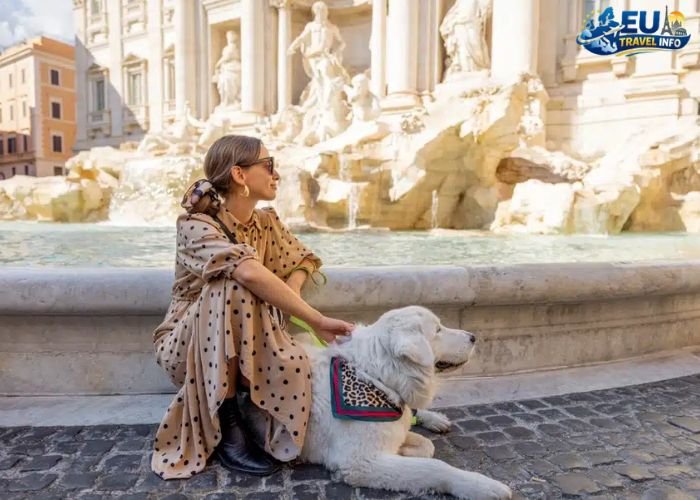
9. Rome, Italy
Romans are not just dog-friendly; they are dog-obsessed. My dog was stopped every 100 meters for scratches and compliments.
I had a wonderful meal at a trattoria in Trastevere. The owner brought my dog a bowl of water and a plate of prosciutto without me even asking. He said, “È famiglia!” which means she is family. You can even find “gelato per cani” (dog gelato) at many shops.
Villa Borghese is the best park in Rome. It is huge, shaded, and has off-leash areas. The summer heat can be very high, though. I had to wake up at 5:00 AM to see the sites before the ground became too hot for my dog’s paws. Rome is history-rich and very welcoming to four-legged friends.
10. Lisbon, Portugal
Lisbon is an underrated gem for a pet friendly destinations europe trip. It has sunny weather and a very relaxed lifestyle.
Monsanto Forest Park is a highlight. It offers miles of trails and open space for off-leash fun. I also loved taking the train to Cascais beach, which is only 20 minutes away. My dog swam in the Atlantic Ocean while I ate fresh sardines.
Portuguese people are very friendly and common to see dogs at riverside cafes. Lisbon is a very hilly city, though. It has seven hills in total. My legs felt like jelly after climbing up to the castle with my dog. But for the beautiful views and affordable prices, it is a great choice.
Which European Countries are Dog Friendly?
If you are wondering which european countries are dog friendly, the answer depends on where you go. Northern Italy, Germany, Austria, and the Netherlands are at the top of the list. In these places, dogs are very much a part of public life. You might even see them in some grocery stores in Italy!
On the contrary, countries like Spain and Portugal used to be less friendly, but they are catching up fast. For example, Spain recently started allowing larger dogs on high-speed trains between Madrid and Barcelona.
Some countries are harder to visit. I recommend that you avoid Iceland or the Faroe Islands for a short holiday. They have very strict rules and long quarantine periods. Additionally, some countries like France have strict laws about “dangerous” dog breeds. If you have a breed like a Pit Bull or a Rottweiler, you must check the local laws very carefully.
Daily Life and Local Etiquette

Traveling through dog friendly cities europe has to offer is not just about the sites. It is about daily life.
Eating Out: In most of the countries I listed, dogs can join you at outdoor tables. In France and Germany, they are often allowed inside as well. Always look for a sticker on the door that shows a dog. If you are not sure, just point at your dog and ask the staff “Okay?”. Most will say yes!
Local Parks: Every city has a different way of handling waste. Amsterdam and Berlin have bins everywhere. In some Spanish cities like Gran Canaria, the police might stop you if you do not carry a water bottle to clean up after your dog marks a spot. It is a rule to carry a bottle and use it every time. Zagreb in Croatia has 313 dog waste bins to keep the city clean.
Public Transport Safety: As cities get smarter, you will see new things on the roads. Many cities now test autonomous mobility systems like self-driving taxis. Waymo taxis in the United States already give over 50,000 paid rides every week.
While these cars are mostly in the US and Asia, they are coming to Europe soon. Studies show that these cars usually detect dogs well. However, some cars have hit animals at night because the sensors failed. Always keep your dog on a short leash near the road for safety.
Vet Care and Emergencies
If you travel full-time, you will likely need a vet at some point. The good news is that vet care in Europe is often much cheaper than in the US.
I had to get a baby tooth removed for my dog while we were in Germany. I waited until we reached Berlin because I knew the clinics were very modern. The vet spoke perfect English and the care was amazing. I paid a small fraction of what it would cost back home.
I recommend that you keep a digital copy of all your dog’s health records on your phone. Additionally, use apps like Rover or Pawshake if you need a pet sitter for a day.
A Special Look at Lucca, Italy
I also want to highlight a very special project in the city of Lucca. This city is part of a project called IN-HABIT. They want Lucca to become the first “human-animal smart city” in Europe.
They are building something called “Animal Lines“. These are special paths that connect the old city center with the suburbs. The paths have “relational areas” where humans and dogs can play and relax together. These areas are even accessible for people with disabilities. Lucca is a wonderful example of how cities can change to welcome pets into the community.
Frequently Asked Questions
Which airline is the most dog friendly?
KLM, Lufthansa, and SWISS are often named the top choices for people who travel with pets. Plus, Transavia and Vueling are very helpful because they allow you to book a spot for your pet online at the same time you buy your own ticket.
Does SWISS airlines accept dogs?
Yes, SWISS allows dogs to travel in the cabin if they weigh less than 8 kilograms including their carrier.
Is Lufthansa pet friendly?
Yes, it is consistently ranked as one of the best airlines for pet owners.
Which airlines allow dogs in cabins?
Most major European companies like KLM, Lufthansa, Air France, and Aegean Airlines allow small pets in the cabin. However, budget airlines like Easyjet and Ryanair do not allow dogs in the cabin at all.
Can I buy a seat for my dog on an airplane?
No, airplane rules generally require your dog to stay inside a carrier that fits under the seat in front of you. You usually cannot buy a separate seat for a dog to sit in like a human.
Do Emirates accept dogs?
Yes, travelers have used Emirates to fly pets through major hubs like Dubai.
What is the most dog friendly country?
Germany and Italy are both top choices and often receive a perfect score of 10 out of 10 for their pet-loving cultures. Northern Italy is specifically known for its extra-welcoming attitude toward dogs.
Do dogs fly free on any airline?
No, airlines almost always charge a set fee for each pet on a flight.
Can I bring my 50 lb dog on a plane?
No, a 50 lb dog is too large for the cabin because the weight limit is usually between 8 and 10 kilograms. Therefore, a dog of that size must fly in the cargo hold or as excess baggage.
Are dogs allowed in cabins on Lufthansa?
Yes, Lufthansa allows small dogs in the cabin if they meet the weight and carrier size rules.
How can I fly my pet internationally?
First of all, you must research airline policies and book a spot for your pet as early as possible. Additionally, your dog needs an ISO-compliant microchip, a rabies vaccine, and an official health certificate or pet passport.
My Final Thoughts
Traveling with my dog through the best dog friendly cities europe can offer has been the most rewarding thing I have ever done. Yes, there is more planning. Yes, there is more paperwork. And yes, you will pay a bit more in fees.
However, the joy is worth every bit of work. There is nothing like seeing your dog chase a wave on a Portuguese beach or sit beside you at a Parisian cafe. You will meet new friends because your dog is a magnet for kindness. Your dog brings a sense of home to every new place.
So, pack your bags and get that pet passport. Your dog deserves to see the Eiffel Tower and the Swiss Alps just as much as you do. Europe is waiting for both of you. Safe travels!
Summary Table: The Definite Ranking of Dog-Friendly Cities
| City | Overall Score | Best Feature | Dog Transport Cost |
|---|---|---|---|
| Zurich | 9.5/10 | Lake Swimming | 3.40 CHF/Day |
| Paris | 9.3/10 | Cafe Culture | Free (Small) |
| Munich | 9.0/10 | Beer Gardens | €1.50/Ride |
| London | 8.9/10 | Massive Parks | Free |
| Berlin | 8.7/10 | Cool Vibe | Free (with Day Pass) |
| Amsterdam | 8.5/10 | Bike Culture | Free/Small Fee |
| Rome | 8.3/10 | Pet Culture | €5 (Large) |
| Barcelona | 8.2/10 | Dog Beaches | Free (Carrier) |
| Lisbon | 7.8/10 | Affordability | Small Fee |
| Vienna | 7.5/10 | 1,000+ Parks | Half Fare |
Analogy for Understanding
To understand traveling in Europe with a dog, think of it like bringing a very popular friend to a party. You might have to pay a little more for their entry and check their ID at the door, but once you are inside, everyone wants to talk to you because of them. The whole experience becomes much more fun and social than if you had walked in alone.