We all know that heart-heavy feeling when we pack a suitcase and see those puppy-dog eyes by the door. I used to think I had to leave my best friend behind every time I wanted to explore a new country. However, my outlook changed completely after I fostered my rescue dog, Vinnie, during the first lockdown. Two and a half years later, we were not just going to a local park; we were driving through the heart of Spain.
The truth is that over 58% of European pet owners now take their dogs on vacation with them. I am one of them. You might ask, is europe dog friendly? From my experience, the answer is a huge yes. Therefore, I have put together this guide to the best dog friendly road trip europe has to offer. We will cover everything from the snowy peaks of Switzerland to the sun-soaked beaches of Portugal.
Preparation: The Boring but Vital Paperwork
First of all, we need to talk about the rules. Can dogs travel freely in europe? They can, but only if you have the right documents. Since Brexit, the old UK pet passport is no longer valid for travel into the EU. You now need an Animal Health Certificate (AHC).
We got our AHC from the vet within 10 days of our travel date. It cost us £160, and it is valid for four months of onward travel within the EU. Additionally, your dog must be microchipped. They also need a rabies vaccination at least 21 days before you get the certificate. At that time, we also paid about £65 for the rabies jab.
One more thing you must know. European road trip with dog logistics require a tapeworm treatment before you return to the UK. You must visit a local vet abroad between one and five days before you board the return tunnel or ferry. The vet will fill in the last box on page four of your certificate. You cannot get home without this.
Choosing Your Ride: By Road Europe
We packed up my small Mini, strapped in Vinnie, and set off. If you have a large breed like a German Shepherd or a Golden Retriever, you need more space. Large dogs need 40-50% more cargo space than medium breeds. They also generate more body heat. Therefore, a good climate control system is a must.
We used a car harness and a seat belt to keep Vinnie safe. On top of that, we installed a barrier behind the back seat. This cost about $90 but it gave us huge peace of mind. Rhetorical fragment? Best investment ever. Later, we learned that heavy-duty seat covers are also vital to protect the car from mud and claws.
The Best Way to Cross the Channel
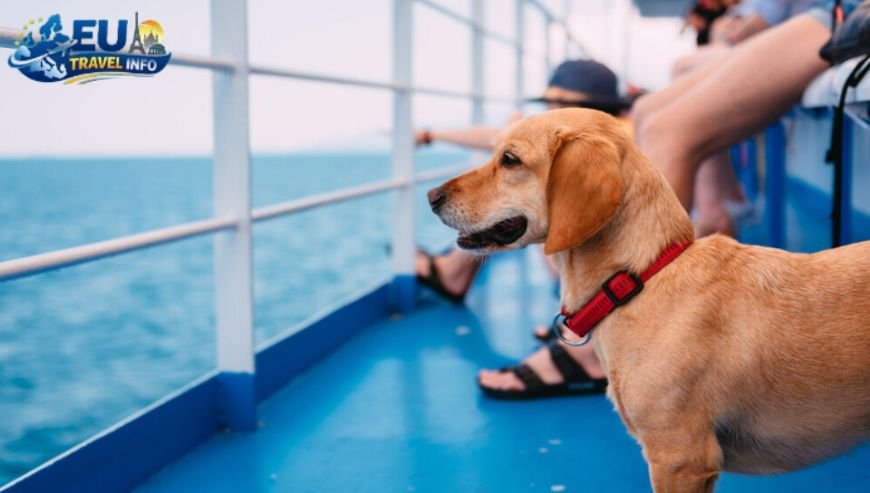
We chose the Eurotunnel Le Shuttle over the ferry. It takes just 35 minutes to cross from Folkestone to Calais. Plus, you get to stay in the car with your dog the entire time. It costs £22 per dog each way.
When you arrive at the terminal, you follow the yellow paw prints to the Pet Reception. They scan the microchip and check your paperwork. Finally, you can let your dog run around in the dedicated exercise area which has artificial grass and free poo bags. Similarly, some people prefer the ferry, but you often have to leave your dog in the car alone. We felt the tunnel was a much better way to start our dog friendly european road trip.
The Spanish Mediterranean Loop
Our first big adventure was a 700-mile loop through Spain. We went from October to December. At that time, the weather was around 20 degrees cooler than the summer heat. In the height of summer, cities like Seville reach 40 degrees, which is dangerous for a pup.
We started in San Sebastian. This city is a hiker’s dream. We hiked up Monte Urgull with Vinnie. Halfway up, we found the Secret Bar. We sat there at sunset, drank a beer, and listened to live music while Vinnie rested. From the top, you can see Playa de la Concha, one of the best beaches in all of Europe.
Gradually, we made our way down to Seville. We spent hours wandering the Plaza de Espana in Maria Luisa Park. Though Spanish food is great, we sometimes wanted something different. We found a place called Nickel Burger. I had the Benedict burger, and it was incredible.
Next, we headed to the coast. In Zahora, we stayed in a cute Airbnb just minutes from the beach. We walked to El Palmar at sunset. Additionally, we visited Nerja, where we ate at Portofino, an Italian place with sea views. Our final stop was Valencia for Christmas Day. We walked through Jardin del Turia, a park that used to be a riverbed. It is the perfect place to walk a dog in the city.
The Italian Lakes and Dolomites
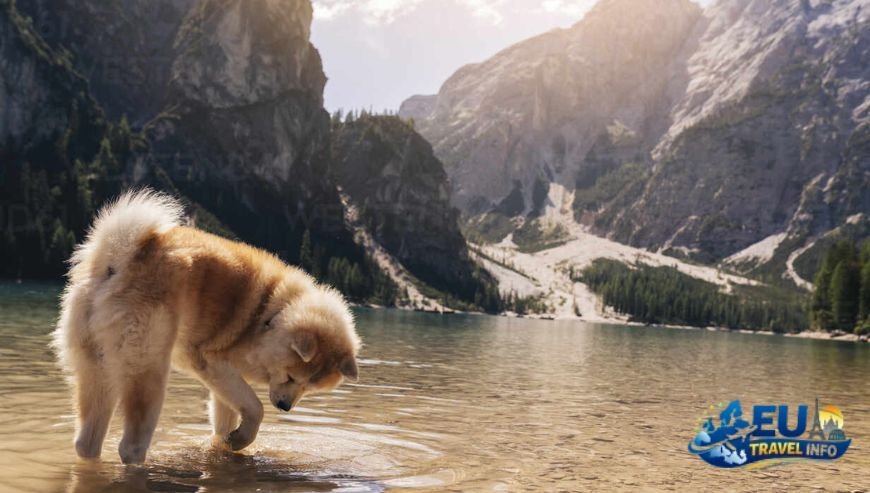
Italy is one of the most welcoming dog friendly road trip destinations in the world. You will see dogs in restaurants, bars, and even some grocery stores. We spent 11 days exploring the north.
We started at Lake Garda and then moved into the Dolomites. If you plan to hike here, you must follow the local laws. You must keep your dog on a leash no longer than 1.5 meters in public places. Also, you must carry a muzzle with you.
The best time to visit is mid-June to early July or late August to September. However, the trails are very crowded in late July and early August. We visited Lake Como on the way back. We stayed in a four-bedroom villa in Dongo for £800 for four nights. Later, we rented a boat on the lake. It cost about £200 for two hours, and Vinnie loved the breeze on his face.
The Swiss Alpine Adventure
Switzerland might be the most dog friendly europe road trip choice on this list. Why? Because dogs can travel for free on all mountain lifts in places like Zermatt.
We spent two weeks there. First of all, we visited Zermatt to see the Matterhorn. We did the Five Lakes Walk, which takes about three hours. Additionally, we visited the Lauterbrunnen valley. It has 72 waterfalls. We walked behind the Staubbach Falls, which was a surreal experience.
On top of that, we visited Oeschinensee. You take a cable car up from Kandersteg to reach this blue lake. It is framed by giant jagged peaks. Gradually, we drove down to Lugano in the Italian-speaking part of the country. The architecture changed to Mediterranean styles, and the weather got much warmer.
Southern France: Gorges and Lavender
France is essentially a playground for dogs. Most restaurants let well-behaved dogs sit inside or outside. Therefore, we always felt welcome.
We loved the Ardèche Gorges. The famous Pont d’Arc is a 54-meter high rock arch that you must see. Gradually, we drove to the Calanques National Park near Cassis. This area has white limestone cliffs and crystal-clear fjords. Dogs are allowed throughout the park.
Finally, we reached Provence. If you want to see the lavender fields in full bloom, you must go in early to mid-July. We visited Moustiers-Sainte-Marie, a village built into a rock face. Similarly, we spent time at Plage de Pampelonne near Saint Tropez. It is a miles-long dog-friendly beach.
Norway: The Land of Fjords
If you hate the heat, Norway is your best dog friendly road trip europe pick. The summer temperatures are cool and comfortable for a furry friend.
However, you must be aware of the rules. Your dog must stay on a lead at all times because of the wildlife. Additionally, restaurants in Norway are not as dog-friendly as those in France or Italy. On the contrary, the nature is vast and empty. You can find places to explore with no one else around. Therefore, it is perfect for dogs who need space.
Germany’s Romantic Road
Germany is very relaxed about dogs in public spaces. We drove through the Romantic Road, which is full of medieval towns.
One of our favorite stops was Rothenburg ob der Tauber. It is one of the best-preserved medieval towns in Germany. Walking the cobbled streets feels like you are in a fairytale. Though some urban areas require leashes, many rural trails allow dogs to be off-leash if they respond to your voice. First of all, check the local laws for the specific region or “Bundesland” you are in, as rules can vary.
Belgium and the River Meuse
We found Belgium to be a dog-lover’s paradise. Most restaurants will even bring a bowl of water for your dog without you asking.
We stayed in Dinant, a town nestled along the River Meuse. It has a dramatic citadel on a cliff. We took Vinnie to a local bar where a man fed him crisps and tried to talk to us in broken French. Gradually, we moved to Brugge. It is very busy with tourists, but we found a car park near the train station that was only a 20-minute walk from the center. We even found an ice cream shop that had treats specifically for dogs.
The Luxembourg Forest Trails
Luxembourg is a hidden gem for an europe road trip with dog. It is clean, calm, and full of character.
We stayed at the Vistay Apartments in Luxembourg City. Our favorite activity was driving out to the Schiessentümpel Cascade. It has cute wooden bridges and paths covered in pine needles. The waterfalls look like something from a movie. Therefore, we highly recommend this stop if you are heading from France to Germany.
Austria’s Alpine Bliss
Austria is very relaxed about dogs in eateries. If you do not see a “no dogs” sign, your pooch is usually welcome.
We spent three nights in Ehrwald at the Bergresort Zugspitze. This resort sits in the shadow of the highest peak in Germany. We took two ski lifts up to Lermoos and Biberwier. Vinnie had to overcome a little fear of heights, but he loved running in the snow at the top. Additionally, we hiked around Eibsee, a beautiful alpine lake.
Croatia’s Dalmatian Coast
European road trip with dog fans often overlook the east, but Croatia is changing. It has fewer stray dogs than other Balkan countries because it is more touristy.
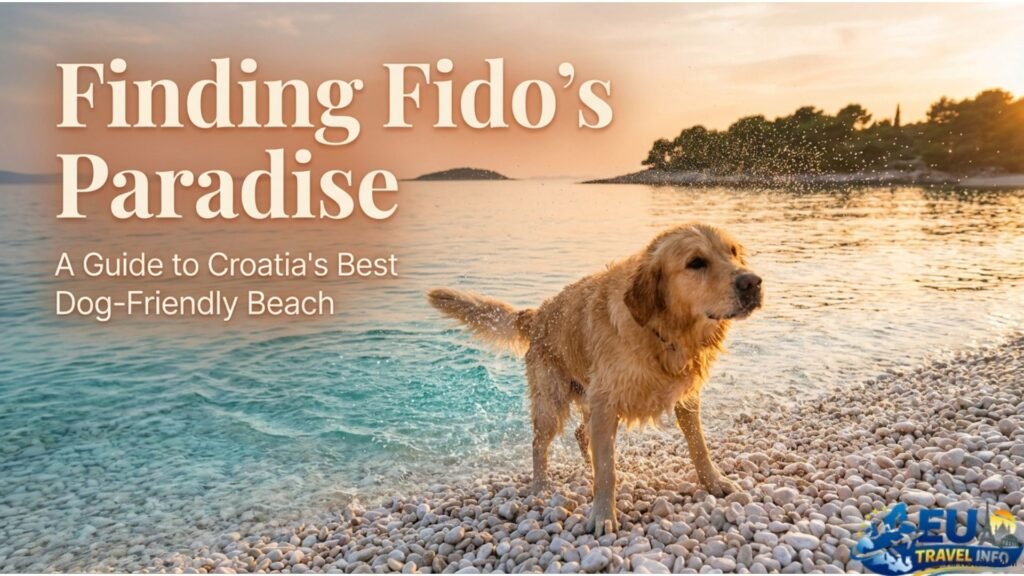
The Dalmatian Coast is less crowded and has many dog-friendly beaches. However, many beaches are made of pebbles or stones. This can be tough on a dog’s paws. On the contrary, the water is crystal clear and perfect for a swim.
Portugal’s Atlantic Beaches
Portugal is great if your dog loves the beach. The Algarve region has many expansive sandy beaches where dogs can run freely outside of the peak season.
However, you should know that Portugal is often considered one of the least pet-friendly countries for indoor activities. You can eat on terraces, but you cannot take your dog into museums or on public transport. Therefore, this is a trip for those who love the great outdoors.
Slovenia: The Most Dog-Friendly Country?
I have heard many travelers say that Slovenia is the most dog-friendly country they have ever visited. Dogs are welcome in restaurants, bars, and cafes across the nation with very few exceptions.
The landscape is full of mountains and lakes that are perfect for hiking. Similarly to Austria, the culture is very laid back. Gradually, this country is becoming a top choice for dog friendly europe road trip itineraries.
Montenegro’s Mountain Scapes
If you want an adventure that is off the beaten path, head to Montenegro. There are many stray dogs in the mountains, but they are generally very friendly.
We never had a problem finding a place to eat with Vinnie on an outdoor balcony or patio. Though the rules officially say no dogs in some places, restaurant owners in tourist areas often break those rules for well-behaved pups. Additionally, the nature here is breathtaking and mostly untouched.
Greece: The Off-Season Dream
Which european countries are dog friendly in the winter? Greece is a top contender. Out of season, the beaches are empty, and the locals take very good care of the stray animals.
However, Greeks usually only allow dogs on outdoor terraces. We visited in the shoulder season of September and October. The weather was still beautiful, and we ate outside every day. Small dogs are generally more welcome than large ones in the hip areas of Athens.
The Baltic Bliss: Estonia, Latvia, and Lithuania
Estonia, Latvia, and Lithuania are surprisingly dog friendly european road trip options. In Estonia, dogs are generally allowed in restaurants and cafes.
Similarly, you will find plenty of dog-friendly places in Riga, Latvia. In Lithuania, travelers have reported no problems bringing small dogs inside cafes in the capital city, Vilnius. Therefore, these countries are great for a quiet, culture-filled road trip.
Daily Management: Tips for the Long Haul
A europe road trip with dog is fun, but it requires a routine. I learned this the hard way. First of all, you must schedule breaks every two to three hours. This allows everyone to stretch their legs and use the bathroom.
Additionally, do not feed your dog a big meal right before you leave. This helps prevent motion sickness. We give Vinnie a light meal and then pack small snacks for the road. On top of that, always have plenty of water available. Dogs pant more when they are stressed or anxious, so they get thirsty fast.
Keeping Them Calm
Does your dog bark at the end of a drive? Vinnie used to whine for the last 15 minutes because he could tell we were slowing down. Rhetorical fragment? A classic “we are almost there” tantrum. To help him settle, we used puzzle toys and Kongs filled with frozen peanut butter. This kept him busy for at least 45 minutes.
Gradually, some dogs might need more help. We spoke to our vet about Trazodone, which is a mild sedative for anxious dogs. We did a trial run at home first to see how he reacted. It made him much more chill and allowed him to sleep through the long highway stretches.
Hotel Etiquette
We stayed in a mix of hotels and Airbnbs. First of all, always filter for “pet-friendly” when booking. However, “pet-friendly” does not always mean “large dog friendly.” Many hotels have weight limits of 50 to 75 pounds.
When we arrive at a new place, the first thing we do is take Vinnie for an extra-long walk. He needs to smell the new grass and trees to decompress. Gradually, he feels more at home. Additionally, we never leave him alone in a new hotel room on the first night. We get takeout instead. This prevents him from barking at strange hallway noises and bothering other guests.
Health and Safety on the Road
Safety is the most important part of any dog friendly europe road trip. Therefore, your dog must wear an ID tag with your current phone number, including the country code. Additionally, make sure their microchip info is up to date.
We also carried a pet first aid kit. It had bandages, antiseptic wipes, and tick removal tweezers. Fleas and ticks are a much bigger issue in France and Spain than in the UK. We gave Vinnie a flea and tick tablet the night before we left. It cost us £45.
Numerical Data Summary for Your Budget
- Rabies Vaccination: ~£65.
- Animal Health Certificate: ~£160 to £200.
- Eurotunnel Dog Fee: £22 each way.
- Ferry from France to Ireland: ~175€ for adults and a van, plus 40€ for a kennel.
- Swiss Vignette (Road Tax): ~£35.
- French Tolls (Harford to Italy): ~£60.
- Tapeworm Treatment Abroad: Varies, but usually cheaper in Spain than in France.
Frequently Asked Questions
Can I take my dog on a road trip through Europe?
Yes, you can take your dog on a road trip across numerous European countries including Spain, France, Italy, Switzerland, Germany, and Belgium.
Can I travel within Europe with my dog?
Traveling between European Union countries is simplified for pet owners as long as the dog has a valid EU Pet Passport, a microchip, and up-to-date rabies vaccinations.
Where to go in Europe with a dog?
Recommended destinations include Norway for its abundant nature, the Alps for extensive hiking trails, and Southern France for its dog-friendly beaches and villages.
Which European country is most dog friendly?
While travelers cite different favorites, Switzerland is described as exceptionally dog-friendly with free travel for dogs on mountain lifts. Germany and Slovenia are also noted for their high levels of pet acceptance in public spaces and restaurants.
Is it hard to travel Europe with a dog?
Travelers often find that while it requires significant preparation regarding documents and vaccines, the actual journey is easier than predicted due to clear signage and welcoming local attitudes.
Can I take my dog to Spain by car?
Yes, driving is a popular way to reach Spain with a dog, often involving a route through France after crossing the English Channel via the Eurotunnel or ferry.
Can I take my dog to France on the Eurotunnel?
Yes, LeShuttle (the Eurotunnel) is a primary transport method for taking dogs to France, allowing pets and owners to stay together in their vehicle for a 35-minute crossing.
Which country is the most dog friendly?
Italy is frequently cited as one of the most dog-friendly countries in the world, with pets widely accepted in restaurants, cafes, bars, and even some shops.
How dog friendly is Germany?
Germany is highly dog-friendly, treating pets almost “like royalty” and allowing them in most public places and on public transport, though they are generally excluded from supermarkets.
Is Italy or Spain more dog friendly?
Italy is generally considered more dog-friendly than Spain because Italian restaurants frequently allow dogs indoors, whereas Spanish eateries often restrict pets to outdoor patios.
Can I drive across Europe with my dog?
Yes, driving across Europe is possible and offers great flexibility for visiting multiple countries like Luxembourg, Austria, and Italy in a single trip.
Can I take my dog on a plane?
Yes, but many owners choose to drive instead to avoid the stress of placing their dog in the aircraft’s cargo hold.
Where to travel in Europe with your dog?
Top locations include the Dolomites for mountain scenery, Biarritz for its coastline, and Luxembourg City for its mix of modern and medieval charm.
What is the best place to vacation with dogs?
Norway is highlighted as a top summer destination because its cooler temperatures are safer and more comfortable for dogs than the extreme heat of Southern Europe.
What countries allow dogs without quarantine?
Most EU Member States do not require quarantine for dogs entering from other low-risk countries, provided all microchipping, vaccination, and health certificate requirements are met.
Concluding words
Dog-friendly European road trips offer an enriching way to explore diverse landscapes, from the lavender fields of Provence to the snow-capped Swiss Alps. Successful travel requires careful preparation, including obtaining an EU Pet Passport or Animal Health Certificate and ensuring your dog meets all rabies and tapeworm treatment requirements.
While countries like Germany and Italy provide highly welcoming environments in restaurants and on public transport, owners should plan routes that account for their dog’s age, size, and heat tolerance. Utilizing services like LeShuttle ensures a stress-free crossing into the continent, allowing your pet to remain by your side throughout the journey.