I love to travel with my four-legged friend. Italy is a land of sun, history, and beautiful nature. It is the perfect place for a holiday with a dog. You can find many outdoor activities here. This Free guide to dog friendly campsites in northern and southern Italy will help you plan the perfect road trip. I have seen the whole country from the snowy peaks of the north to the warm beaches of the south. A dream holiday? Absolutely.
First of all, you must handle the legal stuff. It is not the most fun part of travel, but it is necessary. Your dog needs a valid European pet passport to enter Italy. Every dog must have a microchip. You must make sure the vet scans the chip before they give any vaccines. The rabies vaccination is the most important one. You must wait at least 21 days after the first shot before you enter the country. If your dog is a puppy, they must be at least 15 weeks old to cross the border. I always carry a muzzle in my bag because Italian law says you must have one with you. You might not use it, but you must be able to show it to the police.
Later, you will realize that Italy is a country of two halves. There is a strong divide between the north and the south. In the north, people are very organized. You will find many campsites with amazing services for dogs. However, the south is more relaxed and raw. At that time, I noticed that dogs are sometimes not welcome in hotels in the south during the hot summer. Therefore, I recommend the cooler north for the peak of summer. On top of that, the south can be very hot, and your furry friend might suffer in the sun.
Guide to Dog Friendly Campsites in Northern and Southern Italy
Northern Italy is a paradise for hikers and lake lovers. There are 817 dog-friendly campsites listed on the PiNCAMP portal for the whole country. Many of these are in the north. South Tyrol and Trentino are ideal because they have many walking trails. I find that the air is clean and the mountains are breathtaking.
Lake Garda: A Doggy Paradise
Lake Garda is one of the most popular spots for a reason. It has a Mediterranean climate and it is easy to reach. You can find 80 campsites around the lake. The western shore is very green and unspoilt. Many sites there have separate play areas and dog showers.
Fornella Camping & Wellness Resort is a great choice in San Felice del Benaco. It has a 9.0 “Very Good” rating. This site sits on a wooded hill and has its own dog beach. I love that they have dog toilets with bag dispensers. Camping Village Europa Silvella is another top pick with a 9.3 “Superb” rating. They allow dogs on all pitches and even in some mobile homes. They have a dedicated dog park for your buddy to run around.
Additionally, you can visit Camping Piani di Clodia in Lazise. It is an ADAC super campsite with a huge meadow area. While dogs cannot go in the main swimming area, they have a large agility course. Similarly, Camping Spiaggia d’Oro offers a special service point in their sanitary building with a dog bathtub and hairdryer. Plus, they have a rare sandy beach.
La Rocca Camping Village near Bardolino is very special. The staff there actually organize exercise classes and games for dogs. They have two agility courses. If your dog gets sick, they even have a vet nearby. I think this is very helpful for peace of mind.
The Dolomites and South Tyrol

The Dolomites offer a different vibe. You will find many people who speak German here. It feels like a mix of Italy and Austria. Camping Vidor in Val di Fassa is right in the heart of the mountains. They have a 3000m² off-leash area. You can take your dog to the restaurant if you ask first.
Camping Montiggl is another amazing spot I found near the border. It has immaculate amenities and solar panels on the roof. I saw many large motorhomes there. The restaurant feels like five-star dining. Gradually, you will see that these mountain sites are very high-end.
Hiking here is fantastic, but you must plan well. The best time to hike is from mid-June to early July or late August to late September. In the middle of summer, the trails are too crowded and it is too hot for a dog. I recommend that you start your hikes early in the morning. You must also check if the trail has metal ladders or fixed ropes. These are not good for most dogs.
Adam and his Australian Shepherd, Apache, recommend the hike to Plätzwiese. If you are not confident on steep rocks, you can stop 50 meters before the summit. You still get a breathtaking view of the Three Peaks.
Central Italy: Tuscany and Umbria
Tuscany and Umbria are the “green heart” of the country. I found that dogs are treated like royalty here. Most shops and restaurants welcome them. There is even a dog photographer in Chiusi.
In Umbria, Camping Village Cerquestra in Magione is a 3-star site that is very pet-friendly. They offer a Dog-Welcome-Kit with water and biscuits at the reception. On top of that, they have a dedicated area on the beach for pets. You can visit the Marmore Falls, which are 156 meters high. It is a beautiful place to walk with your dog.
Tuscany has romantic roads like the Chiantigiana. I love to drive past the vineyards with my dog. Dogs feel very at home among the olive groves. Camping Ville degli Ulivi has pine trees and oleander hedges that provide great shade. They also have dog showers for a quick cool down.
Exploring the South: Puglia and Calabria
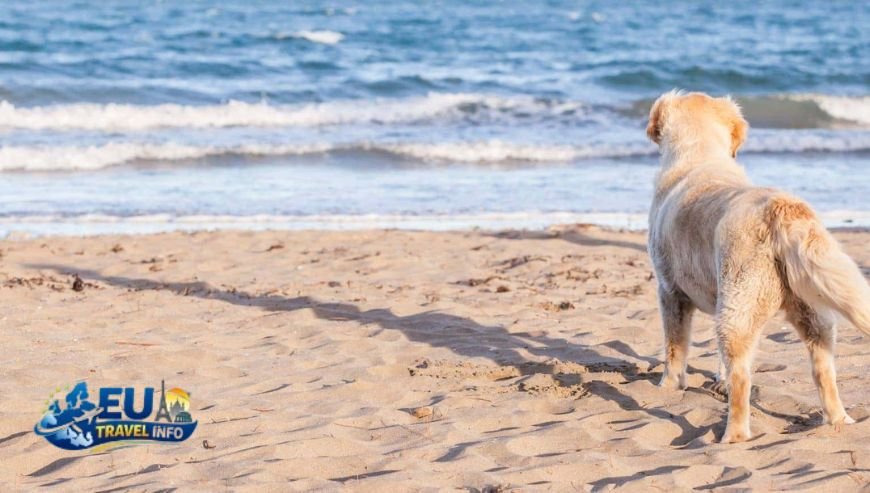
Now, let us talk about the “boot” of Italy. Puglia has 800 km of coastline between the Adriatic and Ionian seas. You can find many pet-friendly facilities here, including resorts and campsites. If you want to visit a free beach, you can do so as long as there is no sign that forbids it. Every town must have at least one free beach for pets.
Eden Salento Agri Beach in Pescoluse is very cool. It is the first “agri-beach” in the area. They offer kibble, water bowls, and a play area. Your dog can even bathe in a specific part of the sea. Santos Bau Beach in Fasano was the first dog-friendly beach in Southern Italy. It has dog umbrellas and all the classic amenities.
In Calabria, the beaches are stunning. The coastline is about 800 km long. Santa Caterina dello Ionio has the first pet-friendly beach established by a municipal decree. Cariati has a resort where every room has a kennel and a bowl. In Soverato, you can see Labrador dogs that work as sea rescuers. It is amazing to watch them.
However, the south has some “grittiness”. You might see trash on the side of the roads or half-finished buildings. Some people say it is “dirty,” but I find it authentic. The people in the south are very friendly and have a simple outlook on life. It is not a sanitized theme park; it is a place where people really live.
Camping Onda Azzurra near Corigliano is a popular spot. It sits next to a pinewood and a long sandy beach. While I was there, I saw many campers with dogs. But be careful: there are many stray dogs and even packs of dogs around the site. I recommend that you carry a stick when you walk your dog outside the camp. If your dog is nervous around strangers, this might be a challenge.
Camping Alfieri south of Crotone is a great alternative. It is pure nature. I paid €20 per night including everything. It is right by the sea in a protected marine area. It was very quiet and peaceful.
The Islands: Sicily and Sardinia
You can reach Sicily by ferry. The Genoa to Palermo ferry is a great way to travel. It takes about 23 hours. I like this because it is more comfortable than a long drive. You can book a pet-access cabin so your dog can stay with you. Your dog must be on a lead and wear a muzzle on the ship.
Sicily is a world of its own. I think it is the best region for a mix of culture and architecture. Palermo is a beautiful surprise. It has amazing street food. Taormina is spotless and very elegant. You can visit the Valley of the Temples in Agrigento.
Sardinia is also a top destination. The Costa Smeralda has crystal-clear waters. Alghero has old Catalan walls that are fun to explore. In the hinterland, you can see the ancient nuraghes.
Motorhome Life and Costs
Traveling by motorhome is the best way to see Italy with a dog. Your friend has direct access to the outdoors. I find that it gives me great freedom. You can find a Guide to dog friendly campsites in northern and southern italy map on the PiNCAMP website which shows all 817 locations.
First of all, let us look at the costs. Italy is not the cheapest place for camping. It is the second most expensive in Europe after Croatia. In 2025, a family paid an average of €66 per night in the peak season. This includes the pitch, electricity, and showers.
However, you can save money. I use the Agricamper app. It allows you to stay for free for 24 hours at hundreds of farms across Italy. You get to taste local products like cheese and olive oil. On top of that, the app shows 410 free dump stations where you can empty your waste. This is very helpful because illegal dumping leads to huge fines.
Fuel is also expensive in Italy. Diesel and petrol prices are among the highest in Europe. I noticed that fuel is cheaper away from the motorways. You should also look for “Self” pumps to save money. If you use the “Con Servizio” pump, an attendant will pump the gas, but you will pay more.
Driving in Italy is an adventure. The roads in the north are good, like in the UK. But in the south, the roads can be narrow and bumpy. Italian drivers are very confident and fast. They often ignore white lines on the road. They will sit right on your bumper. My advice? Let them pass.
They use their horns for everything. A honk can mean “hello” or “get out of my way”. If someone flashes their lights, they are probably coming through. Parking is also a challenge in towns. People will double park and use their hazard lights. It is a bit chaotic, but it works in a strange way.
Finally, be aware of ZTL zones. These are restricted traffic areas in the centers of cities. If you drive your motorhome past the signs, cameras will catch you. You will get a fine in the post later. I always look for the ZTL signs and stay away.
Eating and Shopping with Your Dog
I love Italian food. You can find weekly markets in almost every town. The smells are amazing for dogs. You can buy fresh salami, cheese, and vegetables. I like to grab a coffee at a bistro on the edge of the market. They usually have a water bowl for the dog.
In restaurants, dogs are generally welcome if they behave. I took my dog to a place in Bologna and he sat under the table. No one mind at all. In Tuscany, you can even find dog ice cream called “gelato per cani”. It is a nice treat on a hot day.
Therefore, you should always check the rules of the specific place. Some restaurants might say no to big dogs. If you want to eat for less, you should stand at the bar for your coffee. Sitting down at a table costs more.
Practical Tips for a Smooth Trip
- Water: Always carry a portable bowl. It gets hot and your dog will be thirsty.
- Leash: Use a lead of maximum 1.5 meters in public.
- Clean up: Always carry waste bags. Keep the trails and beaches clean for everyone.
- Public Transport: Dogs can ride trains and buses. They usually need a ticket and a muzzle. Small dogs might travel for free.
- Safety: Do not leave your dog in a hot car. The temperature rises very fast.
- Health: Talk to your vet about leishmaniasis and ticks before you go. These are common in the south.
Finally, I recommend that you use apps like Park4Night to find places to stay. They have great databases of “Sostas”. Sostas are cheaper than campsites. Some even have free electricity.
Italy is a wonderful place for a dog-friendly holiday. Whether you choose the majestic mountains of the north or the wild beaches of the south, you will have a great time. Guide to Dog Friendly Campsites in Northern and Southern Italy is more than just a list of places. It is an invitation to explore a beautiful country with your best friend. Life is just better when your dog is living la dolce vita too. Pack your bags, grab the leash, and hit the road. Italy is waiting for you both.
FAQ
Is northern Italy dog-friendly?
Yes, the north is the most popular area for people with pets. Regions like South Tyrol and Trentino are perfect because they have many hiking routes and walking trails. Lake Garda is also a top choice with 80 campsites that often have special dog beaches and showers.
Where can dogs sleep when camping?
Your dog can sleep on your camping pitch or in selected mobile homes. Some high-quality sites even offer doghouses or sleepers if you ask for them. A comfortable bed? You bet.
Where to go in Italy with a dog?
You should visit Lake Garda for the water or the Dolomites for the mountains. If you love the sea, the beaches in Puglia and Calabria are great options in the south. Tuscany is also wonderful for walks through vineyards and olive groves.
Where to leave a dog when camping?
Many sites offer a dog-sitting service. This is helpful if you want to visit a museum or a city like Rome or Florence, where dogs are often not allowed.
Is it mandatory to walk your dog in Italy?
They do mention that you must keep your dog on a leash in public. Additionally, you are not allowed to lead your dog on a leash while you are cycling.
Can I leave my dog in a tent while camping?
They warn you very clearly that you must never leave your dog in a car because high temperatures can kill them.
Is Italy very dog-friendly?
Italy is very welcoming to pets. You can find 817 dog-friendly campsites across the country. Many places even have dog pools, agility courses, and special menus in restaurants.
Is Sardinia safe for dogs?
They do not mention specific safety levels for pets, but they do recommend talking to a vet about diseases like leishmaniasis before you travel south.
What is the new pet policy in Italy?
The latest rules say you must use the 2025 health certificates for pets. You still need a microchip, a rabies vaccine, and a valid EU pet passport.
Can dogs sleep outside while camping?
Yes, they can sleep outside if the campsite provides a fenced area or a doghouse. You should always make sure they are safe and do not disturb other campers.
Concluding words
Italy is a fantastic place for a holiday with your pet. You can choose the organized north with its mountain trails or the wild south with its 800 km of coastline. Remember that the average cost for a campsite is about €66 per night during the peak season. You must also follow the laws by carrying a muzzle and using a short leash. A road trip with your best friend? It is the best way to see the country.