I have always believed that travel is better when you bring your best friend along. Recently, I decided to take my furry companion on a massive adventure from the United States all the way to the heart of the Balkans. You might wonder How to Fly Your Dog to Bosnia from the US. I will tell you right now that it is a journey filled with paperwork, vet visits, and a lot of heart. It is a big task, but it is worth every second when you see your pup sniffing the mountain air in Sarajevo.
The first thing I learned is that you cannot just buy a ticket and show up at the airport. Bosnia and Herzegovina pet travel requires a very specific plan that you must start months in advance. Statistics show that 78% of American pet owners now travel with their animals every year. Additionally, the pet travel industry is growing by about 9.5% each year through 2030. People love their dogs, and I am no different. If you want to travel to Bosnia with dog successfully, you need to follow a strict Step-by-Step Process.
Think Before You Fly
First of all, you must decide if this is a short trip or a permanent move. If you only plan to stay for two weeks, the stress might be too much for your dog. I had to think about the age and health of my pup because long flights are hard. Experts say that dogs between two and ten years old usually handle the stress best. However, older dogs with arthritis or other health issues might find the crate time very difficult.
You should also look at the costs. Most people spend between $1,500 and $5,000 to move a dog to another country. Small dogs that fit under your seat might only cost $150 to $400, but large dogs in cargo can cost $1,000 to $3,000 for the flight alone. On top of that, you have vet bills, crates, and government fees. Therefore, you must prepare your wallet just as much as your dog.
Later, I checked the weather. Many airlines will not fly dogs in the cargo hold if it is too hot or too cold. You really want to find a window in the spring or fall when temperatures are mild. I aimed for October because it is safer for the dog to sit on the tarmac during loading.
Step 1: The All-Important Microchip
The very first legal step is the microchip. You must do this before anything else. I made sure my dog got a 15-digit ISO-compliant microchip. This is the world standard for pet identification. If your dog has an old 9-digit or 10-digit chip, you might need to carry your own scanner or get a new chip.
A licensed vet must put the chip under the skin near the shoulders. It is a quick and painless process that acts like a permanent ID card. Once the chip is in, the vet must scan it to make sure it works. Plus, every single piece of paperwork you get from now on must have that exact microchip number on it.
Step 2: Rabies and Other Shots
After the chip is in, your dog needs a rabies shot. Bosnia requires all dogs over three months old to have this vaccination. You must wait at least 21 days after the shot before you can enter the country. This is very important because the border guards will check the dates carefully.
I also made sure my dog had shots for other things like distemper, hepatitis, and parvovirus. Cats need shots for things like feline leukemia. You should have your vet record everything in a vaccination booklet. Similarly, you should keep these records safe because they are the foundation of your bosnia pet passport.
Step 3: The Rabies Titer Test
This step is sometimes the trickiest part of the process. A rabies titer test measures the antibodies in the blood of your pet. You must have this test done at least 30 days after the rabies shot. If you are coming from an “unlisted” country, this test is a must.
The blood sample must go to an approved laboratory. Gradually, you will get the results back. The big catch is that your dog cannot enter Bosnia until three months after the day the blood was taken. Therefore, you must start this at least four months before your trip. At that time, I felt like I was buried in calendars and dates, but staying organized is key.
Step 4: Finding the Perfect IATA Crate
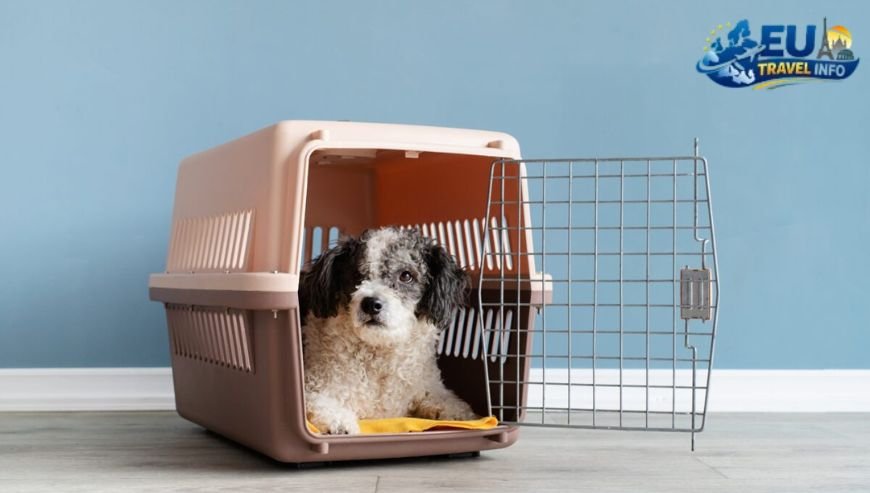
If your dog is too big to fit under the seat, he must go in the cargo hold. This means you need a very specific kind of crate. The airline will demand a crate that meets IATA (International Air Transport Association) standards.
The crate must be rigid and made of material like metal or thick plastic. It cannot have wheels, or the wheels must be taken off. The door must be made of metal. Additionally, the crate must have enough ventilation on all four sides. The total area for air must be at least 16% of the surface area of the sides.
I had to measure my dog carefully to get the right size. Here is the formula I used:
- Length (A): From the tip of the nose to the base of the tail.
- Height (B): From the ground to the elbow joint.
- Width (C): Across the shoulders.
- Height (D): From the floor to the top of the head or ears.
The internal length of the crate must be A + ½ B. The width must be at least C x 2. The height must be at least D plus bedding. Your dog must be able to stand up, turn around, and lie down naturally. I found that buying a crate one size larger than I thought was a smart move.
Step 5: The 6-Week Crate Training Plan
I did not want my dog to be scared on the flight. Therefore, I followed a 6-week training plan to make the crate a happy place.
- Week 1: I put just the bottom of the crate in the living room with a soft blanket.
- Week 2: I gave every single treat inside that crate base.
- Week 3: I put the top on the crate. At first, my dog was nervous, so I gave him treats just for putting two paws inside.
- Week 4: I started closing the door for just a second while he ate a treat.
- Week 5: I kept the door closed for longer times, like ten or twenty seconds. I stayed close and spoke in a calm voice.
- Week 6: He started sleeping in the crate at night with the door closed.
By the time we flew, the crate was his “den”. It was a familiar and cozy place for him. Additionally, I put a t-shirt that smelled like me inside the crate to help him feel safe.
Step 6: Booking the Airline
Booking the flight is a whole separate task. I learned that there is a big difference between excess baggage and manifest cargo. Excess baggage means the dog is on your ticket. Manifest cargo means the dog has his own ticket called an “air waybill”. Manifest cargo is often safer because the airline has more rules for handling the animals.
I chose an airline with a good reputation for pets, like Lufthansa. They have a special Animal Lounge in Frankfurt where dogs can rest, eat, and get fresh water during layovers. You must call the airline to make sure there is room for a pet before you book your own seat. Sometimes I stayed on hold for hours just to talk to the pet department.
Lufthansa has a weight limit of 8 kg (about 17 lbs) for dogs in the cabin. If your dog and the carrier weigh more than that, they must go in the hold. They are very strict about this and will weigh your dog at the check-in desk.
Step 7: The Final Vet Visit and USDA Stamp
This part is a race against time. You must get an International Health Certificate from a USDA-accredited veterinarian. This visit must happen 10 days or less before you leave. The vet will check that your dog is healthy and has no signs of disease.
However, the vet’s signature is not enough. The paperwork must go to a USDA office for an official stamp and ink signature. I used the VEHCS (Veterinary Export Health Certification System) to submit the forms electronically, but I still needed the original paper with the embossed stamp to travel. Without that stamp, your dog will not get on the plane.
The Big Travel Day
On the day of the flight, I fed my dog a light meal about two hours before we left for the airport. I gave him a good walk to burn off energy. I also made sure his water bowl was attached to the inside of the crate door so the airline staff could fill it from the outside.
I did not use sedatives or tranquilizers. Most vets say these are dangerous during flights because they can mess with a dog’s breathing and balance. The air pressure changes at high altitudes make drugs even riskier. Instead of drugs, I used Adaptil pheromone wipes to help him stay calm.
When we checked in, the staff used zip ties to secure the crate door. This is an extra safety step so the door does not pop open by accident. At that time, my heart was racing, but the staff were very kind to my pup.
Arrival at Sarajevo International Airport
All pets flying into Bosnia must land at Sarajevo International Airport. You should tell the veterinary officials at the airport that you are coming. When we landed, I had to be there for customs clearance.
A border guard looked at my USDA papers and checked my dog’s microchip. He wanted to make sure the dog looked healthy and had no signs of illness. If the paperwork is perfect, the process is usually quite fast. On the contrary, if you miss a step, your dog could be put in quarantine or sent back at your expense.
Living the Dream in Bosnia
Gradually, we settled into our new life. There is no mandatory quarantine in Bosnia if you follow all the rules. I made sure to find a local vet right away to keep his rabies shots up to date.
Walking my dog through the cobblestone streets of Baščaršija was a dream come true. People in Bosnia are very friendly toward pets. Though the paperwork was a mountain of work, seeing him happy in a new country made it all worth it.
FAQ
Can I bring my dog to Bosnia?
Yes, you can bring your domestic dog into the country. You must follow the specific rules for a Bosnia and Herzegovina pet passport. It is a long journey. But perfectly possible.
Can I buy a plane ticket for my dog internationally?
You certainly can. You will often buy a ticket for a “pet in cargo” or “excess baggage”. You must call the airline to confirm they have room for your animal before you pay for your own seat.
How much does it cost to fly my dog overseas?
It is not cheap. Most people spend between $1,500 and $5,000 in total. Small dogs that stay in the cabin cost about $150 to $400 for a round trip. Large dogs that go in the cargo hold can cost $1,000 to $3,000 for the flight alone. Plus, you have vet fees and crate costs.
Is it hard to fly internationally with a dog?
I found that it is quite hard. It takes a lot of time and very deep research. The paperwork is a big pile of stress. However, you can do it if you stay organized.
Can a dog go on a 12 hour flight?
Yes, they can. Additionally, you must provide water if the total journey time is over 12 hours. You should also offer a light meal at least two hours before the flight starts.
Do any airlines let dogs fly free?
No, they do not. Pet transport is not part of your free baggage allowance. You will always pay a fee based on the weight of the dog and the crate.
Is it safe for dogs to fly in cargo?
Many experts believe that manifest cargo is the safest way for animals to travel. In this case, the airline follows very strict rules for handling the pets. Most pets arrive with no issues at all.
Is it stressful for dogs to fly?
Yes, it can be very stressful for them. You must think about the age and health of your pet. An older dog might find the crate time very difficult.
What is the best airline to fly a dog?
Lufthansa is often called one of the most pet-friendly options in Europe. They have a world-class Animal Lounge in Frankfurt where handlers care for your dog during layovers.
Is it better to ship or fly a dog?
Flying a dog as manifest cargo on a commercial flight is a very safe and standard choice. It is usually the preferred method for international moves.
Concluding words
To fly your dog to Bosnia from the US, you must follow a very strict path. First of all, get that 15-digit microchip and the rabies shot. Later, you need a titer test and a USDA-endorsed health certificate. Lufthansa is a great choice for the flight because of their care for animals. This process is expensive. It is also a lot of work. But seeing your dog in Sarajevo is the best reward. Stay calm. Follow the steps. Your best friend will thank you.