I always dreamed of sipping a rich espresso in a sun-drenched Tuscan plaza with my loyal dog at my side. You probably have that same dream. Italy is incredibly dog friendly. However, the rules for international travel can feel like a giant maze. I want to help you figure out How to Travel to Italy with Your Dog. First of all, you must plan far in advance. It is not just about a plane ticket. You need specific shots and papers. I learned this the hard way during my own travels.
Can I take my dog with me to Italy? Yes. It is absolutely doable. How to move to italy with a dog starts with understanding the health requirements. You cannot just show up at the airport. How to Travel to Italy with Your Dog – Flights and Entry Requirements involves a strict timeline. If you miss one step, your pet might face quarantine. A total nightmare? Yes.
The Essential First Steps: Microchips and Rabies

The very first thing you must do is get a microchip. This is not just any chip. It must be an ISO-compliant 15-digit transponder. Additionally, the vet must scan this chip every time they give your pet a shot or a check-up. I always ask the vet to write the chip number on every single piece of paper. This makes the customs process much faster later.
First of all, the order of events matters. You must implant the microchip before the rabies vaccine. If you do it the other way around, the vaccine does not count for travel. You will have to do it all over again. How to travel to italy with your dog requires you to be very careful with dates. After the microchip is in, your dog needs a rabies shot. You must wait at least 21 days after this primary shot before you can enter Italy.
Similarly, you should check the validity of your pet’s current vaccine. A three-year rabies vaccine is only valid if there was no lapse in coverage. If there was even a one-day gap, the new shot is a “primary” shot. Therefore, the one-year rule applies. Plus, your dog must be at least 12 weeks old to even get the vaccine. Most puppies are at least 15 weeks old by the time they can legally fly.
The Paperwork Mountain: EU Health Certificates
Can I take my dog to italy from usa? You certainly can, but you need the Annex IV EU Health Certificate. This is the most important document you will carry. It acts as your dog’s passport. An accredited veterinarian must complete this form. However, you must ensure they use the absolute newest version of the form. The government changes these forms often. I once saw a traveler get rejected because their form was expired by just a few weeks.
On top of that, you need a USDA endorsement. Once your vet signs the health certificate, you must send it to the USDA office. You must do this within 10 days of your arrival in Italy. This window is very tight. I suggest using an overnight mailing service like FedEx. You should include a prepaid return envelope too.
Additionally, you must sign an Owner Declaration. This paper proves that you are not moving the dog to sell it. It is a non-commercial move. This rule applies if you travel within five days of your pet. If the gap is longer, the move becomes “commercial,” which requires much harder paperwork.
Booking the Flight: Can I Fly to Italy with My Dog?
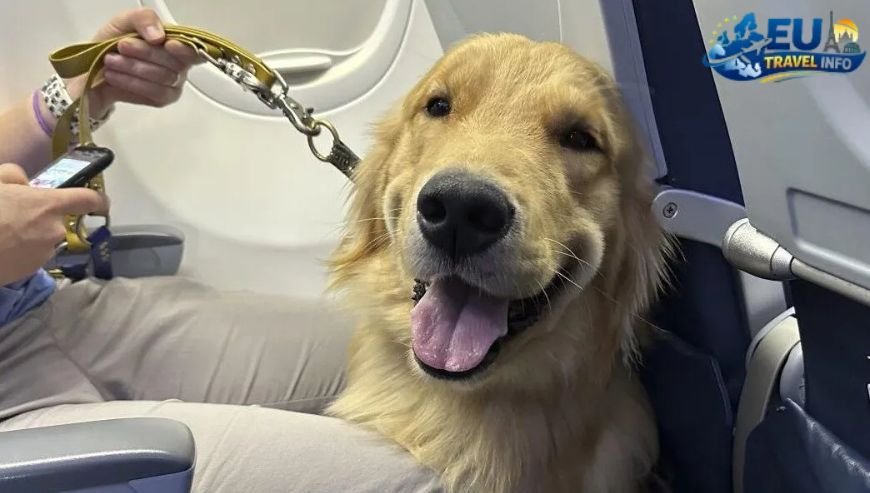
You might wonder, can i fly to italy with my dog? The answer depends on the size of your pup. I traveled with a small dog named Poppy who weighed 12 pounds. Small dogs are lucky. They can often fly in the cabin with you. ITA Airways, which is the flagship carrier of Italy, is very pet friendly. They allow dogs in the cabin if the total weight of the dog and the carrier is under 10 to 12 kilograms.
However, the size limits for carriers are very strict. On domestic flights, the carrier must be no larger than 24 x 40 x 30 cm. International flights are even tighter at 20 x 40 x 20 cm. I always recommend a soft-sided bag like the Petsfit carrier. It fits better under the seat. Also, you should book your pet’s spot at least 48 hours before the flight. Most planes only allow a few pets per flight.
Gradually, rules for bigger dogs are changing too. A new rule from ENAC now allows medium and large dogs in cabins on some domestic Italian flights. This is a huge win for pet parents. For international flights, though, large dogs usually travel as manifest cargo or checked baggage. They stay in a pressurized, temperature-controlled hold. You must use an IATA-approved crate for this.
Arrival and Customs: Entering the Country
When you land in Italy, do not just walk out. You must go to the customs line. You should tell the officers that you have a dog. They will scan the microchip and check your USDA-endorsed certificate. Usually, there is no routine quarantine for pets coming from the USA. As long as your papers are perfect, you will be on your way in a few hours.
Later, you might want to get an EU Pet Passport. If you plan to stay in Europe for a while, this makes travel between countries much easier. You can get one from a local Italian vet for a small fee. It is much better than carrying a stack of health certificates every time you cross a border.
Getting Around: Trains, Buses, and Metros
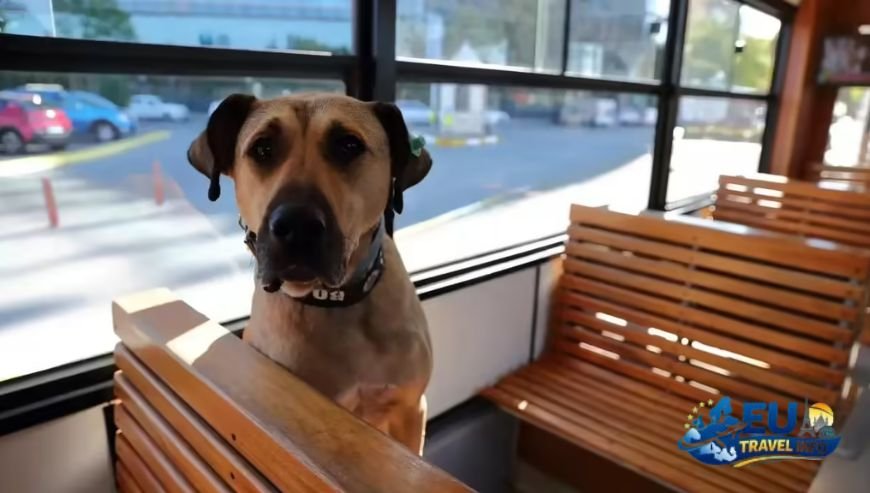
Italy is a dream for travelers who use public transport. Dogs are allowed on almost all trains, buses, and trams. Trenitalia is the main train company. Small dogs in carriers travel for free. They must stay in a carrier no bigger than 70 x 30 x 50 cm.
On the contrary, larger dogs must be on a leash and muzzled. You have to buy a ticket for them. This is usually half the price of a second-class adult ticket. I once saw a passenger get a fine because they forgot to buy a ticket for their big dog. Do not make that mistake. Also, dogs are not allowed in the restaurant cars unless they are guide dogs.
Similarly, the metro and buses in cities like Rome and Milan are very welcoming. In Rome, you can bring up to two dogs per bus. Small dogs are free if they are in a carrier, but larger dogs need an ordinary ticket. You must also have a muzzle ready. Many people do not use them, but the driver can ask you to put one on at any time.
Ferries: Crossing the Mediterranean
If you want to visit islands like Sicily or Sardinia, you will likely take a ferry. Many ferry companies like GNV and Moby Lines are very pet friendly. Some even offer pet-friendly cabins. These rooms have easy-to-clean floors and extra space for your pup. I stayed in one on a trip to Ischia, and it was very comfortable.
However, some companies like Corsica Linea require dogs to stay in a kennel area on the deck. You should always check the specific rules for your ferry before you book. For example, Tirrenia allows dogs on the outside decks but not in the indoor lounges. Always bring a water bowl and some food for the crossing.
Where to Stay: The Magic of Agriturismos
When I travel to the Italian countryside, I always look for an agriturismo. These are working farms that rent out rooms or apartments. They are the perfect choice for dog owners. Why? Because they have tons of open space for your dog to run around. Margot, a travel expert who lived in Italy for twenty years, selects the best ones for quality and charm.
In Tuscany, about two out of three farms welcome dogs. You can find beautiful places near Florence, Siena, and Lucca. Some even have special walking routes for pets. For instance, Agriturismo 140 near Lake Garda has a private woodland where dogs can run off the leash.
Additionally, you can find great spots in other regions like Umbria, Marche, and Piedmont. Many of these farms also have restaurants that serve local Tuscan cuisine and wine. Just remember that you might have to pay a small daily fee for your dog. You should also keep your pet on a leash while you are on the farm premises.
Life in the City: Milan and Rome
Milan is one of the most dog-friendly cities in Europe. Dogs are allowed almost everywhere, including shopping malls and tourist sites. I love the dog parks there. The Indro Montanelli Gardens has a great enclosed dog run. Many restaurants like Rosso Rubino even offer a doggie menu.
Rome is similarly welcoming. You can walk your dog through the Villa Borghese park for a beautiful morning stroll. Most outdoor cafes will bring a bowl of water for your pup without you even asking. Just be aware that you must pick up after your dog. Failure to do so can lead to a big fine.
Sun, Sand, and Sea: Dog-Friendly Beaches
Can I take my dog with me to Italy for a beach day? Absolutely. Italy has many dedicated dog beaches. These are not just normal beaches that allow dogs. They are specially designed for them. They have dog showers, water bowls, and even agility courses.
One of the most famous is Pluto Beach in Bibione. It offers sun loungers for both humans and dogs. Bau Bau Beach in Liguria is another great choice. If you are near Rome, you should check out Baubeach in Lido di Ostia. It is known for being very eco-friendly.
However, you must follow the rules. Your dog must be vaccinated and have a valid license. Some beaches might require a flea collar too. I recommend avoiding the hottest part of the day so your dog does not overheat. Always rinse the salt and sand off their coat with fresh water after they swim.
Eating Out: Dining with Your Best Friend
Italians love their food, and they love dogs. Therefore, you will find that most restaurants with outdoor seating welcome pets. Many indoor places are also fine with small, well-behaved dogs. I once had lunch with a famous fashion designer who fed my dog bits of prosciutto right at the table.
Additionally, some places are more formal. If you are staying at a luxury hotel like the Regina Isabella in Ischia, they might set up a special table outside so your dog can join you for dinner. It is always a good idea to mention you have a dog when you make a reservation. This ensures they give you a table with enough space for your pup to lie down quietly.
FAQ
How do I travel to Italy with my dog?
To travel to Italy, your dog must first be microchipped with an ISO-compliant 15-digit chip,. Following the microchip, they must receive a rabies vaccination at least 21 days before entry,. You will also need an EU health certificate issued by an accredited vet and endorsed by the relevant government authority (such as the USDA in the US or CFIA in Canada) within 10 days of arrival,.
Can I bring my dog to live with me in Italy?
Yes, you can bring your dog to live in Italy as long as you fulfil all pet import regulations. Once you arrive, you must register your dog with the regional Canine Registry Office within ten days of entering the country.
How much does it cost to take a dog to Italy?
Costs vary depending on the airline and service. ITA Airways charges between €73 and €230 for in-cabin travel depending on the route, while pets in the hold can cost between €95 and €350,. United Airlines charges a $125 fee each way for pets. Additionally, veterinary fees for health certificates and government endorsements can cost approximately $200.
Which airlines allow dogs in cabin to Italy?
ITA Airways allows small dogs in the cabin (weight limits of 10–12kg including the carrier),. United Airlines also permits dogs in the cabin on some routes, provided they fit in a carrier under the seat,.
Is Italy very dog friendly?
Yes, Italy is considered one of the most dog-friendly countries in Europe,. Dogs are generally welcomed in shopping malls, outdoor dining areas, hotels, and on public transport,.
Can you take a dog on a plane?
Yes, dogs can travel on planes either in the cabin if they are small enough or in the hold as checked baggage or cargo for larger breeds,.
How to get a pet passport in Italy?
If you have arrived with a health certificate, you can obtain an EU Pet Passport by visiting a local vet or a government veterinary office at your destination. This passport remains valid for the life of the dog, provided rabies vaccinations are kept up to date.
Can dogs go on trains in Italy?
Yes, dogs are allowed on almost all public transport, including Trenitalia and regional trains,. Small dogs in carriers (up to 70x30x50 cm) usually travel for free, while larger dogs must be on a lead and muzzled, typically requiring a half-price second-class ticket,,.
Concluding words
Travelling to Italy with your dog is a manageable process provided you follow the sequence of microchipping, rabies vaccination, and obtaining an endorsed EU health certificate,. Airlines like ITA Airways and United provide options for pets to travel in the cabin or hold, though you must adhere to strict carrier size and weight limits,.
Once in Italy, the country is exceptionally welcoming, offering dog-friendly accommodation, beaches, and extensive access to public transport, including trains and ferries,,. By preparing original documentation and confirming airline policies in advance, you can ensure a smooth journey for your pet,.