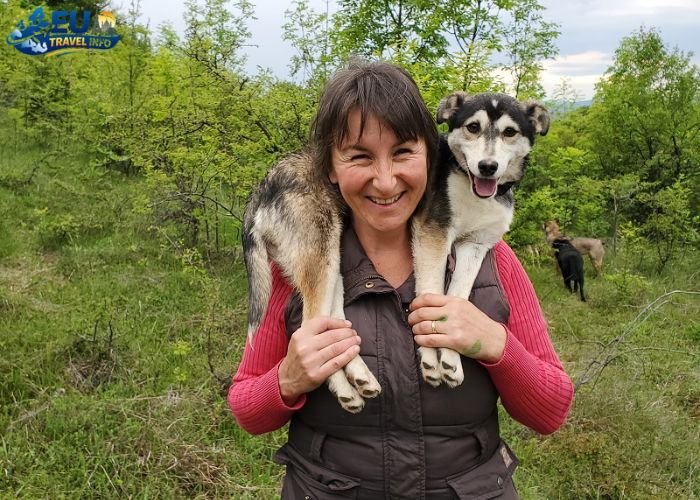
I traveled to Bulgaria in September 2018 with my miniature dachshund, Schnitzel. I had not heard much about this country before my visit. Bulgaria won me over with its beautiful coastline, magnificent mountains, and deep history. It is also very affordable for travelers.
You might wonder, is Bulgaria dog friendly? It is not the most pet-friendly spot in Europe, but it is still a great place for a pup. Dog-Friendly Bulgaria offers plenty of adventures if you look for them. First of all, let me tell you about the basics of planning Dog friendly bulgaria holidays.
Getting Your Pup Ready for the Trip
You must follow standard European Union rules to bring a dog into the country. These rules apply whether you come from another EU country or from outside of Europe. First of all, your dog needs a microchip. This chip must follow ISO standards 11784 or 11785. Plus, you must get your dog a valid rabies vaccine. You must do this at least 21 days before you enter the country. Also, you need an EU pet passport or a health certificate from a vet.
Similarly, the rules are specific if you drive from Serbia, North Macedonia, or Turkey. You will need an EU animal health certificate if you do not have a passport from an EU country. Additionally, a rabies titer test is a must for dogs from Serbia and Turkey. You should do this test three months in advance.
On the contrary, you do not need this test for dogs from North Macedonia. When you drive into Bulgaria from these non-EU spots, you must use a specific “Travellers’ point of entry”. Officials there will check your paperwork. Though, I found that border officials did not always check my dog’s passport when I drove in from other EU countries.
At that time, it was a very fast process. For instance, I entered through the Thermes-Zaltograd border from Greece. The officials cleared our van in just 20 minutes.
Preparation is the key to a smooth journey. Later, you will be happy you did the work. Microchips usually have 15 digits. You must make sure your vet scans the chip before giving the rabies shot. Otherwise, the shot does not count under EU rules. Therefore, double-check your records.
If you travel from the United States, you need a USDA endorsement on your health certificate. This must happen within 10 days of arrival for “non-commercial” trips. On top of that, “commercial” certificates are only valid for 48 hours after the vet signs them.
How to Travel Around with a Dog
You have a few options for moving around the country. Most people choose to drive because it offers the most freedom. However, you can use public transport too. The state railway company is BDZ. It is the largest carrier in the country. BDZ has different types of trains, like the fast Expresen Vlak and the local Patnicheski.
You can take a small cat or dog as hand luggage. The pet must stay in a waterproof vessel on your lap or the floor. This is only allowed in second class coaches. Your pet must not bother others with smell or noise. If other passengers object, you and your dog must move to the entry lobby.
Small pets travel for free. For larger dogs, the rules are different. You must buy a ticket that costs half the price of a second-class ticket. These dogs must wear a muzzle. They can only stay in the entry lobby of the last coach of the train. Also, you must have a veterinary certificate for them.
Animals are not allowed in sleeping cars or dining cars. The exception is for dogs that help people who cannot see well. These dogs can go in all coaches and even sleeping cars. They still need a muzzle, ID card, and a leash that does not stretch.
Additionally, you can use public transport in the city of Sofia. Small dogs in a bag or box travel for free. Large dogs need a single ride ticket or a paper card. You should also carry their papers. Taxis are another choice for Bulgaria with dog travel. Plus, I found that many drivers are helpful. Finally, you could even try kayaking on the Danube River with your pup.
Finding Dog Friendly Hotels Bulgaria
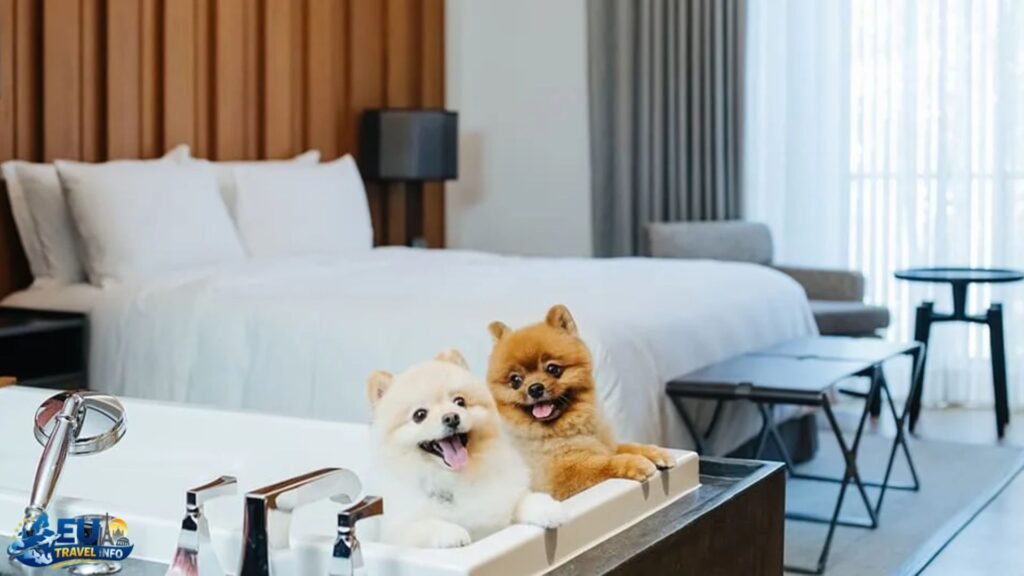
I stayed in many places, from Airbnb apartments to 4-star hotels. We stayed at the Grand Hotel Riga in Ruse. It is a lovely 4-star spot. Most hotels I visited did not charge extra for my dog. This is a nice change from other countries. However, some hotels still have fees or size limits.
You should always check before you book. Airbnb is a great way to find pet friendly bulgaria housing. You can filter for pets to find the best spots. I found some hosts who were dog owners themselves!
On top of that, you should know about the rental market in the capital. Finding a long-term place in Sofia with a dog can be hard. Many landlords say no to pets right away. Gradually, you might find a way by offering more money. Some people pay an extra month of deposit.
Others add a clause to the contract to pay for any damage. A small dog like a Yorkshire Terrier is easier to place than a large breed. Plovdiv is often easier for renters with pets than Sofia. Therefore, keep that in mind if you plan to stay a long time.
Eating Out with Your Best Friend
We mostly dined on outdoor terraces. It is a very common thing to do in the summer. Most restaurants with outdoor seating are happy to have your dog. We ate at several spots in Nessebar with Schnitzel. However, I do not think indoor dining is common for pets. It is usually up to the manager. If it is winter, you could ask politely. Some people say they get to eat inside if they ask first.
We enjoyed many seafood platters on the coast. The seafood is some of the cheapest in Europe. Also, it is excellent quality. You can pair it with some fine Bulgarian wine. In Sofia, we loved SASA, a Japanese restaurant. It is an upscale spot that welcomes dogs inside. Our waitress gave us great service.
We also visited the Art Club Museum many times. It has a huge outdoor area that is very posh. In the town of Karlovo, we had tea and cake in a local cafe with a beautiful courtyard. Similarly, we found a dog-friendly cafe in a park in Smolyan.
Exploring the Capital City: Sofia
Sofia is the capital and the largest city in the country. It is a beautiful place that mixes history with nature. You can see Roman ruins all over the city. I walked along Vitosha Boulevard almost every day. It is the main shopping street and it is dog-friendly. You will find many bars and restaurants with outdoor seats there.
Another top spot is the Saint Alexander Nevsky Cathedral. It is a massive church that can hold 10,000 people. Dogs cannot go inside, but they can walk on the grounds. We took a nap in the grass in front of it. The shade was very refreshing. Additionally, you must visit the National Palace of Culture.
There is a park called Ploshtad right outside. It is very popular with locals. My dog loved the fountains and the benches there.
If you want more nature, head to the parks. Borisova Gradina is the most popular park. It has fountains, statues, and off-leash areas for dogs. Yuzhen Park is another great choice. It offers views of Vitosha Mountain and has a dog park. You can even take a trolley bus with your dog to get around the city. Finally, if you feel brave, you can hike on Vitosha Mountain. It is only 10 kilometers away from the city. It has waterfalls, caves, and lakes to explore.
The Cultural Capital: Plovdiv
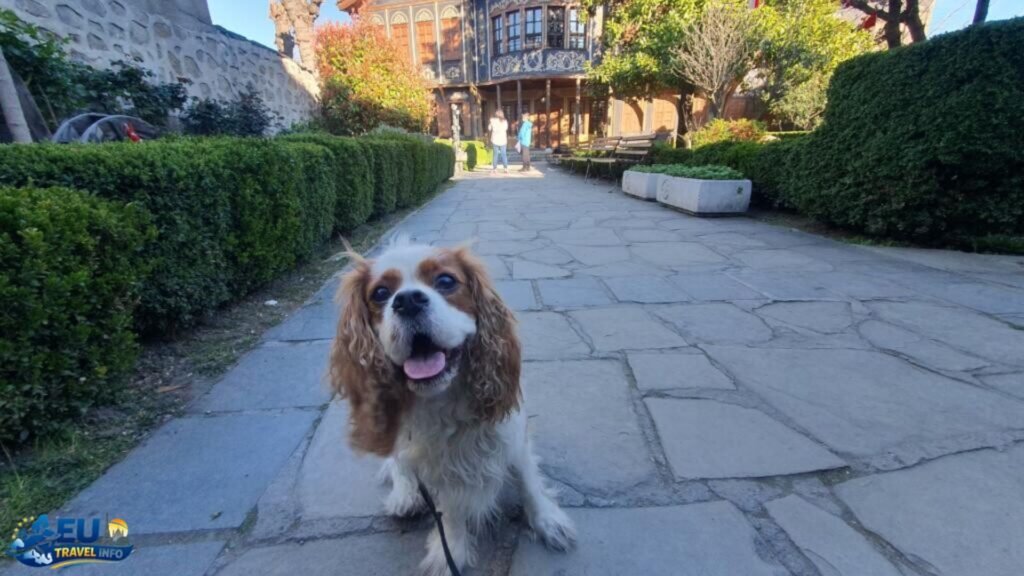
Plovdiv is one of the oldest cities in the world. It is a major cultural hub. I loved the Old Town. It has narrow, cobbled streets and colorful houses. We walked through the winding alleys with our dogs. You can see the Roman Theatre there. It is one of the best-preserved in the world. The view from the hilltop is breathtaking.
The new town is also fun to visit. It has a very long pedestrian street. In fact, it is one of the longest in Europe. You can enjoy the lively mood and see street performers. Also, there are many green spaces. Lauta Park even has a dedicated dog park.
We tried local food at restaurants like Pavaj and Smokini. Plus, you can even go on a dog-friendly wine-tasting tour. Wineries like Villa Yustina allow you to bring your dog along.
Hiking in the Rhodope Mountains
The Rhodope Mountains are the largest range in the country. They cover about 15% of the land. I had a pawsome adventure there in the autumn of 2023. We stayed in a charming village called Smilyan. It is famous for its beans and dairy products. There is a Bean Museum you can visit. Our dogs loved playing in the Arda River.
There are four great hiking trails you should try:
- Gorna and River Arda: This is an easy route that takes about an hour. You start in the village of Gorna. You will see a trout fishing reservoir and mountain meadows. There is a quirky, dog-friendly restaurant hidden in the forest.
- Koshnitsa Fortress and Cave Trail: This is a 35-minute climb to an ancient fortress. You can walk through a cave that is 300 meters long. Use a flashlight to see the rocks inside. The view from the top is worth the effort.
- Waterfall Canyon Trail: This trail starts west of Smolyan. It follows the Elenska River. You can see the Orpheus Waterfall, which is 68 meters high. The trail is rough, so you need good boots. However, watch the weather. We had to turn back because of a sudden storm with lightning.
- Eco Trail Neviastata: This trail is about 1 km long. it starts at a monastery. It leads to a stunning rock formation. You get a great view of the valley below.
Similarly, we visited Mogilitsa and the Agushevi Konaktsi Fortress. It is a huge feudal complex from the 19th century. Dogs must wait in the courtyard while you look inside. Also, we explored the town of Smolyan. It has a tree that is 1,000 years old. Our dogs sat right under it.
Sun and Sand: Dog Friendly Beaches Bulgaria
The Black Sea Coast is a paradise for beach lovers. Gradina Beach is a top spot because dogs are allowed all year round. It is a long sandy beach with clear water. There are showers, toilets, and an outdoor bar. My dogs loved making new friends there.
Vromos Beach near Chernomorets is another gem. It is a mix of sand and rocks. It is very peaceful and private. We took morning and evening walks there. On the contrary, Central Beach in Chernomorets has strict rules. Dogs can only go there before 7:00 a.m. and after 8:00 p.m. in the summer.
Drivers Beach is a wild, hidden spot. It is one of the most pet friendly bulgaria beaches. It is near the resort of Dyuni. You can enjoy the peace and quiet without many tourists. Sinemorets Beach is also very beautiful. It is divided by the Veleka River. Dogs are allowed on both the north and south parts. The south part is more secluded and wild.
In Burgas, you can visit Saxa Beach. You must keep your dog on a leash and they cannot swim there. Also, you should walk through the Sea Garden. it is a large park along the coast with water fountains for dogs. Sunny Beach is very popular and allows dogs on several of its beaches.
However, some locals say dogs are banned from most public beaches from June to September. They worry about kids playing in the sand. Therefore, check locally before you let your dog off the leash.
Historical Sites and Attractions
Bulgaria has so much history to see. Nessebar is an ancient city on a peninsula. It is a UNESCO World Heritage site. You can walk through the old town and see ruined churches. We visited the Church of Saint Sophia with our dog. However, dogs cannot go inside the museum churches. We took turns stepping inside while the other held the dogs.
Another cool spot is the Madara Rider. It is a giant rock carving of a horseman. It dates back to the 7th or 8th century. There is even a dog carved behind the horse! You can view it from the bottom of a cliff.
In Hisarya, you can see the best-preserved Roman wall in Europe. It is 2,327 meters long. The town has 22 hot water springs. We walked around the walls with our dogs and then got spa treatments for ourselves. Additionally, we visited the Castle of Ravadinovo. It looks like something from a fantasy show. It has gardens, fountains, and many animals like peacocks. Dogs are welcome on a leash.
Finally, you should visit the Ethno Village Etar. It is an open-air museum near Gabrovo. It shows how people lived in the 19th century. You can see watermills and workshops. Our dogs were very welcome to join us there.
Living with Stray Animals
You will likely see many stray dogs and cats in the country. In the past, the situation was very bad. From 1999 to 2006, over 70,000 stray dogs were killed in Sofia. Fortunately, a law in 2008 stopped this practice. Organizations like FOUR PAWS have worked hard to help. The number of stray dogs in Sofia dropped from 11,124 in 2007 to 3,589 in 2018.
Most stray dogs are timid and will ignore you. However, you should still be careful. Steer clear of packs, especially at night. If your dog does not like cats, you might have more trouble. There are many stray cats near outdoor restaurants. Always keep your dog on a leash so they do not chase them. Strays can carry diseases like parvovirus, so keep your dog’s vaccines up to date.
Health and Food: Bulgaria Dog Food and Vets
The standard of veterinary care is generally good. Most clinics are in big cities like Sofia, Plovdiv, and Varna. The Bulgarian Veterinary Union regulates the profession. Finding an English-speaking vet is not too hard in the cities. In Sofia, the Central Vet Clinic is highly recommended. It is open 24/7. Dobro Hrumvane is another good choice in the city center.
If you need specific bulgaria dog food, you have options. Many pet shops in the cities offer quality products. Also, there is a growing scene for raw feeding. You can find BARF food shops in Burgas, Varna, and Sofia. For example, Zoo Group Stefanov has many locations in malls and city centers. You can even order dog food online from sites like eBag.
FAQ
Is Bulgaria dog friendly?
Bulgaria is a great spot for a trip with your pup, though it is not the most pet-friendly country in Europe. You will find many natural spots and hotels that welcome pets in tourist areas like Sofia and Plovdiv. The perfect trip? You bet.
What to be careful in Bulgaria?
You must be careful around stray dog packs, especially at night, because they can be territorial. These dogs can also carry diseases like parvovirus. Additionally, be mindful of strict summer rules on public beaches where dogs might be banned from June to September.
Where is the most dog friendly place in Europe?
Cities like Paris and Vienna are top choices for dog owners. In Bulgaria, the Black Sea Coast and the Rhodope Mountains are the best spots for outdoor fun with a pup.
Is Romania dog friendly?
Yes, Romania is a pet-friendly destination. It is often compared to Bulgaria, and it is known for having very affordable hotel prices for travelers with pets.
Final Tips for Your Trip
To make your trip smooth, keep these tips in mind:
- Arrive early: Try to get to towns and attractions before 9:00 a.m.. This helps you find parking and avoid big crowds.
- Use a Leash: Technically, dogs should be on a leash in many areas. Even though some locals ignore the rules, you should follow them to be safe.
- Carry Water: Always have a water bowl and fresh water for your dog, especially during hikes or beach days.
- Pet Insurance: It is not required, but it is a very good idea. It can cover vet bills if your pup gets sick.
- Check a Dog friendly bulgaria map: You can find interactive maps online that show pet-friendly beaches and parks.
Bulgaria is a stunning destination for travelers who want to see a different side of Europe. It has a mix of nature, culture, and low prices. Is Europe dog friendly? Yes, and is Germany a dog friendly country? Very much so. Which European countries are dog friendly? Many are, and Bulgaria is slowly joining that list. If you plan well and stay flexible, you and your dog will have a wonderful time.
Traveling with a dog in Bulgaria is like reading a giant history book while walking through a beautiful garden. You might have to jump over a few stray branches, but the views at the end are always worth the effort. Enjoy the journey!