I love the smell of the salt air and the sound of the ocean waves. It is even better when I have my furry best friend by my side. If you are a mature traveler like me, you probably want to take your dog everywhere. France is a dream for people who love history and nature. However, the beach rules can be a bit like a maze. I spent a lot of time figuring out Official Rules – Are Dogs Allowed on French Beaches so you do not have to.
France has a massive dog population. There are roughly 10 million dogs in the country. That is about 17 dogs for every 100 humans. Because of this, many places are welcoming. Plus, a study showed that 40% of French dog owners think their pets are the most important part of their lives. Even so, you cannot just walk onto any beach. Local mayors have a lot of power here. They use a special law called a municipal decree to decide if dogs can visit.
The Law of the Beach
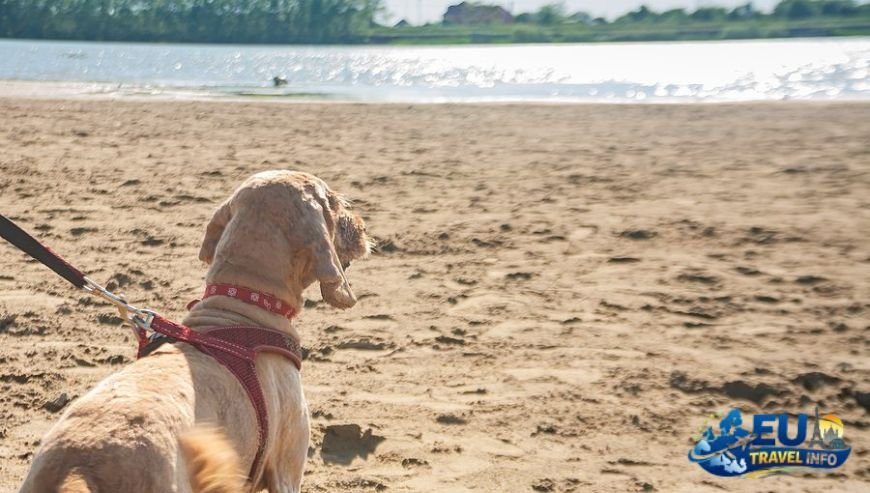
The big question is always the same. Are Dogs Allowed on French Beaches? The answer is yes, but it depends on where and when you go. You must look for signs at the entrance of the sand. A red circle with a black dog picture usually means a total ban. Sometimes the sign says Même Tenus en Laisse, which means you cannot bring the dog even if it is on a lead.
If you break these rules, the police might give you a fine. This fine is often between 11 € and 68 €. However, some fancy towns like Cannes or Les Sables d’Olonne are much stricter. If you do not pick up your dog’s waste there, you could pay up to 450 €. That is an expensive walk. Always carry waste bags with you. It is the responsible thing to do. Additionally, it helps keep the beaches open for all of us in the future.
The Blue Flag Problem
You might see a blue flag flying over some beaches. This is the Pavillon Bleu label. It means the water is very clean and the beach is managed well. But there is a catch for us dog lovers. To keep this flag, the town must usually ban dogs from the sand and swimming areas during the busy summer months. This is because of health reasons. Scientists worry about bacteria like E. coli in the water.
Because of this, the most famous resort beaches often say no to pets in July and August. Do not worry though. Many towns leave a “wild” section of the coast open for us. These spots might not have lifeguards or toilets, but they give your dog space to run. I usually check a dog friendly beaches near me map on my phone to find these hidden gems.
Rules for Different Kinds of Dogs

You should know about the dogs in France rules regarding breeds. France has two categories for what they call “dangerous” dogs.
- Category 1: These are “attack dogs” like Pitbulls or Mastiff-types without a pedigree. They are strictly banned from all public spaces, including every beach. You cannot even bring them into the country.
- Category 2: These are “guard dogs” like Rottweilers or purebred American Staffordshire Terriers. They can visit permitted public areas, but they must be on a lead and wear a muzzle at all times.
For most of us with Labradors, Spaniels, or Shiba Inus, these rules do not apply. We just need to follow the local signs. If the beach allows dogs, keep yours on a lead unless the sign says it can be free.
Exploring Northern France
If you arrive from the UK via the tunnel, you will start in the north. This area is great for pets because the beaches are huge. Dog friendly beaches northern france are often very permissive because there is so much space.
Hauts-de-France and Calais
I found that Bray-Dunes is one of the best spots near the Belgian border. The environment is wild and beautiful. You can find the Plage du Perroquet there, which allows dogs all year round. Similarly, Leffrinckoucke Beach near Dunkirk is a winner. It has a large space with dunes for long walks.
In Berck-sur-Mer, you must keep your dog on a lead near the swimming spots. However, the Plage des Sternes is very welcoming. I love watching the seals there, but you must keep your dog away from them for everyone’s safety. Another great choice is Escalles Beach. It sits right under the white cliffs of Cap Blanc-Nez. It is a pebble beach, but it is perfect for active families.
Dog-Friendly Beaches Normandy
Moving west, you hit Normandy. This region loves its history and its dogs. Dog-friendly beaches normandy often have “Toutourisme” offices that give you maps and waste bags.
Omaha Beach at Vierville-sur-mer is a must-visit. It is a massive 2.5 km stretch of white sand. Even in the summer, dogs on leads can walk here. Gouville-sur-Mer is another favorite of mine. It is famous for its colorful beach huts and is very pet-friendly.
If you go to the Alabaster Coast, visit Le Tilleul. The Plage d’Antifer is tucked between giant cliffs. It is one of the most beautiful sights in France. Just remember that leads are mandatory there. In Trouville or Deauville, you can only walk your dog on the sand early in the morning or late at night during the summer. Usually, this means before 10 am and after 7 pm.
Brittany Dog-Friendly Beaches
Brittany is a rugged and beautiful place. It has hundreds of miles of coastline. Brittany dog-friendly beaches are plentiful, but some are protected because of rare birds.
I suggest checking a dog friendly beaches brittany map before you go. Santec is a fantastic choice because all its beaches are now open to dogs. Laber Beach in Roscoff is another beautiful spot with golden sand and clear blue water. It stays quiet even when it is high season.
If you want a secret spot, look for Théven Braz Cove. You have to find a hidden path in the hamlet of Kerfiat to get there. It is a sandy and pebble beach that dogs absolutely love. In the south of Brittany, Plouharnel has vast natural stretches where your dog can really stretch its legs.
The Atlantic Coast and Vendée
The west coast of France is a paradise for people who love the sun. The Vendée region is perhaps the most welcoming place in the whole country. They even have a list of 20 dog-friendly beaches just in that one area.
Favorite Spots in Vendée
- Notre Dame de Monts: Try the Plage des Régates or Plage du Murier.
- Saint Jean de Monts: The Plage de la Davière and Plage des Tonnelles are great options.
- La Tranche sur Mer: This town is a champion for pets. They allow dogs on several beaches like Plage de la Terrière and Plage Corps des Gardes.
On top of that, Île d’Oléron and Île de Ré are lovely islands. On Île de Ré, the rules are a bit stricter to protect birds like the Kentish Plover. They lay eggs right in the sand. Please stay on the wet sand to avoid crushing their nests. Most beaches there ban dogs in the summer, but Les Gouillauds beach is an exception where they are allowed.
Further south in Gironde, you will find Plage de Salie Sud. It is often called the best dog beach in Europe. It has a huge stretch of sand and is surrounded by pine forests. It is a perfect place for your dog to let off steam.
Dog-Friendly Beaches South of France
The Mediterranean is a bit more difficult. The beaches are smaller and more crowded. However, dog-friendly beaches south of france do exist if you know where to look.
In Nice, the city created two specific beaches for dogs. These are La Lanterne and Lenval. They are pebble beaches on the famous Promenade des Anglais. You will even see statues of a dog named Totor at Lenval to show you where to go.
Menton is another hero in this region. It has a beach specifically for dogs near the port of Garavan. In Antibes, the Plage de la Salis has a dedicated area for our four-legged friends. Though many parts of the French Riviera are private and ban pets, these “Cani-plages” are a great relief for us.
In the Languedoc-Roussillon area, Torreilles is the leader. It has two official dog beaches. On the contrary, the Gard department is the worst. They do not allow dogs on any of their beaches, not even the wild ones.
Logistics: Getting Your Dog to France
If you live in the UK, traveling to France changed after Brexit. You cannot use the old UK pet passport anymore. Instead, you need an Animal Health Certificate (AHC).
The Checklist for Entry
- Microchip: Your dog must be chipped before it gets a rabies shot.
- Rabies Vaccine: This must be done at least 21 days before you travel.
- Age: The dog must be at least 12 weeks old to get the vaccine.
- Tapeworm Treatment: If you are returning to the UK, a vet must give your dog a tapeworm pill between 24 and 120 hours before you cross the border.
The AHC usually costs between £120 and £200. You need a new one for every single trip. However, one certificate lasts for four months of travel within the EU.
I highly recommend the Eurotunnel (LeShuttle). It is the fastest way to cross. You stay in your car with your dog for the whole 35-minute journey. They even have special exercise areas for dogs at the terminals. Some ferries like P&O now have pet lounges too. This means you do not have to leave your dog in the car deck, which can be noisy and scary.
On the Beach: Health and Safety
The beach is fun, but it can be dangerous for dogs. I always keep a few things in mind to keep my pet safe.
- Heatstroke: Dogs can get heatstroke in temperatures as low as 20°C. Do not go to the beach during the hottest hours, usually between 10 am and 4 pm. Use a parasol or a beach tent to give your dog shade.
- Fresh Water: Never let your dog drink seawater. It will make them very sick. Always bring a bowl and plenty of fresh water.
- Jellyfish: Watch out for meduses. The violet ones can sting quite badly. If your dog gets stung, go to a lifeguard station. They usually have an antidote. Do not use fresh water on the sting; use salt water instead.
- Sand and Salt: Salt can dry out a dog’s skin and cause infections. Always rinse your dog with fresh water after they swim. I also check their paws for sharp shells or hot sand that can burn their pads.
- GPS Trackers: I use a GPS collar when we are in new places. If my dog gets distracted by a bird and runs off, I can find him instantly.
Being a Good Guest
We want France to stay dog-friendly. This means we must be on our best behavior. Always follow the Official Rules – Are Dogs Allowed on French Beaches posted on the local signs.
First of all, pick up the poop. There is no excuse for leaving it behind. Many towns like Nice provide free bags in dispensers. Second, respect other people. Not everyone loves dogs. Keep your pet from running onto other people’s towels or stealing their picnics.
Finally, think about the wildlife. France has beautiful nature reserves called Natura 2000 sites. Dogs are often seen as “silent predators” by birds. Even if your dog is friendly, its scent can scare a mother bird away from her eggs. In the spring, from April 15 to June 30, you must keep your dog on a lead even in the woods to protect young animals.
FAQ
Are dogs allowed everywhere in France?
Dogs are welcome in many places, but there are limits. Most public parks require a lead. National parks often ban dogs to protect nature. Children’s play areas are strictly off-limits.
Can I take my dog on a beach?
Yes, you can take your dog to the beach, but you must follow local rules. Many popular beaches ban dogs during the busy summer months of July and August. You should always look for signs at the entrance.
Where in France is dog friendly?
The regions of Normandy, Brittany, and the Vendée are very friendly to pets. The “Toutourisme” label helps you find towns that offer special welcome packs for dogs.
Is Paris a dog friendly city?
Paris is friendly, but you must follow strict laws. You must pick up all waste or pay a large fine. Small dogs can ride for free in bags on public transport, while larger dogs need a ticket and a muzzle.
Which country is most dog friendly?
France is one of the top choices because it has a very high dog population. There are about 17 dogs for every 100 people there. Many restaurants and hotels happily accept pets.
What beach is the most dog friendly?
The Plage de la Salie Sud in the Gironde region is often called the best dog-friendly beach. It offers a massive space for dogs to play safely.
What happens if I bring my dog to the beach?
Your dog will have a great time, but you must watch for dangers. Salt and sand can irritate their skin. You also face a fine of up to 150 € if you enter a beach where dogs are banned.
Can dogs go in restaurants in France?
Most casual restaurants and cafes allow dogs, especially on the outdoor terrace. You should always ask the staff before you sit down. Very fancy restaurants with white tablecloths might say no.
Can I bring my dog on vacation to France?
You certainly can bring your dog if you have the right papers. You need a microchip, a rabies vaccine, and an Animal Health Certificate or EU Pet Passport.
Can dogs go on Calais beach?
Dogs are allowed on parts of the coast near Calais, like Escalles Beach. Some spots require a lead at all times. Others might only allow dogs during certain times of the year.
Concluding words
Taking your dog to a French beach is a great way to spend a holiday. You must remember that Official Rules – Are Dogs Allowed on French Beaches change depending on the town and the month. Many beaches ban dogs in the summer to keep the water clean for the Blue Flag label.
However, regions like Normandy and the Vendée offer many “wild” spots where your pup can run free. Always check the local signs and bring plenty of fresh water for your friend. Respect the rules and clean up after your pet to keep these beautiful places open for everyone.