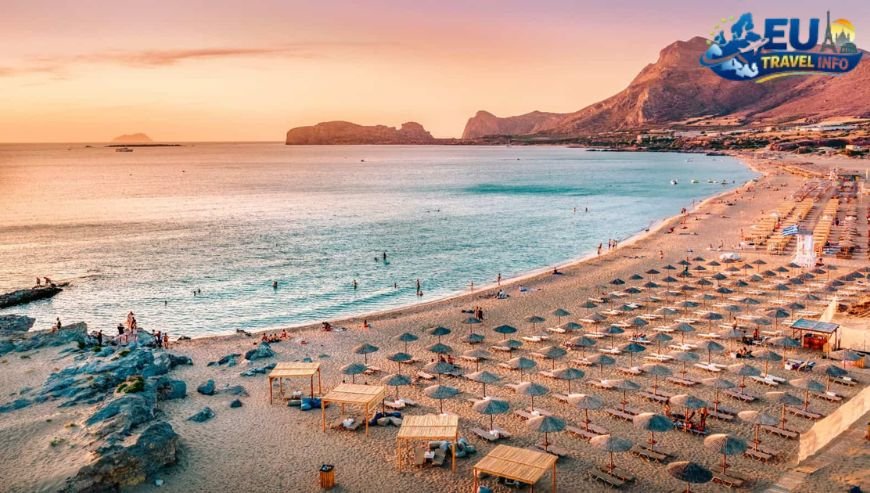

I have explored the blue waters and white villages of the Mediterranean many times. Greece is a place where history meets the sea. It is truly beautiful. However, many people think it is too expensive to visit. I am here to tell you that is not true. You can see the ruins and eat the food without spending a fortune. I have traveled to over ten islands and spent months on the mainland. I know how to save money. This travel guide to greece on a budge will show you the way.
First of all, I want to talk about how you can enjoy the sun and the history while keeping your wallet full. This is my 13 Best Travel Guide To Greece On A Budget. I will share my personal secrets on how to travel greece on a budget so you can plan your own dream trip for 2026.
Visit During the Shoulder Season

The timing of your trip is the most important choice you will make. Most people want to go in July or August. That is a mistake. The heat is intense and the crowds are everywhere. Prices for hotels also double during those months. I prefer the shoulder season. This includes May, June, September, and October.
The weather is still warm enough for a swim. But the prices are much lower. In September, the sea is very warm because it has been under the sun all summer. Additionally, you will find that hotels are much easier to book. You do not have to fight for a spot on the beach. Therefore, you should avoid the peak summer months if you want to save money.
A trip in May or October can save you up to 30 percent on your hotel bill. Plus, you will actually be able to see the Acropolis without thousands of people in your way. It is a much more relaxed experience. Finally, the locals are friendlier when they are not overwhelmed by massive summer crowds.
Choose Budget-Friendly Islands
You likely see photos of Santorini and Mykonos every day. They are famous for a reason. However, they are some of the most expensive places in the world. If you want to know how to vacation in greece for cheap, you must look at other islands.
I fell in love with Paros. It is a charming island with whitewashed villages and golden beaches. It offers traditional Greek life but it is much more affordable. You can expect to spend between €80 and €130 per day here. Similarly, Syros is a hidden gem. It is the capital of the Cyclades but many tourists skip it. The main city, Ermoupoli, has marble streets and beautiful buildings. It is magical.
Crete is another excellent choice. It is the largest island in Greece. Because it is so big, it has its own economy. This means prices for food and rooms stay lower. You can find rooms in smaller villages for as low as €20 to €40 per night. On top of that, the food in Crete is some of the best I have ever tasted.
Master the Greek Ferry System
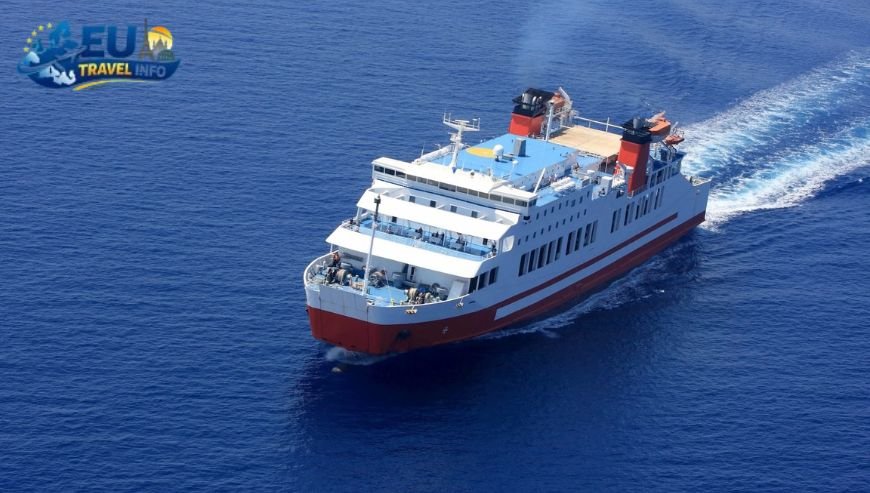
Transportation can be a big cost. You have two choices for ferries: high-speed or conventional. High-speed catamarans are fast but they are very expensive. They also can make you feel sick if the wind is strong. On the contrary, conventional ferries like Blue Star are much cheaper and very stable.
I always choose the slow boat. It is a relaxing way to travel. You can sit on the deck and watch the islands pass by. An economy ticket on a slow ferry is usually around €40 to €50. A high-speed ticket can cost over €100. Therefore, if you have time, the slow ferry is the better budget choice.
Always book your ferry tickets in advance for the summer. Use a site like Ferryhopper to compare prices. Additionally, if you are bringing a car, you must book months early because garage space is limited.
Eat Like a Local with Tavernas and Gyros
Food is a highlight of any Greek trip. You do not need to go to fancy restaurants to eat well. In fact, the best food is often the cheapest. Pita gyros and souvlaki are my go-to meals for a quick lunch. They only cost between €3 and €5. They are filling and delicious.
For dinner, I look for a local taverna. These are small, family-run restaurants. They serve hearty dishes like moussaka or grilled meats. I use the “Greek Salad Rule” to see if a place is cheap. If a Greek salad is under €7, the restaurant is usually a good deal.
You should also order house wine. It often comes in a carafe and is very cheap compared to a bottle. Plus, it usually tastes great. Gradually, you will learn which local dishes are your favorites. Mine are fava bean dip and tomato balls.
Spend Time on the Mainland
Many people land in Athens and leave immediately for the islands. This is a mistake. The mainland has so much to offer. Athens is the birthplace of Western civilization. You need at least two full days to see the sights. You can visit the Acropolis and the ancient ruins for a fair price if you buy a combined ticket.
The city of Thessaloniki is also a great budget choice. It is the second-largest city in Greece. It has a student vibe and a fantastic food scene. It is often cheaper than Athens. Additionally, you can visit places like Meteora. The monasteries on top of rocky pillars are a sight you will never forget.
Mainland travel is easy because you can use the bus system. You do not have to worry about ferry schedules or high ticket prices. Therefore, a mix of mainland and islands is a smart way to plan your trip.
Use the KTEL Public Bus Network
If you do not want to rent a car, the KTEL bus system is your best friend. It is a network of regional bus companies that covers almost the whole country. It is very affordable and reliable. For example, a bus ticket from the airport to central Athens is only €5.50.
The system can be a bit of a puzzle. Each region has its own website and terminal. In Athens, there are two main terminals: Kifissos and Liosion. You must know which one serves your destination. However, once you are on the bus, the ride is usually smooth and comfortable.
Buses connect most villages and towns. They are a great way to see the countryside. Plus, you will save a lot of money compared to a taxi. Taxis in Greece can be very expensive. Therefore, I highly recommend using the KTEL network.
Choose Guesthouses and Local Rooms
Your choice of where to sleep will have a huge impact on your greece travel budget per day. Instead of big international hotels, look for local guesthouses or domatia. These are often run by families. They are clean and offer a more authentic experience.
You can find simple private rooms for €40 to €80 per night in most areas. Hostels are also common in cities and on popular islands. A dorm bed usually costs between €15 and €25. If you are traveling as a pair, a private room in a guesthouse is often a better deal than two hostel beds.
I always check Booking.com for options. It has the most listings for Greece. Additionally, some guesthouses offer a small kitchen. You can save more money by making your own breakfast or simple meals.
Take Advantage of Free Museum Days
You can see the history of Greece for free if you plan your dates carefully. Many archaeological sites and museums have free admission days. For example, from November to March, the Acropolis and other sites are free on the first Sunday of every month.
There are also national holidays when entry is free, such as March 25th and October 28th. Additionally, students from the European Union often get free entry all year round. Students from other countries can get a 50 percent discount.
Always carry your student ID or a senior card if you have one. You should always ask for a discount at the ticket office. Similarly, look for combined tickets in Athens that let you see multiple ruins for one price.
Stay Connected with an eSIM
Do not pay for expensive roaming from your home phone company. It is a waste of money. Instead, get an eSIM. I have used companies like MobiMatter, Saily, and Airalo. You can get a data plan for as little as a few dollars.
It is much cheaper than buying a local SIM card at the airport. You can set it up before you even leave home. This way, you will have a map and a translator the moment you land. Additionally, many cafes and hotels in Greece offer free Wi-Fi.
Having data is very helpful for checking bus schedules or booking last-minute ferries. Plus, you can stay in touch with your friends and family without a high bill. Therefore, an eSIM is a small cost that saves you a lot of trouble.
Pack Light with a Backpack
Greece has many hills and old streets. Most islands are covered in cobblestones. If you bring a heavy suitcase with wheels, you will struggle. I have seen many tourists break their wheels on the uneven paths of Mykonos or Santorini.
I prefer a high-quality travel backpack. It makes moving between ferries and hotels much easier. You will have your hands free to hold your ticket or grab a railing on the boat. Additionally, small domestic flights often have tiny overhead bins. A soft backpack fits better than a hard suitcase.
You do not need to pack a lot of clothes. Many islands have affordable laundry services where you can wash and dry a bag of clothes for about €10 to €20. Plus, most of the time you will just be in a swimsuit and light clothes.
Understand the Water Rules
You should know where the water is safe to drink. In Athens and on most of the mainland, the tap water is safe and tastes good. You can fill your bottle for free. However, on most of the islands, the tap water is not for drinking.
It is usually desalinated seawater. It is safe for washing your face but it tastes salty or metallic. I do not buy small plastic bottles at every shop. That is expensive and bad for the environment. On the contrary, I buy 6-liter jugs at the supermarket for about €2.
I use those big jugs to refill my reusable bottle in my room. This simple hack will save you a lot of money over a two-week trip. Additionally, it reduces plastic waste on the beautiful islands.
Follow the “3-Night Rule” for Island Hopping
A common mistake is trying to see too many islands in a short time. You lose half a day every time you move. You have to pack, check out, wait for the ferry, and check in at the new place. It is exhausting.
I follow the “3-Night Rule”. Do not stay for less than three nights on any major island. This gives you at least two full days to explore. If you stay for only two nights, you only get one full day. That is not enough to see a place like Naxos or Crete.
If you have ten days, pick three destinations at most. For example, Athens and two islands. This is the how to plan a trip to greece on a budget secret that most people miss. You will save money on ferry tickets and have a much better time.
Avoid the “ATM Trap” and Use Euros
When you use your credit card or an ATM, you will often see a screen asking if you want to be charged in your home currency or in Euros. Always choose Euros. This is a very important money tip.
If you choose your home currency, the bank uses its own exchange rate. It is almost always a bad rate with hidden fees. Choosing Euros lets your own bank do the conversion, which is much cheaper. Additionally, avoid the blue and yellow “Euronet” ATMs. They have very high fees.
Look for ATMs owned by local banks like Piraeus Bank or Alpha Bank. They usually charge a much smaller fee, around €2 to €3. Plus, while most places take cards, you should always have some cash for small snacks, buses, or tips.
Realistic Daily Budget for 2026
To help you with how to plan a trip to greece on a budget, here is a look at what things actually cost. Prices have gone up, but you can still travel cheaply if you are smart.
| Item | Estimated Cost (EUR) |
| Pita Gyro (Street Food) | €3.50 – €5.00 |
| Greek Salad (Taverna) | €7.00 – €12.00 |
| Local Beer (0.5L) | €3.00 – €6.00 |
| Hostel Dorm Bed | €15.00 – €25.00 |
| Budget Guesthouse Room | €40.00 – €80.00 |
| Ferry Ticket (Slow Boat) | €40.00 – €50.00 |
| Bus Ticket (Local) | €1.20 – €2.50 |
For a shoestring traveler, you can get by on €25 to €45 per day if you stay in hostels and cook some meals. A backpacker who eats out at tavernas and does some activities will spend around €60 to €95 per day.
Frequently Asked Questions
How much budget do I need for a Greece trip?
The amount you need depends on your travel style. A typical seven-day trip usually costs between $1,435 and $3,720 per person including flights. However, a shoestring traveler can survive on 25 to 45 EUR per day if they stay in hostels and cook their own food. Plus, mid-range travelers usually spend between 115 and 220 EUR daily.
What is the cheapest way to travel around Greece?
The most affordable way to see the country is by using the KTEL public bus system. These buses reach almost every village and are very reliable. Additionally, you should choose conventional ferries, like Blue Star, instead of high-speed catamarans to save money. Similarly, walking in the city centers is free and allows you to find hidden gems.
How much does a trip to Greece normally cost?
On average, a visitor spends about $250 per day in Greece. This price covers a mid-range hotel, public transport, and decent meals. A two-week adventure for one person usually costs about $3,300. Therefore, you should plan for a total of $2,800 to $6,800 for two weeks depending on your choices.
How to save money in Greece?
You should visit during the shoulder season in May, June, or September when prices are lower. To eat cheaply, look for the “Greek Salad Rule”; if the salad is under 7 EUR, the restaurant is a good deal. Also, you can visit the Acropolis and other ruins for free on the first Sunday of the month from November to March. On top of that, I always suggest buying wine and snacks at local mini-markets instead of tourist shops.
What is the cheapest month to visit Greece?
The low season months from November to March offer the lowest prices for hotels and flights. Specifically, October is often the most affordable time to fly to the country. However, be aware that many island businesses close during the cold winter months.
How much is a 7 day trip to Greece?
A week in Greece typically costs between $1,435 and $3,720 per person. For two people traveling together, the total cost for a week is usually between $2,800 and $6,800. Budget-conscious couples can keep their total spend between $2,450 and $3,570 for seven days.
Is Mykonos or Santorini better?
These islands offer very different experiences. Santorini is best for dramatic volcanic views, romance, and history. On the contrary, Mykonos is famous for golden sand beaches and high-energy nightlife. Gradually, you may realize that doing both is possible because they are only two hours apart by ferry.
What is the prettiest Greek island to visit?
Beauty is everywhere in Greece. Santorini is a geological wonder with white villages on high cliffs. Symi has one of the prettiest ports in the country with its colorful neoclassical houses. Additionally, Crete features the famous pink sand of Elafonisi Beach.
What is the best time to visit Greece?
The shoulder season in May, June, September, and October is the best time to go. During these months, the weather is warm but the crowds are much thinner. Finally, the sea is warmest in September, which makes it perfect for swimming.
Is 500 euros enough for a week in Greece?
Yes, 500 euros is plenty for a week if you follow a shoestring budget. Since a shoestring traveler spends about 25 to 45 EUR per day, you would only use about 175 to 315 EUR for the week. This leaves money for a few extra treats or ferry tickets.
What language is spoken in Greece?
Greek is the official language of the country. However, English is widely spoken in tourist areas like Athens and the main islands. You will have no trouble communicating in hotels or restaurants.
What is the cost of a meal in Greece?
A simple pita gyro or souvlaki costs only 2 to 5 EUR. A meal at a casual local taverna usually runs between 10 and 20 EUR per person. However, fine dining at a fancy restaurant can cost between 35 and 180 EUR.
Concluding words
I hope this 13 Best Travel Guide To Greece On A Budget makes your planning easier. Greece is a beautiful place that offers history and sun to everyone. You can save money by choosing islands like Naxos, Crete, or Syros instead of the expensive hotspots.
Remember to use the KTEL buses, eat street food, and visit during the shoulder season to keep your costs low. Though prices are rising, a smart traveler can still find magic in the ancient ruins and blue seas without spending a fortune.