You stand in the heart of Vienna. The air smells of roasted coffee beans and warm sugar. You are about to embark on a journey through the flavors of a nation that served as the culinary center of a vast empire. Austrian food is not just one thing.
It is a beautiful mixture of traditions from Bohemia, Hungary, and Northern Italy. You will find that these recipes flowed into imperial kitchens and eventually reached the tables of everyday people. First of all, you must understand that this cuisine is built on five main styles: frying, boiling, braising, roasting, and stewing.
The Crown Jewel: Wiener Schnitzel
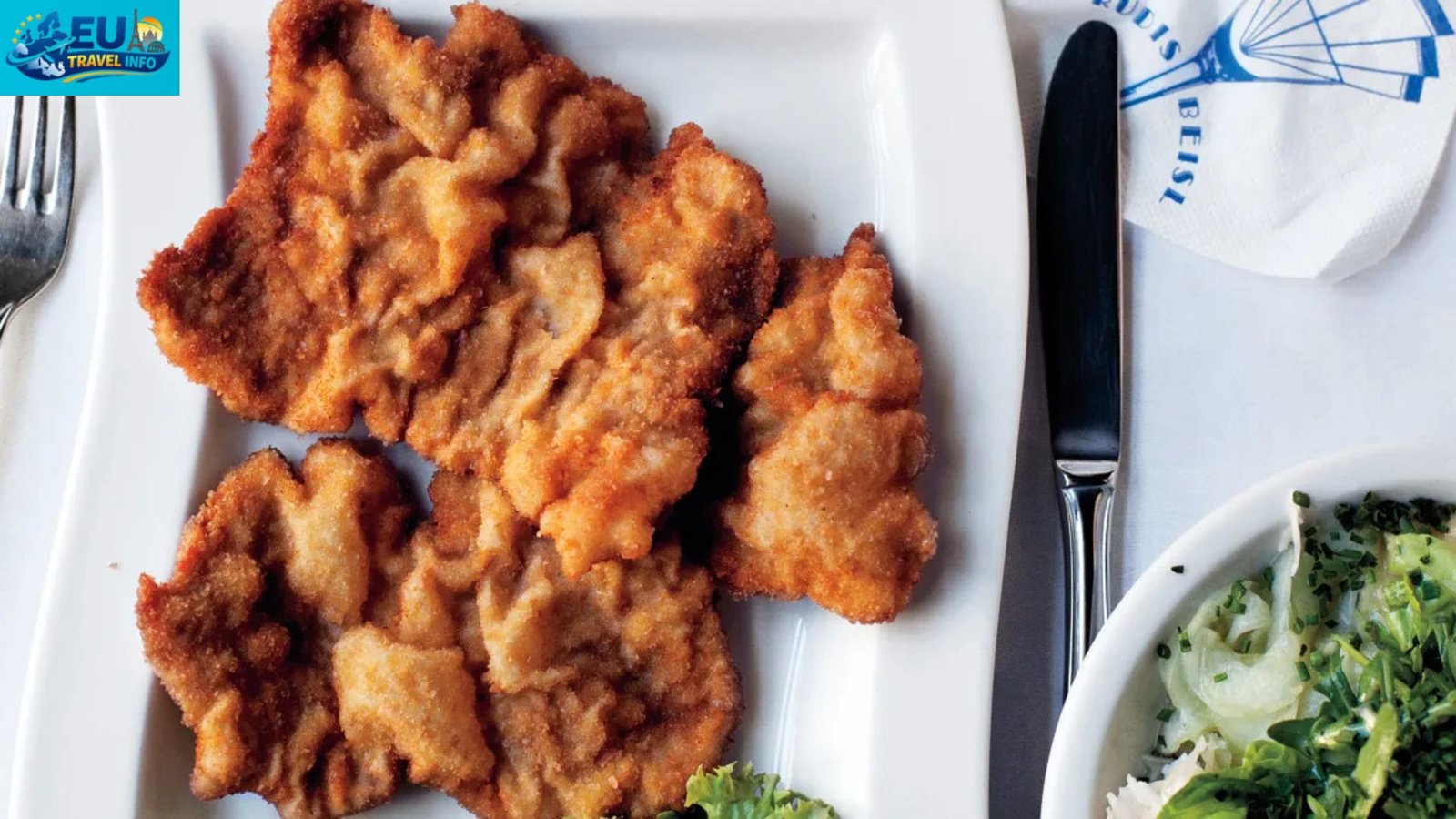
You cannot visit Austria without eating a Wiener Schnitzel. It is the undisputed national favorite. This dish is a thin escalope of veal. You will see that traditional chefs are very specific about the preparation. The veal must be beaten to a thickness of exactly 4 to 6 millimeters. The chef then adds salt to both sides. Later, the meat goes through a three-step breading process: flour, whisked egg, and finally breadcrumbs.
You will notice a unique taste because the original version uses pure pork lard for frying. The lard is highly resistant to heat and produces very little trans fats. You must ensure the fat is the right temperature.
If the lard is not hot enough, the breadcrumbs will become fatty and soggy. On the contrary, if it is too hot, they will burn. The chef gently tosses the pan so the escalopes “swim” in the fat. This creates the characteristic wavy, golden crust.
Additionally, you should know that serving sauce with a traditional schnitzel is considered a “sacrilege” in Vienna. You eat it with a wedge of fresh lemon and a side of Viennese potato salad or parsley potatoes. This is truly authentic Austrian food. For the perfect drink, a glass of Grüner Veltliner is the classic choice. This white wine provides the crispness needed to balance the rich breadcrumbs.
The Emperor’s Choice: Tafelspitz
Next, you must try Tafelspitz. This boiled beef dish enjoyed cult status because it was the favorite food of Emperor Franz Josef I. Legend says it was “invented” at the Hotel Sacher because the Emperor ate so fast that his guests were left hungry. The hotel provided a dish that could simmer for hours and stay delicious.
The name refers to the specific cut of meat, which is the tip of the lower part of the beef near the hip. In the United States, you might know this as the top round or standing rump. The meat has a fine-grained texture and a thin layer of fat, which makes it ideal for boiling.
The tradition of Viennese beef dates back to the Middle Ages. You will find it served in a strong beef broth with root vegetables. A standard serving contains about 315 calories and 23 grams of protein. You traditionally eat it with a mix of side dishes:
- Apple and horseradish sauce.
- Chive sauce.
- Roasted sliced potatoes.
- Creamed spinach.
Additionally, you can pair this with a medium-bodied Zweigelt red wine if served slightly chilled. However, a mighty Grüner Veltliner is also unbeatable here. This is the traditional austrian food vienna experience you have been looking for.
The Magic of the Coffee House
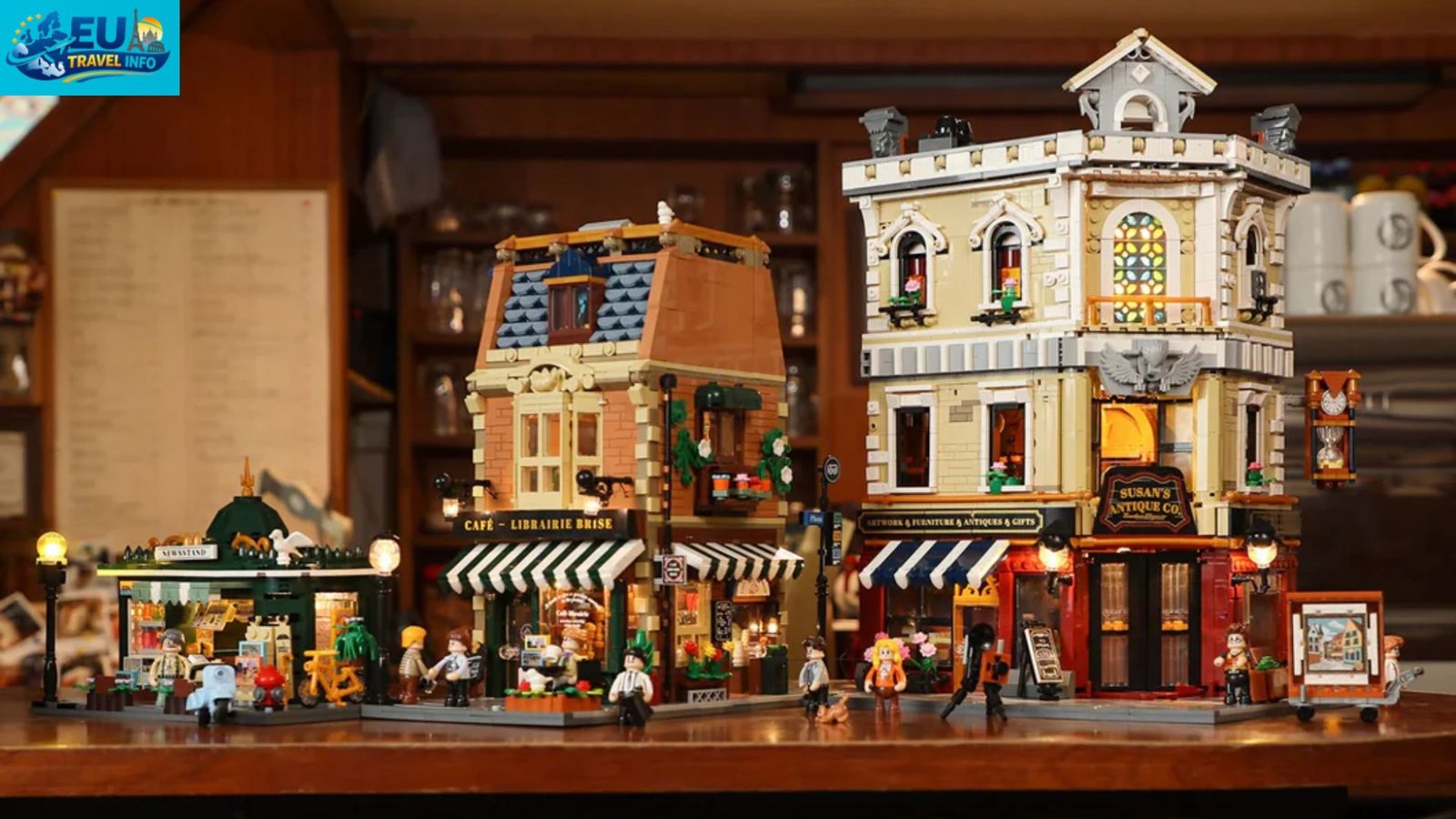
You walk into a Viennese coffee house. It feels like a “democratic club” where you can sit for hours for the price of one cheap cup of coffee. These institutions are so important that UNESCO listed them as Intangible Cultural Heritage in 2011. You will see marble tables, Thonet chairs, and an unlimited supply of newspapers.
You should order a Melange, which is half coffee and half heated milk, often with foamed milk on top. If you want something stronger, try the Einspänner. This is a strong black coffee served in a glass with a large dollop of whipped cream.
Plus, you cannot ignore the cakes. The Sachertorte is the most famous chocolate cake in the world. It features a chocolate sponge with an apricot jam filling. You usually eat it with a side of unsweetened whipped cream. Similarly, the Linzer Torte has a long history.
The earliest known recipe for this spiced nut cake dates back to 1653. It uses a shortcrust dough with hazelnuts or almonds and a tart redcurrant jam filling. Gradually, you will realize that coffee house culture is about taking your time. The waiter will even bring you a glass of cold tap water as a sign of attention.
Heuriger: The Heart of the Vineyards
You leave the city center and head to the outskirts. You are looking for a Heuriger, a traditional wine tavern. Vienna is unique because it has vineyards right within the city limits. A “Heuriger” literally means “this year’s wine”. Historically, these places only served cold food because of laws from 1784 meant to protect regular restaurants.
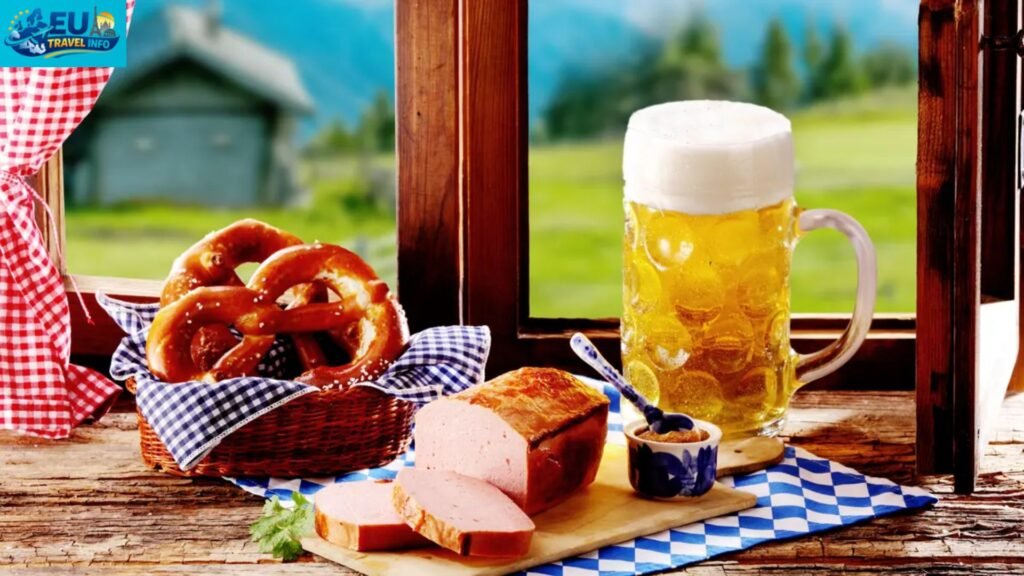
Today, you can still find simple, hearty fare. You should order a Brettljause. This is a cold snack served on a wooden board. It usually includes:
- Liptauer, a spicy cheese spread.
- Grammlschmalz, an indulgent spread made from pig fat.
- Smoked meats and local cheeses.
On top of that, larger taverns now serve hot dishes like Stelze (pork knuckle). This giant leg of pork is covered in crispy crackling. You should also try Liptauer on a slice of crusty bread.
First of all, remember the “liter liter” rule if you are with a group. You order one liter of white wine and one liter of soda water to share. This keeps you hydrated and is exactly what the locals do. You will find that these taverns are the best places to experience the true Viennese spirit.
Regional Specialties: From Styria to Carinthia
You travel south to Styria. You will see fields of pumpkins everywhere. This region is famous for its Pumpkin Seed Oil, often called “Green Gold”. This oil has a nutty taste and a deep green color. You must be careful with it. It should not be exposed to high heat because the nutrients will be destroyed.
Therefore, it is mostly used in the “cold kitchen” for salads. Statistical data shows that even 10 minutes of direct sunlight can degrade the oil, so it is always sold in dark bottles.
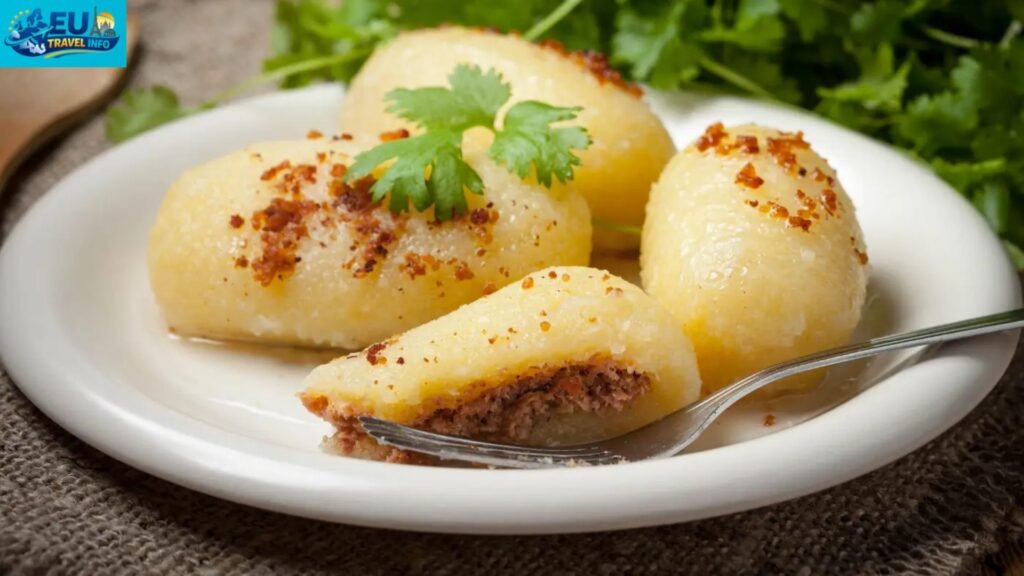
Later, you move to Carinthia. You must find Kärntner Nudeln (Carinthian cheese noodles). These are vegetarian dumplings that look like large ravioli. The dough is basic, but the filling is special. It uses a mix of potato puree and Topfen (a dry quark cheese). The most important seasoning is “noodle mint”. You will notice a unique pleated edge on these dumplings, which is the trademark of a skilled Carinthian cook. You eat them drizzled with brown butter and a side of green salad.
Additionally, you might come across Schlutzkrapfen in Tyrol. These are similar vegetable-filled dumplings. You will see that alpine cuisine has always been mainly vegetarian because meat was once too expensive for country people.
The Wachau Valley and the “Marille”
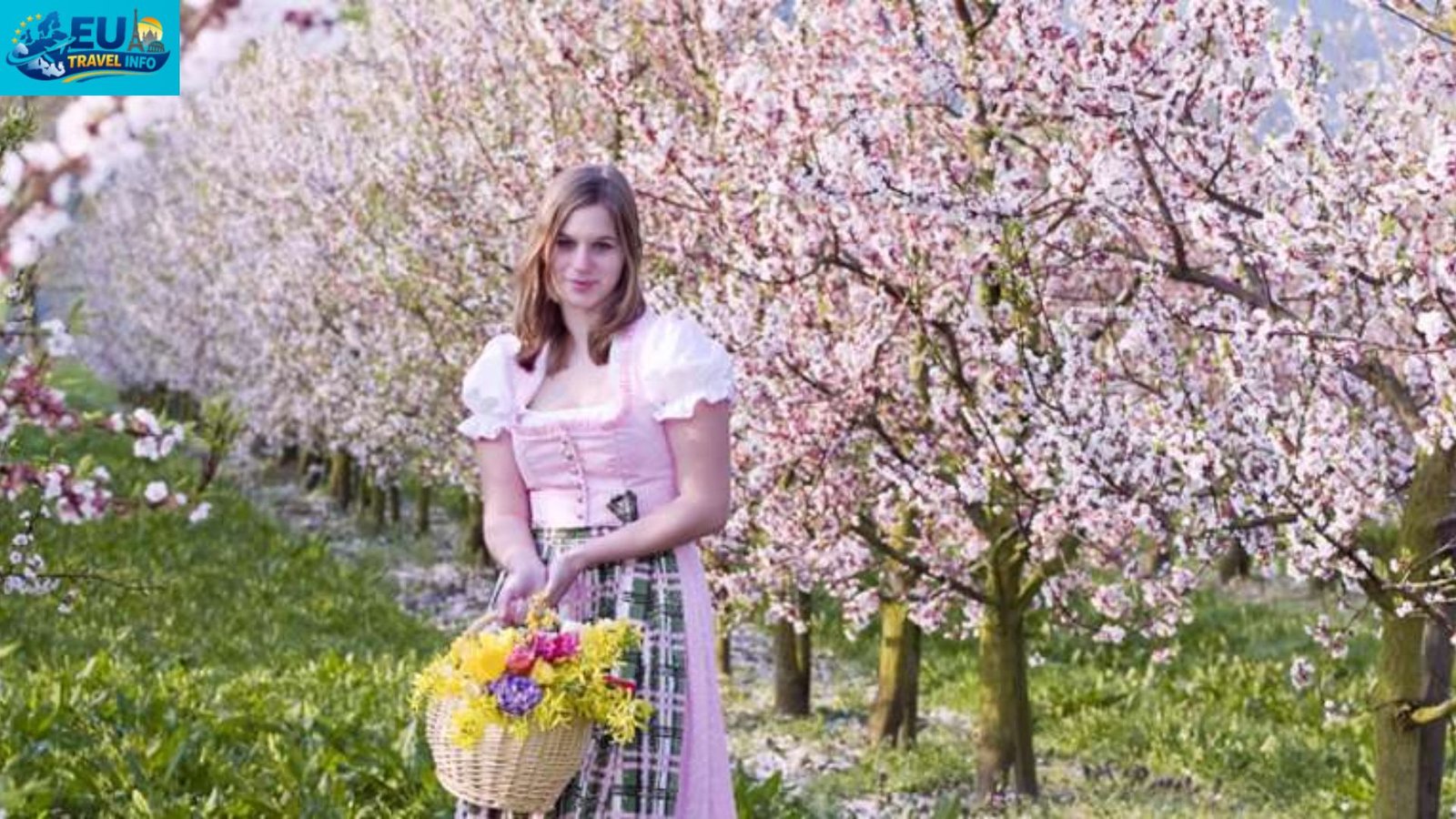
You follow the Danube River to the Wachau Valley. This area is a UNESCO World Heritage site. It is famous for its apricots, which locals call Marille. These fruits are different from regular apricots. They are sweeter and have a “protected designation of origin” in the EU.
You must try Marillenknödel (apricot dumplings). The chef wraps a whole apricot in a special potato or Topfen dough. The dumplings are poached and then rolled in buttered breadcrumbs and sugar. You eat them warm while they are fresh. One famous restaurant used nearly one ton of apricots in a single season to keep up with demand.
Though the fresh fruit is only available in July, you can find apricot jams, schnaps, and syrups year-round. These products are authentic Austrian food near me options if you visit any local delicatessen in the region.
Hearty Meats and Savory Stews
You will find that pork is the most popular meat in Austria. Schweinsbraten (roast pork) is a staple. It is often seasoned with garlic and caraway and served with Semmelknödel (bread dumplings) and cabbage salad. You will see that different regions pair this with different wines, such as a dry Schilcher rosé in Western Styria.
Additionally, you must try Austrian Goulash. It is different from the Hungarian version. The Saftgulasch is a juicy stew prepared with lean beef and a massive amount of onions. You use at least two-thirds as many onions as you have meat. The chef slow-cooks it for at least three hours until the beef is tender and the sauce is thick and dark. You eat it with rolls or dumplings.
Plus, do not forget the sausages. You will see Würstelstands (sausage stands) all over Vienna. You should order a Käsekrainer. This is a spiced sausage filled with small chunks of cheese. When it is grilled, the cheese melts and creates a delicious “crunch”. Another informal favorite is the Bosna, a spiced bratwurst served in a hot dog roll.
Freshwater Fish Delicacies
Austria has some of the cleanest rivers and lakes in the world. You will find that many lakes have water pure enough to drink. Therefore, freshwater fish is a high-quality part of the menu. You should look for:
- Trout (Forelle).
- Char (Saibling).
- Pikeperch (Zander).
- Carp (Karpfen).
You will often see Wurzelkarpfen, which is carp cooked with root vegetables and freshly grated horseradish. Similarly, Paprika Pikeperch is a Central European dish often served with a chanterelle mushroom goulash. You should pair these fish dishes with a refreshing Sauvignon Blanc from Styria.
Sweet Conclusions: Pancakes and Pastries
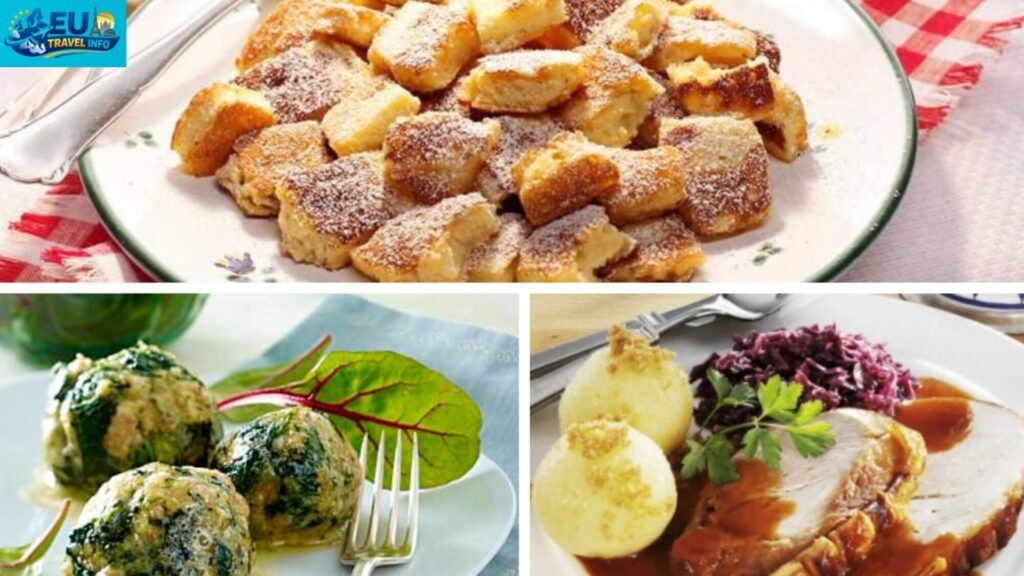
Finally, you must save room for Kaiserschmarrn. This is a thick, fluffy pancake ripped into bite-sized pieces and roasted in a pan. It is usually served with a fruit compote, often made from plums, called Zwetschkenröster. Legend says it was named after Emperor Franz Joseph I.
You should also try Apfelstrudel (apple strudel). Traditional versions use layers of paper-thin pastry wrapped around a filling of apples, cinnamon, and raisins. You will see that making the dough is an art form. It must be so thin that you can read a newspaper through it.
Additionally, if you are in Salzburg, you must order Salzburger Nockerl. This is a sweet, meringue-like dessert that looks like three snowy mountain peaks. It is very light and represents the mountains surrounding the city.
Gradually, you will see that traditional austrian food recipes are about more than just calories. They are a link to a history that shaped Central Europe. You will find that today’s top chefs are still using these traditions to create first-class dishes. First of all, explore the local taverns. Later, visit the grand coffee houses. You will find that every bite tells a story of the old empire and the beautiful landscape of modern Austria.
FAQ’s
What are the most popular dishes in authentic Austrian cuisine?
The most famous dishes you should try are Wiener Schnitzel (veal escalope), Tafelspitz (boiled beef), and Schweinsbraten (roast pork). For dessert, the Sachertorte and Apfelstrudel are global favorites.
Where can I try authentic Austrian food in Salzburg or Vienna?
In Vienna, you must visit a coffee house like Café Central or a wine tavern (Heuriger) in the 19th district like Sirbu or Zimmerman. In Salzburg, look for restaurants serving Salzburger Nockerl or local freshwater fish like trout from the nearby lakes.
What makes Austrian cuisine different from other European foods?
Austrian food is a “melting pot” of the old Austro-Hungarian Empire. You will find it combines the refinement of Italian cooking with the hearty, rustic traditions of Bohemia and Hungary. It also heavily relies on specific preparation methods like boiling and frying in lard.
Is authentic Austrian food suitable for vegetarians?
Yes, it is! Alpine cuisine has a long history of vegetarian dishes like Kärntner Nudeln (cheese noodles) and Schinkenfleckerl (pasta bake, which has a cabbage version called Krautfleckerl). You will also find many dishes featuring wild mushrooms or asparagus.
What desserts are considered traditional in Austrian cuisine?
Traditional options include the Linzer Torte (the world’s oldest named torte), Kaiserschmarrn (shredded pancakes), Germknödel (yeast dumplings with plum jam), and the iconic Sachertorte.
What is the most famous street food in Austria?
The Würstelstand (sausage stand) provides the ultimate street food experience. You should try a Käsekrainer (cheese-filled sausage) or a Bosna. Leberkäse rolls are also a very common quick snack found at butchers.
How expensive is it to eat authentic Austrian food in Austria?
You will find a wide range of prices. A coffee and cake at a grand café or a formal Tafelspitz dinner can be pricey, but Heurigen (wine taverns) and Würstelstands offer very affordable, high-quality local food.
Concluding Words
You have now seen the incredible variety of Authentic Austrian Food. From the imperial halls of Vienna and the Tafelspitz of the Emperor to the rustic Heurigen in the vineyards, every meal is an experience.
You can taste the “Green Gold” of Styria or the sweet apricots of the Wachau Valley. Austrian cuisine is a celebration of history, regional pride, and the simple joy of sharing a “liter liter” of wine with friends. You should make sure to try at least one Wiener Schnitzel and a slice of Sachertorte on your next European travel trip.