You walk into a wood-panelled dining room in the heart of Vienna. The smell of frying butter and rich beef broth fills the air. You see marble tables and plush velvet seats. This is the world of Classic Austrian Dishes. You are about to go on a food tour that covers hundreds of years of history.
Austrian food is not just about fuel. It is about identity and a deep sense of cosiness known as Gemütlichkeit. You will find that these traditional austrian dishes tell stories of an empire that once stretched across Europe.
The Imperial History of Your Plate
First of all, you must understand where this food comes from. Much of the typical austrian dishes you see today were born during the time of the Austrian Empire in the 1800s. At that time, the monarchy reached from Hungary to Italy and Bohemia. Gradually, recipes moved across borders.
You can thank Italy for the Schnitzel and Hungary for the Gulasch. Even the late-night Döner Kebab came from Turkish influences later on. Therefore, classic austrian food is a mix of many cultures on one plate.
Austria is almost entirely self-sufficient when it relates to food. You will notice that chefs celebrate regional and seasonal produce. In the spring, you find asparagus and radish. Summer brings berries and cucumbers.
Autumn offers pumpkin and walnuts. Winter provides chestnuts and a huge amount of apples. You should know that sugar, salt, and fat are the three main things that make this food so addictive.
Begin with the Best: Classic Starter Dishes
You should always start your meal with a soup. Classic starter dishes in Austria are usually clear broths with a lot of flavor. The most common one is Rindfleisch Suppe, which is a beef broth.
You will find carrots, leeks, and celery inside. Additionally, the chefs often add a carbohydrate boost like Griessnockerl, which are semolina dumplings. Similarly, you might try Leberknödel, which are small dumplings made of bread and liver.
If you prefer something creamy, look for Kürbiscremesuppe. This is a pumpkin soup. It is often topped with a dark green oil called Kürbiskernöl. This pumpkin seed oil is a Styrian delicacy. It has a nutty taste and a very dark color. However, you must be careful because it can stain your clothes.
Another interesting soup is Spargelsuppe. This is a cream-based white asparagus soup. It often has a hint of nutmeg. You might also find Frittaten, which are thin strips of pancakes served in a clear broth. These typical austrian dishes prepare your stomach for the heavy main courses to come.
The National Legend: Wiener Schnitzel
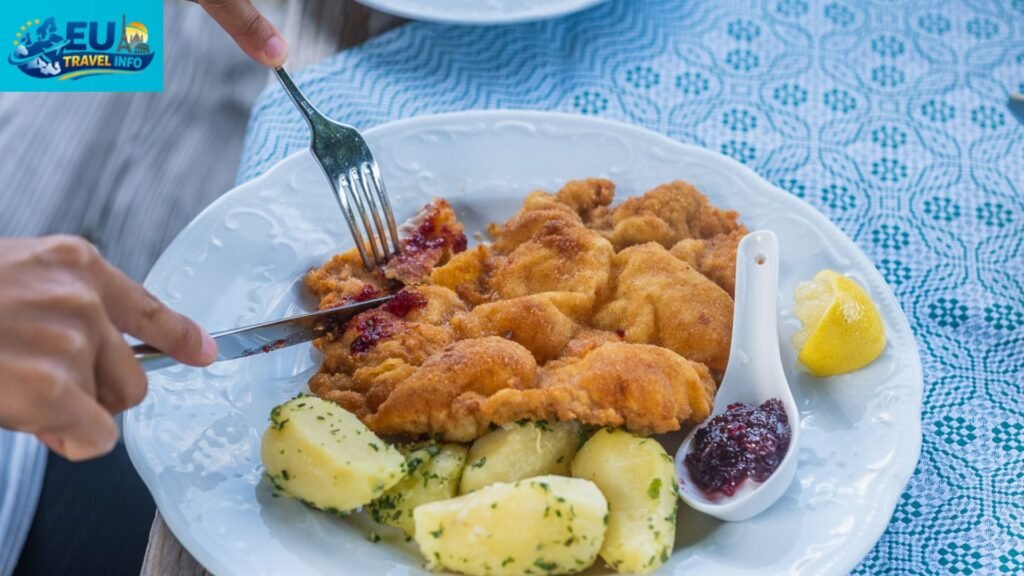
You cannot visit Austria without eating a Wiener Schnitzel. This is the national dish. Most people think it is synonymous with the country. Historically, the roots of this dish are in Venice. Italian chefs fried meat in breadcrumbs as early as the sixteenth century. Later, Count Radetzky brought the idea to Austria around 1857.
For an original Wiener Schnitzel, you need veal. If a restaurant uses pork, they must call it “Viennese style” instead. You will see that the meat is pounded very thin. Usually, it is about 5mm thick. The chef then follows a “Panierstraße” or breadcrumb trail. First, the meat goes into flour. Second, it goes into beaten eggs. Finally, it goes into unflavored breadcrumbs.
The frying process is an art. The meat must float in a lot of fat. Traditionally, chefs use clarified butter or pork lard. You will see the chef swirl the pan so the hot fat gets on top of the meat. This creates a wavy, bubbly surface called a “soufflé” breading. On top of that, you should never see sauce on a real Schnitzel in Vienna. You only get a lemon wedge and perhaps some lingonberry jam.
The Emperor’s Choice: Tafelspitz
You should also try Tafelspitz, which is boiled beef. This was the favorite meal of Emperor Franz Joseph I. It became known as “The Emperor’s Dish” because it was served at his court almost every night. You will find that it is a very tender cut of beef from the rear of the cow.
The meal is a full experience. First, you drink the rich beef broth with vegetables. Later, you take the bone marrow and spread it on toasted dark bread. Finally, you eat the tender meat. It is usually served with fried potatoes and a chive sauce. Additionally, you get Apfelkren, which is a mix of apples and horseradish.
You should know that the meat must be so soft that you do not even need a knife to cut it. People in Vienna often go to a restaurant called Plachutta to try this. They serve it in gorgeous copper pots. You will feel like royalty when the waiter wheels the steaming cart to your table.
A World of Dumplings: The Knödel
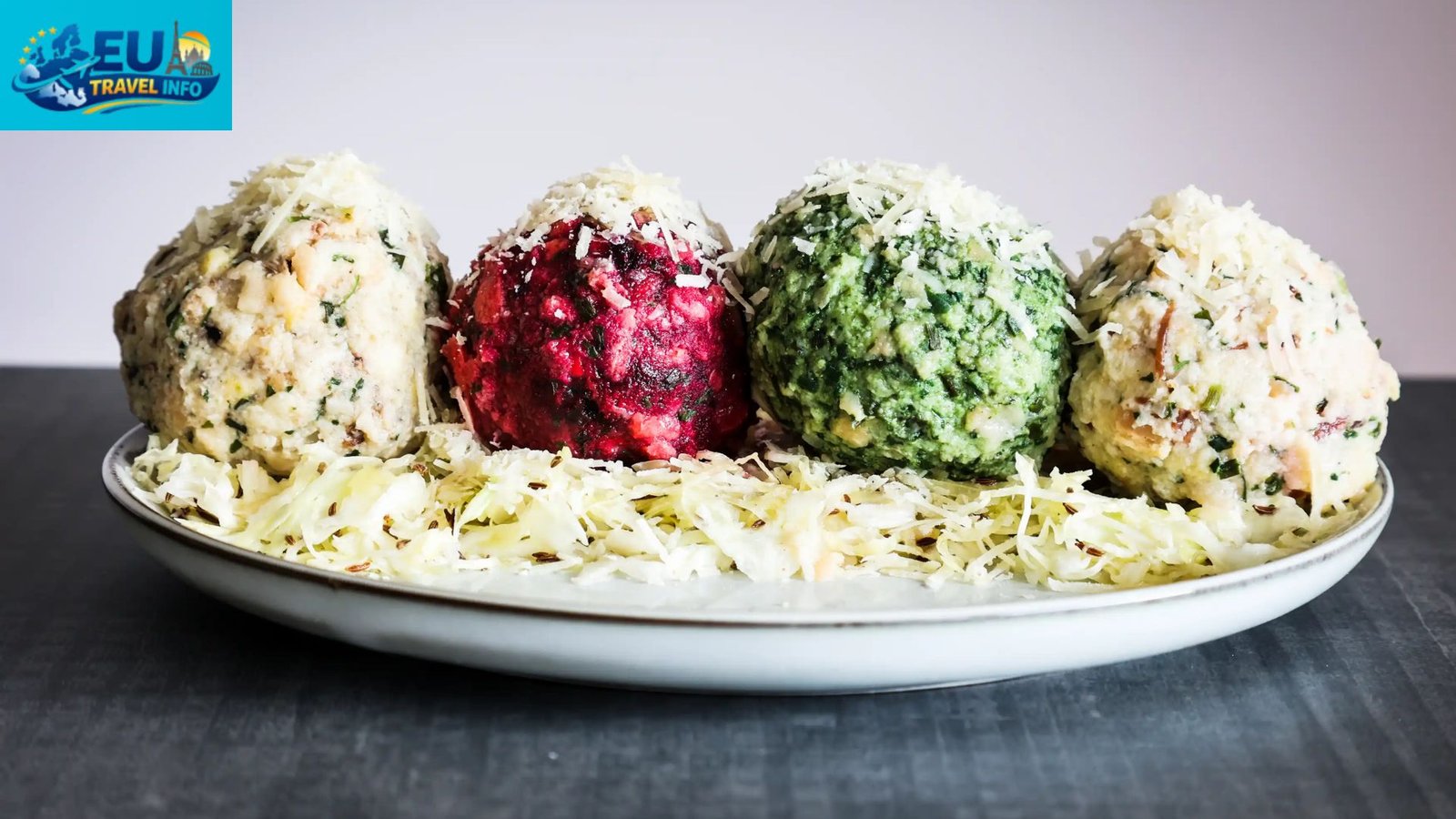
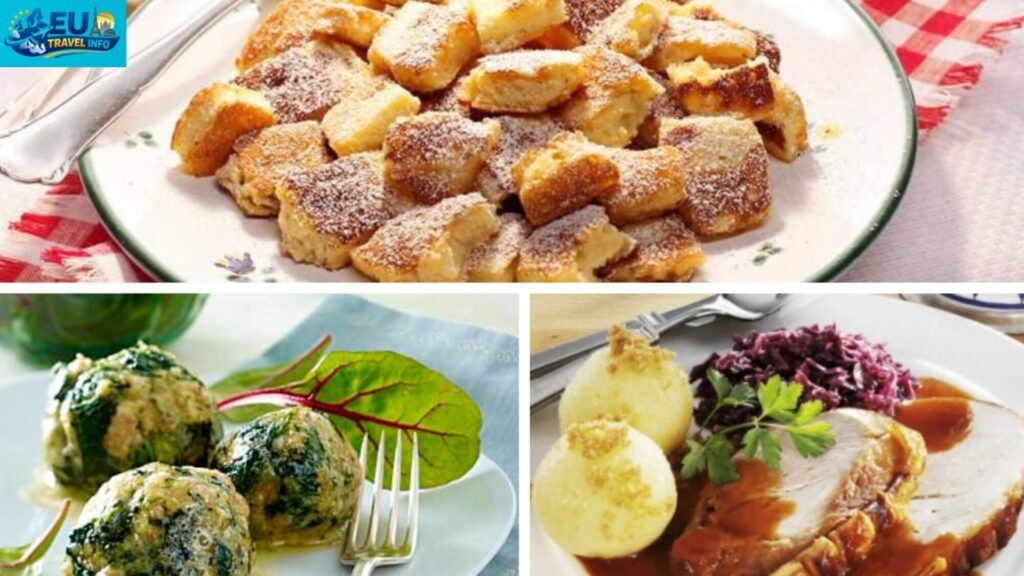
You will see the word knödel everywhere on Austrian menus. These are dumplings. They are the ultimate comfort food for harsh winters. Most of them use older Semmel rolls soaked in warm milk. Plus, they often have herbs or bacon inside.
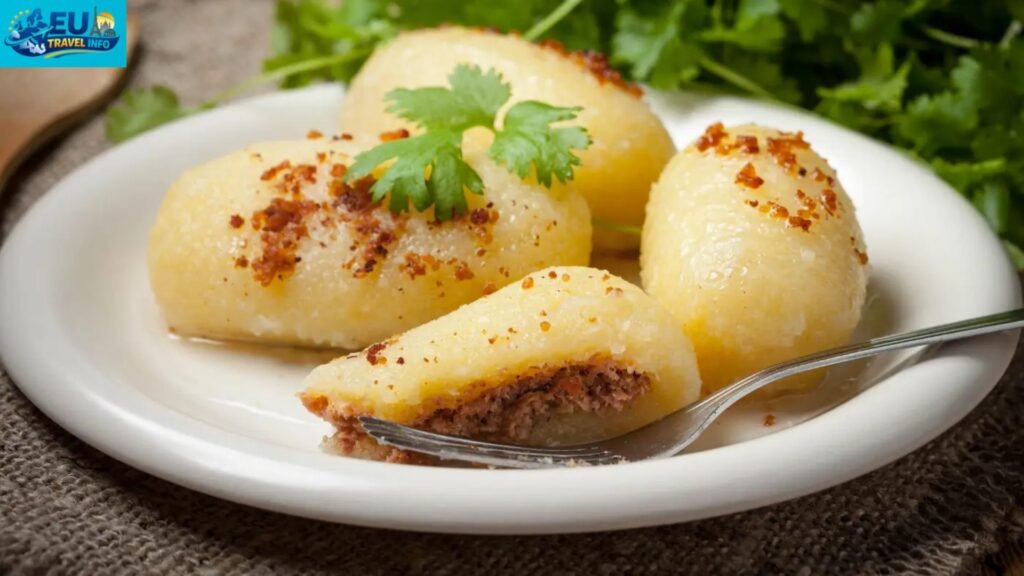
There are many types to learn about. Semmelknödel are the basic bread dumplings. They are perfect for soaking up gravy from roast pork. Serviettenknödel are similar, but they are boiled in a cloth napkin and served in slices. On the contrary, Fleischknödel have a meat filling inside a potato dough.
You might also find Kaspressknödel. These are dumplings made with mountain cheese. Chefs press them flat like a crab cake and fry them. They are great in soup or on top of a salad. Every region has its own favorite. For example, Tyrol is famous for Tyrol dumplings with bacon.
Hearty Mains and Mountain Huts
You might want something even more filling after a day of hiking or touring. Käsespätzle is a great choice. It is like a Swiss macaroni and cheese made with butter noodles and Emmental cheese. Similarly, you should try Krautfleckerl. This is a simple dish of small square pasta mixed with cabbage, onions, and butter. It is a very cozy meal.
If you like meat stews, look for Gulasch. It has a lot of meat, potatoes, and a huge amount of paprika. Erdapfelgulasch is a version made mostly with potatoes. Additionally, you might find Hirschragout in the late autumn. This is venison in a rich gravy served with potatoes and currant jam.
Lecso is another popular dish from Hungary. It is made of peppers and tomatoes cooked down with paprika. You can eat it warm or cold in any season. During the winter holidays, you will often see Gebratente Ente, which is delicious roast duck.
The Famous “Emperor’s Mess”: Kaiserschmarrn
You might be surprised to find that some “desserts” are actually served as main dishes for lunch. The most famous one is Kaiserschmarrn. The name means “Emperor’s Mess”. It is a fluffy, lightly sweetened pancake that is shredded into bits while it is frying.
The story goes that it was made for Emperor Franz Joseph I. His wife, Empress Elisabeth, wanted a very light dessert. She thought this dish was too rich and refused to eat it. The Emperor finished his portion and hers too. Traditionally, it is served with powdered sugar and a plum jam called Zwetschgenröster. You will find it is an awesome and very filling meal.
The Coffeehouse Culture: More Than Just a Drink
You must spend time in a Viennese coffeehouse to truly understand classic austrian cuisine. These places are like living rooms for the public. Famous people like Sigmund Freud and Mozart used to hang out in them. In 2011, UNESCO even named this culture as a protected heritage.
When you order coffee, it comes on a silver tray with a glass of water. You can sit for hours with just one cup. Here is a small glossary for you:
- Melange: Half coffee and half milk with frothed milk on top.
- Einspänner: An espresso in a glass with a lot of whipped cream.
- Kleiner Schwarzer: A single espresso.
- Wiener Schokolade: A rich hot chocolate with whipped cream.
You should also know that these cafes often serve light meals too. You might see a white wine spritz on the tables in the afternoon. In the summer, you can sit outside in a “Schanigarten”.
Sweet Treats: Sacher and Linzer Torte
You will find that Austrians are very proud of their cakes. The most famous chocolate cake in the world is the Sachertorte. It was invented in 1832 by a young apprentice named Franz Sacher. It is a chocolate sponge cake with a layer of apricot jam and a smooth chocolate glaze.
There was a famous legal battle over this cake in the 20th century. Hotel Sacher and the Demel pastry shop fought over the trademark. Eventually, they both got to sell it, but they have different recipes. Hotel Sacher puts the jam in the middle of two layers. On the contrary, Demel puts the jam just under the glaze. You should always eat it with a side of unsweetened whipped cream.
Linzer Torte is another historical gem. The recipe dates back to the 1600s, making it the oldest cake recipe in written form. It has a dry shortbread crust filled with red currant or raspberry jam. On top of that, it has a lattice of nuts on the surface. It is quite dry, so it is best with a cup of coffee.
Iconic Snacks and Street Food
You will find great food even at gas stations and food trucks. Wurst, or sausage, is the king of street food. You can get a Currywurst, which is covered in sweet curried ketchup. Kasekrainer is a favorite, which is a sausage stuffed with pieces of cheese. Be careful because the cheese can be very hot and messy.
Leberkäse Semmerl is a very typical austrian dishes for a quick snack. It is a warm, thick slice of seasoned meat loaf served in a crusty white roll. You should try it with spicy mustard. Similarly, you might find Döner Kebap everywhere. It is lamb, beef, or chicken served in a pita with yogurt sauce.
For something fried, look for Langos. This is a deep-fried pancake topped with garlic and sour cream. You also should not miss the Bretzel or pretzels. The saltier they are, the better they taste. If you want a smaller version, look for a Laugenstangerl, which is a pretzel stick.
The Liquid Side: Wine, Beer, and Spirits
You should explore the local drinks as well. Grüner Veltliner is a very popular crisp white wine. You can buy a decent bottle for only 2 to 3 euros at the grocery store. If you prefer beer, you can just say “ein Bier, bitte”. Gösser is a very common brand.
If you are hiking, you might want a Saurer Radler. This is two parts beer and one part mineral water with lemon. It is refreshing and has less alcohol, which is good when you still have to hike down a mountain. In the winter, you must try Glühwein. This is mulled red wine that makes you feel very cozy on a cold night.
Finally, there is Schnapps. This is a strong after-dinner drink. It is grain alcohol seasoned with fruit or spices. It is very strong, usually between 60 and 80 proof. It will certainly give you a “bite” at the end of your meal.
Regional Specialties to Find
You will find that each part of Austria has its own stars.
- Styria: Famous for Sterz and all things pumpkin.
- Tyrol: Look for bacon and small dumplings called Schmarren.
- Salzburg: Try the Salzburger Nocken, which is a very fluffy sweet dish.
- Upper Austria: They love cider roast and Linzer cakes.
- Carinthia: You will find a lot of filled pasta and cereal dishes.
Austrians take a lot of pride in these dishes. Many recipes are passed down through generations in family kitchens. Even the farmers in small villages sell their own yogurt and honey using an honor system with a small cash box. It shows the deep trust in these small communities.
Tips for Your Culinary Adventure
You should remember that classic austrian food is not always the healthiest choice. It is high in sugar, salt, and fat. However, you can balance it out by hiking high mountains and swimming in crystal clear lakes.
When you buy pumpkin seed oil, look for the PGI-seal. This proves the seeds come from protected areas in Austria. Also, do not use this oil for high-heat frying. It loses its flavor and healthy ingredients if it gets too hot. Pour it over your food only when the dish is almost finished.
You will find that bigger cities like Vienna and Salzburg have many vegan and vegetarian options. Smaller villages might have less, but their local markets have amazing fresh produce. You can always find fresh bread and cheese to make a great meal.
FAQ’s
What are the most popular classic Austrian dishes to try?
The top dishes are Wiener Schnitzel, Tafelspitz, and Kaiserschmarrn. You should also try various types of Knödel and Gulasch.
Which traditional Austrian dishes are considered must-eat foods?
You must eat an original Wiener Schnitzel and a slice of Sachertorte. Tafelspitz is also a “must” for anyone who wants to eat like an emperor.
What ingredients are commonly used in classic Austrian dishes?
Beef, pork, and veal are very common meats. You will also see a lot of potatoes, cabbage, apples, and flour for dumplings.
Are classic Austrian dishes similar to German cuisine?
Yes, they share many similarities, but Austria has unique influences from its former empire. For example, Austrian sweets and coffeehouse culture are very distinct.
What is the most famous dessert among classic Austrian dishes?
The Sachertorte is the most famous cake. However, Apfelstrudel and Kaiserschmarrn are also iconic sweet treats.
Are there vegetarian options in classic Austrian dishes?
Yes, you can find Käsespätzle and various sweet dumplings like Marillenknödel. Large cities have many modern vegetarian restaurants as well.
Where can you find authentic classic Austrian dishes in Austria?
You can find them in traditional guesthouses, mountain huts, and historic Viennese coffeehouses. Restaurants like Plachutta are famous for specific dishes like Tafelspitz.
Concluding Words
This article guided you through the rich world of Classic Austrian Dishes. You learned about the imperial history of foods like Wiener Schnitzel and Tafelspitz. We covered the importance of soups, dumplings, and street food.
You also saw the deep culture of Viennese coffeehouses and famous desserts like the Sachertorte. Austria offers a hearty and historical culinary journey for every traveler.