You walk down a cobblestone street in Vienna and the smell of fried butter hits you. It is the scent of history. Food is identity here, and it is a huge part of how people feel they belong to their culture. You are about to go on a journey through the most popular food in Austria.
This guide will help you find the top food in Austria that you simply must try on your next tour. Whether you are in a fancy palace or a small street kiosk, the flavors will stay with you forever.
The Famous Wiener Schnitzel
First of all, you cannot visit this country without eating a Wiener Schnitzel. This is the most popular food in Austria for a reason. People often think it was born in Vienna, but the roots actually go back to Venice. Legend says that Field Marshal Count Radetzky brought the recipe home around 1857. However, the first written mention of it in Austrian cooking was actually in 1831.
When you order this famous food in Austria, you should know that a “real” Wiener Schnitzel must be made of veal. If a menu says Wiener Schnitzel, it refers to a veal cutlet that is fried in clarified butter. The meat is pounded until it is very thin. Later, the chef coats it in flour, beaten eggs, and breadcrumbs.
The secret to a perfect one is that the breadcrumbs are not pressed down hard. This allows the coating to “fluff up” or souffle while it swims in hot fat. You will see it served with a slice of lemon and sides like parsley potatoes, potato salad, or a mixed salad.
If you want the best experience, you should visit Figlmüller in Vienna. Additionally, you can find great versions at Gasthaus zur Dankbarkeit in Burgenland or Der Tschebull in Carinthia. It is a golden meal that truly represents the soul of the country.
The Emperor’s Favorite: Tafelspitz
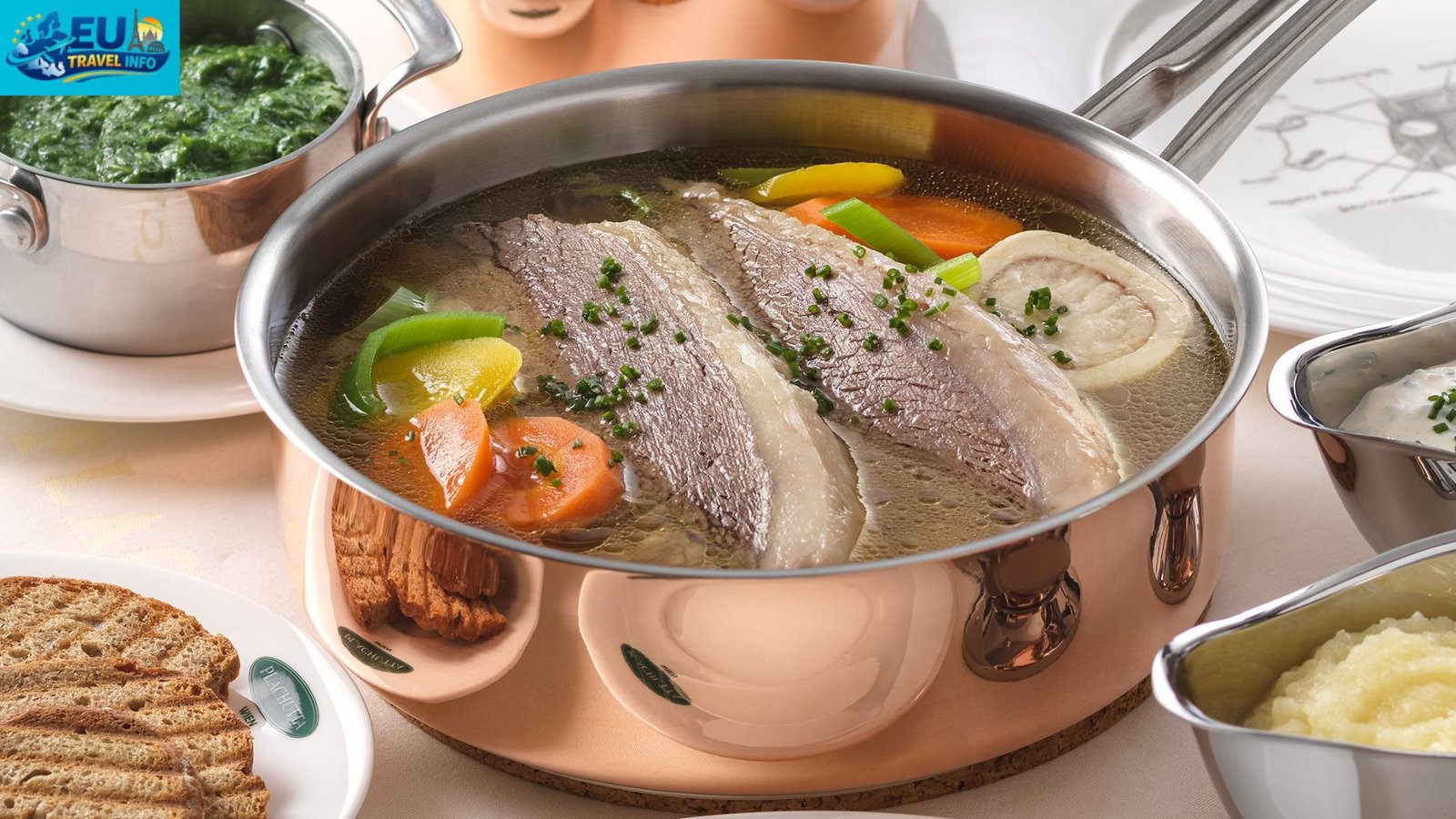
On top of that fried delight, you must try Tafelspitz. It is a traditional food in Austria that was the favorite of Emperor Franz Joseph I. His private table was never without a fine piece of boiled beef.
This dish consists of beef or veal boiled in a broth with root vegetables and spices. The name actually refers to the specific cut of meat. In the United States, you might call this the standing rump or top round. Austrian butchers are very precise. They have separate names for almost every muscle. For example, the hind leg alone is divided into 16 different cuts.
You will usually see Tafelspitz served with a mix of minced apples and horseradish. Sometimes it comes with sour cream and chives or roasted potato slices. It is a hearty, honest meal. Perfectly simple. Truly royal.
The Iconic Viennese Würstelstand
Gradually, you will find yourself looking for a quick snack. This is when you head to a Würstelstand. These iconic sausage kiosks are everywhere. They are the best place to find common food in Austria that locals actually eat every day. Grabbing a sausage is one of the most authentic ways to experience the local culture.
The undisputed star of the scene is the Käsekrainer. It is a smoked sausage filled with small bits of melted cheese. When it is roasted until it is crisp, the cheese inside stays gooey and flavorful. You should eat it with mustard, horseradish, and a fresh bread roll.
If you want something else, here are some other popular meals in Austria found at these stands:
- Bratwurst: A simple, hearty classic roasted until golden brown.
- Bosna: A spicy icon originally from Salzburg. It is a roasted sausage in a toasted bun with curry and onions.
- Frankfurter: This is the original “Vienna Sausage” that the whole world knows. It is mild and juicy.
- Debreziner: A smoky sausage with a gentle paprika heat.
- Burenwurst: Also called “Klosterwurst,” it is dark, coarse, and very filling.
You might also like the Waldviertler, which is heavily smoked and very intense. For a more elegant choice, try the Sacherwürstel. It is a finer, slimmer version of the Frankfurter. Plus, many stands now offer veggie and vegan sausages that are surprisingly good.
At the Würstelstand zum Kaiser, you can enjoy these classics with real Viennese charm. Order them freshly roasted for the best taste. Pair your sausage with a beer or an Almdudler soda.
The World of Austrian Dumplings (Knödel)
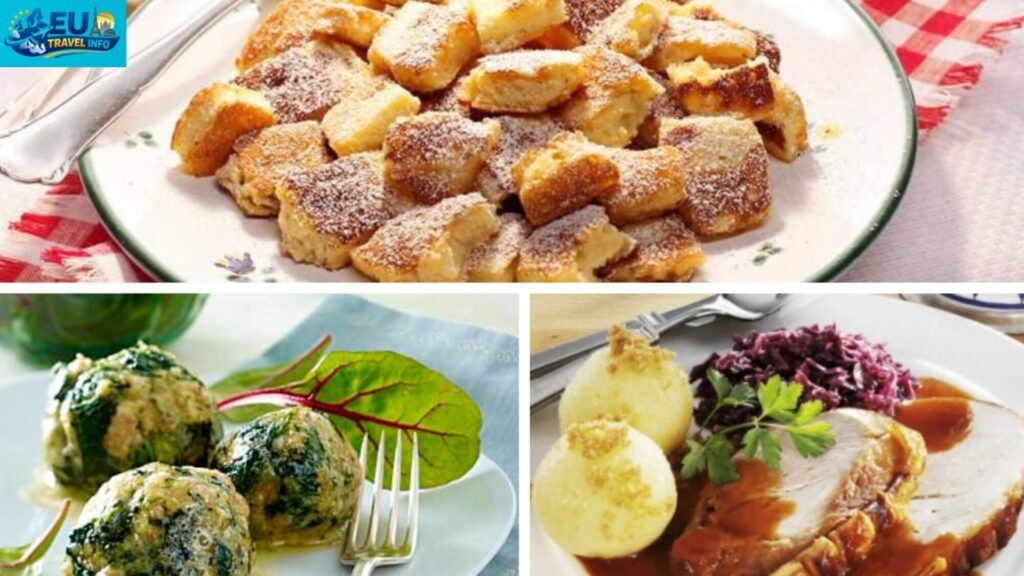
Similarly, you will notice that many dishes end in the word knödel. These are dumplings, but they are much better than the “gelatinous icebergs” you might expect. They are a huge part of traditional food in Austria.
There are two main types. Some are for starters or main courses, and others are for dessert.
For your soup, you might find a Leberknödel. It is made with minced bread, onions, and liver. Another option is the Kaspressknödel, which is a flat dumpling made with bread and cheese. It comes from the west but is very popular in Vienna. You might also see Griessnockerl, which are semolina dumplings that give your soup a carb boost.
When it comes to main dishes, the Semmelknödel is king. It is made from cubes of dry white bread. A variation is the Serviettenknödel, which is cooked in a napkin and served in slices. These are perfect for soaking up gravy from a Schweinsbraten (roast pork).
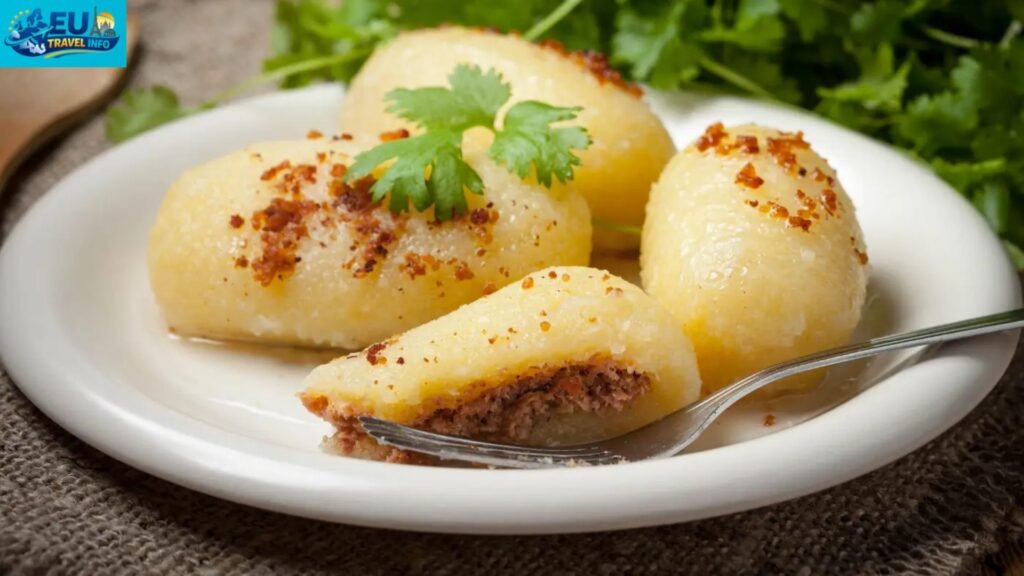
Finally, do not forget the Fleischknödel. These have a potato dough outside and a meat filling inside. They are robust and designed to help you survive a cold winter.
Styrian Green Gold: Pumpkin Seed Oil
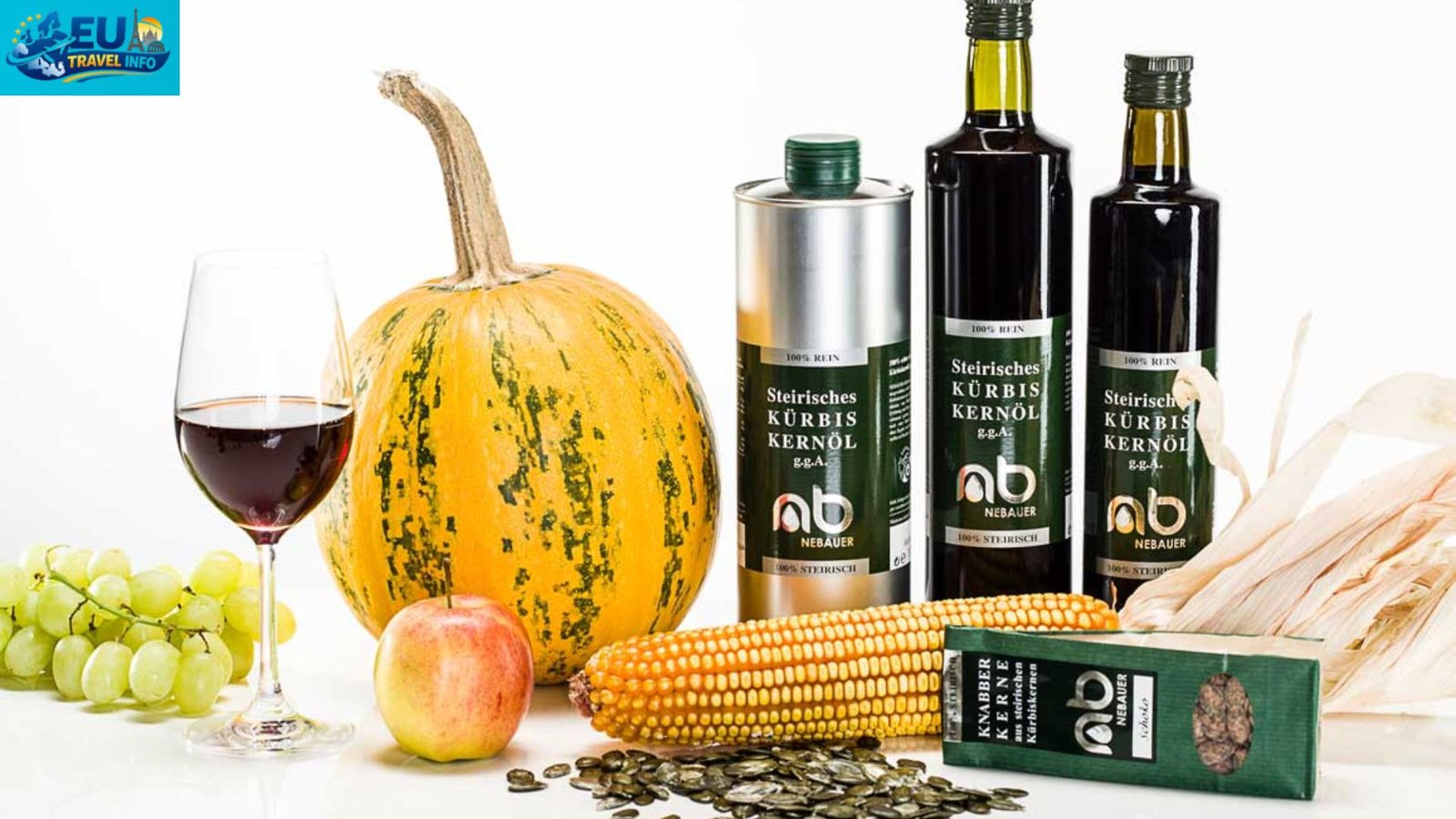
Therefore, you must also learn about Styrian Pumpkin Seed Oil. People call it the “green gold of Styria”. It has a very dark green color and a unique nutty taste.
This oil is incredibly healthy. It contains minerals like zinc and selenium, plus vitamins A, C, and D. About 80 percent of it consists of unsaturated fatty acids. It helps reduce cholesterol and is good for the heart.
History shows how precious it is. In 1735, it was only used in pharmacies for medicine. In 1773, it was actually banned as a cooking oil because it was too valuable. Today, you will see it used mostly as a salad dressing. You can also find it in scrambled eggs or even desserts.
Wait! Do not heat this oil. You should always add it after you finish cooking to keep the flavor and health benefits. If you want to try a unique treat, look for Pumpkinseed Dumplings made with marzipan and ground seeds.
The Sweet Side: Sacher Torte and More
Later, you will want dessert. The Sacher Torte is the most famous food in Austria vienna. Franz Sacher, a young apprentice, created it in 1832 for an Imperial Chancellor. It is a dense chocolate cake with a sweet apricot jam filling and a glossy chocolate ganache on top.
There was even a legal battle called “Vienna’s Chocolate Cake War” between Hotel Sacher and the Demel bakery over who had the original recipe. Hotel Sacher eventually won. Today, it is a household name worldwide.
Though the Sacher Torte is famous, you should also try the Linzer Torte. It is named after the city of Linz and is the oldest known cake recipe in written form, dating back to at least 1822.
Another favorite food in Austria is the Marillenknödel, or apricot dumpling. These combine a Chinese fruit (apricot) with Southeast Asian sugar and a Bohemian preparation style. They are a cultural icon of the Wachau Valley.
If you want something massive, try the Germknödel. It is a giant yeast dough sphere filled with plum jam and covered in poppy seeds and sugar. It usually comes with melted butter or vanilla sauce. Pure heaven.
Heuriger Culture and Coffee Houses
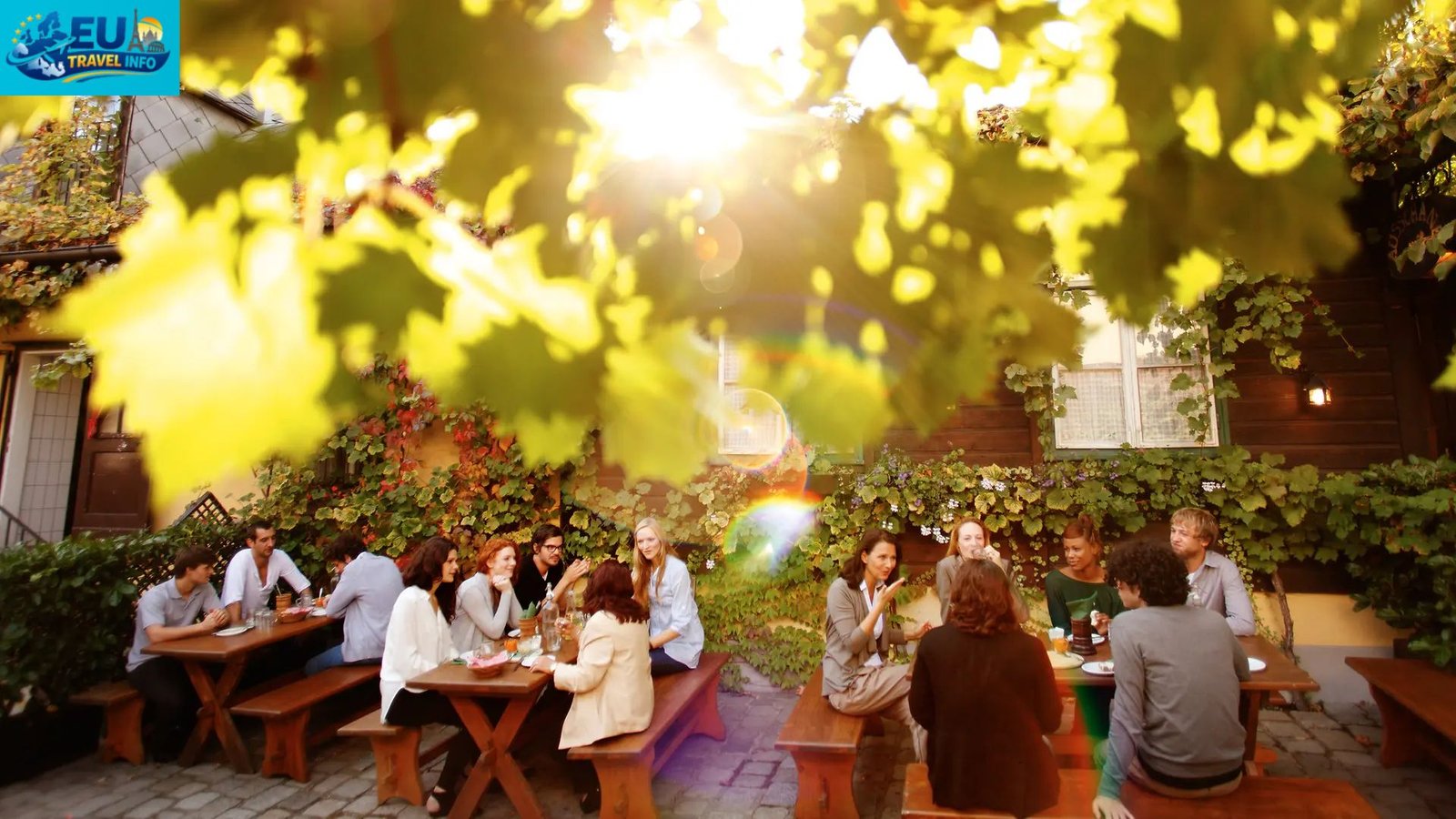
Additionally, you must experience the Heuriger culture. These are family-operated wine taverns. UNESCO recognized this tradition as Intangible Cultural Heritage in 2019.
Vienna is the only major capital with active commercial vineyards inside city limits, spanning about 700 hectares. You can visit districts like Grinzing or Nussdorf to try local wines like Grüner Veltliner or Gemischter Satz.
Authentic Heuriger display an evergreen branch, or Buschen, above the door to show they are open. You can enjoy a cold buffet of cured pork, cheeses, and spreads while listening to traditional music.
On the contrary, if you prefer a slower pace, visit a Viennese coffee house. UNESCO also protects this culture. It is a place where “time and space are consumed, but only the coffee is found on the bill”. You can sit for hours with a single cup of coffee, like an Einspänner (strong black coffee with whipped cream), and read the newspaper. Famous writers like Peter Altenberg and Stefan Zweig loved these places.
Popular spots include Café Central, Café Sacher, and Café Landtmann. You will always get a glass of cold tap water with your coffee. It is the ultimate way to relax.
FAQ’s
What are the most popular traditional foods in Austria?
The list includes Wiener Schnitzel, Tafelspitz, and various types of Knödel (dumplings). Sausages like the Käsekrainer are also very common.
Which Austrian dishes should first-time visitors try?
You should definitely start with a Wiener Schnitzel and a visit to a Würstelstand for a sausage. For dessert, try the Sacher Torte or Marillenknödel.
What is Austria’s national dish and why is it famous?
The Wiener Schnitzel is the archetypical dish for Austrians. It is famous for its thin, crispy, golden-brown coating and its long history in Viennese culture.
Are Austrian desserts an important part of the local cuisine?
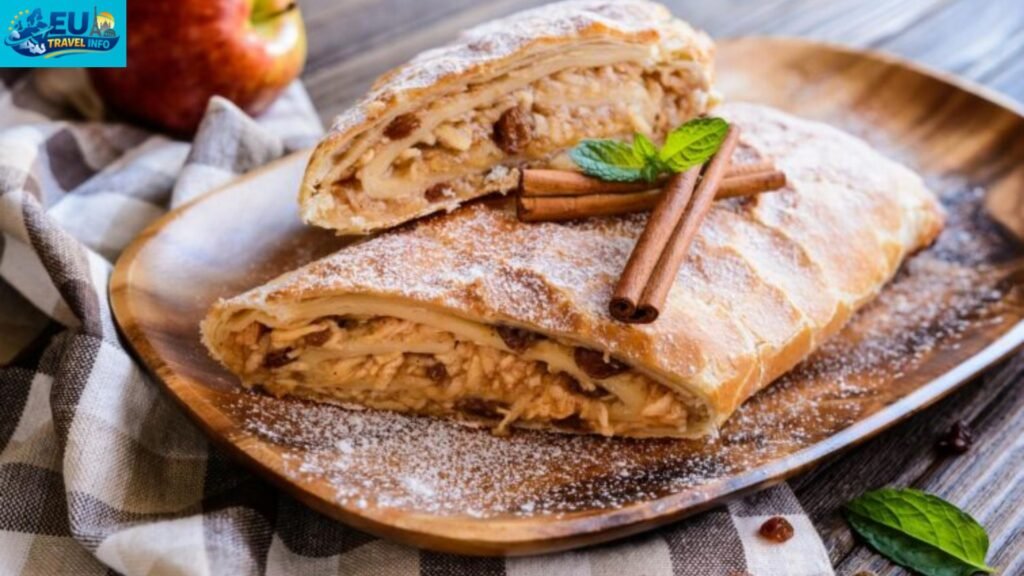
Yes! Desserts like Sacher Torte, Linzer Torte, and Apple Strudel are legendary. Dessert dumplings made from curd cheese or yeast are also very popular.
What street foods are commonly found in Austria?
The most common street food is found at the Würstelstand, where you can buy various sausages like Bratwurst, Frankfurters, and the spicy Bosna.
Which Austrian foods are popular in Vienna and Salzburg?
In Vienna, you must try Wiener Schnitzel and Tafelspitz. Bosna sausages are originally a legend from Salzburg but are now popular in Vienna too.
Is Austrian cuisine influenced by other European countries?
Absolutely! Austrian chefs are masters at uniting different cultural influences. You see Italian influence in the Schnitzel and Bohemian influence in the dumplings.
Concluding Words
Austria offers a rich world of flavors that connects history with every bite. From the crispy Wiener Schnitzel to the sweet Sacher Torte and the rustic Heuriger wine taverns, you will find a food culture that is both elegant and welcoming. You should visit soon to taste these traditions for yourself.