You wake up as the sun hits the old stone streets of Vienna. The air is cool and crisp. You feel a deep hunger in your stomach. It is time for a Traditional Austrian Breakfast. You walk past beautiful buildings with grand windows.
You see people sitting at outdoor tables. They have large cups of coffee and plates of fresh bread. This is the heart of the city. This is the classic austrian breakfast experience you have waited for. You step into a cozy café. The smell of roasted beans and warm yeast fills your nose. Pure bliss.
The Heart of the Table: The Kaiser Roll
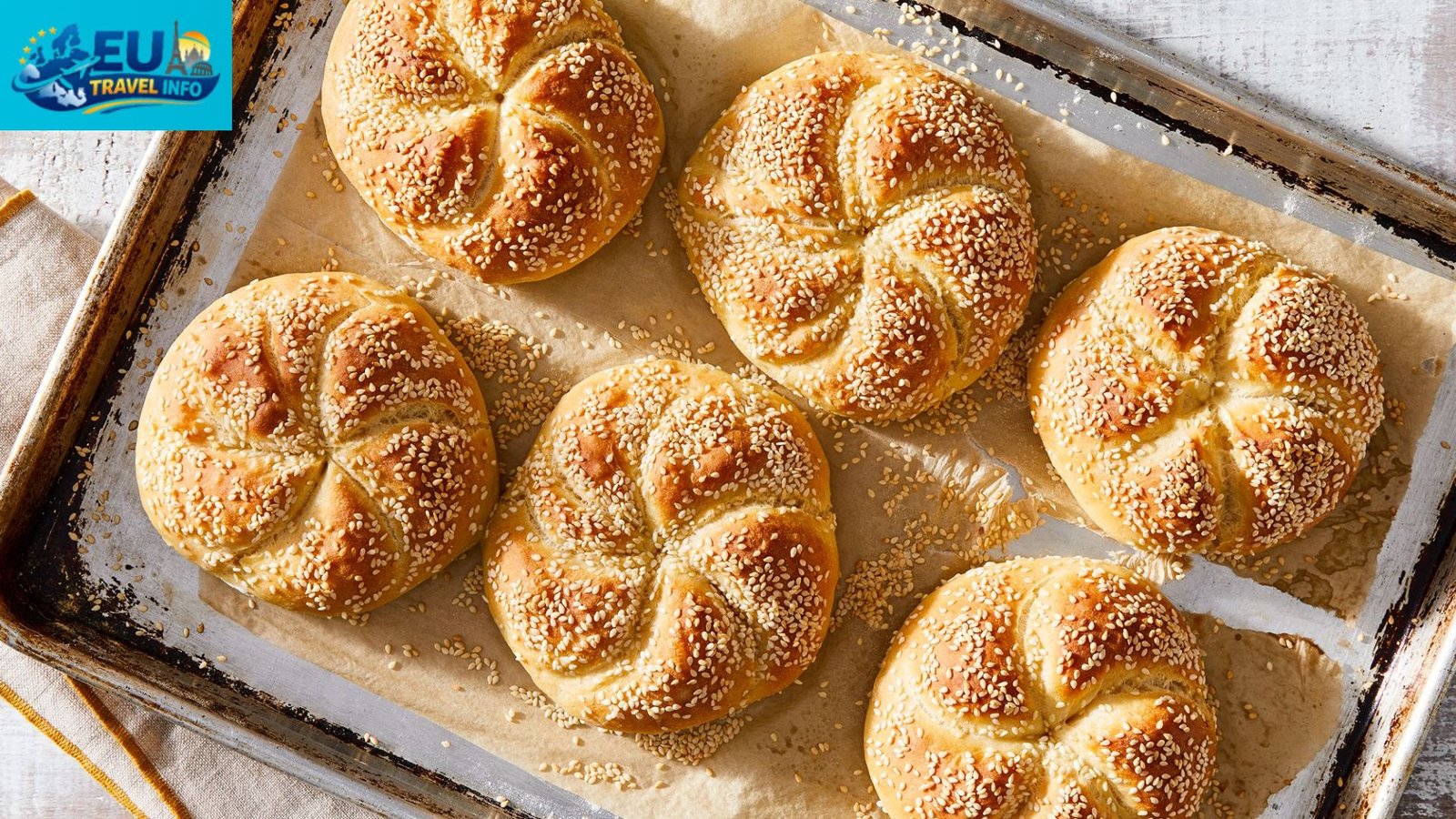
First of all, you must look at the bread. The bread is the most important part of any traditional austrian breakfast vienna style. You will see a round roll with a star shape on the top. People call this the Kaisersemmel or the Kaiser Roll. It has a very long history. At that time in the 17th century, only a few special bakers could make these rolls. The name “Kaiser” means emperor. This name shows that the bread is of the highest quality.
The roll is perfect. It is crispy on the outside. It is soft and fluffy on the inside. Each roll has about 182 calories. You can find these traditional austrian breakfast foods all over the city. Bakers use a special technique to fold the dough five times. This creates the star pattern and helps the bread expand evenly in the oven. Therefore, every bite has the perfect crunch.
Additionally, you might see a croissant on your plate instead of a second roll. This is common at famous places like Oberlaa on the Neuer Markt. The traditional austrian food vienna offers is full of these small, delicious choices. Similarly, you can swap your white roll for other kinds of bread if you ask. You will love how the warm bread smells when the waiter brings it to your table. Simple. Elegant. Fresh.
Sweet Spreads and Local Flavors
You cannot have bread without something sweet to put on it. A traditional Austrian breakfast always includes high-quality jam and butter. You will see brands like Staud’s Wien on the table. This company started in 1883 at the Brunnenmarkt in Vienna. It is a family business that people trust. Their Rote Ribisel (red currant) jam is a local favorite.
On top of that, you might try Wieser Wachau jam. This jam comes from the Wachau Valley. They use a special type of apricot called Marille. These fruits are hand-selected when they are fully ripe. Another famous name is Adolf Darbo. This family company began in 1879 in Tyrol. They make some of the best fruit syrups and honey in Europe.
However, you might prefer honey over jam. Most cafés let you choose. You spread the thick, creamy butter on your warm roll. Then you add a layer of deep red jam. The taste is incredible. Plus, you can find many traditional austrian food recipes that use these jams in other ways later in the day. Gradually, you begin to understand why Austrians love their sweet mornings.
The Egg: A Soft-Boiled Staple
Now, you look at the little cup on your tray. It holds a soft-boiled egg. This is a core part of the Wiener Frühstück or Viennese breakfast. You tap the shell with your spoon. The yolk inside should be warm and runny. You might dip a piece of your Kaiser roll into the golden center. It is a savory delight.
Some people prefer their eggs served in a glass. This is a very old-school way to eat them in a coffee house. If you feel very hungry, you can order an egg dish with two or three scrambled eggs. At that time, you will feel ready for a long day of walking. Though the meal is simple, it is very filling.
The Savory Upgrade: Ham and Cheese

You might want something more than just bread and jam. Many places offer an upgrade to the basic meal. You get slices of ham and cheese on the side. This version is often called a Farmer’s Breakfast or Bauernfrühstück. You see thick slices of aged cheese. You see high-quality deli meats like prosciutto.
Similarly, you might find a carrot cream cheese spread on your plate. You take a piece of bread and add a slice of pickle, some meat, and a bit of cheese. This creates a perfect mini-sandwich. It is a salty contrast to the sweet jam you had earlier. Finally, your taste buds feel completely satisfied. The variety of traditional austrian food is truly impressive.
Mastering the Coffee Order
You cannot finish your breakfast without a proper drink. Coffee is the lifeblood of Vienna. It is almost a rule that you must have a coffee with your meal. In a traditional coffee house, you do not just order “a coffee”. You must be specific. First of all, you might try a Melange. This is half coffee and half heated milk with foam on top. It is the most popular choice.
On the contrary, you might want something stronger. You can order a Kleiner Schwarzer, which is like a slow-extracted espresso. If you want something fancy, try the Einspänner. This is black coffee in a glass with a big pile of whipped cream and powdered sugar on top. Coachmen used to drink this because the cream kept the coffee warm while they waited for passengers.
Therefore, you should take your time with your drink. Coffee is served with a small glass of still water. This is a sign of good service. Later, you might see people reading the daily newspapers while they sip their drinks. Similarly, you can sit for a long time without anyone rushing you. It is your “extended living room”.
Mountain Fuel: Tiroler Gröstl
Suppose you are in the mountains of Tyrol instead of the city. Your breakfast might look very different. You might eat Tiroler Gröstl. This is a heavy, warm dish. It uses fried potatoes, onions, and bacon. Usually, the cook puts a fried egg on top. At that time, it was a way to use leftovers from the night before.
Now, it is a famous mountain meal for hikers and skiers. It is simple but very rich. You often eat it straight from the pan. Plus, it gives you enough energy to climb any peak. Many restaurants serve it with a side of Speckknödel or bacon dumplings. This is traditional austrian cuisine at its most hearty.
A Sweet Treat: Kaiserschmarrn
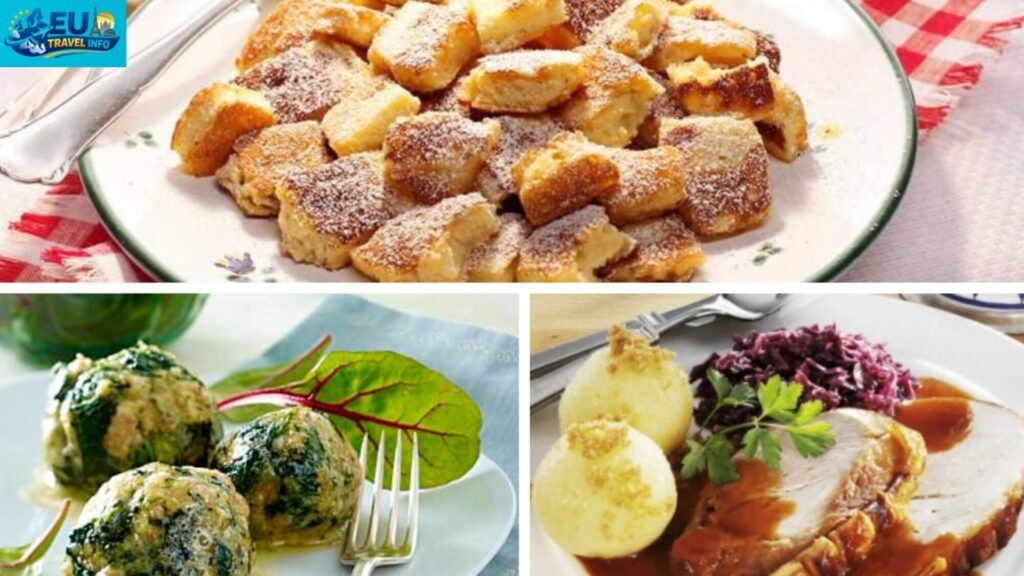
You might see something on the menu called Kaiserschmarrn. These are sweet, fluffy pancakes. The cook tears them into small pieces while they are in the pan. Then, they cover the pieces with powdered sugar. People usually serve this with a fruit compote made of plums or applesauce.
Though it is often a dessert, some people eat it for a very grand breakfast or brunch. One recipe uses 6 eggs, 350 ml of milk, and 130 g of flour. It is very light because the cook whips the egg whites before adding them to the batter. You will find that portions in Austria are often very large. Therefore, you should come with a big appetite.
Regional Flavors and Snacks
Austria has many different regional traditions. In Lower Austria, you might find dishes with poppy seeds or apricots. In Styria, you will see pumpkin seed oil everywhere. It has a nutty flavor and a deep green color. People put it on salads and even spreads. Similarly, you might try a Brettljause for a late breakfast or snack.
A Jause is a mid-morning or mid-afternoon snack. A Brettljause is served on a wooden board. It includes cold meats like Speck (bacon), hard-boiled eggs, and spicy cheese spreads like Liptauer. On top of that, you might get freshly grated horseradish to clear your nose.
If you are near a sausage stand, or Würstelstand, you can grab a quick bite. You might try a Käsekrainer. This is a sausage filled with small bits of cheese. When the sausage is grilled, the cheese melts inside. You eat it with a Kaiser roll and some mustard. This is a classic example of traditional austrian food near me that you can find on almost any street corner.
Practical Tips for Your Trip
You should know that prices in Vienna can be high. A breakfast for two people with drinks might cost over 23 Euro. However, many cafés offer deals where a hot drink is included with the meal. You should look for these to save some money. Also, tipping is important. Service is included, but you should still give about 10% extra if the service was good.
If your bill is 9.80 Euro, you should not just round up to 10 Euro because that is considered a small tip. Instead, you should give 11 or 12 Euro. This makes the staff feel respected. Finally, do not be afraid to talk to the waiters. They might seem formal, but they are very professional.
You will notice that the cafés are full no matter what day it is. People love to sit and talk. You should join them. Take a deep breath. Enjoy your coffee. Eat your warm bread. This is the way to start a perfect day in Austria. It is not just a meal. It is a tradition that has lasted for hundreds of years.
Exploring More Flavors
Gradually, you will find your favorite spot. Maybe it is a small bakery with fresh Gugelhupf cake. Maybe it is a grand coffee house with velvet seats and silver trays. You might even find a great breakfast at the airport with a tiered stand full of treats and a glass of prosecco. Every morning is a new chance to try something different.
The traditional Austrian breakfast is simple, balanced, and elegant. It shows that Austrians value quality over quantity. They want a calm start to the day. You will take these memories home with you. Perhaps you will even try to bake your own Kaiser rolls or make Kaiserschmarrn for your friends. It is a delicious way to remember your travels.
FAQ’s
What is included in a traditional Austrian breakfast?
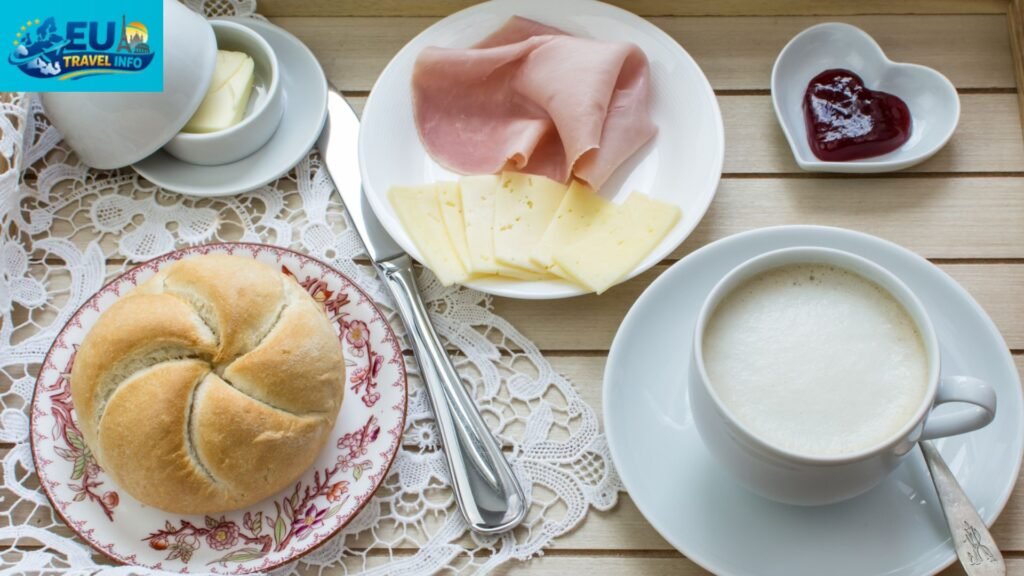
A basic version, often called a Wiener Frühstück, usually includes two fresh bread rolls (Kaisersemmel), butter, jam or honey, and a soft-boiled egg. You will also get a hot drink like coffee or tea.
What do people in Austria typically eat for breakfast?
Most people enjoy the continental style with rolls, spreads, and eggs. Some prefer savory items like cold cuts (ham) and various cheeses. In the mountains, hearty dishes like Tiroler Gröstl with potatoes and bacon are popular.
Is a traditional Austrian breakfast healthy or heavy?
It is generally balanced and lighter than a typical American breakfast. It focuses on high-quality bread and simple toppings. However, if you choose the “Farmer’s Breakfast” or mountain dishes like Gröstl, it can be quite heavy and filling.
What bread is commonly used in a traditional Austrian breakfast?
The most famous bread is the Kaisersemmel or Kaiser Roll, which is a white roll with a star pattern on top. You might also find croissants or darker rye breads depending on the café.
Are there any popular drinks served with a traditional Austrian breakfast?
Coffee is the most important drink, served in many styles like the Melange or Einspänner. Tea, juice, and cocoa for children are also common. Some luxury breakfasts even include a glass of prosecco.
How is a traditional Austrian breakfast different from other European breakfasts?
It is similar to other continental breakfasts but places a very high importance on coffee house culture and specific rolls like the Kaisersemmel. It is less greasy than a British breakfast and more orderly than some others.
Can tourists easily find a traditional Austrian breakfast in Austria?
Yes. Almost every café, hotel, and restaurant that opens in the morning will serve a version of the Wiener Frühstück. It is a staple of the local food scene.
Concluding Words
A Traditional Austrian Breakfast is more than just food; it is a slow, elegant ritual that celebrates quality ingredients like the Kaisersemmel, local jams, and world-class coffee.
Whether you choose a simple roll with butter or a hearty mountain fry-up like Tiroler Gröstl, these local flavors offer a perfect window into the calm and orderly culture of Austria.