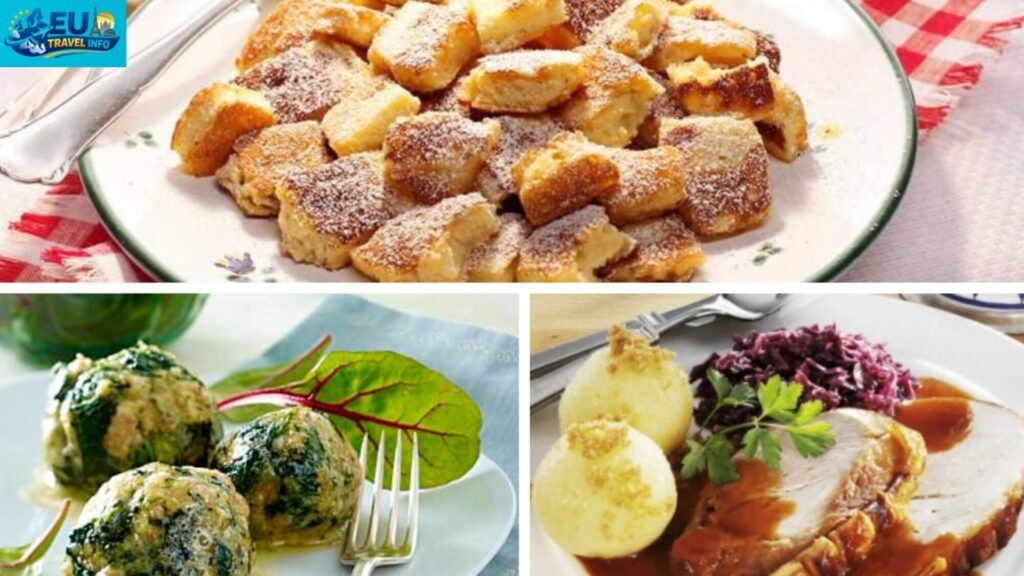
You step off the train and the crisp mountain air hits your face. You are finally here in the heart of Europe. Austria is a place where history lives on every plate. The food culture is a mix of many traditions from the old empire.
You will find that authentic Austrian dishes vary from the high Alps to the cozy streets of Vienna. This guide helps you navigate the best typical Austrian dishes during your travels.
The Royal Start: Wiener Schnitzel
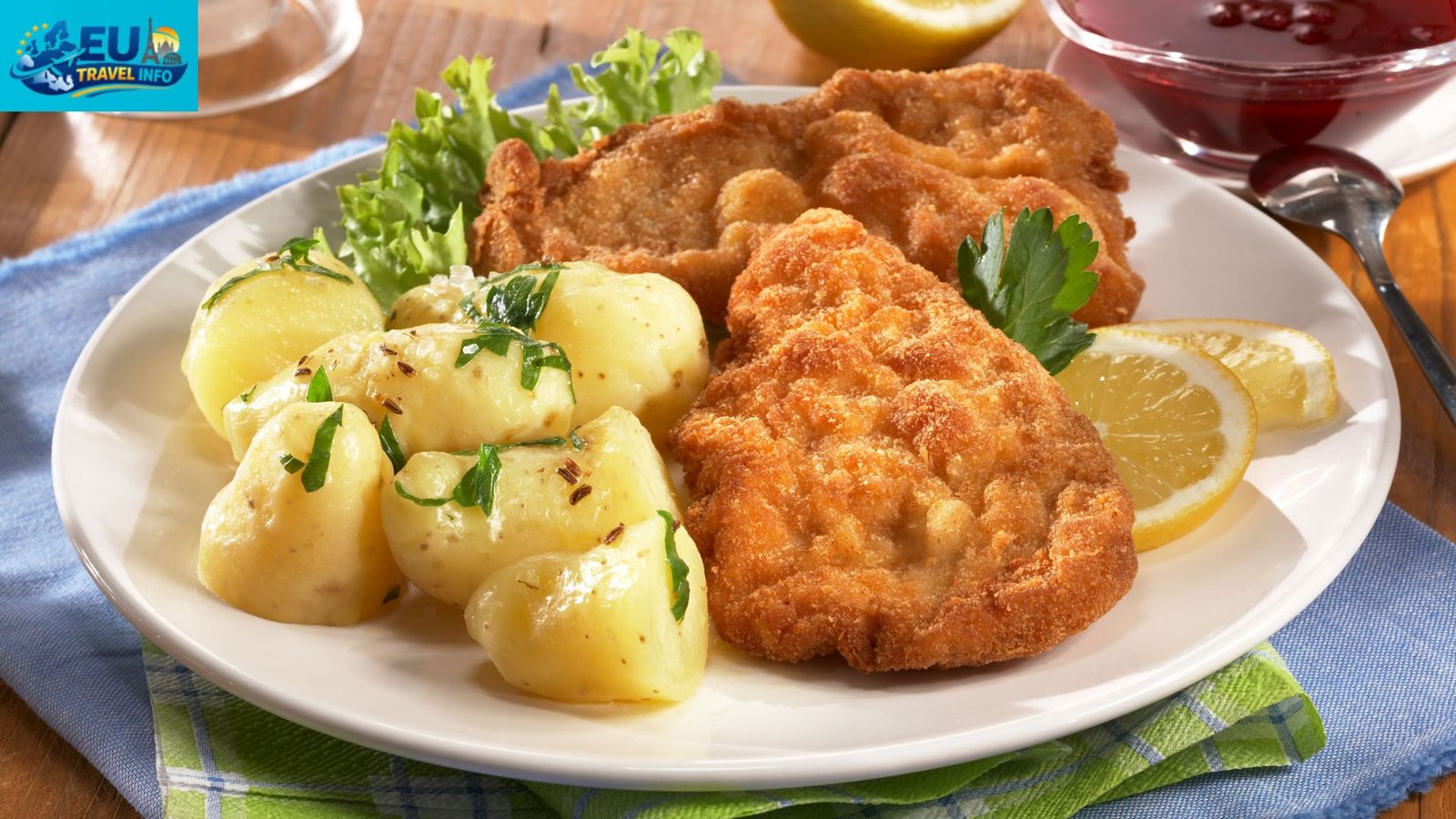
First of all, you must try the most famous of all popular Austrian dishes. This is the Wiener Schnitzel. You should know that a real Wiener Schnitzel must use veal. The meat is cut into thin slices of about 4 millimeters. A chef pounds the meat flat and salts it lightly. Later, they roll the meat in flour, whipped eggs, and bread crumbs.
The secret to a perfect schnitzel is the frying method. The meat must swim in lard or clarified butter. The temperature stays between 160 and 170 degrees Celsius. This makes the breading rise like a soufflé. You will see a golden-yellow crust that is light and puffy.
Typically, people serve it with a wedge of lemon and a side of parsley potatoes or a Viennese potato salad. Do not ask for sauce on your schnitzel because that is a sacrilege in Vienna. Similarly, you might find variations made with pork, but these are called Schnitzel Wiener Art or Wiener Schnitzel vom Schwein.
The Emperor’s Favorite: Tafelspitz
You cannot leave Vienna without a visit to a traditional beef restaurant. Tafelspitz is the national dish of Austria. It was the favorite meal of Emperor Franz Joseph I. He ate it almost every night at his court. This dish consists of boiled beef, usually the cap of the rump.
The experience of eating Tafelspitz is a ritual. First of all, the waiter brings a copper pot filled with a rich, aromatic broth. You start by eating this warming soup with root vegetables. Additionally, you spread creamy bone marrow on toasted dark bread. Finally, you enjoy the tender slices of beef.
People serve the meat with Apfelkren, which is a mix of apple and horseradish. You also get a chive sauce and crispy fried potatoes. At famous places like Plachutta, you can choose from different cuts of beef based on how much fat they have.
Hearty Alpine Flavors in Tirol
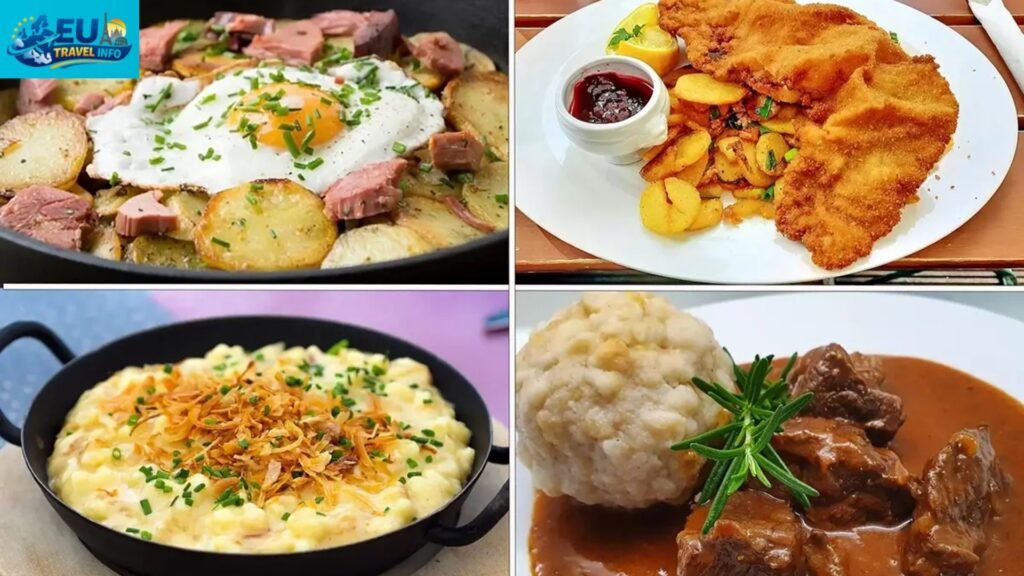
Gradually, your journey takes you west toward the mountains. The cuisine of Tirol is rustic and perfect for a cold climate. You will find dishes that use local cheese, speck, and potatoes. One iconic meal is Tiroler Gröstl.
Farmers originally ate this hearty dish to stay strong. It is a pan-fry of potatoes, onions, and Speck, which is a smoked and salted pork. A fried egg often sits on top of the mix. It is the best meal after a long day of hiking.
Another mountain favorite is Kasspatzln. These are Tyrolean cheese noodles. The chef uses fresh egg noodles and melts a local cheese like Almkäse over them. Caramelized onions add a sweet crunch to the top. It is very similar to mac and cheese but it has a much richer flavor. Plus, you can try Tiroler Graukäse, which is a special low-fat cheese used in many regional recipes.
The World of Knödel
You will notice that many classic Austrian dishes end in the word knödel. These are dumplings, and they are a staple of the local diet. There are two main types: savory and sweet. Savory dumplings often appear in soups as a starter. Leberknödel are made with liver, bread, and onions. Kaspressknödel are smaller dumplings made from cheese and bread that the cook flattens and fries.
Main course dumplings are even more robust. Semmelknödel use small cubes of dry white bread as the main ingredient. These are the perfect side dish for Schweinsbraten, or roast pork, because they soak up the gravy.
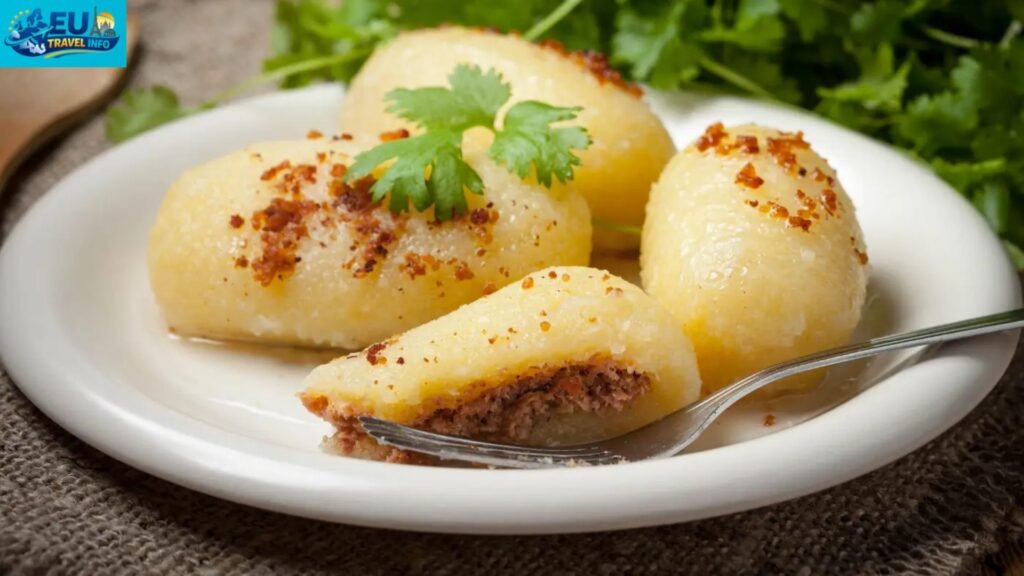
On top of that, you might see Serviettenknödel. The cook forms the dough into a tube, wraps it in a napkin, and boils it. Then, they serve it in thick slices. If you want a meat-filled version, look for Fleischknödel. These have a potato dough exterior and a center filled with minced meat or smoked pork.
Styria’s Black Gold: Pumpkin Seed Oil
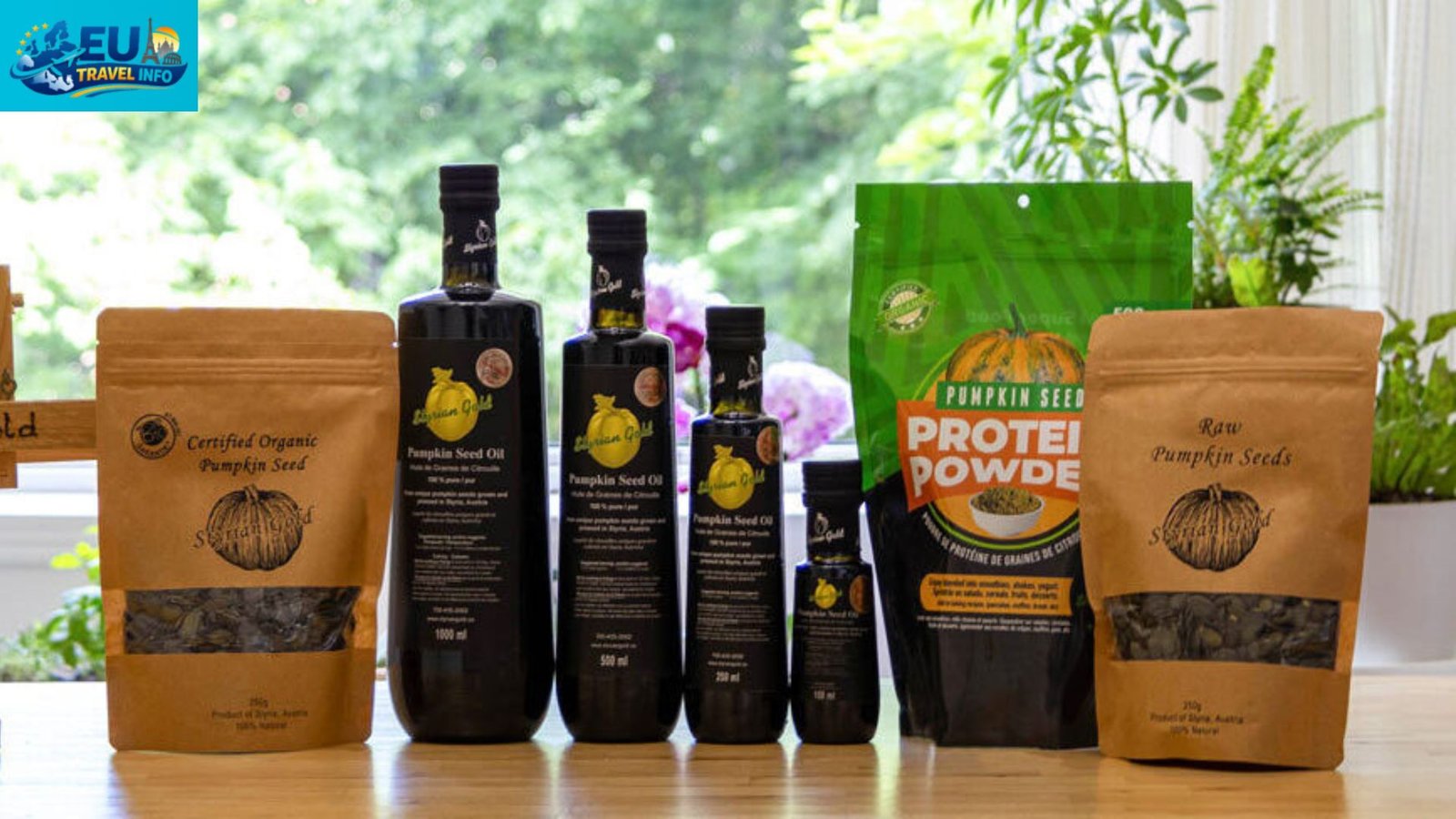
Therefore, you must travel south to Styria. This region is famous for Pumpkin Seed Oil. People call it “black gold” or “motor oil” because it has a thick, dark green tone. It takes about 2.5 to 3 kilograms of shell-less seeds to produce just 1 liter of this oil.
You will taste a nutty and fine roasted aroma when you try it. Locals drizzle it on salads and even use it as a sauce for vanilla ice cream. However, you should never heat this oil above 120 degrees Celsius or it will smell bad. It is very healthy because it contains many antioxidants and zinc. One great way to eat it is in a Gugelhupf, which is a traditional Austrian bundt cake.
Sweet Endings and Coffee House Culture
Your travels will eventually lead you back to the dessert menu. Austria is the home of the world’s most famous cake, the Original Sacher-Torte. Franz Sacher created it in 1832 when he was only 16 years old. He had to step in for a sick chef to impress special guests. The cake is a chocolate masterpiece with layers of apricot jam.
Another historic treat is the Linzer Torte from Upper Austria. It is the oldest known cake in the world and dates back to 1696. It uses almond short-crust pastry and a lattice pattern on top. If you want something lighter, try the Tyrolean Apple Strudel. It has thin layers of dough filled with apples, cinnamon, and raisins.
You should enjoy these sweets in a Viennese coffee house. This is more than just a place for a drink. It is a social tradition where you can sit at a marble table for hours with just one cup of coffee. You can read the newspaper and soak in the atmosphere of history. The UNESCO even lists this culture as part of the world’s intangible heritage.
Winter Delicacies and Christmas Markets
Though the summer is beautiful, winter brings its own popular Austrian dishes. You will see stands selling Maroni, which are hot chestnuts, all over Vienna. They are a perfect winter snack that warms your hands and your belly. You can even make them at home by baking them at 200 degrees Celsius for about 30 minutes.
Christmas time is special for traditional Austrian food. Families often eat Weihnachtsgans, or Christmas goose, filled with apples and chestnuts. Alternatively, some choose Weihnachtskarpfen, which is baked carp. You will also find a huge variety of cookies. Vanillekipferl are vanilla-flavored cookies shaped like half-moons.
Zimtsterne are star-shaped cookies with a strong cinnamon taste. To stay warm, you should drink Weihnachtspunsch or Glühwein (mulled wine). These hot drinks use red wine, sugar, and spices like cinnamon and cloves.
Freshwater Fish and Regional Wines
Austria has some of the cleanest rivers and lakes in the world. Therefore, freshwater fish is a top choice for a healthy meal. You will find Trout, Char, and Whitefish on many menus. A common preparation is Carp with Root Vegetables, where the fish simmers in a stock of vinegar and herbs. In Styria, they serve this with freshly grated horseradish.
You can pair these meals with world-class Austrian wines. Grüner Veltliner is the signature white grape of the country. It is dry and peppery, which makes it a great partner for many dishes. If you are eating red meat, look for a Zweigelt or a Blaufränkisch. These red wines are fruity and match the rich sauces of Austrian stews.
FAQ’s
What are the most popular traditional Austrian dishes to try?
The most famous dishes include Wiener Schnitzel (veal cutlet), Tafelspitz (boiled beef), and Apple Strudel. You should also look for Tiroler Gröstl and various types of Knödel.
What ingredients are commonly used in traditional Austrian dishes?
Common ingredients include meat (veal, beef, pork), potatoes, and flour for dumplings and pasta. Dairy products like butter, cream, and regional cheeses are also vital. Spices like paprika, cinnamon, and caraway seeds add characteristic flavor.
Are traditional Austrian dishes similar to German cuisine?
Yes, they share many roots, especially with southern German cooking. Both cultures love schnitzel, roast pork, and dumplings. However, Austrian cuisine has unique influences from the old Austro-Hungarian Empire, including Hungarian and Italian styles.
Which traditional Austrian dishes are suitable for vegetarians?
Vegetarians can enjoy Kasspatzln (cheese noodles) and Krautfleckerl (cabbage pasta). Many dessert dumplings, like Marillenknödel (apricot dumplings), also work as a main meal. You might also find breaded mushrooms or cauliflower as a meat-free option.
What desserts are included in traditional Austrian dishes?
The list is long and sweet. You must try Sacher-Torte, Linzer Torte, and Kaiserschmarrn (shredded pancakes). Germknödel (yeast dumplings with plum jam) and Apple Strudel are also classic favorites.
Where can tourists try authentic traditional Austrian dishes in Austria?
You should visit a traditional Gasthaus or a Heuriger (wine tavern) for a rustic experience. In Vienna, places like Plachutta are world-famous for Tafelspitz. Viennese coffee houses are the best spots for cakes and pastries.
How have traditional Austrian dishes evolved over time?
Austrian food began as a mix of culinary traditions from across the empire’s lands. In the 19th century, cookbooks began to standardize these recipes into what we know today. Recently, top chefs are refining these “homely” dishes to make them more modern while still using local ingredients.
Concluding Words
Traditional Austrian cuisine is a journey through history and geography. You can enjoy the royal elegance of a Wiener Schnitzel in Vienna or the rustic strength of Tiroler Gröstl in the mountains.
Every region offers something special, from the “black gold” pumpkin oil of Styria to the sweet apricot dumplings of the Danube valley. You will find that these dishes warm both your heart and your belly as you travel across this beautiful country.