You step off the train into the crisp air of the Alps. Your senses wake up. The smell of fresh bread and wood smoke fills the streets. You are about to embark on a journey through Traditional Austrian Food. This is not just a list of meals. This is a story of an empire. You will feel the warmth of the concept called Gemütlichkeit. This word means a special kind of cozy comfort that you can not find anywhere else.
Austrian cuisine reflects a history that stretched across many lands. It combines the traditions of Hungary, Bohemia, and Northern Italy into something unique. You do not just eat here. You participate in a culture that values time and quality.
Meals are never a rush. A visit to a coffee house might last two hours over a single cup. This is the entire point. You slow down. You talk. You enjoy the traditional austrian food dishes that have remained perfect for hundreds of years.
The Crown Jewel of the Menu: Wiener Schnitzel
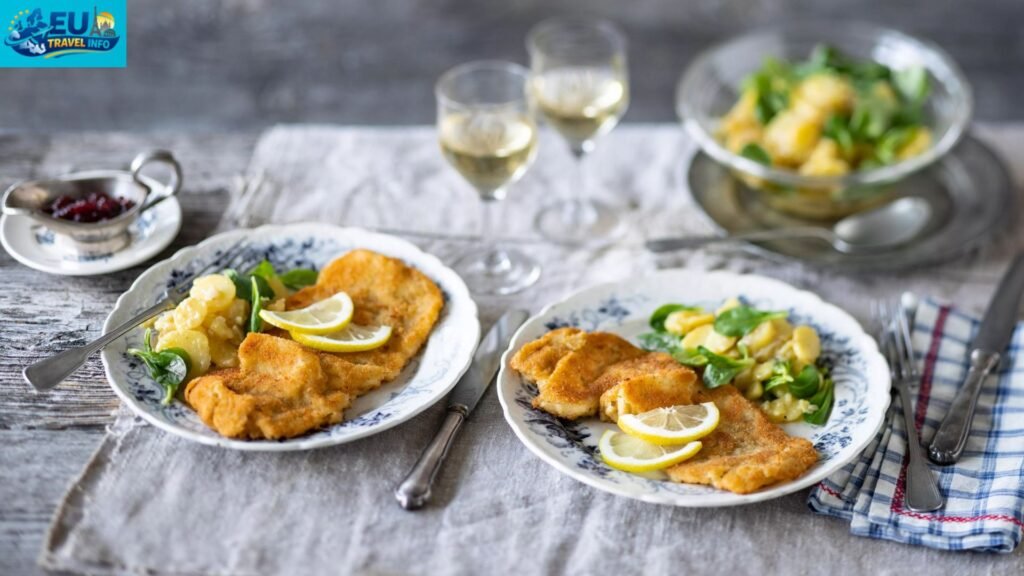
First of all, you must try the legend. The Wiener Schnitzel is the national glory of Austria. You will find it on every menu, but you must know the rules. A true Wiener Schnitzel represents a masterpiece of technique. It must be made of veal. If a restaurant uses pork, they must call it “Schnitzel Wiener Art” or Wiener-style schnitzel.
You will see a thin cutlet that is beaten until it is nearly translucent. The chef uses a three-layer method of flour, beaten egg, and breadcrumbs. The meat is fried in clarified butter until the exterior is a perfect mahogany color. The crust should not stick to the meat. It forms a loose shell that puffs up like a cloud.
Statistical Data to Remember:
- Cost: You should expect to pay between 22€ and 35€ for an authentic veal schnitzel in a top traditional austrian food restaurant vienna like Figlmüller.
- Thickness: The meat should be exactly 1/4-inch thick before it hits the pan.
- Temperature: A perfect schnitzel is cooked until it reaches an internal temperature of 145°F.
You do not put sauce on this dish. If you see mushroom gravy or paprika sauce, the kitchen has made a mistake. You only need a lemon wedge and perhaps a side of Erdäpfelsalat (Austrian potato salad).
The Soul of the Emperor: Tafelspitz
Later, you should seek out the soul of Vienna. Tafelspitz is the ultimate comfort food. Emperor Franz Joseph I ate this beef dish nearly every day for over 60 years. The name refers to the “table point,” which is a lean cut of beef from the topside.
The meat simmers slowly in a vegetable broth for about 90 minutes. This process makes the beef so tender that it yields to a fork. You will receive this meal in courses. First, you sip the rich broth from a cup. This warms you from the inside. Additionally, the sliced beef arrives with apple-horseradish sauce and chive sauce.
Tafelspitz Details:
- Price range: You will likely pay 26€ to 38€ for the complete service.
- Wait time: Budget 30 to 40 minutes for the kitchen to prepare it properly.
Mountain Traditions: Tiroler Gröstl and Innsbruck Favorites
Gradually, you might travel toward the west. You will find traditional austrian food innsbruck that focuses on mountain life. You must try Tiroler Gröstl. This dish started as a clever way for farmers to use leftovers. It is a simple mix of sliced potatoes, onions, and beef or pork.
The chef fries everything in butter until the edges turn golden and crisp. Finally, a fried egg sits on top of the pile. You will find this on nearly every menu in Tyrol’s ski resorts. It is the ultimate reward after a long day in the mountains. On top of that, you might enjoy a Pfiff (a small 0.2 litre beer) to go with it.
The Mastery of the Dumpling: Knödel Culture
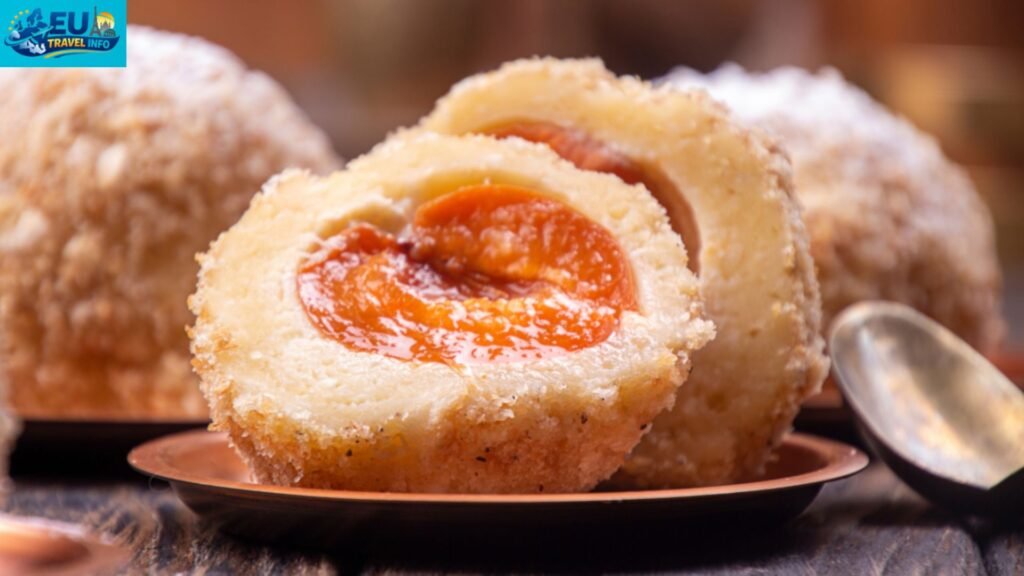
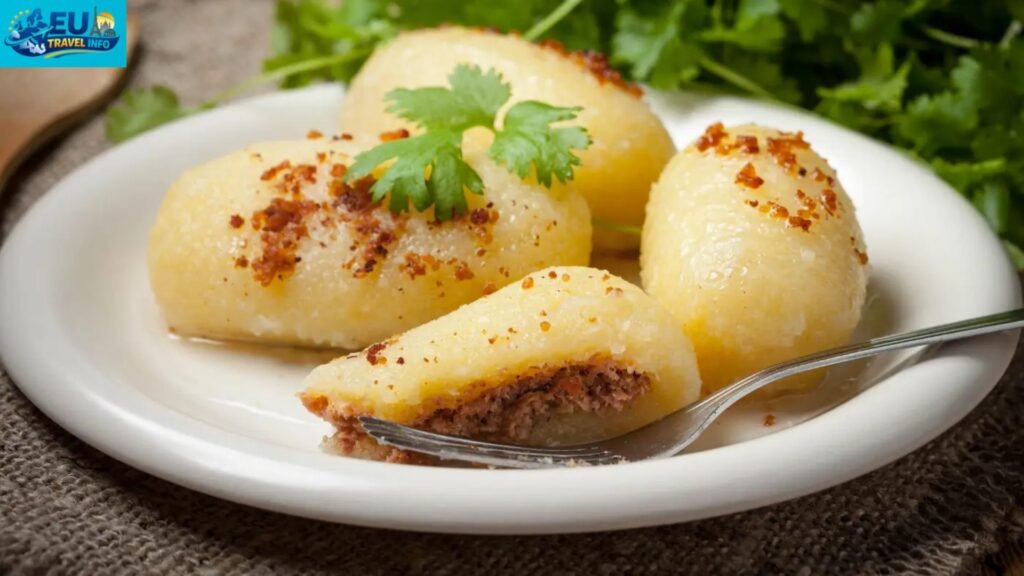
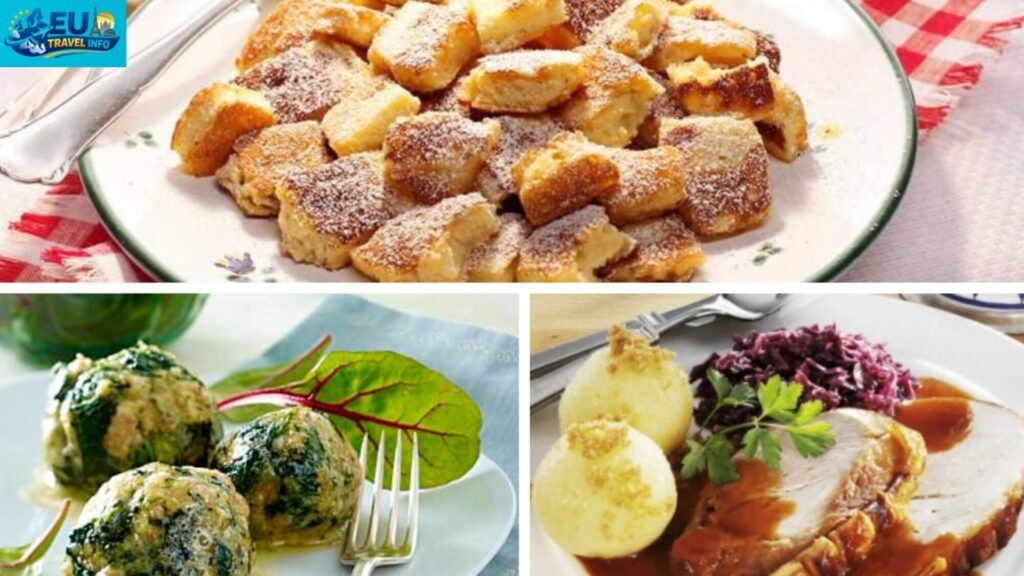
You will notice that many dishes end with the word Knödel. These are not just dumplings. They are starch-based pillows of joy. Austrians are masters of the dumpling. You can eat them as a starter, a main course, or a dessert.
Traditional Austrian Food Recipes often include these varieties:
- Semmelknödel: Bread dumplings made from stale rolls, milk, and eggs. They soak up gravy perfectly.
- Speckknödel: These are dumplings packed with smoky bacon. They are a staple of traditional austrian food salzburg and Tyrol.
- Kaspressknödel: Flat bread dumplings filled with mountain cheese. They are fried until they have a gooey middle.
- Leberknödel: Small dumplings made from liver and onions, usually served in a clear soup.
The Sweet Ritual: Viennese Coffee Houses
Your journey is not complete without a visit to a Viennese coffee house. UNESCO recognizes this culture as an “Intangible Cultural Heritage”. You enter a room with marble tables and Thonet chairs. The atmosphere is elegant and slow. You are expected to linger alone for hours with a newspaper.
You must order a Melange. This is half coffee and half heated milk with a foam top. Additionally, the waiter will bring you a glass of cold tap water. This water is an obligatory sign of attention.
Top Desserts to Pair with Your Coffee:
- Sachertorte: This is the most famous chocolate cake in the world. It was created in 1832 by a 16-year-old apprentice. It features a dense chocolate sponge and a thin layer of apricot jam. You must always eat it with Schlag (unsweetened whipped cream).
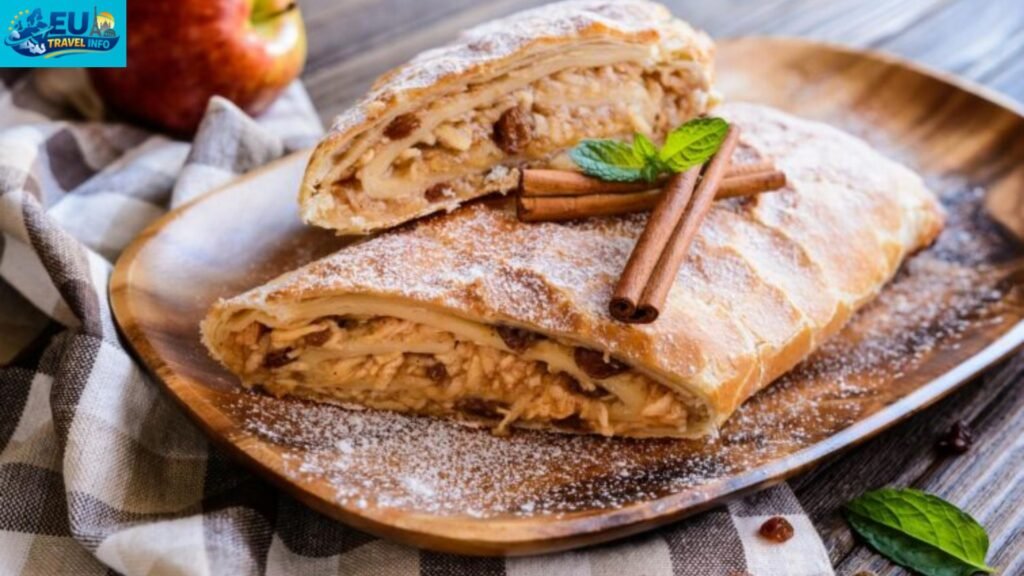
- Apfelstrudel: A recipe from 1697. The pastry dough is stretched so thin that you could read a newspaper through it. It is filled with tart apples, raisins, and cinnamon.
- Kaiserschmarrn: This is the “Emperor’s Pancake.” It is a light, fluffy pancake torn into pieces and caramelized in a pan with butter and sugar. It arrives at your table with Zwetschkenröster (plum compote).
Traditional Austrian Food for Christmas
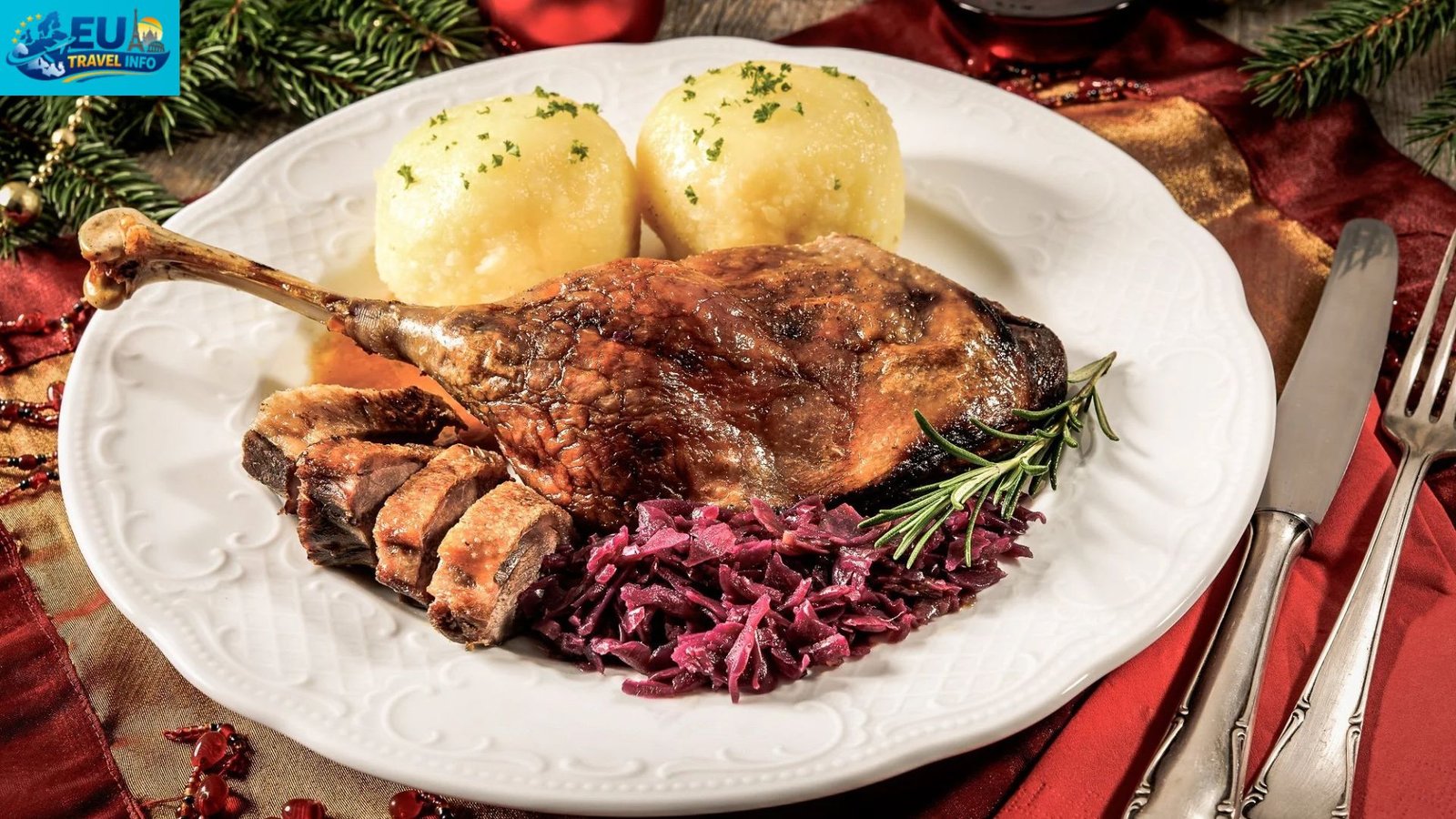
You will find that winter brings special traditions. Traditional Austrian Food for Christmas is very hearty. Most families serve a roasted goose with red cabbage and dumplings. On top of that, carp is a very common dish for Christmas Eve.
You might also gather around a Raclette or Fondue. These are communal meals that keep the family at the table for hours in a cozy atmosphere. Plus, you can visit Christmas markets to find Roasted Chestnuts and Glühwein (hot mulled wine).
Statistical Christmas Data:
- There are approximately 20,000 small private schnaps distilleries in Austria that produce fruit brandies for the holidays.
- The original Sachertorte recipe has been a secret for over 190 years.
A Note on Regional Diversity
You should explore the different states to find new flavors. Lower Austria produces beautiful apricots for Marillenknödel (apricot dumplings). Styria is famous for its “green gold,” which is pumpkin seed oil. You will see this oil on salads and even on desserts. In Vorarlberg, you must try Kässpätzle, which are egg noodles prepared with lots of cheese and fried onions.
Practical Advice for Your Tour
Therefore, you should plan your meals with care. Traditional Austrian food recipes easy versions exist, but the real magic is in the restaurants.
- Tipping: You should hand cash directly to the server. You usually add 5% to 10% for good service.
- Table Manners: You must keep your hands visible on the table. You should place your knife and fork together at the 5 o’clock position to signal that you are finished.
- Reservations: You will need a reservation for famous spots like Figlmüller.
Austrian food is a celebration of history and simple ingredients. You will not find foam or modern experiments here. You will find techniques perfected over centuries. Every bite of a crispy schnitzel or a warm strudel tells you a story of the Habsburg crown lands. You are invited to sit down, stay for hours, and eat like an emperor.
FAQ’s
What are the most popular traditional Austrian foods to try?
You should start with Wiener Schnitzel, Tafelspitz, and Apfelstrudel. Tiroler Gröstl and Kaiserschmarrn are also very popular, especially in the mountain regions.
What makes Austrian cuisine unique compared to other European cuisines?
It is unique because it combines the cooking traditions of the former Habsburg Empire. You will see a mix of Hungarian, Bohemian, and Northern Italian influences adapted into a single culinary style.
Is Wiener Schnitzel considered traditional Austrian food?
Yes, it is the most iconic dish. It is even protected by law in Austria. To use the name “Wiener Schnitzel,” the restaurant must use veal.
What are some famous Austrian desserts and pastries?
You will find the Sachertorte, Linzer Torte, and Apfelstrudel in every café. Additionally, Salzburger Nockerl and Punschkrapfen are very famous local treats.
What traditional Austrian dishes are commonly eaten in Salzburg?
You must try Salzburger Nockerl, which is a sweet meringue-like dish. Kasnocken (cheese dumplings) and freshwater trout are also very common in the Salzburg region.
Are there vegetarian options in traditional Austrian cuisine?
Traditional food is meat-heavy, but you can find many options. You should order Käsespätzle (cheese noodles), Krautfleckerl without bacon, or various sweet dumplings like Marillenknödel.
What drinks are typically served with traditional Austrian meals?
You will usually see beer (pale lager), wine (Grüner Veltliner or Zweigelt), and the herbal soft drink Almdudler. After a meal, a shot of Schnaps is a common tradition.
Concluding Words
Traditional Austrian food is a rich blend of history, culture, and deep comfort. You can enjoy elegant meals in Vienna or hearty mountain food in the Alps.
Every dish focuses on high-quality local ingredients and centuries-old methods. You will feel the warmth of Austrian hospitality in every bite. This cuisine calls you to slow down and truly enjoy your travel experience.