You probably think about summer when you dream of a trip to Europe. Most people imagine hot days on the coast or a boat ride in Venice under a blue sky. However, winter in Europe is a total game-changer. It is a secret world of low prices and zero crowds. You can see the same history and art but with way fewer people around you. Plus, the whole place feels like a movie. Sparkling lights. Hearty food. Warm wine. It is the perfect time for a mature traveler who wants peace and quiet.
First of all, you must decide what kind of winter you want. Do you want to see snow and Christmas markets? Or do you want to find some “winter sun” in the south? Europe has both. At that time of year, northern cities like Prague or Berlin can get very cold. Similarly, southern spots like Sicily or Malta stay mild and pleasant. This Step-by-Step Europe Winter Travel Itinerary Guide 2026 will show you how to mix the best of both worlds.
Why You Should Choose a Winter Europe Tour
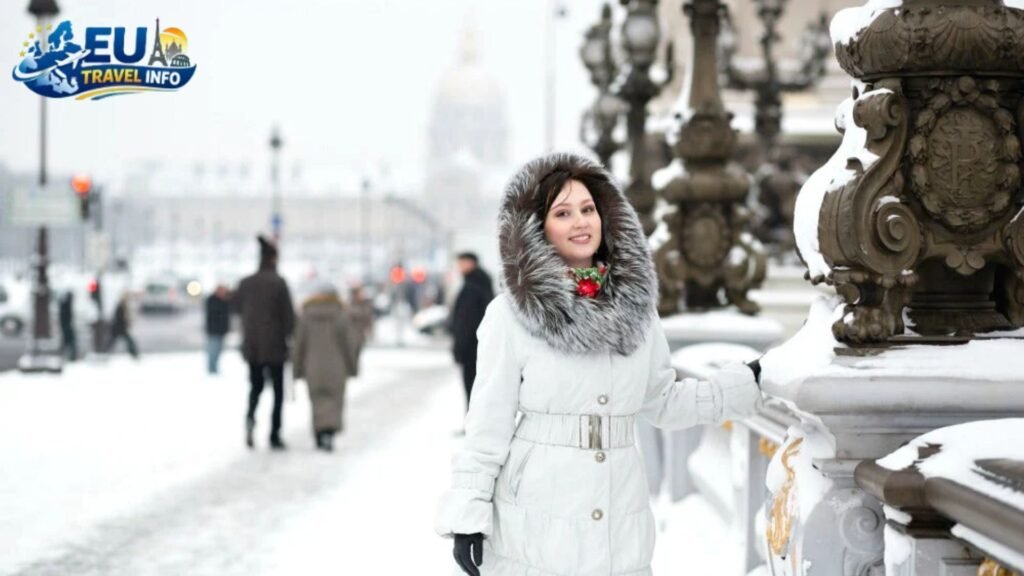
You will save a lot of money. Hotels and flights drop their prices in the off-season. Additionally, you do not have to wait in long lines for the big sights. You can take photos of the Colosseum or the Eiffel Tower without hundreds of tourists in your way. It is a time when the continent shines in a different way.
Though it is cold, the food is better. Winter is comfort food season. You can enjoy white truffles in Italy or hot chocolate in Swiss villages. Similarly, the festivals are incredible. You could see the Carnival in Venice or the Northern Lights in Norway. There is so much to do. Therefore, you should start planning right now.
Week 1: The Fairytale Cities (Vienna, Budapest, and Prague)
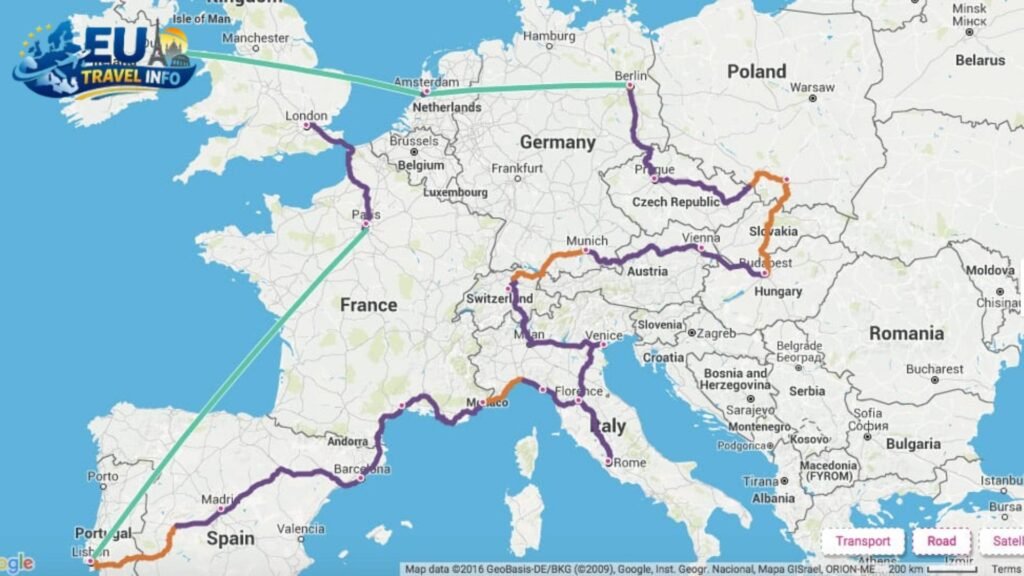
First of all, start your Europe winter itinerary in the heart of the continent. You will travel between three beautiful capitals by train. This is a 7-day journey through Austria, Hungary, and the Czech Republic.
Day 1 to 2: Vienna, Austria Vienna is a city of palaces. You should stroll down the Ringstrasse to see the elegant buildings. St. Stephen’s Cathedral is a must-see with its colorful roof. Also, make time for the Schönbrunn Palace. It has over 1,400 rooms. Later, you can grab a Wiener schnitzel and a local beer for dinner. The temperature here will likely be between 32°F and 50°F (0°C to 10°C). It is chilly, so wear your layers.
Day 3 to 4: Budapest, Hungary You will take a train from Vienna to Budapest. The ride only takes about 2.5 hours. Once you arrive, head to the Fisherman’s Bastion for the best views of the city. On top of that, you must visit the thermal baths. The Széchenyi Baths are the largest. Plunge into the hot water while the cold air hits your face. It is a dream. At that time, you might even see snow on the ground, as temperatures stay around 34°F to 37°F.
Day 5 to 7: Prague, Czech Republic Finally, head to Prague. This train ride takes about 7 hours, but the views of the Danube river are beautiful. Prague is a gothic masterpiece. You should walk across the Charles Bridge and see the Old Town Square. Do not miss the Astronomical Clock. It is the oldest working one in the world. Plus, you can try some “chimney cake” from a local baker to stay warm. Expect temperatures between 26°F and 35°F (-3°C to 2°C).
Week 2: Christmas Markets and Alpine Wonders
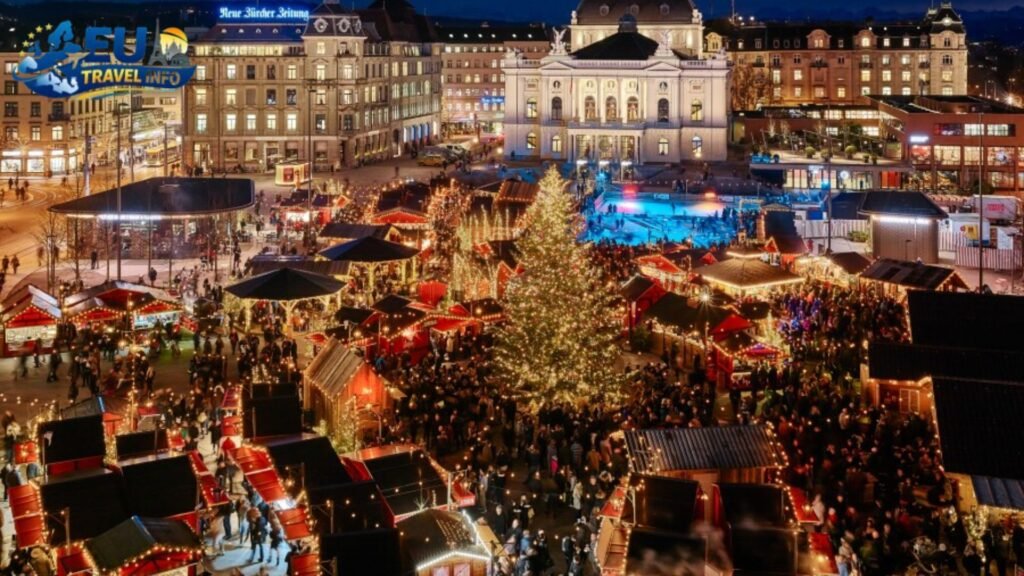
If you travel in late November or December, you must see the Christmas markets. This 4 weeks in europe winter itinerary can easily include a road trip through France, Germany, and Switzerland.
The Road Trip Route Start in Paris. Even though Paris does not have the biggest markets, the city is magical at Christmas. Later, take a train to Strasbourg, the “capital of Christmas” in France. It has 300 wooden stalls spread across 12 markets. Additionally, you should see the 30-meter-high Christmas tree.
Gradually, move into the Black Forest in Germany. Freiburg is a great base. You can visit the Ravenna Gorge market. It is set under a high train bridge in the middle of the woods. It feels like a scene from a movie. Similarly, make a day trip to Basel, Switzerland. It is often a fan-favorite because of its peaceful, snowy streets and rich architecture.
Finally, end this week in Baden-Baden. It is a luxury village known for its spas and cozy market stalls. You might even buy some alpaca wool slippers there like other travelers do.
Week 3: Chasing the Winter Sun (Southern Europe)
By the third week, you might be tired of the cold. Therefore, head south for some european winter vacations that feel like spring. Southern Spain, Italy, and Greece are your best bets.
Sicily, Italy Sicily is a treasure. In January, the temperature is often in the high 60s F. You can explore the Valley of the Temples in Agrigento without the sweating heat of summer. On top of that, you can even ski on Mt. Etna, which is an active volcano. It is a strange feeling to ski in the morning and eat fresh seafood by the sea in the afternoon.
Andalucia, Spain Similarly, southern Spain is perfect. Cities like Seville and Granada are much more comfortable in winter. You can visit the Alhambra with smaller crowds. If you time it right, you can even go skiing in the Sierra Nevada mountains and then drive to the coast for tapas.
Mainland Greece Do not forget about Athens. You can climb up to the Acropolis without the sun beating down on you. Winter is a great time to see the ruins because the cruise ship crowds are gone. Plus, Athens was recently named a top food capital, so your meals will be amazing.
Week 4: Festivals and the Far North

To finish your winter europe tour, you should see something truly unique. February is the month of carnivals and music.
Tromsø, Norway If you want a real adventure, go above the Arctic Circle to Tromsø. You can attend the Northern Lights Festival. This is also one of the best places to see the aurora borealis. You can take a guided tour to find the best clear skies. At that time, the days are very short, but the music and the lights make it magical.
The Carnival of Santa Cruz de Tenerife On the contrary, if you want a party, go to the Canary Islands. The carnival in Tenerife is the second-largest in the world after Rio. It is an explosion of color, costumes, and dancing in the streets. The weather there is subtropical and warm all year. It is the perfect way to end your month-long trip.
Practical Tips: What Month Does Europe Go on Vacation?
You might wonder what month does europe go on vacation. Most locals take their main holidays in July and August. However, many Europeans also head to the mountains in February for ski breaks. December is also very busy because of the Christmas season. January is actually the quietest and cheapest month to visit. Therefore, if you want to avoid everyone, aim for mid-January.
Packing for Your Europe Vacation Itinerary Ideas
You must pack smart. Carrying a big suitcase through snowy streets is not fun. Stick to carry-on only if you can.
- Layers are key. You need thermal shirts and leggings to wear under your jeans.
- Wool is your friend. Pack two warm wool sweaters and thick wool socks.
- Waterproof shoes. You will walk a lot on wet cobblestones.
- Accessories. Do not forget a hat, scarf, and touchscreen gloves.
- Power bank. Batteries die very fast in the cold weather.
Similarly, you should roll your clothes to save space. Use packing cubes to keep everything organized. It makes finding your socks so much easier in a small hotel room.
Important Details for Your 2026 Trip
You should know about the Prime Price League if you want to stay in luxury spots. Aspen leads the world, but in Europe, Val d’Isère and Gstaad are the top-tier luxury destinations. Prime prices in these areas can average over €30,000 per square meter. Additionally, many new “branded residences” like Mandarin Oriental are opening in spots like Cortina d’Ampezzo for the 2026 Winter Olympics.
On the contrary, if you want value, look at regions like the Dolomites in Italy or smaller villages in Bulgaria. You can find amazing culture without the high price tag of the famous Swiss resorts.
Frequently Asked Question
Which country in Europe is best to visit in winter?
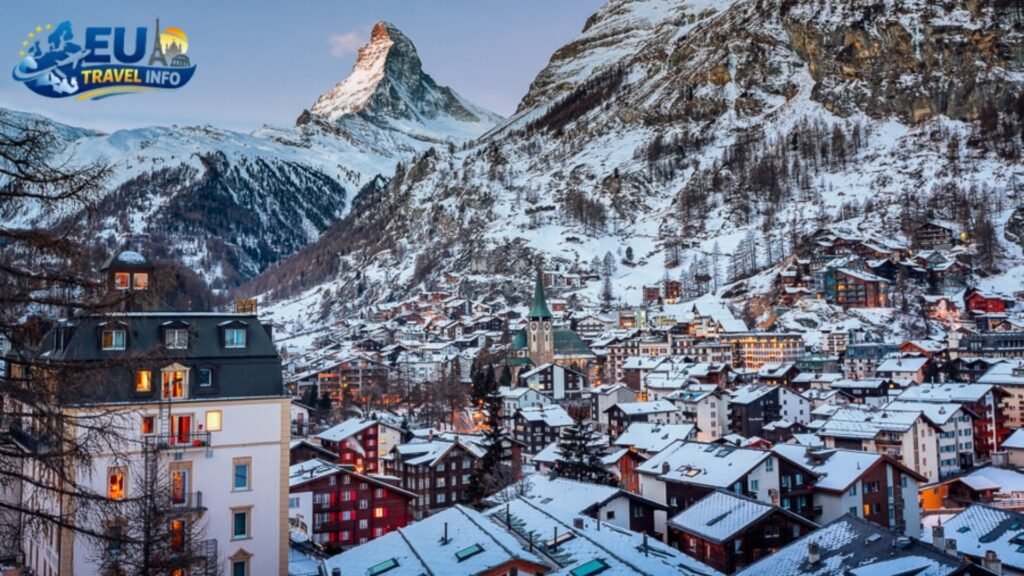
It depends on your goal. Italy is fantastic for a mix of culture, fewer crowds, and great food. Switzerland is the winner for a true “winter wonderland” feel. Spain is best for those seeking mild weather and sun.
Is it good to travel around Europe in the winter?
Yes, it is an excellent choice. You will find much lower prices for hotels and tours. The major cities are much quieter, so you can see museums and landmarks without stress.
Where to go in Europe in winter cheaply?
Eastern Europe is your best bet. Countries like Hungary and the Czech Republic offer a lot of value. Bulgaria is also very affordable and has unique traditions like the Surva Festival.
What countries are best for winter travel?
Austria, Germany, and Switzerland are the best for traditional Christmas markets. Norway and Finland are top choices for the Northern Lights. Italy and Greece are best for mild weather and historical sightseeing without the heat.
Concluding Words
This Step-by-Step Europe Winter Travel Itinerary Guide 2026 shows that winter is a magical time to see the continent. You can enjoy the fairytale cities of the east, the festive markets of the north, and the warm sun of the south. With lower costs and fewer crowds, you will see a side of Europe that most people miss. Pack your layers and get ready for the trip of a lifetime.