You are standing in the middle of a cobblestone street in Prague. The air smells like fresh bread and history. You look around at your friends and family. Everyone is smiling. No one is stressed about the map or the next train. This is the magic of a perfect group trip. Welcome to Your 2026 Group Travel Itinerary Europe Guide to Explore Easily.
Europe is a big place. It is a puzzle of cultures, foods, and languages. You might wonder, how long does it take to plan a trip to europe? Experts say you should start your planning between 3 and 10 months before you want to leave. This time allows you to lock in flights and find the best spots for your crew. How to plan a trip to europe does not have to be a nightmare. First of all, you need to decide what kind of adventure you want. Do you want the busy streets of London or the quiet peaks of the Swiss Alps? Perhaps the ancient ruins of Athens call your name.
The dream. The plan. The journey. You are ready for it all.
Timing Your Big Adventure: When to Go

You want the best weather and the smallest crowds. How long should a europe trip be? Many people find that 14 days is the “golden mean”. It gives you enough time to see several countries without getting too tired. Planning a trip to europe for 3 weeks is also a great choice if you want to dive deeper into specific regions.
The time of year matters a lot. Peak season is usually from May through September. During these months, the sun is out and the nightlife is loud. However, the crowds can be extreme at the Colosseum or the Eiffel Tower. You will also face higher prices.
On the contrary, the shoulder season is often the best choice for a mature traveler. This period includes April, May, September, and October. You will find that prices for hotels and flights are much lower during these months. Additionally, the lines for museums are shorter. In Rome or Paris, you might see 15% fewer people than in the middle of summer. Therefore, you get a more relaxed and authentic vibe.
Moving the Group: Your Transportation Options
You have to get from city to city. This is the backbone of your trip.
The Power of the Train
Group travel trips europe often rely on the rail network. The Eurail Global Pass is a top tool for this. It covers 33 countries. You can choose a Continuous Pass for travel every single day or a Flexi Pass if you want to stay in one spot for a while.
You should know about some costs. In countries like France, Italy, and Spain, you must pay for a seat reservation on high-speed trains. This usually costs between €10 and €20 per person. Plus, if you want a bed on a night train, it might cost around €34 for a bunk or €94 for a private bed. Similarly, the Eurostar between London and Paris requires a passholder fee of about €35 in second class.
The Comfort of the Private Coach
If your group has 30 to 56 people, a private charter bus is often the best way to go. It provides door-to-door service. Companies like BCS Bus have over 13 years of experience and fleets of over 340 vehicles. Another great option is Linea Azzurra in Italy, which offers luxury coaches with Wi-Fi and air conditioning.
You will find that a large bus can cost between €800 and €1,200 per day. Though this sounds like a lot, it is often cheaper per person than train tickets for a big group. On top of that, your luggage stays safely in the storage area below the seats.
The Agile 12-Seater Van
Maybe you are planning a trip to europe for 3 weeks with just a few close friends. A van like a Mercedes Sprinter is perfect for 8 to 15 people. These vans are great because they can drive into tight city centers where big buses are not allowed. You should look for a Long Wheelbase (LWB) model if you have a lot of bags. A LWB van might cost around £80 to £100 per day.
Where to Rest Your Head: Group Stays
You need a place that handles groups well.
MEININGER Hotels are a smart pick for 2026. They have hotels in 35 cities like Paris, Berlin, and Rome. They design their rooms for groups. For example, rooms with more than five beds often have separate showers and toilets to avoid a morning “logjam”. Also, they offer a breakfast buffet to start your day right.
If you prefer more space, you can look at aparthotels like Staycity. These units have kitchens so you can cook your own meals. Finally, for a luxury experience, you can rent a large villa through Interhome or Top Villas. Some villas in Italy or Spain can sleep up to 36 guests. Imagine your family gathered around a private pool in Tuscany. That is a memory that lasts forever.
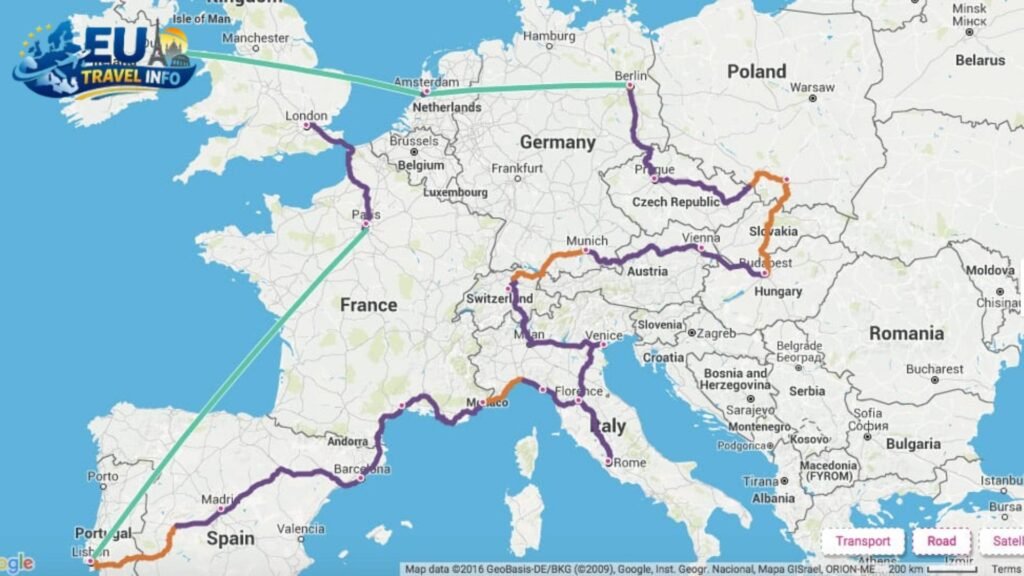
Itinerary 1: The Western Europe Whirl (14 Days)
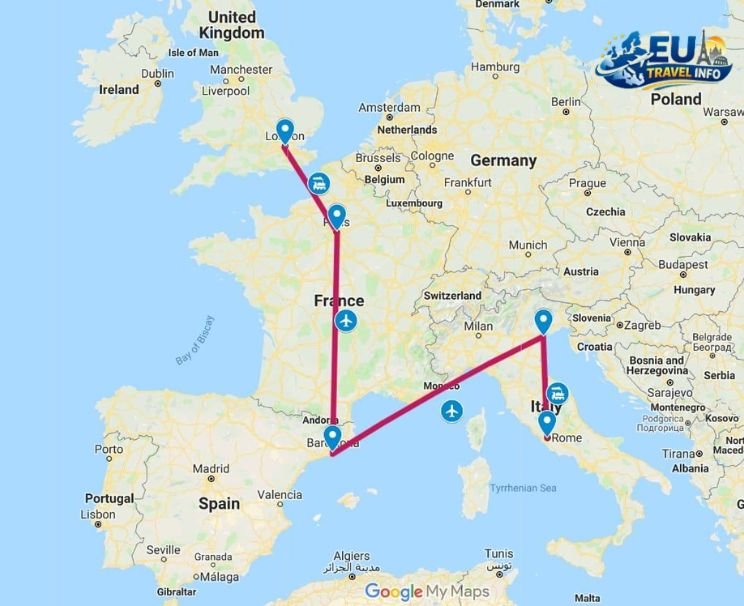
This is the classic group travel itinerary Europe. It hits the big stars.
Days 1-2: London and Paris You start in London. You see Big Ben and the Tower of London. Later, you take the 2.5-hour Eurostar to Paris. You must see the Eiffel Tower sparkle at night.
Day 3: Paris You should book your Louvre tickets online and arrive by 8:30 AM to beat the rush. On top of that, a dinner cruise on the Seine River is magical. You can see the monuments illuminated while you enjoy a meal.
Days 4-5: Swiss Alps You travel through Burgundy’s wine country to reach the Swiss Alps. You should take the first cogwheel train to Jungfraujoch at 8 AM. It is cold at 11,000 feet, so remember to pack warm layers.
Days 6-8: Tuscany and Rome You stop at the Leaning Tower of Pisa before heading to Tuscany. In Rome, you should pre-book your Vatican tickets for 8 AM. The Roman Forum gets very hot, so do that first thing in the morning.
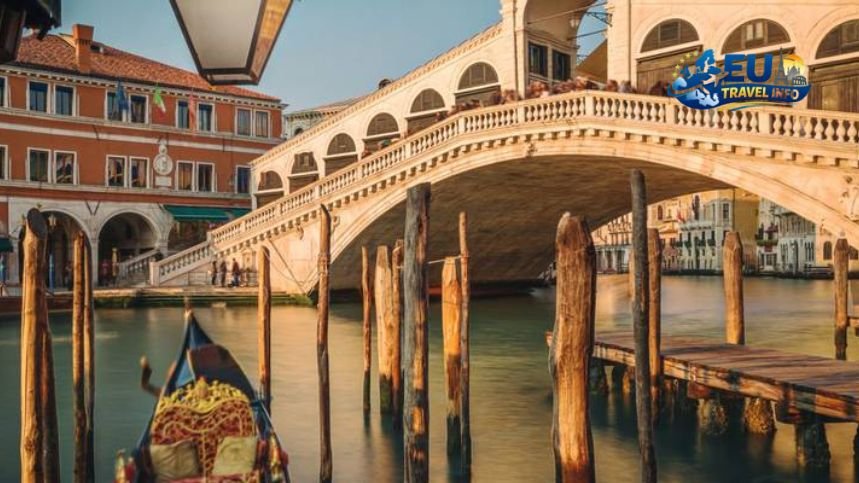
Day 9: Venice You take a 4-hour drive to the city of canals. Instead of a gondola, you might try the vaporetto line 1. It is much cheaper and gives you the same great views.
Days 10-14: Munich, Amsterdam, and Return You visit Munich’s beer halls and then head through the Dutch countryside to Amsterdam. You can join a canal cruise for the best photos of the city. Finally, you visit the medieval town of Bruges on your way back.
Itinerary 2: The Balkan Adventure (14 Days)
If you want something different, look at the Balkans. This route covers 21 cities across 7 countries.
Days 1-2: Athens and Delphi You begin in the heart of Greece. You should get to the ancient site of Delphi before 9 AM to beat the heat. The museum there is best visited in the afternoon when the crowds leave.
Days 3-6: Meteora and Albania You visit the monasteries in Meteora. You need sturdy shoes because the steps can be slippery. Later, you explore the stone cities of Gjirokastra and Berat in Albania.
Days 7-11: Lake Ohrid and Montenegro You enjoy the lakeside boardwalk at sunset in North Macedonia. Then, you head to the coast of Montenegro. You should climb the fortress walls in Kotor in the early morning to avoid the midday sun.
Days 12-14: Bosnia and Belgrade You visit the iconic bridge in Mostar. Your trip ends in Belgrade, Serbia, after a 5-hour drive.
Master the Major Sights: Tips for 2026
You do not want to stand in line for hours. Here is how to plan a family trip to europe with ease.
The Louvre (Paris)
Groups must have a reservation. You should book weeks in advance. A “Large Group” of 7 to 20 people pays a €90 fee plus €22 for each ticket. Also, guides must use headphones so they do not have to shout.
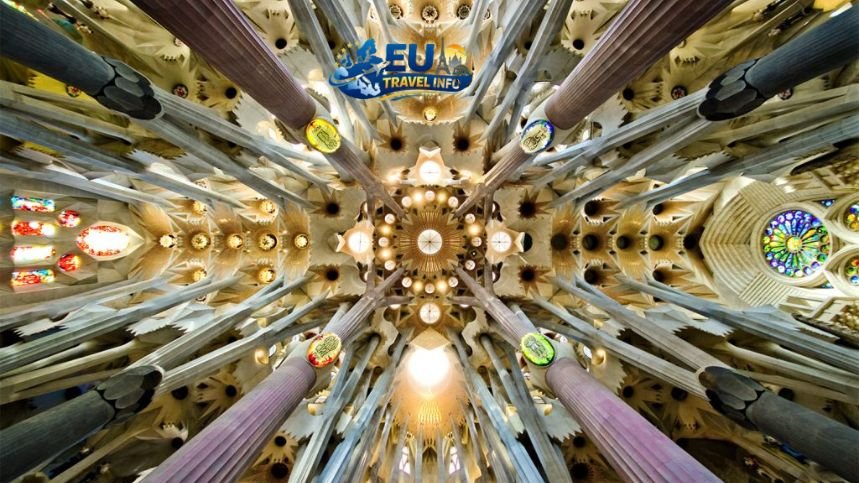
Sagrada Familia (Barcelona)
This is Gaudí’s masterpiece. For groups of 10 or more, you must book a guided tour. It costs about €30 per person. You should book at least 15 days ahead. Between 9 AM and 10 AM, the church has a “Quiet Hour” where everyone must use digital guides with earphones.
The Acropolis (Athens)
If you have 16 to 40 people, you need a reservation. Groups enter through a “fast lane”. You should bring your own headsets for the tour. The museum even has a special cloakroom just for groups.
Dining with a Crowd
You have to feed everyone. In Italy, look for a menu turistico or prezzo fisso. These are fixed-price menus that are usually 30% cheaper than ordering separate dishes. Though the choices are limited, it is a great budget option.
In Paris, a dinner cruise is a top experience. Bateaux Parisiens offers a service starting at €99. If you want the best view, the “Service Premier” has front seating and champagne for about €215.
In Prague, you can join a private beer and tapas tour. For about €79, you can visit three microbreweries and eat traditional Czech snacks like pickled sausages.
Final Thoughts for Your 2026 Journey
You are ready to explore. You know that how to plan a trip to europe involves picking the right season and the right bus. Your 2026 Group Travel Itinerary Europe Guide to Explore Easily is just the start.
First of all, keep your plans flexible. Though you want to see everything, sometimes a rainy day in Mykonos means you just have to find a cozy cafe and relax. Additionally, always use a travel diary if you have a paper rail pass. This keeps you legal and helps the train companies.
On top of that, think about safety. MEININGER Hotels have 24-hour reception and high-tech key cards. Similarly, always carry a powerbank for your phone. Your tickets and maps are on your screen, so you cannot let the battery die.
Finally, enjoy the local life. In the shoulder season, you will find that locals are friendlier because they are not as stressed by crowds. Therefore, take the time to chat with a shopkeeper in Florence or a waiter in Munich. These small moments are often the best parts of the trip.
Europe in 2026 is waiting for you. You have the guide. You have the dream. Now, you just need to pack your bags and go. Safe travels!
Frequently Asked Questions
Are Europe Group Tours worth it?
They absolutely are. Professional guides bring history to life for you and your friends. You get a stress-free experience because all the logistics are handled by experts.
How to plan a group travel trip?
You should start your search 3 to 10 months early to get the best deals. First of all, pick your dream locations. Then, choose between a flexible rail pass or a private motorcoach for your crew.
Is it cheaper to travel with a group?
Yes, it often is. Shared costs for a private charter bus can be much lower per person than individual train tickets. Plus, some hotels like MEININGER offer special prices and conditions for groups of 12 or more.
Is 1,000 euros enough for 2 weeks in Europe?
It is quite tight for a full tour. High-end journeys often cost around $280 per day, which is over 3,500 euros for two weeks. However, you can save money by using budget buses and staying in hostels.
Who are the big 3 in Europe?
London, Paris, and Rome are the “Big 3” cities for travelers. These cities are the main anchors for most classic itineraries in Western Europe.
Is $100 a day enough in Europe?
It is possible for a very savvy traveler. You must use cheap intercity buses and stay in budget hostels to stay under that limit. On the contrary, high-speed trains and luxury hotels will push your daily costs much higher.
What are the 7 countries Europe trip?
The Balkan Adventure is a popular route that covers 7 countries. This exciting circuit includes spots like Albania, Montenegro, and Serbia.
What month is the cheapest to fly to Europe?
November through March is the off-season for the continent. You will find that airfares are often hundreds of dollars cheaper during these months.
What are the disadvantages of group tours?
Some travelers feel that the pace is a bit rushed at times. You also have to follow a set schedule with the whole group in places like the Louvre. Additionally, menu choices at group dinners can be limited compared to ordering separate dishes.
Concluding Words
Your grand European journey in 2026 is closer than you think. You can navigate the continent with ease by choosing the right season and the best transport options like Eurail or private coaches. The Balkan Corridor and Western Loop offer memories that will last a lifetime for your family and friends. You just need to plan ahead to beat the crowds and save your hard-earned money. Trust the experts and your own sense of adventure. Your perfect group trip is waiting for you!