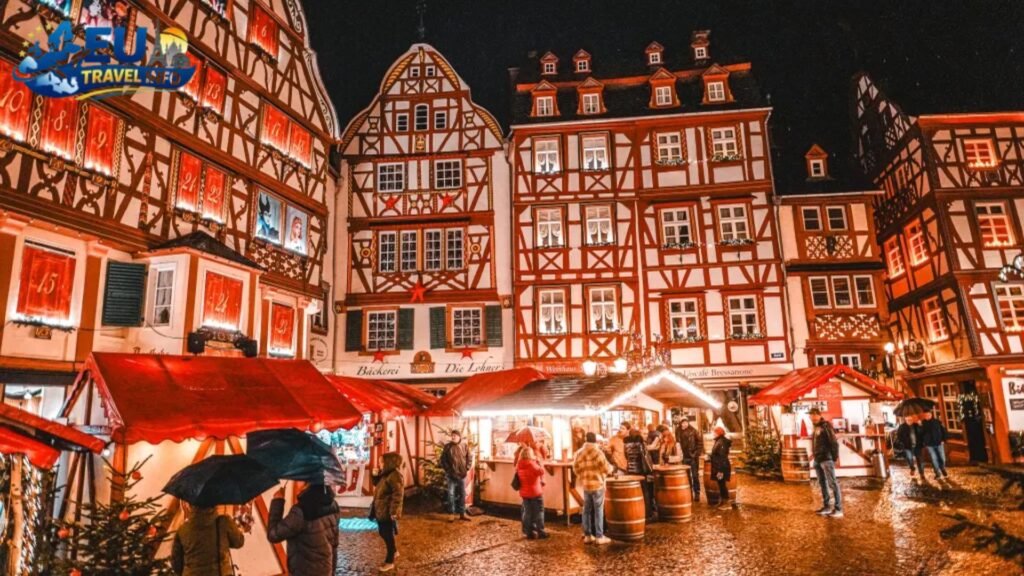
Imagine a world where the air smells like cinnamon and roasted chestnuts. Think of cobblestone streets dusted with fresh, white snow. Picture thousands of tiny lights that twinkle on giant pine trees. This is not a dream. It is Christmas in Germany.
You are about to embark on the ultimate Christmas In Germany Itinerary for 2026. You will see medieval towns. You will drink warm wine from colorful mugs. You will feel the true magic of the holiday season.
First of all, you must plan for the right time. Most Christmas markets in Germany itinerary stops begin in late November. Specifically, many start around November 25 and run until December 23 or 24. If you want to see the best of it, you should visit during the first three weeks of December.
Christmas in Germany facts show that this is when the festive spirit is at its highest. You should also know how long is christmas in germany. The main celebrations happen on Heiligabend (Christmas Eve), followed by two public holidays on December 25 and 26. This answers how many days off for christmas in germany for most workers. It is a time for family. It is a time for joy.
Day 1 to Day 3: Munich – The Gateway to Bavaria
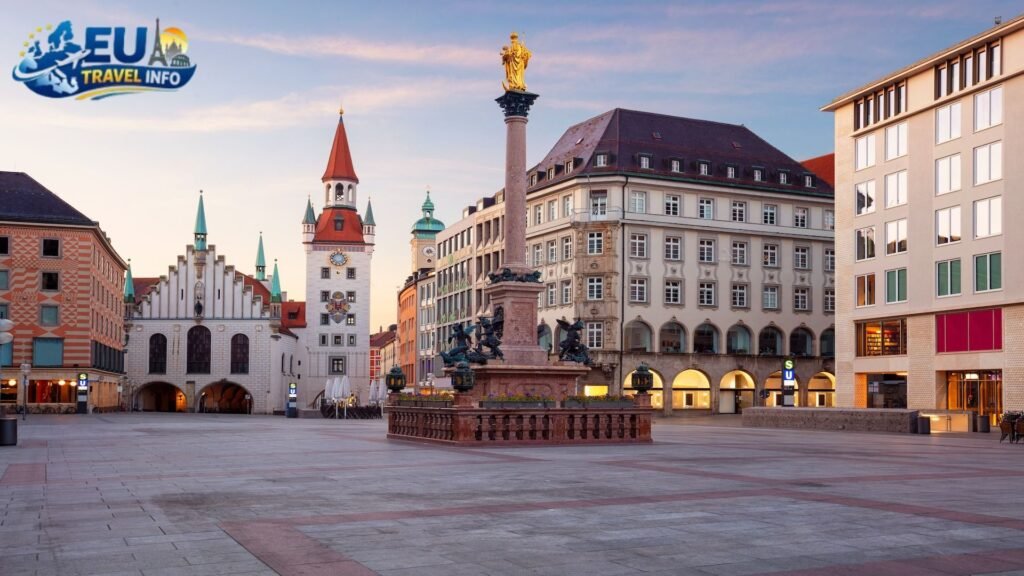
You arrive at Munich International Airport. It is a busy hub. You follow the signs to the S-Bahn. This train is the cheapest way to reach the center. You arrive at Munich’s main station. It is called München Hbf. You check into your hotel. You should choose a place near the Altstadt (Old Town). This keeps you close to the action.
Marienplatz is your first stop. It is the heart of the city. Here, the Munich Christmas Market shines bright. The 2026 dates for this market are November 24 to December 24. You look up at the New Town Hall. It is magnificent. You see the giant Christmas tree. It is covered in lights. You smell Glühwein (mulled wine). You see stalls selling Lebkuchen (gingerbread).
Later, you visit the Munich Residenz. This was the home of Bavarian royalty for centuries. You walk through the Antiquarium. It is the largest Renaissance hall north of the Alps. It is lavish. It is breathtaking. You also visit the Cuvilliés-Theatre. It is a masterpiece of the Rococo style. Additionally, you spend time at Nymphenburg Palace. It was a summer residence. You see the Gallery of Beauties. These are portraits of women admired by King Ludwig I. You walk through the gardens. If it is cold enough, the canal becomes a place for ice skating. Similarly, you visit the Marstallmuseum to see royal coaches and sleighs. One sleigh belonged to King Ludwig II. It is gold. It is like a fairy tale.
Day 4: Regensburg – A Walk Through History
You take a train to Regensburg. It is a UNESCO World Heritage site. The journey takes about 90 minutes. You enter a city that feels frozen in time. You find four different markets here.
The Romantic Christmas Market at Thurn and Taxis Palace is a must. It is one of the most beautiful in the country. You pay for a ticket to enter. It is worth every cent. You see the palace courtyard lit by torches. You sit in the Champagne Pavilion. You feel the elegance. You see traditional craftsmen at work. On top of that, you visit the Regensburger Christkindlmarkt at Neupfarrplatz. You eat a Regensburger sausage. It is a local favorite. Therefore, you must try it with sweet mustard.
Day 5 to Day 6: Nuremberg – The City of Gingerbread
You travel to Nuremberg. It is only one hour away by train. You check into a hotel near the Hauptmarkt. This is where the famous Nuremberg Christkindlesmarkt happens. For 2026, it runs from November 27 to December 23.
This market is huge. It has more than 180 stalls. You see rows of red and white striped roofs. You look for the Schöner Brunnen. It is a colorful fountain with 40 statues. You find the ring on the fence. You spin it for good luck. Plus, you must try the food. Nuremberg is famous for its tiny Rostbratwurst sausages. You eat three in a bun. It is called “Drei im Weggla.” You also buy Elisenlebkuchen. This gingerbread has very little flour. It is mostly nuts and spices. It is delicious.
You walk up the hill to the Imperial Castle (Kaiserburg). You see the view of the city. The red rooftops are covered in snow. However, you also remember the history. You visit the Albrecht Dürer House. He was a famous artist. You see how a wealthy family lived in the Renaissance. At that time, Nuremberg was the center of the world. Later, you walk down Weißgerbergasse. It is the prettiest street in the city. It has colorful half-timbered houses. It is perfect for photos.
Additionally, you take a day trip to Bamberg. It is a 30-minute train ride. It is another UNESCO city. You see the Old Town Hall. It is built in the middle of a bridge. It is very unique. You drink a Rauchbier. This is a beer that tastes like smoke. It is an acquired taste. Though, you might love it.
Day 7: Rothenburg ob der Tauber – A Storybook Town
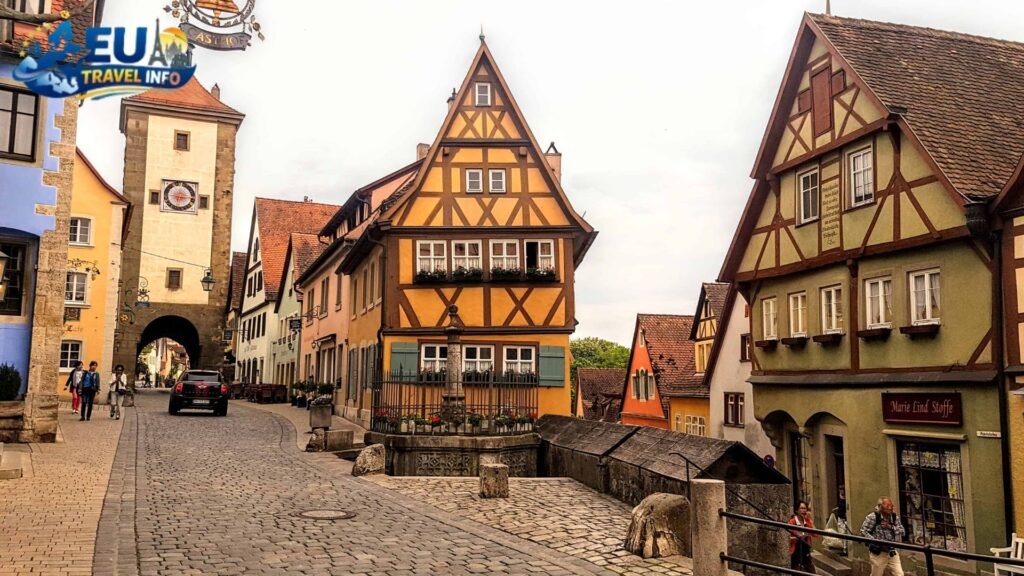
You head to Rothenburg ob der Tauber. It is the most photographed town in Germany. Your travel itinerary of germany would be incomplete without it. It sits on the Romantic Road. You see stone walls. You see 42 towers. You see the Plönlein. It is a small square with a yellow house. It is the image on every postcard.
The Reiterlesmarkt is the name of the local market. It is small. It is cozy. You visit the German Christmas Museum. It is open all year. You see how decorations have changed over hundreds of years. You also go to the Käthe Wohlfahrt flagship store. It is a Christmas village inside. You see giant nutcrackers. You see glass ornaments. Gradually, you feel like a child again.
You walk the City Walls. It is a 2.5-mile path. You look over the red roofs. You climb the Town Hall Tower. It has 222 steps. The ladder at the top is steep. Finally, you see the whole valley. It is spectacular. You must also try a Schneeball (snowball). It is a fried pastry covered in sugar. It is crunchy. It is a local treat.
Day 8 to Day 9: Dresden and Leipzig – The Old and the Grand
You travel east to Dresden. This city is the home of the Striezelmarkt. It is the oldest Christmas market in the world. It started in 1434. You see the world’s tallest Christmas pyramid. You taste Dresden Stollen. This is a fruit bread covered in powdered sugar. It is a tradition that is centuries old.
You visit the Zwinger Palace. It is a Baroque masterpiece. You see the Frauenkirche. It was rebuilt after the war. It is a symbol of peace. You also find the Medieval Market in the Stallhof. There is no plastic here. There are no electric lights. You see craftsmen using old tools. You might even see people taking a hot bath in a wooden tub. It is very different. It is very quiet.
Next, you stop in Leipzig. It is a short train ride away. The market here has been running since 1767. You see the world’s largest free-standing advent calendar. Every day, a new door opens. You hear the trumpeters play from the balcony of the Old City Hall. It is a grand sound.
Day 10 to Day 12: Berlin – The Modern Metropolis
You arrive in Berlin. It is the capital. It is huge. It has more than 80 different markets. You do not try to see them all. You focus on the best ones.
First, you visit Gendarmenmarkt. It is the most elegant square in the city. The market here is beautiful. You see white tents with yellow stars. You see the Brandenburg Gate. It is a symbol of a united Germany. You also visit the Reichstag. You must book your ticket in advance. You walk up the glass dome. You look down at the parliament. You look out at the city.
You spend time in City West. You see the Kaiser Wilhelm Memorial Church. It was left in ruins after the war. It is a powerful reminder. Similarly, you shop at KaDeWe. It is a giant department store. It has a famous food floor. You see luxury from all over the world. On the contrary, you visit the Berlin Wall. You see the history of division. You see how far the city has come.
For a unique experience, you head to the Charlottenburg Palace market. The palace is lit up in blue and purple. It is very royal. You also look for the Flying Santa at the Rotes Rathaus market. He flies over the crowd in his sleigh. It is a great show for everyone.
Day 13 to Day 14: The Black Forest and Stuttgart
If you have more time, you head south to the Black Forest. You visit the Ravenna Gorge Christmas Market. It is set under a giant railway viaduct. The arches are lit in many colors. It is one of the most unique settings in Europe. You must buy your tickets weeks in advance. They sell out very fast.
You also visit Stuttgart. It has one of the oldest and largest markets. It has over 300 stalls. The best part is the roofs of the stalls. They are decorated with moving figures and lights. They are like works of art. Additionally, you go to Esslingen am Neckar. It is a 15-minute train ride. This is a Medieval and Christmas Market. You see people in old costumes. You see fire breathers. You feel like you have traveled back in time. It is a favorite for many travelers.
What to Eat and Drink
Your trip is a feast for the senses. You must know the terms.
- Glühwein: Hot wine with spices. You pay a Pfand (deposit) for the mug. You get your money back when you return the mug. Or you keep it as a souvenir.
- Feuerzangenbowle: A stronger wine. A sugar cube soaked in rum is set on fire above the cup.
- Bratwurst: Grilled sausage. Every region has its own type.
- Reibekuchen: Fried potato pancakes. They are served with applesauce.
- Gebrannte Mandeln: Roasted almonds. You will smell them everywhere.
- Käsespätzle: Soft egg noodles with lots of cheese and onions. It is very filling.
What to Pack and Wear
The weather in December is cold. The average high is around 3 to 4°C. It is often gray. It is often damp. Therefore, you must dress in layers.
- Base Layer: Use thermal shirts.
- Middle Layer: Wear a wool or cotton sweater.
- Outer Layer: Invest in a good, long winter coat.
- Bottoms: Wear fleece-lined pants or jeans.
- Shoes: Wear comfortable, warm boots with thick wool socks. You will walk a lot.
Travel Tips for Your Journey
You can travel by train or by car. The German rail system is very good. You can buy Flexpreis tickets. These let you take any train on a certain day. It gives you freedom. However, a car is good if you want to visit small villages in the Black Forest.
Always carry cash. Many market stalls do not take cards. Carry coins for the bathrooms. Also, avoid the weekends if you can. The markets get very crowded on Friday and Saturday nights. Go in the morning when they first open. It is more peaceful. You can see the details of the crafts better.
Essential Phrases to Know
- Hallo: Hello.
- Danke: Thank you.
- Ein Glühwein, bitte: One mulled wine, please.
- Wo ist der Weihnachtsmarkt?: Where is the Christmas market?.
- Wie viel kostet das?: How much does that cost?.
You are now ready. You have the facts. You have the plan. You have the spirit. Germany is waiting for you. The lights are ready to shine. The wine is warming up. Your Christmas In Germany Itinerary for 2026 will be a trip you never forget. Enjoy every moment. Drink deep. Eat well. Be merry.
Frequently Asked Question
Is Christmas a good time to go to Germany?
Yes. It is the most magical time of the year. The markets bring light and warmth to the cold winter. You will see traditions that have lasted for hundreds of years. The food and atmosphere are unlike anything else in the world.
Where should I spend Christmas in Germany?
Munich and Nuremberg are excellent choices because they have many markets and deep history. Rothenburg ob der Tauber is perfect if you want a small-town, fairy-tale feel. Berlin is great for those who want a mix of modern life and traditional festivities.
What is the most Christmassy part of Germany?
Bavaria and Saxony are often considered the most festive regions. This includes cities like Munich, Nuremberg, and Dresden. These areas are famous for their old-world charm, traditional crafts, and world-renowned markets.
What town in Germany is famous for Christmas?
Rothenburg ob der Tauber is the most famous. It is known for its medieval beauty and the fact that it celebrates Christmas all year round with its dedicated museum and shops.
Concluding Words
This Essential Christmas In Germany Itinerary Travel Guide 2026 provides a complete path through the heart of Europe’s most festive season.
From the grand markets of Munich and Nuremberg to the storybook streets of Rothenburg and the historic traditions of Dresden, you will experience the best of German holiday culture. By following this guide, you will know exactly what to eat, where to go, and how to stay warm while making memories that last a lifetime.