You are ready to plan the trip of a lifetime. You want to see the sharp peaks of the Alps and the sun-soaked streets of historic Italian cities. This Step-By-Step Italy Switzerland Itinerary Guide 2026 is your map to success.
You will find that Switzerland and Italy are two of the most visited countries in Europe. Together, they attract around 80 million tourists every year. These places are famous for good reasons. You will enjoy incredible food, deep history, and easy travel between them.
Choosing Your Best Time to Visit
You must pick the right season for your journey. Rick Steves notes that the main tourist season in Switzerland runs from May through September. High summer in July and August offers the best weather and long days where it is light until after 21:00. Additionally, you can celebrate Swiss National Day on August 1 with fireworks and parades. However, these months are very busy and expensive.
On the contrary, the months of late May, June, September, and early October offer fewer crowds and mild weather. You might even see cattle processions as decorated cows move between mountain pastures.
Later, in the winter from December to March, the mountain resorts become crowded with skiers. You will find beautiful Christmas markets in Switzerland during December. You must pack warm clothing for the Alps no matter when you go because the weather changes suddenly.
How to Move Around: Trains vs. Cars
First of all, you should consider the train network. Both countries have fantastic public transport that connects every major highlight. A rail pass like the Eurail Global Pass is often a smart choice. It covers train travel across all of Europe for a set number of days.
Additionally, the Swiss Travel Pass is a key to carefree travel within Switzerland. It gives you unlimited travel by train, bus, and boat for 3, 4, 8, or 15 days. Plus, it offers free admission to more than 500 museums.
You might think about a rental car. However, you should be careful. Renting a car in one country and dropping it off in another can lead to hefty fees. For example, a user on a travel forum noted a drop-off fee that was larger than the rental cost itself.
Therefore, many travelers choose to rent a car near the border, cross by train, and pick up a new car on the other side. Similarly, parking in Italian cities is often a nightmare, and some Swiss towns are car-free.
The Italy Switzerland Itinerary: Different Timeframes
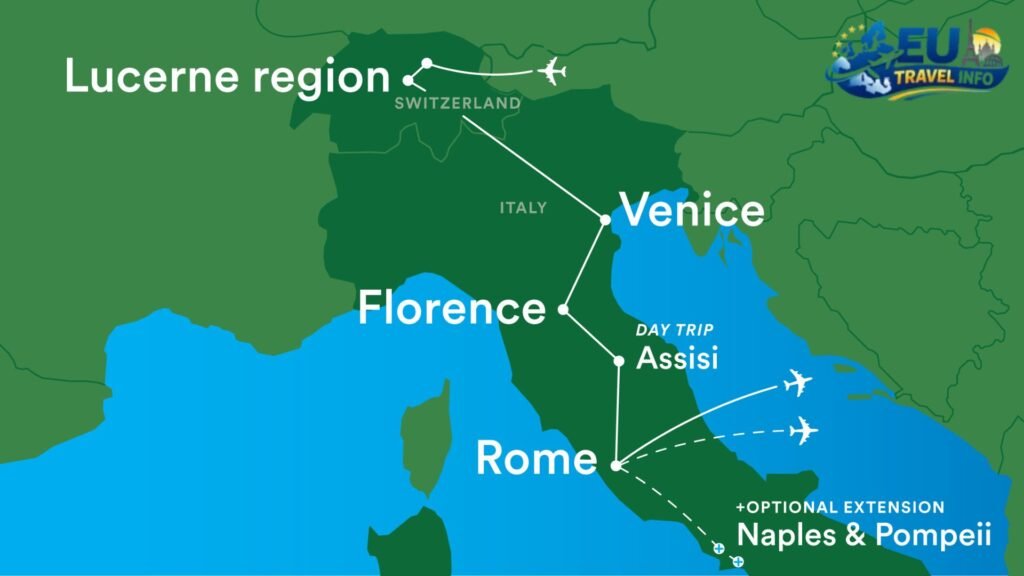
Italy Switzerland Itinerary 7 Days
You have one week. You must move fast. You should fly into Zurich and immediately take the 50-minute train to Lucerne. Spend two days there exploring the Old Town and a mountain like Mount Pilatus. Later, you spend two days in Interlaken for a Jungfraujoch day trip. Finally, you take the 3-hour and 10-minute train to Milan for your final three days of Italian culture.
Italy Switzerland Itinerary 10 Days
You have ten days. You can include more scenic routes. First of all, fly into Milan and take the train to Zermatt, which takes about 3.5 to 4 hours. Spend two days viewing the Matterhorn. On top of that, take the full-day Glacier Express train to St. Moritz.
This train is the slowest express train in the world, taking about 8 hours to cross 291 bridges and 91 tunnels. Later, take the Bernina Express to Tirano and continue to Milan. You will have four days left to explore Milan or head to the Cinque Terre for the sea.
Italy Switzerland Itinerary 14 Days
Two weeks is a perfect amount of time. You can follow a popular rail route. You start in Zurich for one day, then move to Lucerne for two days. Gradually, you travel to Lauterbrunnen and Zermatt for four days total. On day seven, you board the Glacier Express to St. Moritz. Days nine and ten are for the Bernina Express and Milan. You then take a high-speed train to Florence for two days of art. Finally, you finish your italy switzerland itinerary 2 weeks trip in Rome.
Italy Switzerland Itinerary 3 Weeks
You have three weeks. You can slow down. You can visit hidden gems like Genoa and Turin. Additionally, you might add 3 to 4 days in the Dolomites for world-class hiking. You could also spend more time in Lake Como to live the “la dolce vita” lifestyle. Many travelers on an italy switzerland itinerary reddit thread suggest that three weeks allows you to truly feel the local culture rather than just seeing the sights.
Phase 1: The Italian Hubs
Milan: The Fashion Capital
You will likely start or end in Milan. It is a cosmopolitan city with a rich history. You must visit the Duomo di Milano. Construction on this magnificent cathedral began in 1386. You can purchase tickets to climb to the roof for breathtaking views of the city. Additionally, you should see Leonardo da Vinci’s masterpiece, “The Last Supper”, at the Santa Maria delle Grazie church. You must book these tickets well in advance.
Lake Como and Ticino
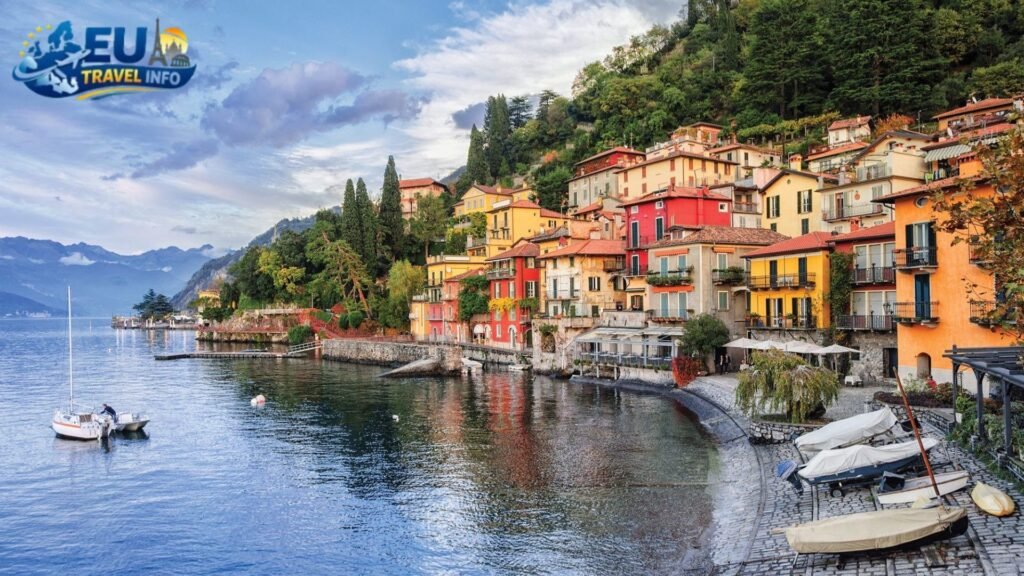
From Milan, a short train ride takes you to Lake Como. You can admire the gardens at Villa Carlotta or take a funicular up to Brunate for lake views. If you want a taste of Italy while still in Switzerland, you must visit the canton of Ticino. It is the sunniest region in Switzerland. You can sail across Lake Lugano and pop over to the Italian village of Porto Ceresio for gelato. Later, you can visit Morcote, which features the Church of Santa Maria del Sasso built in the 1400s.
Florence and Venice
If you have more time, you head south. Florence is the birthplace of the Renaissance. You can meet Michelangelo’s David at the Accademia Gallery. Similarly, Venice offers undeniable charm. You should take a gondola ride and visit the Doge’s Palace. However, you should try to visit Venice in the shoulder months of April or October to avoid the stifling summer heat and heavy crowds.
Phase 2: The Border Crossing on the Bernina Express
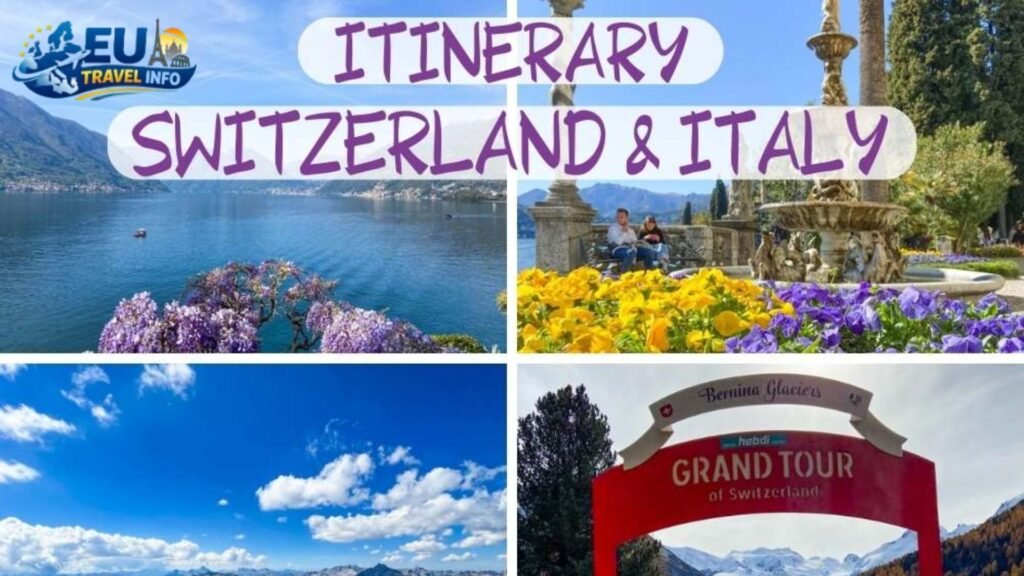
This is a highlight of any italy switzerland tour package. The Bernina Express connects Tirano in Italy to St. Moritz or Chur in Switzerland. It is a UNESCO World Heritage site. The train runs on the highest railway tracks in Europe. You will sit in modern panoramic cars with ceiling-high windows.
The journey is incredible. You pass through 55 tunnels and over 196 bridges. You will see the Landwasser Viaduct, which leads directly into a rock face. You also cross the Brusio Circular Viaduct. The train climbs to 2,253 meters at Ospizio Bernina before descending past glaciers down to the palms of Italy. A second-class ticket from Chur to Tirano costs about CHF 66.00. Additionally, you must pay a seat reservation fee.
Phase 3: The Swiss Alpine Wonders
St. Moritz: Pure Elegance
You arrive in St. Moritz, a chic resort town. It is the place that invented winter tourism in the 1860s. You can walk the easy 4.4km lake trail. On top of that, you can stay in unique places like a rotating observatory dome for stargazing.
Zermatt and the Matterhorn
Later, you take the Glacier Express to Zermatt. This town is car-free. You must take the Gornergratbahn mountain train for the best view of the Matterhorn. You can also take Europe’s highest cable car to Matterhorn Glacier Paradise at an altitude of 3,883 meters.
Interlaken: The Adventure Base
Interlaken sits between Lake Thun and Lake Brienz. It is the perfect base for the Jungfraujoch. You board a train to reach the “Top of Europe” at 3,454 meters above sea level. There, you can explore an Ice Palace and view the Aletsch Glacier. Additionally, you can try paragliding for a pump of adrenaline and a view of the blue lakes.
Phase 4: Storybook Cities
Lucerne
Lucerne is a compact town with stunning medieval architecture. You must walk across the Chapel Bridge, a 14th-century wooden bridge that is a symbol of the city. You can also take a gondola and aerial cableway to the summit of Mount Pilatus. The descent on the world’s steepest cogwheel railway is a thrill you will not forget.
Zurich
Zurich is the largest city in Switzerland and a global finance hub. You can walk the quaint lanes of the Old Town. You should not miss the Lindt Home of Chocolate in nearby Kilchberg. You can take a chocolate tour and even see a massive chocolate fountain. On top of that, you can climb the tower of Grossmünster Church for a view of Lake Zurich. It only costs CHF 5 per adult.
Traveling with Kids: A Family Guide
You might think planning a switzerland italy itinerary with kids is hard. It is not. You should choose a home base like Zurich or Lucerne to avoid packing every day. Many Swiss trains have family cars with space for kids to play.
You should visit the Swiss National Museum in Zurich, which is very interactive. Additionally, your kids will love the PILU Land Playground at the base of Mount Pilatus, which includes a zipline. In Milan, you can visit the Leonardo da Vinci Museum of Science and Technology, which is the largest of its kind in Italy. Do not forget to stop for gelato daily. Authentic Italian gelato is a treat that every child (and adult) will enjoy.
Budgeting and Practical Tips for 2026
You must prepare for the cost difference. Switzerland is much more expensive than Northern Italy.
- Accommodation: Expect to spend €90+ in Italy or €150+ in Switzerland for mid-range rooms.
- Food: A main dish in a simple Swiss restaurant costs €25-35, while in Italy you can eat world-class pasta for €10-20.
- Currency: Italy uses the Euro, and Switzerland uses Swiss Francs (CHF). You can use cards in most places, but keep some cash for small mountain shops.
You should download the SBB app for Swiss train times and the Grand Train Tour of Switzerland app to collect digital stamps and coupons. Additionally, look for “2-for-1” deals in the Digital Swiss Coupon Pass if you book a package in 2026.
Hidden Gems: Val Bavona
You may want to see something truly ancient. Far from the busy cities is Val Bavona in Ticino. This valley has 12 villages dotting a 10km stretch. Homes are built directly into massive boulders. Surprisingly, the valley exists off-grid. Most homes have no electricity except for a few with solar panels. It is a time capsule from a bygone era that will move you.
Conclusion: Your Final Plan
You now have the tools for a perfect Step-By-Step Italy Switzerland Itinerary Guide 2026. Whether you choose a quick 7 days or an in-depth 3 weeks, you will experience the best of Europe. You will ride world-famous trains, eat incredible food, and see landscapes that look like paintings.
Frequently Asked Question
Is Switzerland close to Italy?
Yes. Switzerland and Italy share a large border in the south. You can easily travel between them in a few hours by train or car.
Which country to combine with Switzerland?
Italy is the most popular choice because of the easy train connections. However, you can also easily combine it with Germany, Austria, or France.
Can I go to Switzerland from Italy?
Yes. You can take high-speed trains from cities like Milan to Swiss hubs like Zurich or Brig. You can also use scenic routes like the Bernina Express.
Is Switzerland or Italy better to visit?
Neither is better; they are different. Italy is famous for art, warm weather, and affordable world-class food. Switzerland is famous for majestic mountains, luxury, and efficient transport.
Concluding Words
This guide provides a detailed plan for your 2026 trip across Italy and Switzerland. You have learned about the best times to visit, the efficiency of the rail network, and specific itineraries ranging from one to three weeks.
You now know how to visit iconic spots like the Matterhorn and the Duomo di Milano, plus family-friendly tips and budgeting advice. You are ready to book your tickets and see the best of these two beautiful nations.