You stand on the edge of a massive crack in the earth. To your left is North America. To your right is Europe. The wind carries the scent of sulfur and wet moss. This is the start of your Golden Circle Iceland Itinerary.
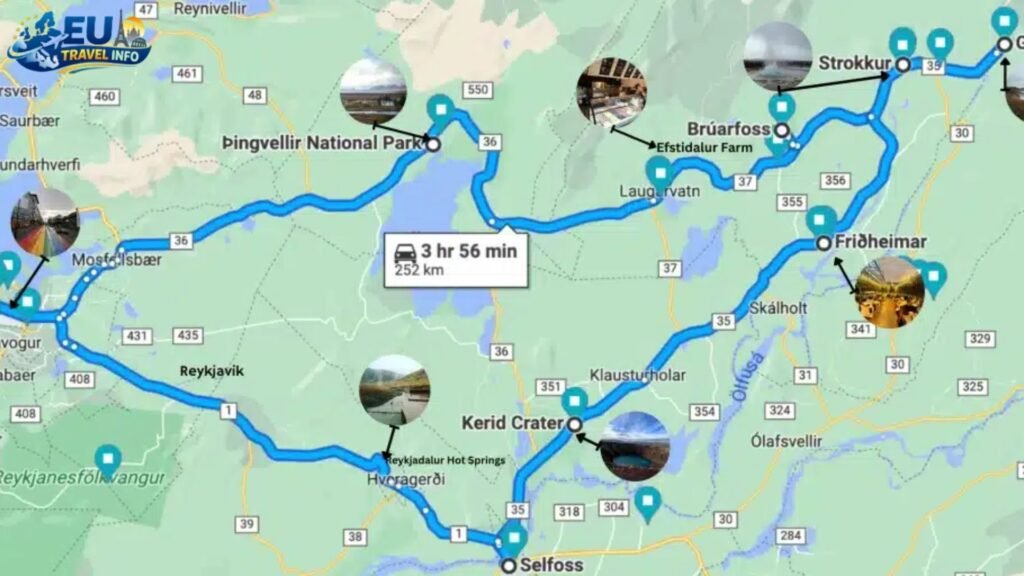
You are about to see the most famous sights in this country. It is a 250-kilometer (155-mile) loop that offers a deep look at the power of nature. First of all, you need a plan for your golden circle iceland road trip. This guide will help you navigate every turn. It is designed for the year 2026. Pure adventure. No stress.
Planning Your Golden Circle Iceland Trip
You must decide when to go. This choice changes everything. Summer offers the midnight sun and green hills. Winter brings snow and the Northern Lights. However, both seasons are beautiful in their own way. You should know that a golden circle iceland day trip usually takes 8 to 10 hours door-to-door from Reykjavík.
Additionally, you need to choose how you will travel. A golden circle iceland self drive itinerary gives you the most freedom. You can stop whenever you want. On the contrary, a guided golden circle tour iceland itinerary is much safer in the winter. Local drivers know how to handle ice and wind.
What to Pack for Your Adventure
First of all, you must dress in layers. The weather in Iceland changes fast. You need a moisture-wicking base layer.
You also need a warm fleece. Finally, you must wear a waterproof and windproof outer shell. Sturdy, waterproof boots are not optional. Plus, bring a refillable water bottle. The tap water here is some of the cleanest in the world.
The Famous Core Trio
Most people follow a standard golden circle iceland itinerary 1 day plan. This loop includes three main stops. These are the “stars” of the show.
1. Þingvellir National Park: The Meeting of Continents
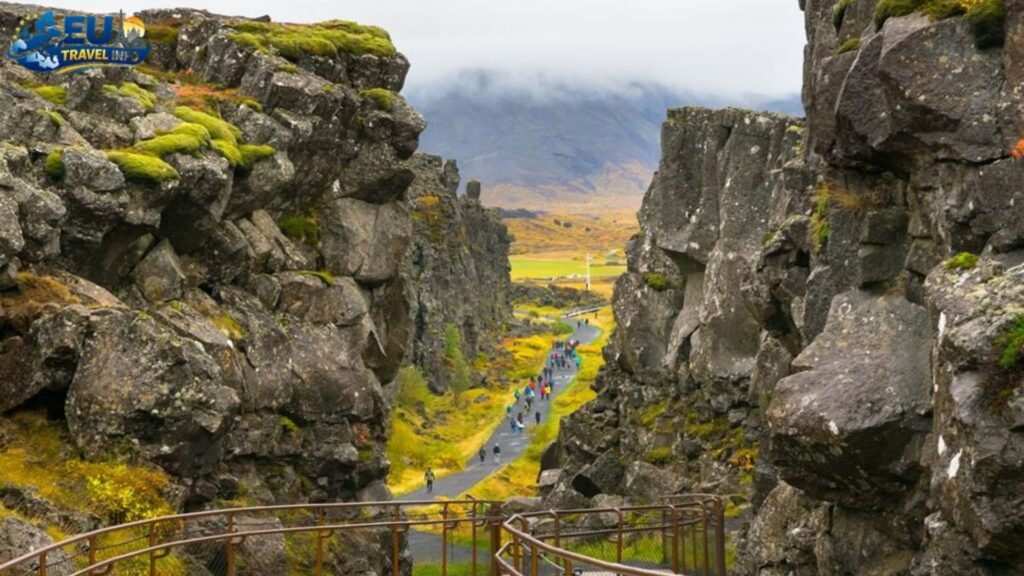
Your first stop is only 47 kilometers (29 miles) from Reykjavík. This is a UNESCO World Heritage site. It is a geological wonder. You can walk through the Almannagjá gorge. This valley shows you where the North American and Eurasian tectonic plates are pulling apart. They move about 2.5 centimeters (one inch) every year.
History lives here too. The Icelandic people formed their parliament, the Althingi, here in 930 AD. It is the oldest parliament in the world that is still in session. Truly remarkable. Ancient laws. Modern democracy. Similarly, the park is home to Þingvallavatn, the largest natural lake in the country.
2. The Geysir Geothermal Area
Next, you drive to the Haukadalur valley. You will see steam rising from the ground from miles away. This is home to the “Great Geysir.” Though the original Geysir is mostly quiet now, its neighbor Strokkur is very active. It erupts every 8 to 10 minutes. It shoots hot water 66 to 132 feet into the air.
At that time, you should keep your camera ready. The eruption is fast. It is powerful. Also, stay behind the ropes. The water is 100 degrees Celsius (212 degrees Fahrenheit). You do not want a burn on your vacation.
3. Gullfoss: The Golden Waterfall
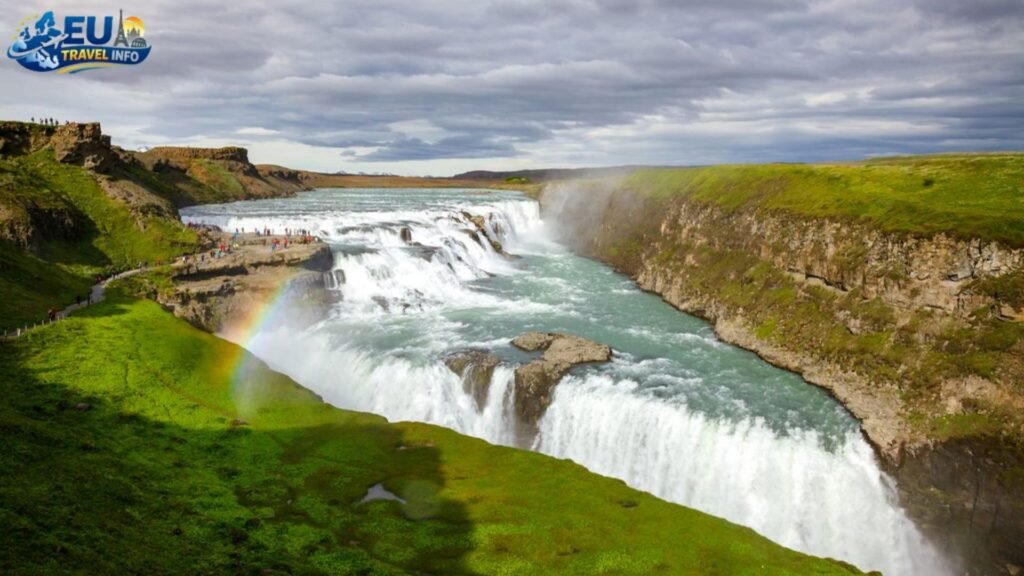
The final stop of the main trio is Gullfoss. The name means “Golden Falls.” This massive waterfall drops into a deep canyon in two stages. The total height is 105 feet (32 meters). In the summer, about 140 cubic meters of water pour over the edge every single second.
There is a hero at this site. Her name was Sigríður Tómasdóttir. She fought to save the falls from being turned into a power plant in the early 20th century. She even threatened to jump into the water to protect it. Because of her, you can still see the falls today.
Essential Detours and Hidden Gems
If you want more than the basic loop, you should add these stops to your golden circle iceland 2 day itinerary. These places are often quieter. They feel more personal.
Kerið Crater: The Eye of the World
You should stop at Kerið on your way back to the city. This is a volcanic crater lake that is about 3,000 years old. The walls are made of vibrant red volcanic rock. The water at the bottom is a deep blue-green. It is 55 meters (180 feet) deep.
You must pay a small fee of 600 ISK to enter. This money helps keep the paths safe. You can walk all the way around the rim. You can also walk down to the water. Many people call it the “Eye of the World” because of its shape.
Friðheimar: The Tomato Heaven
You need to eat lunch at Friðheimar. This is a family-run farm that grows tomatoes all year round using geothermal energy. You eat your meal inside a greenhouse while the plants grow around you.
The tomato soup and freshly baked bread are famous. On top of that, you can try tomato beer or tomato ice cream. You must book a table weeks in advance. It is very popular. Plus, they have 40 Icelandic horses on the farm and put on shows for visitors.
Brúarfoss: The Electric Blue Waterfall
This is one of the most beautiful spots in the region. It is often called the bluest waterfall in Iceland. The water comes from the Langjökull glacier. You have two ways to get there. You can take a quick 5-minute walk from a nearby parking lot. Or you can take a 3.5-kilometer (2.2-mile) hike along the river.
The blue color is so bright it looks fake. No filters needed. You will see the water rushing through dark volcanic rocks. It is a peaceful place. It feels like a secret.
The Secret Lagoon and Other Soaks
If you love hot springs, you have many choices. The Secret Lagoon in Flúðir is the oldest swimming pool in Iceland, built in 1891. It stays between 38 and 40 degrees Celsius (100-104 F) all year.
Similarly, you can visit Laugarvatn Fontana. They have steam rooms built directly over bubbling hot springs. You can even try rye bread that they bake in the hot sand for 24 hours. Additionally, the new Laugaras Lagoon offers a more modern spa experience near the Hvítá River.
Multi-Day Adventure Plans
One day is enough for the highlights. However, a golden circle iceland itinerary 3 days plan lets you see the “wild” side of the region.
- Day 1: Do the classic loop. See Þingvellir, Geysir, and Gullfoss. Stay overnight near Flúðir at a place like The Hill Hotel.
- Day 2: Visit the Þjórsárdalur Valley. This area has the Hjálparfoss waterfall and reconstructed Viking ruins at Stöng. You can also find Gjáin, a canyon that looks like a fairy tale.
- Day 3: Go for an adventure. You can book a snowmobiling tour on the Langjökull glacier. Then, finish your trip with a long soak in a lagoon before driving back to the city.
Winter Travel: What You Need to Know
Visiting in 2026 during the winter is a magical experience. The red rocks of Kerið are covered in white snow. The waterfalls are partially frozen and look like glass. However, you must be careful.
Daylight is very short. In December, you might only have 4 or 5 hours of light. You must plan your route carefully so you are not driving in the dark. Roads can be very icy. If you are not a confident winter driver, you should book a tour. This takes the stress away. You can just look at the view.
Frequently Asked Questions
How long does it take to drive Iceland’s Golden Circle?
You should plan for 8 to 10 hours total. The actual driving takes about 3 to 4 hours if you do not stop. But you will want to stop often. Factor in time for lunch, photos, and walks at each site.
Is the Golden Circle free?
Most of the natural sites are free to visit. You do not pay to see Geysir or Gullfoss. However, you must pay for parking at Þingvellir. You also pay a small entrance fee of 600 ISK at Kerið Crater.
Is it better to stay in Reykjavík or the Golden Circle?
Reykjavík is great for restaurants and nightlife. It is the best base for short trips. However, staying in the Golden Circle area, perhaps in Flúðir, lets you beat the morning crowds. You can reach the main sites before the big buses arrive from the city.
Is 4 full days enough in Iceland?
Yes, 4 days is a good amount of time for a first trip. You can spend one full day on the Golden Circle. You can spend another day on the South Coast to see black sand beaches. Use the third day for a lagoon and the city. Use the fourth day for your arrival or departure.
Concluding Words
Your Step-By-Step Golden Circle Iceland Itinerary Guide 2026 is your ticket to an unforgettable journey. You will walk between tectonic plates at Þingvellir, watch Strokkur erupt, and feel the power of Gullfoss.
Whether you choose a one-day dash or a three-day deep dive, this region shows you the very soul of Iceland. Pack your layers. Charge your camera. The road is waiting.