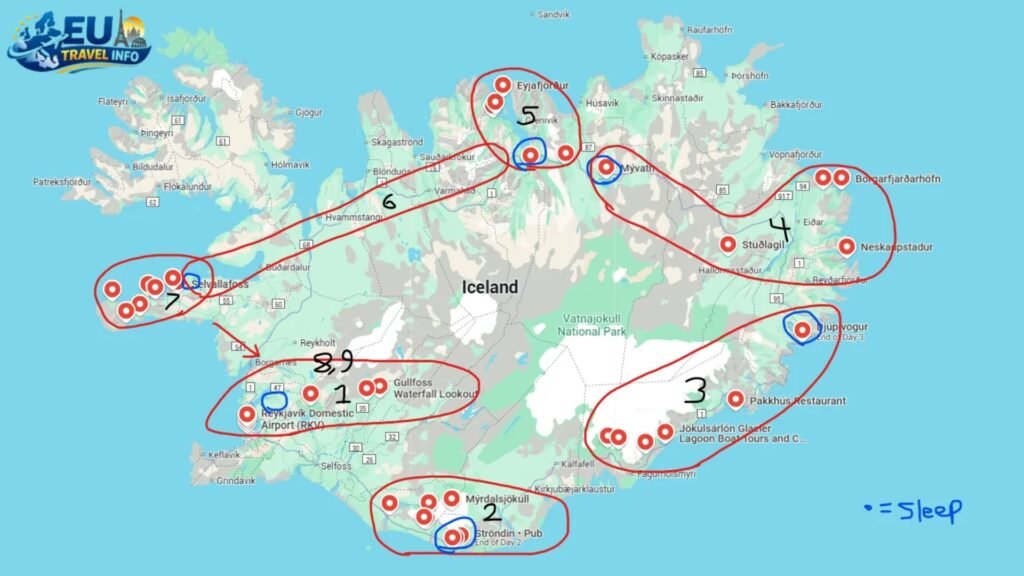
You are about to embark on the most incredible adventure of your life. Imagine the wind in your hair and the sight of massive glaciers on the horizon. Iceland is a land of fire and ice that demands your full attention. This 9 Day Iceland Itinerary Guide 2026 provides everything you need to know for a perfect trip. You will find that nine days is the perfect amount of time to see the major sights without feeling too rushed.
This guide is for the mature traveler who wants comfort plus adventure. You might choose a camper van for the ultimate freedom to chase the northern lights. Perhaps you prefer a 4×4 vehicle to reach those spots off the beaten path. Whatever you choose, the open road awaits you.
The Foundation of Your Trip: Route 1
First of all, you must understand the Ring Road. This is a national road that circles the entire country. It is 1,322 kilometers (821 miles) long. It is the longest ring road in Europe. Most of the road is two lanes wide. However, you will encounter 31 single-lane bridges in rural areas. You must be careful here. Vehicles that reach the bridge first have the right of way.
The speed limit on open roads is 90 kilometers per hour. You will find speed cameras near Reykjavík and in tunnels. Therefore, you should watch your speed carefully. Additionally, the weather can change in a heartbeat. Icelanders say if you do not like the weather, you should just wait five minutes. This is very true. You might see sun, rain, and snow all in one day.
Day 1: The Golden Circle and Geothermal Bliss
Your 9 Day Iceland Itinerary begins in the southwest. This is the most famous tourist route in the country. It is a loop of about 300 kilometers. First, you visit Þingvellir National Park. This is a UNESCO World Heritage Site. You can walk between two tectonic plates here. It is also the place where the Icelandic parliament began.
Next, you drive to the Geysir Geothermal Area. You will see Strokkur. This geyser erupts every 5 to 10 minutes. It shoots water 20 to 30 meters into the air. On top of that, you will visit Gullfoss Waterfall. It is a powerful two-tier waterfall. The name means “Golden Falls”.
Later, you should soak in the Blue Lagoon. This world-famous spa is near the airport. The milky blue water is rich in silica. It is a must-visit spot. However, you must book your tickets well in advance. If you want something more low-key, try the Secret Lagoon in Flúðir. It is the oldest natural hot spring in Iceland. People have used it since 1891. It feels more authentic and less crowded.
Day 2: The Mighty South Coast
On the second day, you head south. This region is famous for its waterfalls. You will first see Seljalandsfoss. You can actually walk behind the curtain of water. Wear your rain gear because you will get wet. Just a short drive away is Skógafoss. This is a massive waterfall where rainbows often appear in the mist.
Gradually, you will reach the black sand beaches of Vík. The most famous is Reynisfjara Beach. You will see huge basalt columns and dramatic sea stacks. Be very careful here. The waves are powerful and dangerous. People call them “sneaker waves” because they come out of nowhere.
Finally, you spend the night near the town of Vík. This is a great place to rest before you move further east. You can also look for the Sólheimasandur plane crash nearby. It has sat on the beach since 1973. You have to walk to it now, so prepare for a long stroll.
Day 3: Canyons and Floating Ice
You start day three with a visit to Fjaðrárgljúfur Canyon. This is a winding, moss-covered gorge. It looks like a scene from a fantasy movie. A short hike from the parking lot leads to incredible views.
Later, you reach Jökulsárlón Glacier Lagoon. This is a highlight for many travelers. You will see blue icebergs floating in the water. You might even see a seal popping its head up. Right next to the lagoon is Diamond Beach. Chunks of ice wash up on the black sand here. They sparkle like diamonds in the sun.
On top of that, you can take a boat tour of the lagoon. This lets you get closer to the icebergs. It is an unforgettable experience. You should also check out Breiðárlón. It is a smaller glacier lake nearby. It is much quieter than its famous neighbor.
Day 4: Vatnajökull National Park and Höfn
Day four is for the glaciers. Vatnajökull National Park is home to the largest glacier in Europe. You can hike in Skaftafell. You should visit Svartifoss waterfall. It is framed by dark basalt columns.
If you have a 4×4, you can drive up to Skalafellsjökull. The road is unpaved and a bit scary. However, the views from the top are absolutely incredible. You can walk on the ice or take a snowmobile tour.
Finally, you arrive in Höfn. This is a small fishing town. You must eat dinner here. The town is famous for langoustine. It is a local delicacy that tastes better than lobster. It is fresh and delicious. Therefore, it is the perfect way to end your day.
Day 5: The Volcanic North and Mývatn
You drive north on day five. You will see the landscape change. It becomes more rugged and wild. Your destination is Lake Mývatn. This area is full of volcanic activity. It feels like another planet.
First, visit the Krafla Crater. You can hike around the rim of a turquoise lake inside a volcano. Nearby are the Hverir mud pots. They are stinking and boiling. You will smell the sulfur from far away. Similarly, you can walk through Dimmuborgir. These are jagged lava formations that look like a dark castle.
Additionally, you should try geyser bread. It is a sweet bread cooked in a hot spring overnight. You can eat it with butter and local fish. End your day at the Mývatn Nature Baths. It is like the Blue Lagoon but less crowded and cheaper. The water is a perfect 36 to 40 degrees Celsius.
Day 6: The Capital of the North and Whales
Your sixth day starts at Goðafoss. This is the “Waterfall of the Gods”. It is very beautiful and easy to reach from the road. Later, you arrive in Akureyri. This is the largest city outside of Reykjavík. It has great shops and restaurants.
You should go whale watching here. Akureyri and Húsavík are the best spots for this. You might see humpback whales or even orcas. May through September are the best months for this adventure.
Also, do not forget to try the ice cream at Brynja in Akureyri. Many people say it is the best ice cream in Iceland. It is a local favorite. Therefore, you should definitely grab a cone.
Day 7: The Road to Snæfellsnes
This is your longest driving day. You are heading to the Snæfellsnes Peninsula. People call this area “Iceland in miniature”. It has everything: glaciers, lava fields, and beaches.
Your first stop is Kirkjufell Mountain. It is the most photographed mountain in the country. Just down the road is Bjarnarfoss Waterfall. It cascades down mossy cliffs. Similarly, you can stop at the Christmas House near Akureyri before you leave the north. It is a festive place full of local crafts.
On top of that, you might find the best hot dog of your trip in Grabrók. The owner makes his own bread. Plus, you can visit a shark museum in Bjarnarhöfn. You can try fermented shark there. Be warned, it has a very strong taste.
Day 8: Hidden Gems and the Sky Lagoon
Spend your eighth day exploring the peninsula. Visit Vatnshellir Cave or Sönghellir. You can hike between the towns of Hellnar and Arnarstapi. You will see dramatic sea cliffs and rock formations. Do not forget to visit the famous black church at Búðir. It is a very iconic spot for photos.
Later, you drive back toward Reykjavík. Treat yourself to a visit at the Sky Lagoon. It is only 10 to 15 minutes from downtown. It has an infinity pool that overlooks the ocean. You should try their 7-step ritual. It includes a sauna, a cold plunge, and a scrub. It is incredibly relaxing after days of driving.
Additionally, you can see the Snæfellsjökull glacier on a clear day. This is the glacier that inspired the book Journey to the Center of the Earth. It is a majestic sight that dominates the skyline.
Day 9: Reykjavík and Farewells
Your final day is for the city. Reykjavík is easy to explore on foot. You must visit Hallgrímskirkja. This is the iconic church that stands tall over the city. You can go to the top for the best view of the colorful houses.
Also, stop by the Harpa Concert Hall. Its glass architecture looks like fish scales. If you need a souvenir, buy a wool hat or sweater. The Handknitting Association of Iceland has a great selection. Icelandic wool is very warm and high quality.
Finally, you return your vehicle at the airport. You have completed an epic 9 Day Iceland Ring Road Itinerary. You have seen waterfalls, glaciers, and volcanoes. You have soaked in hot springs and eaten local food. It is a journey you will never forget.
Essential Tips for Your 2026 Trip
What to Pack
You must use a layering system. The weather is unpredictable. You need a waterproof and windproof jacket. This is your most important item. Do not bring an umbrella because the wind will break it.
You also need merino wool base layers. They keep you warm even if they get wet. Avoid cotton because it stays wet and makes you cold. On top of that, you need waterproof hiking boots with ankle support. They are non-negotiable for the rough terrain.
Additionally, bring a swimsuit. You will use it constantly for the hot springs. A portable power bank is also essential for your phone and camera. The cold weather drains batteries very quickly.
Budgeting for Iceland
Iceland is expensive. You should plan your budget carefully. A 9 day Iceland road trip can vary in cost. Some travelers spend around $3,000, while others spend over $12,000 for two people.
To save money, shop at Bónus or Krónan. These are the most affordable grocery stores. You can make your own sandwiches for lunch. Eating out is very pricey. A burger can cost $24 or more. Also, fuel is expensive. You might pay $300 or more for gas during your trip.
However, many of the best sights are free. You do not have to pay to see most waterfalls or the national parks. Therefore, you can balance your spending. Renting a campervan is a popular way to combine transport and lodging costs.
Best Time to Visit
An Iceland 9 day itinerary summer offers long days and the midnight sun. You will have nearly 24 hours of daylight in June. This means you can see the sights late at night to avoid crowds. On the contrary, a 9 day Iceland itinerary September offers a chance to see the Northern Lights. The weather is still mild, but the nights are dark enough for the aurora.
Many people prefer the shoulder season. Low season begins on September 1. Prices drop and there are fewer tourists. If you want to see ice caves, you must visit in the winter, from November through March.
Gradually, you will find the right time for you. Just remember that the 2026 summer will be very busy. There is a solar eclipse in August 2026. Many hotels and cars are already being booked. Therefore, you should plan your trip as soon as possible.
Frequently Asked Questions
Can you do Iceland in 9 days?
Yes, you can certainly do Iceland in nine days. It is the perfect amount of time to complete the entire Ring Road without rushing. You will have enough time for the South Coast, the North, and even the Snæfellsnes Peninsula.
Is 10 days in Iceland enough?
Ten days is definitely enough for Iceland. It allows for a more relaxed pace than a shorter trip. You can spend more time at your favorite spots or add extra activities like a glacier hike or a longer visit to the Westfjords.
Can I see northern lights in September in Iceland?
Absolutely. The Northern Lights season starts in late August or early September as the nights become dark again. Your chances are high if the skies are clear and there is solar activity.
Are 8 days enough for Iceland?
An 8-day Iceland itinerary is enough to see the main highlights, but you will need to move faster. You might have to skip one area, like the Snæfellsnes Peninsula, or spend less time at each waterfall to finish the circle.
Concluding Words
Your 9 Day Iceland Itinerary Guide 2026 is the key to an unforgettable trip. You will journey across the Ring Road, seeing everything from the Golden Circle to the Diamond Beach.
Whether you choose a campervan or a hotel stay, you will experience the raw power of nature. Remember to pack your layers, respect the environment, and prepare for a magical adventure in the land of fire and ice.