You are standing on a stone balcony. The sun warms your skin. Below you, the Adriatic Sea sparkles like a thousand diamonds. This is the trip you have dreamed about for years. Croatia and Montenegro offer a mix of old history and beautiful nature that few other places can match. You want a plan that works. You need details that help you avoid stress. This guide for 2026 will give you everything you need to know.
The Best Time for Your Adventure
First of all, you must pick the right month. July and August are the hottest months. Temperatures often reach 28°C or 88°F. These months are also very crowded. You will face long lines at ferry ports. Huge cruise ships drop off thousands of people in places like Dubrovnik.
However, you should consider May, June, or September. The weather is still wonderful during these times. Temperatures usually stay between 23°C and 27°C. The crowds are much smaller. September is a great choice because the sea is still warm enough for a swim. October brings rain and cooler air, but it is also the time for wine harvests and food festivals.
If you love festivals, you might visit in February for the Feast of Saint Blaise in Dubrovnik. You could also visit in March for the Festival of Oysters in Ston. At that time, the local people reclaim their cities from the summer tourists.
New Travel Rules for 2026

You must be aware of big changes for travel in 2026. The European Union has a new system called the Entry/Exit System (EES). This system will be fully active by April 10, 2026. It records the movements of non-EU travelers using biometric data.
First-time visitors since the launch must provide personal data. Officers will take a photo of your face. They will also scan your fingerprints. This data stays in a digital file for three years. Later visits will be faster. You will only need to verify your photo or fingerprints. Use a biometric passport to speed up the process at self-service kiosks in major airports like Zagreb or Split.
Additionally, you must remember that Croatia is now part of the Schengen Area. Border controls with other Schengen members are gone. But, controls remain in place for the borders with Serbia, Bosnia and Herzegovina, and Montenegro.
Crossing the Border into Montenegro
You will find the border crossing to be a major part of your journey. The main crossing between Croatia and Montenegro is Debeli Brijeg – Karasovići. This crossing is on the Adriatic Highway.
During the summer of 2026, you should expect long waits. Lines can last from 20 minutes to several hours. The shortest wait times usually happen very early in the morning, between 5 am and 7 am. Similarly, the second-to-last weekend in August is the worst time to leave Montenegro for Croatia.
On top of that, there is a five-kilometer “no-man’s land” between the two checkpoints. You should not try to walk between them with heavy luggage. If you drive a rental car, you must tell the agency in advance. You need the right paperwork to cross. You can buy car insurance at the Debeli Brijeg border if your rental does not have it. It costs about €15 for 15 days.
Your Croatia and Montenegro Itinerary: Different Lengths for Every Traveler
You might have five days or you might have two weeks. Every trip is special.
Croatia and Montenegro Itinerary 5 Days
A short trip requires a tight plan. You should focus on the highlights.
- Day 1-3: Spend your time in Dubrovnik. Walk the city walls. They are 1,940 meters long. Visit the Rector’s Palace.
- Day 4-5: Take a bus or ferry to Kotor, Montenegro. Explore the Old Town. It is a UNESCO World Heritage Site.
Croatia and Montenegro Itinerary 7 Days or 8 Days
A week allows you to see more islands.
- Day 1-2: Start in Split. Visit the old city.
- Day 3-4: Go to Hvar. Enjoy the beaches.
- Day 5-6: Travel to Dubrovnik. Take a day trip to Lokrum Island.
- Day 7-8: Finish in Kotor. Visit the small town of Perast.
Croatia and Montenegro Itinerary 10 Days
This is a very popular choice on the croatia and montenegro itinerary 10 days reddit threads. Users like MyTorontoAccount suggest a split between city and sea.
- Day 1-2: Split.
- Day 3-4: Hvar.
- Day 5-6: Dubrovnik.
- Day 7-8: Kotor.
- Day 9: Perast.
- Day 10: Return to Dubrovnik for your flight.
Croatia and Montenegro Itinerary 12 Days or 14 Days
A longer trip lets you go inland.
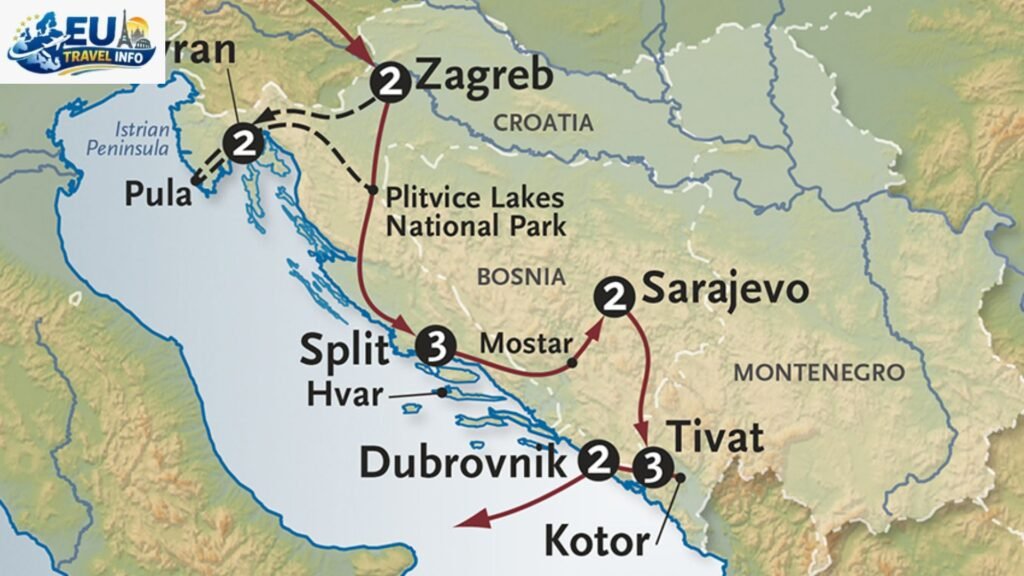
- Day 1-3: Zagreb. Visit the Museum of Broken Relationships.
- Day 4: Plitvice Lakes National Park.
- Day 5-7: Zadar and Split.
- Day 8-10: Dubrovnik.
- Day 11-14: Kotor and Budva, Montenegro.
You could even try a slovenia croatia and montenegro itinerary. You would start in the north and work your way down the coast.
Must-See Spots in Croatia
Dubrovnik: The Pearl of the Adriatic
You will love the red roofs of this city. It served as a filming site for many famous shows.
- The City Walls: You must walk these walls. The views are incredible. They reach a height of 25 meters in some spots. The walk costs about 200 Kuna.
- Mount Srđ: Take a cable car or hike to the top. It is 412 meters high. You can see the whole city and the islands from there.
- Banje Beach: This is a famous spot for a swim near the Old Town.
Split: A City Inside a Palace
You will find Split to be very lively.
- Old Town: The city grew out of an ancient Roman palace.
- Island Hopping: Use Split as your base for boat tours to the Blue Lagoon or Trogir.
Plitvice Lakes National Park
You should not miss this natural wonder. It has sixteen lakes and many waterfalls. Admission can cost around $76 in the summer.
Must-See Spots in Montenegro
Kotor: The Fjord of the South
You will feel like you are in a movie here. The mountains drop straight into the sea.
- St. John’s Fortress: You must hike to the top. There are over 1,350 steps. The hike takes you 1,200 meters into the air. Do this at sunrise or sunset to avoid the heat.
- The Old Town: Get lost in the narrow streets. Visit the St. Tryphon Cathedral.
Perast and Our Lady of the Rocks
You should take a boat to the small islands in the bay. Our Lady of the Rocks is an artificial island with a beautiful church. Perast is a quiet village that only takes a few hours to see.
Budva: Sun and Fun
You will find Budva to be great for nightlife and beaches. It is one of the oldest settlements on the Adriatic. It has a history of over 2,500 years.
How to Get Around
By Ferry
You can take a new ferry between Dubrovnik and Budva in 2026. This journey takes only two hours. A one-way ticket costs €50. This ferry runs on Thursdays, Fridays, Saturdays, and Sundays.
Additionally, a ferry connects Dubrovnik to Kotor. This ride takes three hours. It sails on Mondays and Wednesdays.
By Bus
The bus is the cheapest way to travel. Tickets from Dubrovnik to Kotor start at about $34 to $38. The ride usually takes two to three hours. However, border checks can make it longer.
You should arrive at the bus station early. In Dubrovnik, buses leave from the station in Gruž. You might have to pay €1-3 for your big suitcases. Do not argue with the bus drivers. They are known for being very strict.
By Car
You can hire a private car or minivan for more comfort. A private car from Dubrovnik to Kotor might cost $250. A minivan for seven people can cost around $330.
Eating and Drinking Like a Local

You will find the food to be fresh and delicious.
- Seafood: You must try the squid ink dishes and fresh fish along the coast.
- Bosnian Cuisine: Visit Taj Mahal in Dubrovnik for a different taste.
- Gelato: Visit Peppino’s in Dubrovnik for some of the best treats in the city.
Budgeting for Your Trip
You need to know what things cost. One traveler spent about $176 per day in Croatia. This included:
- Lodging: $63 per night on average.
- Eating Out: $47 per day.
- Transportation: $17 per day.
Montenegro was a bit cheaper at $151 per day. You can save money by buying food at grocery stores for breakfast.
Important Tips for a Smooth Trip
First of all, carry some cash. While many places take cards, small shops and bus drivers often prefer Euros. Both Croatia and Montenegro use the Euro as their currency.
On top of that, stay flexible. Delays at the border are common in the summer. Do not pack your schedule too tight.
Gradually, you will learn to love the slower pace of life in the Balkans. Take time to sit in a square with a coffee. Watch the world go by. This is the true spirit of travel.
Finally, remember your passport. You cross an international border when you go between these countries. You are leaving the Schengen Zone when you enter Montenegro. You will likely get two stamps in your passport.
FAQ
Can you do Croatia and Montenegro?
Yes, you certainly can. They are very close to each other. Many people combine them into one trip. You can travel by bus, car, or ferry between the two countries easily.
Which country to combine with Croatia?
Montenegro is the most popular choice. However, many travelers also add Bosnia and Herzegovina to their plans. Slovenia is another great option if you have more time and want to see mountains and lakes.
Which is better, Croatia or Montenegro?
Both are amazing in different ways. Croatia has more islands and famous cities like Dubrovnik. Montenegro is smaller and feels more rugged and natural. Montenegro is often a bit cheaper and less crowded than the main spots in Croatia.
How long is the ferry from Montenegro to Croatia?
The ferry from Budva to Dubrovnik takes two hours. The ferry from Kotor to Dubrovnik takes three hours. These services are great for avoiding the traffic at the land borders.
Conclusion
Your trip to Croatia and Montenegro in 2026 will be an experience you never forget. From the massive stone walls of Dubrovnik to the breathtaking heights of Kotor, every day offers a new wonder. You now have the plan. You know the costs. You understand the new border rules. Pack your bags and get ready for the blue water and warm sun of the Adriatic.