You stand under a sky that is almost always blue. The air smells like sweet orange blossoms and salty sea water. This is Andalucía, a place where history feels alive in every stone and every dance step. You want an adventure that stays in your heart forever. Southern Spain is exactly that place. Whether you have just a few days or two full weeks, you can find a Southern Spain Itinerary that fits your life perfectly.
This land is the hottest part of Europe. It even has the only desert on the continent. You will find over 300 days of sunshine every single year. Ancient ruins. Great food. Wild mountains. It is all here for you to see.
The Best Ways to Move Around
You must decide how to travel before you land. Spain has an excellent train system called Renfe. It is fast and very comfortable. You can easily plan a southern spain itinerary by train if you stick to the big cities like Seville, Córdoba, and Granada. These cities sit close together. Most trips between them take less than two hours.
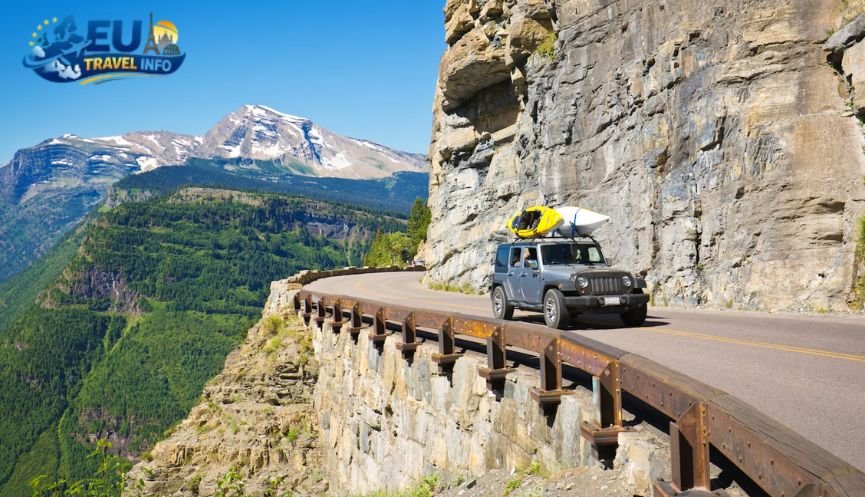
However, you might want to see the small White Villages or hidden beaches. You absolutely need to rent a car for that. Small coastal towns often have very few bus routes. Driving in this region is quite easy. The roads are good and the signs are clear.
When to Plan Your Trip
You should think about the heat before you book your flight. Summer months like July and August can be very difficult. Temperatures often climb above 40°C (104°F). In Seville, it even reached 46°C (115°F) recently. Many local shops and bars close during August so owners can go to the beach.
Spring and autumn are much better for you. April, May, and October offer warm days and cool nights. You will see flowers in bloom and avoid the heavy crowds. Winter is also a great choice if you like mild weather. You can still see daytime temperatures in the 20s (°C).
Málaga: Your Gateway to the South
You will likely start your journey in Málaga. This is one of the oldest cities in the whole world. It dates back to 800 BC. It is not just a place with an airport. It is a cultural star.
First, you should visit the Alcazaba. This is a huge Moorish fortress from the 11th century. It sits right next to an old Roman Theatre. Later, you can walk up to the Castillo de Gibralfaro. The views of the port and the city from the top are incredible.
Additionally, you might want to see the Málaga Cathedral. It is very tall and only has one tower. Locals call it “The One-Armed Lady.” If you have time, you can visit the Picasso Museum because the famous painter was born right here.
Seville: The Heart of Spanish Culture
You take the train from Málaga and arrive in Seville in about two hours. This is the capital of the region. It is a city of narrow streets, beautiful tiles, and great tapas bars.
You must see the Real Alcazar. This royal palace dates back to the 10th century. It has intricate carvings and vast gardens with fountains. You need to book tickets weeks in advance because they sell out fast. Right next door is the Cathedral of Seville. It is the largest Gothic church in the world. You can even see the tomb of Christopher Columbus inside.
On top of that, you should experience Flamenco. This is the soul of Andalucía. You have two main choices for shows. Tourist tablaos charge €35 to €75 and often include dinner. They are very professional and polished.
On the contrary, you can look for a peña. These are local clubs for fans. They cost much less, usually €15 to €25. The shows are more raw and spontaneous. You might even see people dancing in the streets during the April Fair.
What to Eat in Seville
You will love the food here. Try these local favorites:
- Carrillada de Cerdo: Pork cheeks that melt in your mouth.
- Espinaças con Garbanzos: Spinach with chickpeas and spices.
- Salmorejo: A thick, cold tomato soup topped with egg and ham.
- Solomillo al Whisky: Pork tenderloin in a garlic and whisky sauce.
Tipping is not expected, but you can leave 5% to 10% for great service.
The Magic of the White Villages
You drive into the hills and see white houses perched on mountain peaks. These are the Pueblos Blancos. They often have old Moorish castles and town squares filled with orange trees.
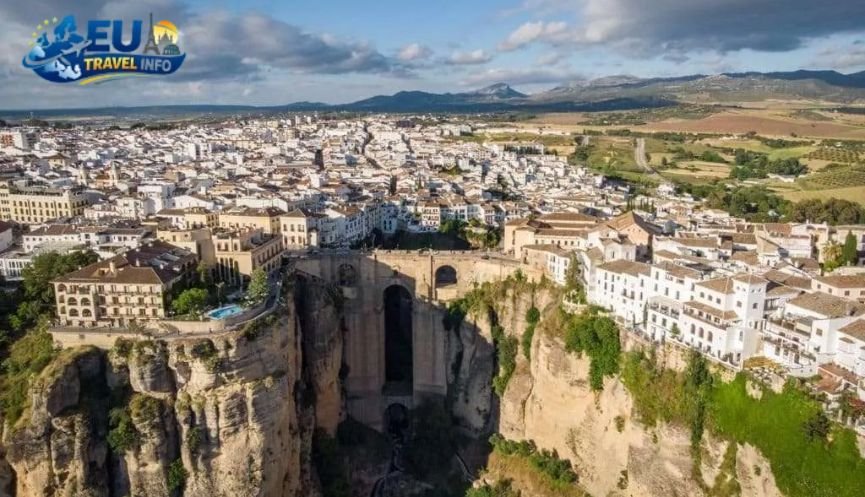
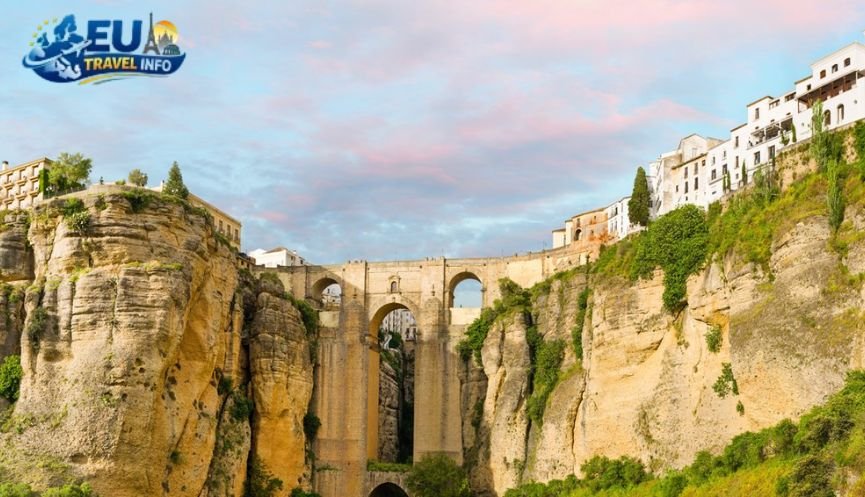
Ronda is the most famous one. It sits on top of a very deep gorge. The Puente Nuevo bridge spans this canyon and offers views that will take your breath away. It was finished in 1793. You can also visit the oldest bullring in Spain here.
Next, you should visit Setenil de las Bodegas. This village is unique because many houses are built directly into the cliffs. The rock acts as a roof for the streets. It is a strange and beautiful sight.
Similarly, Zahara de la Sierra is worth a stop. It has a commanding hilltop position with a 13th-century Moorish castle on top. The views over the blue reservoir below are perfect for photos.
If you like something quirky, visit Júzcar. In 2011, the whole village was painted blue to celebrate a movie about the Smurfs. The locals liked it so much they never painted it white again. It is now a fun spot with Smurf statues and colorful murals.
Granada and the Mighty Alhambra
You move east to Granada, a city at the foot of the Sierra Nevada mountains. This was the last place held by the Moors before they were defeated in 1492.
The main reason to visit is the Alhambra. It is one of the best-preserved Islamic palaces in the world. It is a UNESCO World Heritage Site. You will see archways covered in geometric patterns and beautiful gardens.
General tickets cost €22.27. This includes the Nasrid Palaces, the Alcazaba fortress, and the Generalife gardens. You must buy tickets at least one month in advance. They sell out nearly every single day.
You should also walk through the Albaicin neighborhood. It is the old Moorish quarter with winding streets. Go to the Mirador de San Nicolás at sunset. You will see the Alhambra glowing orange with the snowy mountains behind it. It is one of the best views in all of Spain.
Córdoba: A City of Many Layers
You take a short train ride to Córdoba. This city was once the capital of an Islamic empire. The center of it all is the Mezquita.
This building is incredible. In 785, the Moors began building a huge mosque here. It is famous for its “forest of columns” and red-and-white arches. Later, in the 16th century, Christians built a cathedral right in the middle of it.
You can see both styles in one place. It is a visual miracle. The Mezquita costs €11.50 to enter. However, you can enter for free if you go between 8:30 and 9:30 AM from Monday to Saturday. It is much quieter then, too.
Afterward, walk across the Roman Bridge. It dates back to 45 BC. You should also wander through the Juderia, which is the old Jewish quarter. If you visit in May, you can see the Patios of Córdoba. These are private courtyards filled with thousands of flowers for a local contest.
Adventure and Nature in the South
You might want some excitement on your trip. Southern Spain has plenty of it.
Caminito del Rey is a must for brave travelers. This is a 7-kilometer trail through a narrow gorge. You walk on a path suspended 100 meters above the river. It is very safe now, but it still feels like a big adventure. You need to book this about a month ahead because it is very popular.
If you love hiking, try Mulhacén. This is the highest peak in mainland Spain. it rises 3,479 meters (11,414 feet) high. On a clear day, you can see all the way to Morocco from the top. It is a difficult hike that takes at least 9 hours.
Finally, you should visit El Torcal de Antequera. This park has some of the most unusual rock shapes in Europe. It looks like a landscape from another planet. You might even see wild Iberian Ibex (mountain goats) jumping across the stones.
Cádiz and the Two Coasts
You have two very different coasts to choose from in the south.
The Costa del Sol faces the Mediterranean Sea. It has calm water and many resorts. Cities like Marbella and Estepona are polished and easy to visit. This coast has 300 days of sunshine and is perfect for a relaxing beach day.
On the contrary, the Costa de la Luz faces the Atlantic Ocean. This is the “Coast of Light”. It is wilder and windier. The beaches are huge and have wild sand dunes.
Tarifa sits right where the two seas meet. It is the southernmost point of Europe. It is famous for kitesurfing and watching bird migrations. You can see thousands of birds of prey fly across the sea to Africa in the autumn.
Cádiz itself is a beautiful old city on a peninsula. It feels very authentic. You can climb the Cathedral tower for views of the ocean. The air here smells like fried fish and salt. It is one of the most underrated spots in Spain.
Sample Itineraries for Your Trip
You can use these plans to help you decide where to go.
Southern Spain Itinerary 5 Days
If you have a short time, stick to the “Golden Triangle.”
- Days 1-2: Seville. See the Alcazar and a Flamenco show.
- Day 3: Córdoba. Visit the Mezquita and move to Granada.
- Days 4-5: Granada. Visit the Alhambra and the Albaicin.
Andalucia Itinerary 7 Days
A week allows you to see more history and one white village.
- Days 1-2: Málaga and the Caminito del Rey.
- Day 3: Ronda. See the bridge and the old town.
- Days 4-5: Seville. Food, tiles, and the Cathedral.
- Day 6: Córdoba. The Mezquita and the Roman Bridge.
- Day 7: Granada. The Alhambra.
Southern Spain Itinerary 10 Days
This is a popular choice that covers the best of the region.
- Days 1-2: Seville.
- Day 3: Cádiz.
- Day 4: Vejer de la Frontera (a beautiful white village).
- Days 5-6: Tarifa or Marbella beaches.
- Days 7-8: Granada and the Alhambra.
- Day 9: Córdoba.
- Day 10: Travel back to Seville or Málaga.
Southern Spain Itinerary 14 Days
Two weeks lets you see everything at a slower pace. You can add more white villages like Arcos or Olvera. You could even take a ferry to Tangier, Morocco for a day trip from Tarifa. Spend more time on the wild beaches of the Costa de la Luz. Hike in the Sierra Nevada. You will not run out of things to do.
Final Tips for Your Adventure
You should remember that life moves slower here. Siesta is a real thing. Many shops close from 2 PM to 5 PM. People eat dinner very late, often after 9 PM or 10 PM.
Plan ahead for tickets to the Alhambra and the Alcazar. Bring your passport everywhere. Many big sites will scan your passport instead of a paper ticket.
Gradually, you will fall in love with this place. The history. The food. The light. Southern Spain is waiting for you in 2026.
FAQ
What is the most beautiful town in southern Spain?
Many travelers believe Vejer de la Frontera is the most beautiful. It is a classic white village on a hill near the coast. It has narrow streets, great shops, and a famous Moroccan restaurant called El Jardín del Califa.
Is southern Spain a good place to visit?
It is a wonderful place to visit. It offers a mix of world-class history, amazing food, and beautiful nature. You get sunny weather almost all year. It is also generally safe and easy to navigate.
What to visit in the south of Spain?
You should prioritize the Alhambra in Granada, the Mezquita in Córdoba, and the Cathedral in Seville. Do not miss the White Villages like Ronda and the stunning beaches of the Costa de la Luz.
Where to spend a week in southern Spain?
You can have a great week by visiting Seville, Córdoba, and Granada. If you want a mix of city and beach, you can stay in Málaga and take day trips to places like Nerja and Ronda.
Concluding words
Your adventure in Southern Spain for 2026 will be a journey through time and beauty. From the majestic palaces of Granada to the wild shores of Cádiz, every stop offers something special. You can follow a tight schedule or wander slowly through white-washed villages. No matter what you choose, the warm sun and rich culture of Andalucía will provide an experience you will never forget.