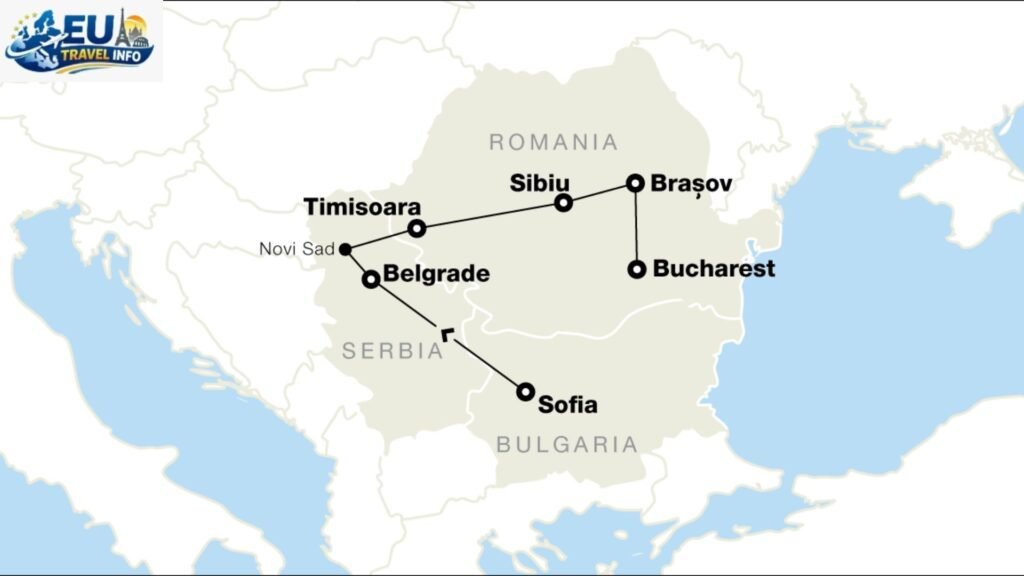
You are about to embark on a journey through a land where ancient history meets modern charm. Bulgaria is a hidden gem in Eastern Europe that offers everything from golden beaches to snowy mountain peaks. This Bulgaria Itinerary Guide 2026 for Perfect Holidays will help you plan the trip of a lifetime. You will find that Bulgaria has existed at the crossroads of Europe and Asia for thousands of years. Thracian, Greek, Roman, Ottoman, and Byzantine empires all left their mark here. History. Culture. Food. Wine. You get it all in one place.
Why You Must Choose Bulgaria in 2026
You might wonder why this year is the perfect time to go. First of all, the country remains one of the most affordable spots in Europe. Statistical data shows that you can enjoy a mid-range trip for about $60 to $80 per person per day. On top of that, the infrastructure for travelers is better than ever. You will find that more than 20% of the country is covered in mountains, which makes it a paradise for hikers. Additionally, you can visit four or more UNESCO World Heritage sites in a single two-week trip.
Logistics and Your Budget
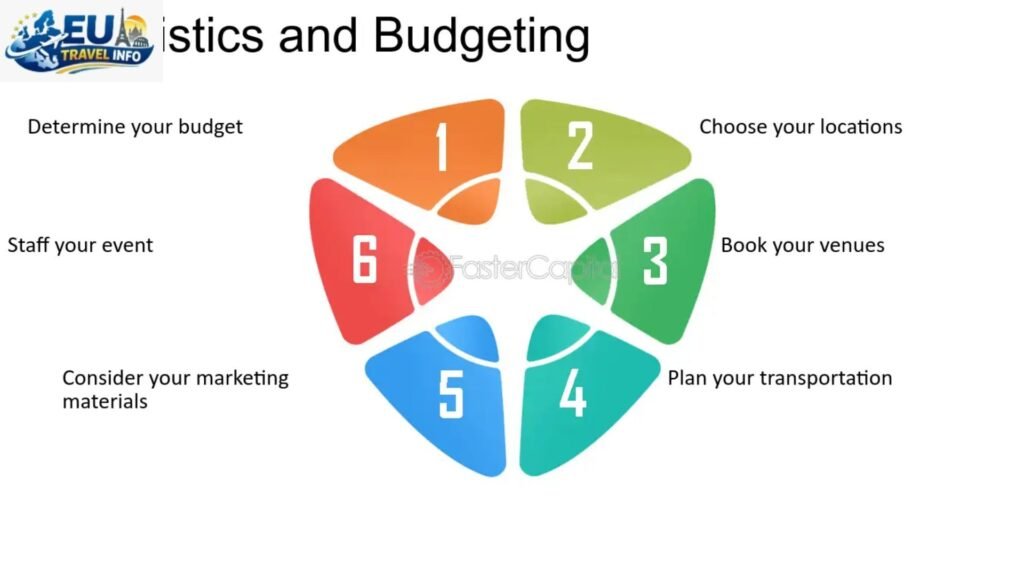 First, let us talk about the money in your pocket. Bulgaria uses the Bulgarian Lev. You will find that one Lev is usually worth about $0.50 USD or 0.50 Euro. ATMs are easy to find in cities and airports. Similarly, credit cards are accepted in most big shops, but you should carry cash for mountain chairlifts and small villages. Statistical evidence suggests that a cheap lunch like a kebab costs only $2.50 to $5, while a nice dinner entree is between $6 and $10. Therefore, your wallet will stay happy throughout your stay.
Your Perfect Sofia, Bulgaria Itinerary (Days 1–3)
You will likely start your adventure in the capital. Sofia is the largest city and home to the main airport. It is a city that is 7,000 years old. You will find it very relaxed for a capital city.
Day 1: Arrival and Golden Domes You arrive and take a private transfer or the metro to your hotel. First of all, you must see the Alexander Nevsky Cathedral. This iconic building can hold 10,000 people inside. The central dome is made of actual gold. Later, you can wander over to the St. Sophia Church. It feels humble but is a deep piece of the city’s memory.
Day 2: Roman Ruins and Religious Tolerance You should join a free walking tour at 11:00 AM or 2:00 PM. You will see Roman ruins right next to coffee shops and metro stations. On top of that, you can visit the “rectangle of tolerance”. This area has a Catholic cathedral, an Orthodox church, a mosque, and a synagogue all on the same street. “Sofia is proud of its religious tolerance,” says one traveler. Additionally, you should visit the Sofia Synagogue, which is the second largest in Eastern Europe.
Day 3: Mountain Air and Frescoes You do not have to go far to find nature. Vitosha Mountain is only 45 minutes from the city center. You can hike to the summit at 2,290 meters for incredible views. On the way back, stop at Boyana Church. This UNESCO site has medieval frescoes painted centuries before the Renaissance began elsewhere. Plus, you can visit the Central Mineral Baths, which now house a museum.
The Mountain Heart: Rila and Melnik (Days 4–5)
Now it is time to leave the city. You will head south toward the highest mountains in the Balkans.
Day 4: The Seven Rila Lakes Hike You must prepare for one of the most beautiful hikes in Europe. You drive about 90 minutes to Sapareva Banya. From there, you take a chairlift for €16 return. You will hike past seven glacial lakes with names like The Tear, The Eye, and The Kidney. The hike takes 3 to 5 hours. It is achievable even if you are not an athlete. Finally, you reach the summit point where you can see all seven lakes at once.
Day 5: Rila Monastery and the Wine Capital You visit the Rila Monastery, which was founded in the 10th century. It sits at an altitude of 1,147 meters. The main walls are 24 meters high, making it look like a fortress. Later, you drive to Melnik, the smallest town in Bulgaria. Gradually, you will notice the strange sand pyramids surrounding the town. Melnik is the wine capital of the country. You must visit the Kordopulov House, which is the largest 19th-century home in the Balkans. It has a wine cellar carved into the rock. Winston Churchill reportedly loved the Broad Leaf Melnik wine from this region.
The Cultural Soul: Plovdiv (Days 6–7)
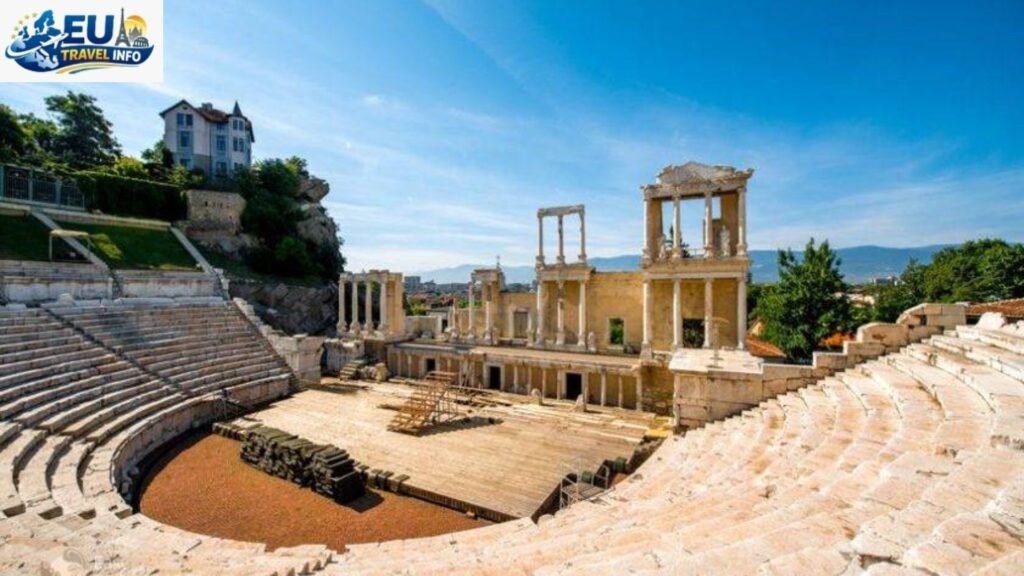
Your Bulgaria Itinerary 7 days mark usually hits the incredible city of Plovdiv. It is the oldest continuously inhabited city in Europe.
Day 6: Ancient Theaters and Old Town Charm You walk through the Old Town with its colorful 18th-century houses. You must see the Ancient Theatre of Philippopolis. It was built in the 1st century AD and holds up to 7,000 people. Today, it still hosts concerts. Additionally, you can visit the Roman Stadium, which lies right beneath the main shopping street. At that time, it could hold 30,000 spectators.
Day 7: The Trap and the Seven Hills You should explore the Kapana district, which means “The Trap”. It is an artsy neighborhood full of cafes, galleries, and flags. On top of that, you can hike up one of Plovdiv’s six remaining hills for a sunset view. Nebet Hill is a favorite for panoramic views of the Old Town. For dinner, you might try shopska salad or kavarma, a rich stew served in a clay pot.
The Rose Valley and Ancient Tombs (Day 8)
You head north toward the center of the country. This area is known as the Valley of the Thracian Kings.
Day 8: Kazanlak and Roses You visit Kazanlak, where the air smells like flowers in May and June. This region once produced 75% of the world’s rose oil. You can visit a rose oil distillery and the Thracian Tomb, which is a UNESCO site. You will see a replica of the tomb because the original is restricted to preserve the ancient art. Later, you might stop at the Shipka Memorial Church with its golden domes.
The Black Sea Coast: Sun and History (Days 9–11)
You now reach the eastern edge of the country. The Black Sea coast offers a mix of relaxation and ancient ruins.
Day 9: Sozopol and Nessebar You spend the morning in Sozopol, one of the oldest towns on the coast. Later, you transfer to Nessebar, known as the Pearl of the Black Sea. It is a UNESCO World Heritage site situated on a small peninsula. You walk through cobblestone streets to see medieval churches like Hagia Sophia and the Church of Christ Pantocrator.
Day 10: Varna and Ancient Gold You travel north to Varna, the third-largest city. You must visit the museum that houses the world’s oldest gold treasure, dating back to the 5th millennium BC. Later, you can relax in the Sea Garden or explore the Roman baths.
Day 11: Cape Kaliakra and Balchik You drive to the northernmost point of your tour, Kaliakra Cape. It is a beautiful landmark with steep cliffs and blue water. On top of that, you should visit the Balchik Palace and Botanical Gardens. The garden has over 3,000 types of plants from all over the world.
Medieval Grandeur and the Second Capital (Days 12–14)
You leave the coast to visit the medieval heart of Bulgaria.
Day 12: Veliko Tarnovo You arrive in Veliko Tarnovo, the medieval capital. The city is famous for the Tsarevets Fortress, which sits on a hill surrounded by the Yantra River. You can walk through the fortress walls and see Baldwin’s Tower. In the evening, you might catch a light and sound show over the hills.
Day 13: Etar and Arbanasi You take a short trip to the Etar Ethnographic Complex. It is an open-air museum where craftsmen still work using old techniques. Later, you visit the village of Arbanasi. It has fortified houses and churches with amazing murals.
Day 14: Returning to Sofia You drive back to Sofia for your flight home. On the way, you can stop at the Troyan Monastery, the third-largest in the country. It is famous for its wood carvings and miraculous icons. Finally, you finish your Bulgaria itinerary 2 weeks adventure with a final dinner in the capital.
Customizing Your Bulgaria Itinerary
You might not have two full weeks. That is okay. Bulgaria is flexible.
Bulgaria Itinerary 10 Days
You can follow the route above but move faster. You spend 2 days in Sofia, 2 days in the Rila area, 2 days in Plovdiv, 2 days on the Black Sea, and 2 days in Veliko Tarnovo. This is a popular “round tour” that covers the major highlights.
Bulgaria Itinerary 7 Days
You should focus on the western and central parts. You spend 2 days in Sofia, 1 day at Rila Monastery, 2 days in Plovdiv, and 2 days in Veliko Tarnovo. Alternatively, you can spend those 7 days doing a cycling tour through the Rhodope Mountains and the Rose Valley.
Bulgaria Itinerary 5 Days
You will want to stick to the “Golden Triangle.” You spend 2 days in Sofia, 1 day on a trip to Rila, and 2 days in Plovdiv. This gives you a great mix of the capital city and ancient history without too much driving.
Bulgaria Itinerary 4 Days
You can do a historical tour focused on the capital and the mountains. You stay in Sofia and take day trips to Rila Monastery and Plovdiv. This is perfect for a long weekend.
Bulgaria Itinerary 3 Days
You should stay in the capital. A Sofia, Bulgaria itinerary for three days allows you to see the Alexander Nevsky Cathedral, hike on Vitosha Mountain, and enjoy the food scene on Vitosha Boulevard.
Important Travel Tips for Your 2026 Holiday
Food and Drink: You must try the shopska salad, which is covered in white cheese. Another favorite is banitsa, a pastry filled with cheese. On top of that, Bulgarian yogurt is famous worldwide. A local might tell you that the bacteria is named “Lactobacillus bulgaricus” and not “Lactobacillus greecus”.
Getting Around: You can use the clean and efficient metro in Sofia. For travel between cities, buses are usually better and faster than trains. For example, the bus from Sofia to Plovdiv takes 2 hours, while the train can take almost 3 hours. Renting a car gives you the most flexibility, especially for the mountains. Prices start around €11 per day.
Best Time to Visit: You will find the best weather in April, May, June, September, and October. July and August can be very hot, with temperatures reaching 40°C (104°F). If you want to hike the Seven Rila Lakes, the best time is July to September because the lakes are often frozen the rest of the year.
FAQ
How many days are enough for Bulgaria?
You should plan for at least 7 to 10 days to see the main cities and mountains. If you want to include the Black Sea coast, a 14-day trip is much better so you do not feel rushed.
Is Bulgaria cheap or expensive?
Bulgaria is very cheap compared to Western Europe. You can find high-quality meals for under $10 and comfortable hotels for $50 to $80 per night. Public transportation is also very affordable, with bus tickets between major cities costing around $7.50.
Which month is best to visit Bulgaria?
June and September are the best months. You get warm weather and long days, but you avoid the extreme heat of mid-summer. May is also excellent if you want to see the roses in bloom.
Is Bulgaria worth a trip?
Yes, it is absolutely worth it. You get a unique mix of Roman history, beautiful mountains, and great food for a fraction of the cost of other European countries. It is still an “off the radar” destination, so you can escape the massive crowds.
Concluding Words
Bulgaria in 2026 offers a perfect holiday for anyone who loves history, nature, and good value. You can explore 7,000-year-old ruins in Sofia, hike to glacial lakes in the Rila Mountains, and relax on Black Sea beaches. Whether you have 3 days or 2 weeks, this country will surprise you with its beauty and its friendly people. Prepare your bags and get ready for an adventure you will never forget.